













Gjør som tusenvis av andre bokelskere
Abonner på vårt nyhetsbrev og få rabatter og inspirasjon til din neste leseopplevelse.
Ved å abonnere godtar du vår personvernerklæring.Du kan når som helst melde deg av våre nyhetsbrev.

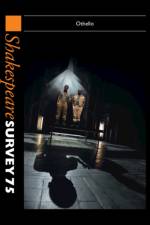
Shakespeare Survey is a yearbook of Shakespeare studies and production. Since 1948, Survey has published the best international scholarship in English and many of its essays have become classics of Shakespeare criticism. Each volume is devoted to a theme, or play, or group of plays; each also contains a section of reviews of that year's textual and critical studies and of the year's major British performances. The theme for Volume 75 is 'Othello'. The complete set of Survey volumes is also available online at https://www.cambridge.org/core/what-we-publish/collections/shakespeare-survey This fully searchable resource enables users to browse by author, essay and volume, search by play, theme and topic and save and bookmark their results.
Freud always regarded The Interpretation of Dreams, and in particular its thesis that dreams fulfill wishes, as his landmark contribution and the scaffolding of his subsequent work. Susan Sugarman, after carefully examining the text and scrutinizing a range of Freud's other works, shows that the dreams book is not and cannot be that scaffolding. For, not only does his argument on dreams falter, but his reasoning elsewhere - in his case histories, his accounts of phenomena of ordinary waking life, and even his avowedly speculative writing - displays a strength and precision his account of dreams lacks. She concludes by exploring what is then left of the dreams theory and Freud's overall vision of the mind.
The European Union Treaty after Lisbon emphasises the overarching objectives of sustainable development and a highly competitive social market economy, aiming at full employment, high levels of environmental protection and social progress. Yet, in 2022, it is clear that these ambitions have not been fully achieved. The ongoing pandemic, the continuing fall-out from Brexit and the resulting economic damage, a Grexit avoided, and potential other exits from the EU, have come to undermine the political consensus of the idea of a European Union. Amidst these challenges, the debates on how to achieve the UN Sustainable Development Goals have turned towards demanding more sustainable economic policies, financial investments and business actions. The present volume provides a much-needed space for in-depth discussion of the concept of sustainable value creation and how it can be achieved within the ecological limits of our planet, through the prism of an interdisciplinary concept of sustainability.
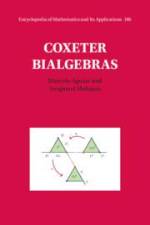
The goal of this monograph is to develop Hopf theory in the setting of a real reflection arrangement. The central notion is that of a Coxeter bialgebra which generalizes the classical notion of a connected graded Hopf algebra. The authors also introduce the more structured notion of a Coxeter bimonoid and connect the two notions via a family of functors called Fock functors. These generalize similar functors connecting Hopf monoids in the category of Joyal species and connected graded Hopf algebras. This monograph opens a new chapter in Coxeter theory as well as in Hopf theory, connecting the two. It also relates fruitfully to many other areas of mathematics such as discrete geometry, semigroup theory, associative algebras, algebraic Lie theory, operads, and category theory. It is carefully written, with effective use of tables, diagrams, pictures, and summaries. It will be of interest to students and researchers alike.
As an excellent source of learning for prescribers specializing in psychiatry, primary care physicians, nurse practitioners, psychologists, and pharmacists, this new edition features approximately 150 questions, divided into ten core areas of psychiatry, helping to identify areas in which you need further study. The majority of questions are new or updated in their explanations and referencing. Each question is followed by an explanation of the answer and a list of references. After completing the questions you will be better able to: diagnose patients presenting with psychiatric symptoms using accepted diagnostic standards and practices; implement evidence-based psychiatric treatment strategies aligned with the patient's recovery goals; integrate recent advances in diagnostic and treatment strategies into clinical practice according to best practice guidelines. This collection has been approved by the American Board of Psychiatry and Neurology as part of a lifelong learning and self-assessment program and as a component of maintenance of certification.
In this book, Stanley E. Porter offers a unique, language-based critique of New Testament theology by comparing it to the development of language study from the Enlightenment to the present. Tracing the histories of two disciplines that are rarely considered together, Porter shows how the study of New Testament theology has followed outmoded conceptual models from previous eras of intellectual discussion. He reconceptualizes the study of New Testament theology via methods that are based upon the categories of modern linguistics, and demonstrates how they have already been applied to New Testament Greek studies. Porter also develops a workable linguistic model that can be applied to other areas of New Testament research. Opening New Testament Greek linguistics to a wider audience, his volume offers numerous examples of the productivity of this linguistic model, especially in his chapter devoted to the case study of the Son of Man.
Generation and Corruption II is concerned with Aristotle's theory of the elements, their reciprocal transformations and the cause of their perpetual generation and corruption. These matters are essential to Aristotle's picture of the world, making themselves felt throughout his natural science, including those portions of it that concern living things. What is more, the very inquiry Aristotle pursues in this text, with its focus on definition, generality, and causation, throws important light on his philosophy of science more generally. This volume contains eleven new essays, one for each of the chapters of this Aristotelian text, plus a general introduction and an English translation of the Greek text. It gives substantial attention to an important and neglected text, and highlights its relevance to other topics of current and enduring interest.
Religion and violence share a complex and enduring history. Viewing violence and religion from an evolutionary perspective situates both within a broader framework of aggressive, affiliative, and signaling behaviors across species. In this work the authors review genetic, epigenetic, and environmental factors that influence violence, distinguishing two types of aggression that differ in underlying physiology and intent. The use of communicative signals to delimit aggression across species is surveyed and the emergence of human symbolic ritual as a signaling system for creating alliances and promoting in-group cooperation is proposed. Using Wallace's typology of religion, this Element explores differences across religious systems in relation to socioecological variation and examines the underlying mechanisms by which religion 'works'. The use of violence as both an 'honest signal' and a mechanism for inculcating religious belief is discussed, and the use of religion to incite, validate, and justify violence is reviewed.
Buddhist origins and discussion of the Buddha's teachings are amongst the most controversial and contested areas in the field. This bold and authoritative book tackles head-on some of the key questions regarding early Buddhism and its primary canon of precepts. Noting that the earliest texts in Pali, Sanskrit and Chinese belong to different Buddhist schools, Roderick S. Bucknell addresses the development of these writings during the period of oral transmission between the Buddha's death and their initial redaction in the first century BCE. A meticulous comparative analysis reveals the likely original path of meditative practice applied and taught by Gautama. Fresh perspectives now emerge on both the Buddha himself and his Enlightenment. Drawing on his own years of meditative experience as a Buddhist monk, the author offers here remarkable new interpretations of advanced practices of meditation, as well as of Buddhism itself. It is a landmark work in Buddhist Studies.
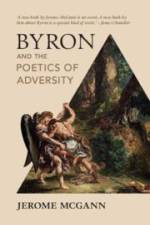
A long line of traditional, often conservative, criticism and cultural commentary deplored Byron as a slipshod poet. This pithy yet aptly poetic book, written by one of the world's foremost Romantic scholars, argues that assessment is badly mistaken. Byron's great subject is what he called 'Cant': the habit of abusing the world through misusing language. Setting up his poetry as a laboratory to investigate failures of writing, reading, and thinking, Byron delivered sharp critical judgment on the costs exacted by a careless approach to his Mother Tongue. Perspicuous readings of Byron alongside some of his Romantic contemporaries - Burns, Blake, Wordsworth, Coleridge, Shelley - reveal Byron's startling reconfiguration of poetry as a 'broken mirror' and shattered lamp. The paradoxical result was to argue that his age's contradictions, and his own, offered both ethical opportunities and a promise of poetic - broadly cultural - emancipation. This book represents a major contribution to ideas about Romanticism.
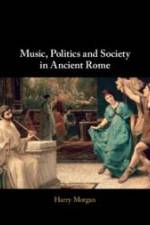
Music was everywhere in ancient Rome. Wherever one went in the sprawling city, the sound of singing and piping, drumming and strumming was never far out of earshot. This book examines the role of music in Roman politics and society, focusing on the period from the Roman conquest of Greece in the second century BCE to the end of the reign of Nero in 68 CE. Drawing on a wide range of literary texts, inscriptions and material artefacts, Harry Morgan uncovers the tensions between elite and popular attitudes towards music and shows how music was exploited as a tool by political leaders and emperors. Far from being a marginal aspect of daily life, music was fundamental to Roman political culture and social relations, shaping debates about class, gender and ethnicity. The book will be of interest to students and scholars of ancient music and Roman history.
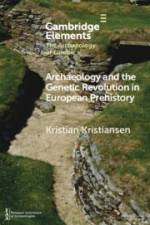
This Element was written to meet the theoretical and methodological challenge raised by the third science revolution and its implications for how to study and interpret European prehistory. The first section is therefore devoted to a historical and theoretical discussion of how to practice interdisciplinarity in this new age, and following from that, how to define some crucial, but undertheorized categories, such as culture, ethnicity and various forms of migration. The author thus integrates the new results from archaeogenetics into an archaeological frame of reference, to produce a new and theoretically informed historical narrative, one that also invites debate, but also one that identifies areas of uncertainty, where more research is needed.
Dismissing industrial policy because 'governments cannot pick winners' is counter-productive. This Element studying selected major innovations illustrates the fact that virtually all major new technologies have been developed by a synergetic cooperation between the public and the private sectors, each doing what it can do best. By examining how R&D is financed, rather than where it takes place, the authors show that the role of the public sector is much more pronounced than is often thought. The nature of the cooperation who does what varies with the nature of each innovation so that simple, one-size-fits-all, rules about what each sector should do are suspect. These results are particularly important because they challenge the scepticism in the United states and elsewhere about the importance of industrial policy, a scepticism that threatens to undermine the long-term, and necessary cooperation, between the public and private sectors in promoting growth-inducing innovations.
Much of the scholarship in development studies focuses on developing countries. However, many of the same issues can be seen in developed countries, where migrants now constitute a sizeable proportion of the poor and politically disenfranchised. In immigrant receiving countries such as Australia, temporary migrants in low-income households are most at risk of poor social and health outcomes. This research explores the experiences of temporary migrant workers from Southeast Asia in Australia, demonstrating that migrant workers, on the whole, live without a political voice or clear pathway to permanent residency and citizenship. The research is informed by Amartya Sen and Martha Nussbaum's theoretical framework of capabilities. One of the most critical capabilities is having a sense of political agency and control over one's environment. Given the significant increase in temporary migration flows around the world, this Element draws attention to the necessity of migrants to be provided with political capabilities.
Race may dominate everyday speech, media headlines and public policy, yet still questions of racialized blackness and whiteness in Shakespeare are resisted. In his compelling new book Ian Smith addresses the influence of systemic whiteness on the interpretation of Shakespeare's plays. This far-reaching study shows that significant parts of Shakespeare's texts have been elided, misconstrued or otherwise rendered invisible by readers who have ignored the presence of race in early modern England. Bringing the Black American intellectual tradition into fruitful dialogue with European thought, this urgent interdisciplinary work offers a deep, revealing and incisive analysis of individual plays, including Othello, The Merchant of Venice and Hamlet. Demonstrating how racial illiteracy inhibits critical practice, Ian Smith provides a necessary anti-racist alternative that will transform the way you read Shakespeare.
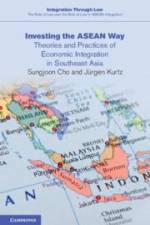
In recent decades, South East Asia has become one of the world's most popular destinations for foreign investment. The member states of the Association of Southeast Asian Nations (ASEAN) have employed varying modalities to pursue first security and then economic cooperation. This book explores regional law and governance in ASEAN through the lens of its regulation of foreign investment. It adopts a new framework to identify the unique ontological autonomy of the ASEAN Investment Regime beyond a simple aggregation of its individual member states. It deploys a sociology-led approach (especially constructivism) and emphasizes ideational factors (such as culture and norms) that guide state actions from within. The book explores the manner in which ASEAN's history and culture have fundamentally shaped its foreign investment policies, leading to outcomes that often depart fundamentally from the external structure and script of Global Investment Law.
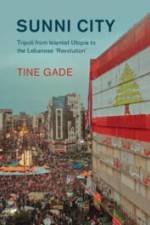
Tripoli, Lebanon's 'Sunni City' is often presented as an Islamist or even Jihadi city. However, this misleading label conceals a much deeper history of resistance and collaboration with the state and the wider region. Based on more than a decade of fieldwork and using a broad array of primary sources, Tine Gade analyses the modern history of Tripoli, exploring the city's contentious politics, its fluid political identity, and the relations between Islamist and sectarian groups. Offering an alternative explanation for Tripoli's decades of political troubles - rather than emphasizing Islamic radicalism as the principal explanation - she argues that it is Lebanese clientelism and the decay of the state that produced the rise of violent Islamist movements in Tripoli. By providing a corrective to previous assumptions, this book not only expands our understanding of Lebanese politics, but of the wider religious and political dynamics in the Middle East.
Hydraulic geometry describes the relations between stable channel characteristics and discharge and adjustments made by a stream in response to changes in river discharge and sediment load. This book introduces hydraulic geometry and discusses different theories and their applications in river engineering, thus providing a comprehensive summary for hydraulic engineers, as well as graduate students and researchers in fluvial geomorphology and hydraulic and environmental engineering. Topics covered include the basis of power form of hydraulic geometry relations, validity and stability of power relations, state and assumption of equilibrium, variability of exponents, variation of channel width and velocity, and the effect of stream size and river channel patterns.
How can researchers study magic without destroying its mystery? Drawing on a collaborative project between the playwright Poppy Corbett, the poet Anna Kisby Compton, and the historian William G. Pooley, this Element presents thirteen tools for creative-academic research into magic, illustrated through case studies from France (1790-1940) and examples from creative outputs: write to discover; borrow forms; use the whole page; play with footnotes; erase the sources; write short; accumulate fragments; re-enact; improvise; use dialogue; change perspective; make methods of metaphors; use props. These tools are ways to 'untell' the dominant narratives that shape stereotypes of the 'witch' which frame belief in witchcraft as ignorant and outdated. Writing differently suggests ways to think and feel differently, to stay with the magic, rather than explaining it away. The Element includes practical creative exercises to try as well as research materials from French newspaper and trial sources from the period.
This book is the first major study of providence in the thought of John Chrysostom, a popular preacher in Syrian Antioch and later archbishop of Constantinople (ca. 350 to 407 CE). While Chrysostom is often considered a moralist and exegete, this study explores how his theology of providence profoundly affected his larger ethical and exegetical thought. Robert Edwards argues that Chrysostom considers biblical narratives as vehicles of a doctrine of providence in which God is above all loving towards humankind. Narratives of God's providence thus function as sources of consolation for Chrysostom's suffering audiences, and may even lead them now, amid suffering, to the resurrection life-the life of the angels. In the course of surveying Chrysostom's theology of providence and his use of scriptural narratives for consolation, Edwards also positions Chrysostom's theology and exegesis, which often defy categorization, within the preacher's immediate Antiochene and Nicene contexts.
This Element examines the concept of moral responsibility as it is used in contemporary philosophical debates and explores the justifiability of the moral practices associated with it, including moral praise/blame, retributive punishment, and the reactive attitudes of resentment and indignation. After identifying and discussing several different varieties of responsibility-including causal responsibility, take-charge responsibility, role responsibility, liability responsibility, and the kinds of responsibility associated with attributability, answerability, and accountability-it distinguishes between basic and non-basic desert conceptions of moral responsibility and considers a number of skeptical arguments against each. It then outlines an alternative forward-looking account of moral responsibility grounded in non-desert-invoking desiderata such as protection, reconciliation, and moral formation. It concludes by addressing concerns about the practical implications of skepticism about desert-based moral responsibility and explains how optimistic skeptics can preserve most of what we care about when it comes to our interpersonal relationships, morality, and meaning in life.
Parceling is pre-modeling strategy to create fewer and more reliable indicators of constructs for use with latent variable models. Parceling is particularly useful for developmental scientists because longitudinal models can become quite complex and even intractable when measurement models of items are fit. In this Element the authors provide a detailed account of the advantages of using parcels, their potential pitfalls, as well as the techniques for creating them for conducting latent variable structural equation modeling (SEM) in the context of the developmental sciences. They finish with a review of the recent use of parcels in developmental journals. Although they focus on developmental applications of parceling, parceling is also highly applicable to any discipline that uses latent variable SEM.
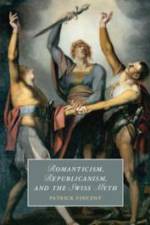
The first detailed treatment of Switzerland in British literature and culture from Joseph Addison to John Ruskin, this book analyzes the aesthetic and political uses of what is commonly called the 'Swiss myth' in the parallel development of Romanticism and liberalism. The myth merged the country's legends going back to the Middle Ages with the Enlightenment image of a happy, free nation of alpine shepherds. Its unique combination of conservative, progressive, and radical associations enabled writers before the French Revolution to call for democratic reforms, whereas those coming after could refigure it as a conservative alternative to French liberte. Integrating intellectual history with literary studies, and addressing a wide range of Romantic-period texts and authors, among them Byron, the Shelleys, Hemans, Scott, Coleridge, and, above all, Wordsworth, the book argues that the myth contributed to the liberal idea of the people as a sublime yet sleeping sovereign.
Moving beyond two main concepts of 'interlingual' and 'intralingual' discrimination, this Cambridge Element addresses the concept of 'translingual discrimination', which refers to inequality based on transnational migrants' specific linguistic and communicative repertoires that are (il)legitimized by the national order of things. Translingual discrimination adds intensity to transnational processes, with transnational migrants showing two main characteristics of exclusion - 'translingual name discrimination' and its associated elements such as 'name stigma' and 'name microaggression'; and 'translingual English discrimination' and its elements such as 'accentism', 'stereotyping' and 'hallucination'. The accumulation of these characteristics of translingual discrimination causes negative emotionality in its victims, including 'foreign language anxiety' and 'translingual inferiority complexes'. Consequently, transnational migrants adopt coping strategies such as 'CV whitening', 'renaming practices', 'purification', and 'ethnic evasion' while searching for translingual safe spaces. The Element concludes with the social and pedagogical implications of translingual discrimination in relation to transnational migrants.
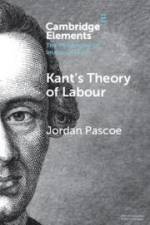
This Element examines Kant's innovative account of labour in his political philosophy and develops an intersectional analysis of Kant. By demonstrating that Kant's analysis of slavery, citizenship, and sex developed in inter-linked ways over several decades, culminating in his development of a 'trichotomy' of Right, the author shows that Kant's normative account of independence is configured through his theory of labour, and is continuous with his anthropological accounts of race and gender, providing a systemic justification for the dependency of women and non-whites embedded in his philosophy of right. By examining Kant's arguments about slavery as intertwined with his account of domestic labour, the author argues that his ultimate rejection of slavery may owe more to his changing conceptualization of labour than to his theory of race, and that his final arguments against slavery rehearse strategies for embedding intersectional patterns of domestic dependence in his account of the rightful state.
In this book, Roberto Di Ceglie offers an historical, theological, and epistemological investigation exploring how commitments to God and/or the good generate the optimum condition to achieve knowledge. Di Ceglie criticizes the common belief that to attain knowledge, one must always be ready to replace one's convictions with beliefs that appear to be proven. He defends a more comprehensive view, historically exemplified by outstanding Christian thinkers, whereby believers are expected to commit themselves to God and to related beliefs no matter how convincing the evidence contradicting such beliefs appears to be. He also argues that both believers and unbelievers can commit themselves to God and the good, respectively, thereby creating a spiritual turn in epistemology that enables them to generate the best possible condition for conducting rational enquiries and discussion.
The letters in Plautus are potent tools for making and thinking about Plautine comedy inside Plautine comedy. Emilia Barbiero demonstrates that Plautus' embedded letters reify the internal performance and evince its theatricality by means of the epistolary medium's script-like ability to precipitate presence in absence. These missives thus serve as emblems of the dramatic script, and in their onstage composition and recitation they cast a portrait of the plays' textual origins into the plays themselves. But by virtue of their inscription with a premise which is identical to that of the comedies they inhabit, the Plautine letters also reproduce the relationship between the playwright's Greek models and his Latin translations: the mirror effect created by a dramatic text inscribed, read and realized within a dramatic text whose plot it also duplicates generates a mise-en-abyme which ultimately serves to contemplate problems of novelty and literary ownership that beset Plautus' literary endeavor.
With their widespread use in the Global South, mobile phones are attracting growing interest from international aid actors and local authorities alike, who are positioning mobile technology as a growth driver and a solution to many social problems. Initiated by giants of the digital industry, these policies are reviving old questions about technological development, the relationship between the market sector and States, and the role of technology in the inequalities between the Global North and Global South. Through a multi-sited ethnography on maternal care in Ghana and India, this Element provides a first-hand look at initiatives that promise to improve poor women's health in the Global South through the use of mobile phones; a field known as Mobile Health or mHealth. Attentive to the way in which these technical objects modify power relations at both international and local levels, this Element also discusses how mHealth transforms care practices and healthcare.
Was Churchill correct when he claimed the Second World War could easily have been prevented if Chamberlain had not appeased Hitler? How far did Churchill and Chamberlain differ on defence and foreign policy? To what extent was Chamberlain responsible for military defeats in 1940? In this new account of appeasement, G. C. Peden addresses these questions and provides a comparative analysis of Chamberlain and Churchill's views on foreign policy and strategic priorities, explores what deterrence and appeasement meant in the military, economic and political context of the 1930s and where Chamberlain and Churchill agreed and disagreed on how best to deter Germany. Beginning in 1931 when Chamberlain became Chancellor of the Exchequer, this book explores the evolution of British policy towards Germany through to the Munich Agreement and its aftermath within the context of Britain's power to influence international affairs in the 1930s and of contemporary intelligence.
This Element studies the causes and the consequences of modern imperialism. The focus is on British and US imperialism in the nineteenth and the twentieth centuries respectively. The dynamics of both formal and informal empires are analyzed. The argument is that imperialism is moved mainly by the desire of major powers to enhance their national economic prosperity. They do so by undermining sovereignty in peripheral countries and establishing open economic access. The impact on the countries of the periphery tends to be negative. In a world of states, then, national sovereignty is an economic asset. Since imperialism seeks to limit the exercise of sovereign power by subject people, there tends to be an inverse relationship between imperialism and development: the less control a state has over its own affairs, the less likely it is that the people of that state will experience economic progress.
Abonner på vårt nyhetsbrev og få rabatter og inspirasjon til din neste leseopplevelse.
Ved å abonnere godtar du vår personvernerklæring.