
























Gjør som tusenvis av andre bokelskere
Abonner på vårt nyhetsbrev og få rabatter og inspirasjon til din neste leseopplevelse.
Ved å abonnere godtar du vår personvernerklæring.Du kan når som helst melde deg av våre nyhetsbrev.

Recent research in neurochemistry has shown there to be a number of chemical compounds that are implicated in the patterns of lust, attraction, and attachment that undergird romantic love. For example, there is evidence that the phenomenon of attachment is associated with the action of oxytocin and vasopressin. There is therefore some reason to suppose that patterns of lust, attraction, and attachment could be regulated via manipulation of these substances in the brain: in other words, by their use as 'love drugs'. A growing bioethical literature asks searching questions about this prospect, and especially about the use of such drugs to enhance or reignite attachment in flagging relationships. This Element examines some of the central arguments on the topic, and sounds a note of caution. It urges that there are reasons to think the states of attachment produced or facilitated by the use of such drugs would not be desirable.
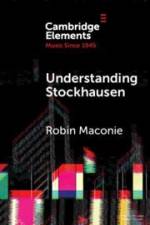
This collection of essays addresses technical developments in telecommunications and sound recording that have guided the direction of musical aesthetics in the post-1950 era. Such information is readily available online but may appear counterintuitive to many who find its priorities difficult to grasp from a musical perspective. The author hopes to draw attention to the place of ideas of communication and flight in western tradition. This Element begins with Varese and his 'noble noise', traverses the arrival of Information Theory and its influence, examples of early computer music, and ends with a defence of the sublime logic of Stockhausen's singing helicopters and tornados.
Buddhism and Comparative Constitutional Law offers the first comprehensive account of the entanglements of Buddhism and constitutional law in Sri Lanka, Myanmar, Thailand, Cambodia, Vietnam, Tibet, Bhutan, China, Mongolia, Korea, and Japan. Bringing together an interdisciplinary team of experts, the volume offers a complex portrait of "e;the Buddhist-constitutional complex,"e; demonstrating the intricate and powerful ways in which Buddhist and constitutional ideas merged, interacted and co-evolved. The authors also highlight the important ways in which Buddhist actors have (re)conceived Western liberal ideals such as constitutionalism, rule of law, and secularism. Available Open Access on Cambridge Core, this trans-disciplinary volume is written to be accessible to a non-specialist audience.
Caste, Knowledge, and Power investigates the transformations of caste practices in twentieth century India and the role of knowledge in this transformation and in the continuing of these oppressive practices. The author situates the domination and subordination in the domain of knowledge production in India not just in the emergence of colonial modernity but in the formation of colonial-Brahminical modernity. It engages less with the marginalization of the oppressed castes in the modern institutions of knowledge production which has already been discussed widely in the scholarship. Rather, the author focuses on how the modern colonial-Brahminical concept of knowledge invalidated many other forms of knowing practices and how historically caste domination transformed from the claims of superiority in acharam (ritual hierarchy) to the claims of superiority in possession of knowledge.
This Element introduces Kongish as a translingual and multimodal urban dialect emerging in Hong Kong in recent years and still in the making. Through the lens of translanguaging and linguistic commodification, and using the popular Facebook page Kongish Daily as a case in point, the study outlines the semiotic profile of Kongish. It examines how Kongish communications draw on a full range of performative resources, thriving on social media affordances and a creative-critical ethos. The study then turns to look at how Kongish is commoditized in a marketing context in the form of playful epithets emplaced on locally designed products, demonstrating how the urban dialect is not merely a niche medium of communication on social media, but has become integral to commercial, profit-driven practices. The Element concludes by challenging the proposition that Kongish must be considered a 'variety' of English, arguing instead that it is an innominate term embodying translanguaging-in-action.
Most systems involved in a chemical process plant are interactive multivariable systems, to control which, the transfer function matrix model is required. This lucid book considers the identification and control of such systems. It discusses open loop and closed loop identification methods, as well as the design of multivariable controllers based on steady state gain matrix. Simple methods for designing controllers based on transfer function matrix model have been reviewed. The design of controllers for non-square systems, and closed loop identification of multivariable unstable systems by the optimization method are also covered. Several simulation examples and exercise problems at the end of each chapter further help the reader consolidate the knowledge gained. This book will be useful to any engineering student, researcher or practitioner who works with interactive, multivariable control systems.
The book studies the social production of motion in a capitalist urban context. In the city of capital, motion refers to a fetish. The bourgeois order posits motion as a metaphor for energy, positivity, and progress - a norm - and obstruction (motion's dialectical opposite) as delinquency. The book uncovers the social tectonics of spatial mobilization and thus demystifies motion. Who and what set spaces on the move? How did various classes of city dwellers activate, experience, and negotiate it? Streets in Motion develops an approach to urban history by theorizing and historicizing the 'street' as an apparatus of city-making and subject formation. It works at two registers - a local history of Calcutta in colonial and post-colonial periods, and a theorizing of the logistical and political-cultural centrality of the street within this rubric. It is argued that the street is politics in as much as politics is the production of space.
This book presents urban transition experiences over nearly three decades in Bangalore based on the narratives of the city's street-based sex workers. Sex workers - female, male, and transgender - have been omnipresent in Bangalore's streets for decades. However, despite being blacklisted as 'undesirable' and hazards to the 'ideal public', they have their own unique imaginaries and narratives of the city and its mutations. In mapping out their spatial and social ecosystems and experiences with technology, this book redraws, rewrites, and relooks at a city and its transformations from their perspectives. The analysis of their experience is anchored to concepts around neoliberal urbanism, gender, labour informality, and the politics of technology. The authors take an unconventional journey through their spaces, comrades, and battles to announce and affirm their individuality and agency through their empowerment strategies, and through their struggles to reclaim their spaces and assert their identities as informal workers and legitimate citizens of the city.
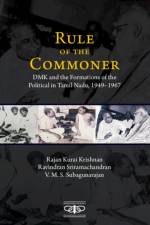
The Dravida Munnetra Kazhagam (DMK) has been singular in heralding and establishing a firm regional polity among the Indian states after the Indian Union was inaugurated as a republic. Academic scholarship has often treated the DMK as a Tamil nationalist or ethno-nationalist formation without conceptual clarity or critical insight. Rule of the Commoner demonstrates with persuasive evidence that the DMK appealed to a federalist and not nationalist imagination. The DMK's combining of the non-Brahmin Dravidian identity and allegiance to Tamil language led to a counter hegemonic formation of the plebes and left populism. Drawing on Ernesto Laclau, the book argues that the DMK achieved the construction of a people as Dravidian-Tamil, with Tamil being the empty signifier of the social whole, Brahmin vs. non-Brahmin divide functioning as the internal frontier leading to the formations of the political. It elaborates the conceptual scheme under the three rubrics of Ideation, Imagination and Mobilization.
Analog and digital electronics are an important part of most modern courses in physics. Closely mapped to the current UGC CBCS syllabus, this comprehensive textbook will be a vital resource for undergraduate students of physics and electronics. The content is structured to emphasize fundamental concepts and applications of various circuits and instruments. A wide range of topics like semiconductor physics, diodes, transistors, amplifiers, Boolean algebra, combinational and sequential logic circuits, and microprocessors are covered in lucid language and illustrated with many diagrams and examples for easy understanding. A diverse set of questions in each chapter, including multiple-choice, reasoning, numerical, and practice problems, will help students consolidate the knowledge gained. Finally, computer simulations and project ideas for projects will help readers apply the theoretical concepts and encourage experiential learning.
This volume examines the phenomenon of contemporary Hindu nationalism or 'new Hindutva' that is presently the dominant ideological and political-electoral formation in India. There is a rich body of work on Hindu nationalism, but its main focus is on an earlier moment of insurgent movement politics in the 1980s and 1990s. In contrast, new Hindutva is a governmental formation that converges with wider global currents and enjoys mainstream acceptance. To understand these new political forms and their implications for democratic futures, a fresh set of reflections is in order. This book approaches contemporary Hindutva as an example of a democratic authoritarianism or an authoritarian populism, a politics that simultaneously advances and violates ideas and practices of popular and constitutional democracy.
This volume examines the political economy of neoliberalism in India and offers cases of resistance and alternative organizing. It departs from existing conversations that focus on the state's policies and decisions, and focuses on the violence unleashed by corporate forces. It should be of interest to anyone curious about the collapse of crucial infrastructures such as healthcare and the news media, or the rhetoric of corporate social responsibility, and why there are people's movements and organizations rising from different geographies. While offering in-depth case studies of oraganisations within India, such as The Wire, The People's Archive of Rural India, Kudumbashree, and Left Word Books, it also informs conversations across the world on alternative forms of organizing. These accounts have two imperatives: first, to train our attention on corporations and where capitalism produces its vast waste lands. Second, to imagine the possibilities of another world. The contributors to this volume write to resist the status quo, explore alternative ways of organizing, re-imagine social relations, and rekindle hope.
Continuous Groups for Physicists is written for graduate students as well as researchers working in the field of theoretical physics. The text has been designed uniquely and it balances coverage of advanced and non-standard topics with an equal focus on the basic concepts for a thorough understanding. The book describes the general theory of Lie groups and Lie algebras, the passage between them, and their unitary/ Hermitian representations in the quantum mechanical setting. The four infinite classical families of compact simple Lie groups and their representations are covered in detail. Readers will benefit from the discussions on topics like spinor representations of real orthogonal groups, the Schwinger representation of a group, induced representations, systems of coherent states, real symplectic groups important in quantum mechanics, Wigner's theorem on symmetry operations in quantum mechanics, ray representations of Lie groups, and groups associated with non-relativistic and relativistic space-time.
Designing Indicators for a Plural Legal World engages with the role of quantification in law, and its impact on law and development and judicial reform. It seeks to examine how different institutions shape and influence the making and use of legal indicators globally. This book sheds light on the limitations of existing quantification tools, which measure rule of law due to their lack of engagement with contexts and countries in the Global South. It offers an alternative framework for measurement, which moves away from an institutional look at rule of law, to a bottom up, user centered approach that places importance on the lives that people lead, and the challenges that they face. In doing so, it offers a way of thinking about access to justice in terms of human capabilities.
The concept of the early life developmental origins of health and disease (DOHaD) in adults has stimulated a new approach to understanding disease trajectories, with major public health implications. Indeed, the principle of the 'lifecourse of disease' now influences health policies internationally. Environmental influences during pregnancy and early life that affect lifelong health are well documented, but there is a new focus on the preconception period and the significance of paternal health on the fetus. This fully revised second edition highlights scientific and clinical advances in the field, exploring new understanding of mechanisms such as epigenetics and the increasingly recognised role of external influences, including pollution. The book is structured logically, covering environment, clinical outcomes, mechanisms of DOHaD, interventions throughout the lifespan and finally implications for public health and policy. Clinicians and scientists alike will improve their understanding of the developmental origins of health and disease with this essential text.
Data science is the foundation of our modern world. It underlies applications used by billions of people every day, providing new tools, forms of entertainment, economic growth, and potential solutions to difficult, complex problems. These opportunities come with significant societal consequences, raising fundamental questions about issues such as data quality, fairness, privacy, and causation. In this book, four leading experts convey the excitement and promise of data science and examine the major challenges in gaining its benefits and mitigating its harms. They offer frameworks for critically evaluating the ingredients and the ethical considerations needed to apply data science productively, illustrated by extensive application examples. The authors' far-ranging exploration of these complex issues will stimulate data science practitioners and students, as well as humanists, social scientists, scientists, and policy makers, to study and debate how data science can be used more effectively and more ethically to better our world.
Much has been written on the relationship between the nature of temporal reality and the God of Classical Theism. Despite the popularity of this general area, what the physics and metaphysics of spacetime might mean for specific theological doctrines has received less attention. Recently, however, interest in this rich and dynamic interplay of ideas has seen rapid growth. This Element provides both an introduction to the physics and metaphysics of spacetime and a jumping-off point for understanding how these can - and in fact should - inform both Christian theology and the philosophy of religion more generally. The author will argue that the nature of spacetime raises particular and pressing problems for Christianity, specifically the interrelated doctrines of salvation and eschatology, and explore whether adequate solutions to these problems are available.
How is God related to the state? Could the existence of robust political authority somehow be evidence for God? In this Element, the author explores these questions, pro and con, looking at various major positions. At the start of the volume, they defend a political argument for God's existence. Having motivated a theistic account of political authority, they then discuss the role God plays or could play in classical liberalism, Marxism, and postliberalism. While they sympathetically survey each political theory in turn, at the end of each section, they raise various objections to the view being discussed. Finally, at the end of the Element, the author articulates desiderata for theists who are looking for political frameworks.
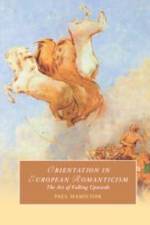
Exploring the experiments in individual and national self-consciousness conducted during the Romantic period, this essential comparative study of European literature, philosophy and politics makes original and often surprising connections and contrasts to reveal how personal and social identities were re-orientated and disorientated from the French Revolution onwards. Reviving a contested moment in the history of aesthetic theory, this study shows how the growing awareness of irresolution in Kant's third Kritik allowed Romantic writers to put the aesthetic to radical uses not envisaged by its parent philosophy. It also recounts how they would go on to force philosophy to revise received notions of authority, empowering women and subordinated ethnic groups to re-orientate existing hierarchies. The sheer range and variety of writers covered is testament both to the breadth of writing that Kant's philosophy so rashly legitimated and to the wider importance of philosophy to the understanding of Romantic literature.
'Orthodoxy' and 'heresy' are essential categories by which the 'Catholic' theological tradition evaluates the (im)propriety of various beliefs and practices relative to its non-negotiable commitments. This Element sketches moments in the development of Christian 'orthodoxy' and 'heresy' in time, as much in the Old and New Testament as in the history of the Church. It also touches upon the vexed theological-methodological question of the relation between Scripture and ecclesial Tradition before concluding with a critique of the 'Catholic' tradition's preoccupation with 'orthodoxy' and 'heresy' in favor of a Christian theology 'without anathemas' that is concerned only for truth.
Thomas Morel tells the story of subterranean geometry, a forgotten discipline that developed in the silver mines of early modern Europe. Mining and metallurgy were of great significance to the rulers of early modern Europe, required for the silver bullion that fuelled warfare and numerous other uses. Through seven lively case studies, he illustrates how geometry was used in metallic mines by practitioners using esoteric manuscripts. He describes how an original culture of accuracy and measurement paved the way for technical and scientific innovations, and fruitfully brought together the world of artisans, scholars and courts. Based on a variety of original manuscripts, maps and archive material, Morel recounts how knowledge was crafted and circulated among practitioners in the Holy Roman Empire and beyond. Specific chapters deal with the material culture of surveying, map-making, expertise and the political uses of quantification. By carefully reconstructing the religious, economic and cultural context of mining cities, Underground Mathematics contextualizes the rise of numbered information, practical mathematics and quantification in the early modern period.
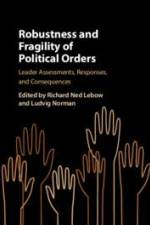
This volume focuses on the assessments political actors make of the relative fragility and robustness of political orders. The core argument developed and explored throughout its different chapters is that such assessments are subjective and informed by contextually specific historical experiences that have important implications for how leaders respond. Their responses, in turn, feed into processes by which political orders change. The volume's contributions span analyses of political orders at the state, regional and global levels. They demonstrate that assessments of fragility and robustness have important policy implications but that the accuracy of assessments can only be known with certainty ex post facto. The volume will appeal to scholars and advanced students of international relations and comparative politics working on national and international orders.
Does democratization lead to more meritocracy in the civil service? The Element argues that electoral accountability increases the value of competence over personal loyalty in the civil service. While this resembles an application of merit principles, it does not automatically reduce patronage politics or improve public goods provision. Competent civil servants are often used to facilitate the distribution of clientelistic goods at mass scale to win competitive elections. The selection of competent but less loyal civil servants requires the increased use of control mechanisms, like the timing of promotions, to ensure their compliance. The Element tests these claims using novel micro-level data on promotions in Indonesia's civil service before and after democratization in 1999. The Element shows that national- and local-level elections led to increased promotion premiums for educated civil servants, and simultaneously generated electoral cycles in the timing of promotions, but did little to improve public goods provision.
Cinderella's Glass Slipper studies Renaissance material cultures through the literary prism of fairy-tale objects. The literary fairy-tale first arose in Renaissance Venice, originating from oral story-telling traditions that would later become the Arabian Nights, and subsequently in the Parisian salons of Louis XIV. Largely written by, for, and in the name of women, these literary fairy-tales took a lightly comic view of life's vicissitudes, especially female fortune in marriage. Connecting literary representations of bridal goods - dress, jewellery, carriages, toiletries, banqueting and confectionary foods - to the craft histories of their making, this Element offers a newly-contextualised socio-economic account of Renaissance luxe, from architectural interiors to sartorial fashioning and design. By coupling Renaissance luxury wares with their fairy-tale representation, it locates the recherche materialities of bridal goods - gold, silver, diamonds and silk - within expanding colonialist markets of a newly-global early modern economy in the age of discovery.
This Element follows the development of humans in constantly changing climates and environments from Homo erectus 1.9 million years ago, to fully modern humans who moved out of Africa to Europe and Asia 70,000 years ago. Biosemiotics reveals meaningful communication among coevolving members of the intricately connected life forms on this dynamic planet. Within this web hominins developed culture from bipedalism and meat-eating to the use of fire, stone tools, and clothing, allowing wide migrations and adaptations. Archaeology and ancient DNA analysis show how fully modern humans overlapped with Neanderthals and Denisovans before emerging as the sole survivors of the genus Homo 35,000 years ago. Their visions of the world appear in magnificent cave paintings and bone sculptures of animals, then more recently in written narratives like the Gilgamesh epic and Euripides' Bacchae whose images still haunt us with anxieties about human efforts to control the natural world.
John Maynard Keynes died in 1946 but his ideas and his example remain relevant today. In this distinctive new account, Peter Clarke shows how Keynes's own career was not simply that of an academic economist, nor that of a modern policy advisor. Though rightly credited for reshaping economic theory, Keynes's influence was more broadly based and is assessed here in a rounded historical, political and cultural context. Peter Clarke re-examines the full trajectory of Keynes's public career from his role in Paris over the Versailles Treaty to Bretton Woods. He reveals how Keynes's insights as an economic theorist were rooted in his wider intellectual and cultural milieu including Bloomsbury and his friendship with Virginia Woolf as well as his involvement in government business. Keynes in Action uncovers a much more pragmatic Keynes whose concept of 'truth' needs to be interpreted in tension with an acknowledgement of 'expediency' in implementing public policy.
Class, Whiteness, and Southern Literature explores the role that representations of poor white people play in shaping both middle-class American identity and major American literary movements and genres across the long twentieth century. Jolene Hubbs reveals that, more often than not, poor white characters imagined by middle-class writers embody what better-off people are anxious to distance themselves from in a given moment. Poor white southerners are cast as social climbers during the status-conscious Gilded Age, country rubes in the modern era, racist obstacles to progress during the civil rights struggle, and junk food devotees in the health-conscious 1990s. Hubbs illuminates how Charles Chesnutt, William Faulkner, Flannery O'Connor, Dorothy Allison, and Barbara Robinette Moss swam against these tides, pioneering formal innovations with an eye to representing poor white characters in new ways.
This volume unites established authors and rising young voices in philosophical theology and philosophy of religion to offer the single most wide-ranging examination of theological determinism-in terms of both authors represented and issues investigated-published to date. Fifteen contributors present discussions about theological (or divine) determinism, the view that God determines everything that occurs in the world. Some authors provide arguments in favor of this position, while others provide considerations against it. Many contributors investigate the relationship between theological determinism and other philosophical issues (the principle of sufficient reason; the compatibility of determinism and free will; moral luck), theological doctrines (creation ex nihilo; divine forgiveness; the inevitability of sin; the unity of Christ's will with God's), or moral attitudes and practices (trusting God; resenting the ill-will of others; resisting evil). This book is essential reading for all those interested in the relationship between theological determinism and philosophical thought.
In this book, Paul Moser explains how self-sacrificial righteousness of a reparative kind is at the heart of Paul's gospel of God. He also shows how divine self-sacrifice authenticates that gospel via human reciprocity toward God in reconciliation. A basis for this reciprocity lies in a teaching of ancient Judaism that humans are to reciprocate toward God for the sake of an interpersonal relationship that is righteous and reconciled through voluntary self-sacrifice to God. Moser demonstrates that Paul's gospel calls for faith, including trust, in God as reciprocity in human self-sacrifice toward God. Although widely neglected by interpreters, this theme brings moral and evidential depth to Paul's good news of reparative redemption from God. Moser's study thus enables a new understanding of some of the controversial matters regarding Paul's message in a way that highlights the coherence and profundity of his message.
This Element offers a broad perspective on responsibility for health. This includes responsibilities in the prevention of disease and accidents, and in the creation of healthcare for all. The professional responsibilities of physicians and nurses are explored, and so are the responsibilities that we all have for our own health. Many of the central problems in healthcare ethics are discussed from a responsibility perspective, for instance paternalism, informed consent, evidence-based medicine, alternative medicine, and the use of artificial intelligence in healthcare. In order to perform this analysis, conceptual tools for responsibility analysis are provided, such as the distinction between blame responsibility and task responsibility and various notions of causality that are relevant for our understanding of responsibility.
Abonner på vårt nyhetsbrev og få rabatter og inspirasjon til din neste leseopplevelse.
Ved å abonnere godtar du vår personvernerklæring.