






















Gjør som tusenvis av andre bokelskere
Abonner på vårt nyhetsbrev og få rabatter og inspirasjon til din neste leseopplevelse.
Ved å abonnere godtar du vår personvernerklæring.Du kan når som helst melde deg av våre nyhetsbrev.

Scores of women feel excluded from Shakespeare Studies because the sound of this field (whether it is academics giving papers at conferences or actors sharing performance insights) is predominantly male. In contrast, women are well represented in Shakespeare podcasts. Noting this trend, this Element envisions and urges a feminist podagogy which entails utilizing podcasts for feminism in Shakespeare pedagogy. Through detailed case studies of teaching women characters in Hamlet, A Winter's Tale, The Merchant of Venice, and As You Like It, and through road-tested assignments and activities, this Element explains how educators can harness the functionalities of podcasts, such as amplification, archiving, and community building to shape a Shakespeare pedagogy that is empowering for women. More broadly, it advocates paying greater attention to the intersection of Digital Humanities and anti-racist feminism in Shakespeare Studies.
As a legacy of the Habsburg Empire, performances of Jacques Offenbach's musical stage works played an important role in Budapest musico-theatrical life in the twentieth century. However, between the collapse of the Empire and the 1956 anti-Soviet revolution, political ideologies strongly influenced the character of these productions, when they took place. Public performances of Offenbach's works were prohibited between 1938 and 1945 and they became the bases for propagandadistic adaptations in the 1950s. This element explores how the local operetta tradition and the vogue of operettas featuring composers as characters during the interwar period were also important factors in how Offenbach's stage works were performed in mid-twentieth century Budapest in versions that sometimes bore little resemblance to the originals.
The distinction between sense and nonsense is central to Wittgenstein's philosophy. It is at the basis of his conception of philosophy as a struggle against illusions of sense generated by misunderstandings of the logic of our language. Moreover, it informs the notions of "e;grammar"e; (in the later work) and "e;logical syntax"e; (in the early work), whose investigation serves to clear up those misunderstandings. This Element contrasts two exegetical approaches: one grounding charges of nonsensicality in a theory of sense specifying criteria that are external to the linguistic performance under indictment; and one rejecting any such theory. The former pursues the idea of a nonsensicality test; the latter holds that illusions of sense can only be overcome from within, through the very capacity of which they constitute defective exercises. The Element connects the two approaches to opposite understandings of Wittgenstein's conception of language, and defends a version of the second approach.
Epidemic Cities provides an overview of the history of epidemics through a particular focus on a range of cities in different regions of the world. The dual focus on both epidemics and specific cities provides an unusual perspective on global history: the analysis of globally circulating epidemics enables reconstructing a variety of wide-reaching entanglements, on the one hand. On the other hand, the concentration with specific urban settings highlights differences and the unevenness engendered by global entanglements. After an introduction concerning the history of the relationship between medicine, epidemics, and cities, the book focuses on the history of three epidemic diseases and how they affected Paris, Buenos Aires, Hong Kong, Bombay, and Baltimore. The timings of major pandemics punctuate the structure of the book: cholera pandemics from the 1830s to the late nineteenth century, bubonic plague at the turn of the twentieth century, and finally tuberculosis until the mid-twentieth century.
The question of what Wittgenstein meant by 'forms of life' has attracted a great deal of attention in the literature, yet it is an expression that Wittgenstein himself employs on only a relatively small number of occasions, and that he does not explicitly define. This Element gives a description of this concept that also explains Wittgenstein's reluctance to say much about it. A short historical introduction examines the origins and uses of the term in Wittgenstein's time. The Element then presents a survey of Wittgenstein's employment of it, and an overview of the literature. Finally, the Element offers a methodological reading of this notion, interpreting it as a conceptual tool in Wittgenstein's wider inquiries into the workings of our language.
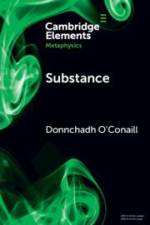
Substance has long been one of the key categories in metaphysics. This Element focuses on contemporary work on substance, and in particular on contemporary substance ontologies, metaphysical systems in which substance is one of the fundamental categories and individual substances are among the basic building blocks of reality. The topics discussed include the different metaphysical roles which substances have been tasked with playing; different critieria of substancehood (accounts of what is it to be a substance); arguments for and against the existence of substances; and different accounts of which entities, if any, count as substances.
The very idea of mental illness is contested. Given its differences from physical illnesses, is it right to count it, and particular mental illnesses, as genuinely medical as opposed to moral matters? One debate concerns its value-ladenness, which has been used by anti-psychiatrists to argue that it does not exist. Recent attempts to define mental illness divide both on the presence of values and on their consequences. Philosophers and psychiatrists have explored the nature of the general kinds that mental illnesses might comprise, influenced by psychiatric taxonomies such as the Diagnostic and Statistical Manual and the International Classification of Diseases, and the rise of a rival biological 'meta-taxonomy': the Research Domain Criteria (RDoC). The assumption that the concept of mental illness has a culturally invariant core has also been questioned. This Element serves as a guide to these contested debates.
This Element examines the contemporary literature on essence in connection with the traditional question whether essence lies within or without our world. Section 1 understands this question in terms of a certain distinction, the distinction between active and latent facts. Section 2 steps back to investigate the connections between essence and other philosophical concepts. Section 3 brings the results of this investigation to bear on the traditional question, sketching an argument from the premise that essentialist facts are explained by the origins of things to the conclusion that such facts are active.
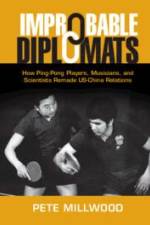
In 1971, Americans made two historic visits to China that would transform relations between the two countries. One was by US official Henry Kissinger; the other, earlier, visit was by the US table tennis team. Historians have mulled over the transcripts of Kissinger's negotiations with Chinese leaders. However, they have overlooked how, alongside these diplomatic talks, a rich program of travel and exchange had begun with ping-pong diplomacy. Improbable Diplomats reveals how a diverse cast of Chinese and Americans - athletes and physicists, performing artists and seismologists - played a critical, but to date overlooked, role in remaking US-China relations. Based on new sources from more than a dozen archives in China and the United States, Pete Millwood argues that the significance of cultural and scientific exchanges went beyond reacquainting the Chinese and American people after two decades of minimal contact; exchanges also powerfully influenced Sino-American diplomatic relations and helped transform post-Mao China.
Sexuality and gender diversity rights in Southeast Asia are deeply controversial and vigorously contested. Debate and protest have been accompanied by both legislative reform and discriminatory violence. These contradictory dynamics are occurring at a time when the international human rights regime has explicitly incorporated a focus on the prevention of violence and discrimination in relation to sexuality and gender diversity. This Element focusses on the need for such rights. This Element explores the burgeoning of civil society organisations engaged in an emancipatory politics inclusive of sexuality and gender diversity, utilising rights politics as a platform for visibility, contestation and mobilisation. This Element focusses on the articulation of political struggle through a shared set of rights claims, which in turn relates to shared experiences of violence and discrimination, and a visceral demand and hope for change.
Good leadership in medicine is crucial, but unfortunately, often woefully inadequate. Those chosen to lead often have limited experience in leadership themselves, or worse, are appointed because of achievements that have nothing to do with their ability to lead. Serving as a guide for those in, or considering, leadership positions in medicine, this book demonstrates how to play to one's strengths and effectively recognise and overcome weaknesses. Describing how to form a functional team, and align your goals with those of upper leadership, advice is applicable to all disciplines and hierarchy structures. The author, David Greer, is a renowned clinician and educator, and has held department chair positions in several prestigious institutions, positioning him perfectly to educate on the qualities of a successful leader. Readers will learn how to work within a team, manage unforeseen crises and to embrace mistakes as opportunities for growth.
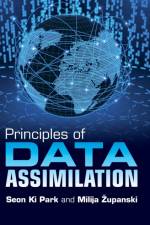
Data assimilation is theoretically founded on probability, statistics, control theory, information theory, linear algebra, and functional analysis. At the same time, data assimilation is a very practical subject, given its goal of estimating the posterior probability density function in realistic high-dimensional applications. This puts data assimilation at the intersection between the contrasting requirements of theory and practice. Based on over twenty years of teaching courses in data assimilation, Principles of Data Assimilation introduces a unique perspective that is firmly based on mathematical theories, but also acknowledges practical limitations of the theory. With the inclusion of numerous examples and practical case studies throughout, this new perspective will help students and researchers to competently interpret data assimilation results and to identify critical challenges of developing data assimilation algorithms. The benefit of information theory also introduces new pathways for further development, understanding, and improvement of data assimilation methods.
This Element analyzes the features of current feminist movements in Latin America and their responses to conservative reactions. For this, it focuses on the pro-choice movement vis-a-vis the anti-abortion countermovement in Mexico and Brazil. It offers a relational approach embracing the dynamics within the feminist field and between feminism and the state to capture the movements' potential effects. First, the Element proposes the concept of nested feminist networks, which comprises of three dimensions revealing the plurality of the movement across intersectional and sexual identity issues (horizontal), its relationship with the multifaceted state (vertical), and the intermediation of political parties and participatory institutions in this relationship (intermediary). Second, it argues that nested networks allow feminists to enable policies and block actions from conservatives. In sum, it explores how feminists, leveraging their plurality and connection with the state, can counter conservative attacks.
This book is the first ever written on English marine conservation regulation from a socio-legal perspective. The monograph presents an in-depth analysis of key aspects of Marine Protected Areas regulation in England, offering the reader access to an under-investigated field. Such regulatory mapping is complemented by an interdisciplinary treatment of the subject exploring the relationship between people and marine parks through central themes in environmental social sciences and regulatory theory, namely space, rationalisation, democracy and adaptation. Thus, the book is of interest to environmental lawyers and regulatory scholars but also to human geographers, environmental sociologists and political scientists. As the book provides critical reflections on current legal and regulatory structures, it contains valuable insights for policymakers and regulators. The book has a strong methodological basis drawing on in-depth desk-based research, complemented by primary qualitative research, conducted over a number of years.
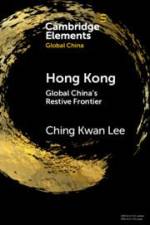
How did Hong Kong transform itself from a 'shoppers' and capitalists' paradise' into a 'city of protests' at the frontline of a global anti-China backlash? CK Lee situates the post-1997 China-Hong Kong contestation in the broader context of 'global China.' Beijing deploys a bundle of power mechanisms - economic statecraft, patron-clientelism, and symbolic domination - around the world, including Hong Kong. This Chinese power project triggers a variety of countermovements from Asia to Africa, ranging from acquiescence and adaptation to appropriation and resistance. In Hong Kong, reactions against the totality of Chinese power have taken the form of eventful protests, which, over two decades, have broadened into a momentous decolonization struggle. More than an ideological conflict between a liberal capitalist democratizing city and its Communist authoritarian sovereign, the Hong Kong story, stunning and singular in its many peculiarities, offers lessons about China as a global force. This title is also available as Open Access on Cambridge Core.
In less than half a century (1978-2020), China has transformed itself from a country that barely fed itself to a powerful player in the global food system, characterized by massive food imports, active overseas agricultural engagement, and the global expansion of Chinese agribusiness. This Element offers a nuanced analysis of China's global food strategy and its impacts on food security and the international agri-food order. To feed a population of 1.4 billion, China actively seeks overseas agri-food resources whilst maintaining a high level of domestic food production. This strategy gives China an advantageous position in the global food system, but it also creates contradictions and problems within and beyond the country. This could potentially worsen global food insecurity in the long term.
Multiple pregnancies are associated with higher risks for both mother and babies. Women with multiple pregnancies have an increased risk of miscarriage, anemia, hypertensive disorders, haemorrhage, and postnatal illness. These pregnancies are more likely to need an operative delivery, and maternal mortality is generally 2.5 times that of singleton births. Fetuses are at increased risk for anatomic and genetic anomalies, growth abnormalities, prematurity, and several physiological problems related to monochorionicity. This book provides a much needed, up-to-date guide to the management of multiple pregnancies. Presented with a uniform approach to all chapters, information is easily navigable, evidence-based, and highly practical. Heavily illustrated, particularly with ultrasound images - the cornerstone of management of multiple pregnancies - this book will appeal to obstetricians and specialists in maternal-fetal medicine, midwives and ultrasonographers and will improve outcomes for mothers and babies.
This Element explores the life and work of Grazyna Bacewicz (1909-1969), as a composer, violinist, pianist and author. She lived a remarkable life in Poland, navigating the complex world of Polish communist society and Soviet dominance after the Second World War, and brought Polish music to wider European attention. The Element describes the historical context of her life, her major achievements, and the language and development of her compositions, which attracted notable interest in Polish musical life. She wrote a wide range of pieces, making a significant contribution to the string repertoire, with important String Quartets and violin works. In her sixty years she achieved impressive triumphs as a women composer, served the Polish Composers Union and often judged major international competitions.
This Element focuses on English-Medium instruction (EMI), an educational approach that is spreading widely and rapidly in higher education institutions throughout the world because it is regarded as a lynchpin of the internationalisation process. The main aim of the Element is to provide critical insights into EMI implementation and the results obtained so far in diverse university contexts. After defining EMI and analysing the rapid extension it has experienced, the volume tackles issues such as stakeholders' views on how EMI programmes are being implemented, the impact of teaching and learning both content and language in a foreign language, translanguaging practices in English-medium lectures, and how assessment has hitherto been addressed. Each section aims to bring to light new avenues for research. The Element wraps up with a description of the many challenges ahead.
Modern Physics intertwines active learning pedagogy with the material typically covered in an introductory survey, from the basics of relativity and quantum mechanics through recent developments in particle physics and cosmology. The flexible approach taken by the authors allows instructors to easily incorporate as much or as little active learning into their teaching as they choose. Chapters are enhanced by 'Discovery' and 'Active Reading' exercises to guide students through key ideas before or during class, while 'ConcepTests' help check student understanding and stimulate classroom discussions. Each chapter also includes extensive assessment material, with a range of basic comprehension questions, drill and practice calculations, computer-based problems, and explorations of advanced applications. A test bank and interactive animations as well as other support for instructors and students are available online. Students are engaged by an accessible and lively writing style, thorough explanations, 'Math Interludes' which account for varying levels of skill and experience, and advanced topics to further pique their interest in physics.
This Element examines the early years of British Young Adult (YA) publishing at three strategic publishing houses: Penguin, Heinemann and Macmillan. Specifically, it discusses their YA imprints (Penguin Peacocks, Heinemann New Windmills and Macmillan Topliners), all created at a time when the population of Britain was changing and becoming more diverse. Migration of colonial and former colonial subjects from the Caribbean, India, and Africa contributed to a change in the ethnic makeup of Britain, especially in major urban centres such as London, Birmingham and Manchester. While publishing has typically been seen as slow to respond to societal changes in children's literature, all three of these Young Adult imprints attempted to address and include Black British and British Asian readers and characters in their books; ultimately, however, their focus remained on white readers' concerns.
This Element offers an overview of some of the most important debates in philosophy and physics around the topics of emergence and reduction and proposes a compatibilist view of emergence and reduction. In particular, it suggests that specific notions of emergence, which the author calls 'few-many emergence' and 'coarse-grained emergence', are compatible with 'intertheoretic reduction'. Some further issues that will be addressed concern the comparison between parts-whole emergence and few-many emergence, the emergence of effective (-field) theories, the use of infinite limits, the notion of intertheoretic reduction and the explanation of universal and cooperative behavior. Although the focus will be principally on classical phase transitions and other examples from condensed matter physics, the main aim is to draw some general conclusions on the topics of emergence and reduction that can help us understand a variety of case-studies ranging from high-energy physics to astrophysics.
This Element looks at the relationship between heritage and design by way of a case study approach. It offers up ten distinct portraits of a range of heritage makers located in Goa, a place that has been predicated on its difference, both historical and cultural, from the rest of India. A former Portuguese colonial enclave (1510-1961) surrounded by what was formerly British India (1776-1947), the author attempts to read Goa's heritage as a form of place-ness, a source of inspiration for further design work that taps into the Goa of the twenty-first century. The series of portraits are visual, literary, and sensorial, and take the reader on a heritage tour through a design landscape of villages, markets, photography festivals, tailors and clothing, books, architecture, painting, and decorative museums. They do so in order to explore heritage futures as increasingly dependent on innovation, design, and the role of the individual.
This Element introduces the concept of oligopoly of coercion to interpretate the interaction between drug trafficking and reconfiguration of the state in Colombia. Three elements are central to this interpretation: corruption in oligopolies of coercion must be understood as a payment by drug traffickers for acting like a parallel state; the state criminalizes more drug as merchandise than drug as capital - its equivalent in money; the politics and war around drug trafficking in Colombia should be understood as the way in which peripheral societies access global markets through the ruling institutions of private armies. With these elements, the author focuses on the dynamics of the reconfiguration of the state in Colombia after the cocaine boom in the mid-70s and the evolution of the private armies in Colombia.
Public opinion polls have become increasingly prominent during elections, but how they affect voting behaviour remains uncertain. In this work, we estimate the effects of poll exposure using an experimental design in which we randomly assign the availability of polls to participants in simulated election campaigns. We draw upon results from ten independent experiments conducted across six countries on four continents (Argentina, Australia, Canada, New Zealand, the United Kingdom, and the United States) to examine how polls affect the amount of information individuals seek and the votes that they cast. We further assess how poll effects differ according to individual-level factors, such as partisanship and political sophistication, and the content included in polls and how it is presented. Our work provides a comprehensive assessment of the power of polls and the implications for poll reporting in contemporary elections.
A thoroughly revised second edition providing the knowledge and evidence-base needed for the perioperative practitioner, clarifying the underlying principles needed for an understanding of anaesthetic, surgical, and recovery practice. This book defines the level of knowledge required for perioperative practitioners and provides a comprehensive reference to the principles and practice of modern operating department practice. Featuring a diverse range of topics, it offers a multidisciplinary overview of new techniques and technologies, changes in medico-legal requirements, changes to professional accountability, and requirements for continuous professional development. Twelve new chapters cover healthcare ethics and professional regulation, health and safety, infection prevention and control, basic patient monitoring, human factors, and perioperative care of the paediatric patient. Incorporating a new focus on the provision of evidence-based practice and holistic care in all areas of perioperative care, this invaluable book is essential reading for anyone working in this sector, in both education and practice.
Many twentieth and twenty-first century composers have written music with rhythmic structures that must be understood through a framework distinct from even, periodic meter, which has been a salient musical feature of Western classical music for centuries. This Element's analytical system outlines structure and phrasing in sections of music without even perceptible meter. Instead of entrainment to meter, Bryan Hayslett theorizes that listeners perceive rhythm in similar ways to how they perceive the rhythm of language. With gesture as the smallest organizational grouping unit, his analytical system combines Fred Lerdahl and Ray Jackendoff's generative theory of tonal music with Bruce Hayes's metrical stress theory from linguistics. The listener perceives the shape of a gesture according to the structure of its constituents, and larger-level phrasing is perceived through the hierarchical relationship of gestures. After developing a set of rules, the author provides analyses that outline temporal structure according to perceptual prominence.
With the interest in biomarkers available for diagnostic, therapeutic, prognostic and research applications growing rapidly, it is now expected that every pathologist should be aware of the correct application of immunohistochemistry in daily practice. This fully updated fourth edition provides practical guidance about preparation, key uses and pitfalls of antibodies for immunohistology in a unique A-Z format. Seventeen full colour infographics present detail about specific biomarkers, including FOXL2, GATA3 and SOX10, pulling out information about expression in tissues and prognosis. Expanded with new biomarkers and the removal of biomarkers that are no longer in common use, each entry in this concise new edition follows a standard structure for quick and easy access by busy readers.
Deep brain stimulation (DBS) is now a firmly established treatment for movement disorders, and an increasing body of evidence supports DBS in the treatment of other neurological and psychiatric disorders. This essential reference guide outlines a practical approach to the use of this paradigm-shifting therapy and covers key aspects of DBS practice. Chapters describe how to implement a DBS program and select appropriate patients, device programming to achieve optimal symptom control, and long-term management of patients. Thoroughly revised, this third edition includes additional chapters on managing patients with emerging applications of DBS. An entire chapter is dedicated to troubleshooting common problems with the therapy as many 'failures' are preventable and addressable. With contributions from experts in the field, this is a must-have reference guide for any clinician working with DBS patients.
Qualitative consciousness is conscious experience marked by the presence of sensory qualities, like the experienced painfulness of having a piano dropped on your foot, or the consciousness of seeing the brilliant reds and oranges of a sunset. Over his career, philosopher David Rosenthal has defended an influential theoretical approach to explaining qualitative consciousness. This approach involves the development of two theories - the higher-order thought theory of mental state consciousness and the quality space theory of sensory quality. If the problem of explaining qualitative consciousness is divided into two more manageable pieces, the door opens to a satisfying explanation of what is seen by some to be an intractable explanatory puzzle. This interdisciplinary collection develops, criticizes, and expands upon themes inspired by Rosenthal's work. The result is an exciting collection of new essays by philosophers and scientists, which will be of interest to all those engaged in consciousness studies.
Abonner på vårt nyhetsbrev og få rabatter og inspirasjon til din neste leseopplevelse.
Ved å abonnere godtar du vår personvernerklæring.