










Gjør som tusenvis av andre bokelskere
Abonner på vårt nyhetsbrev og få rabatter og inspirasjon til din neste leseopplevelse.
Ved å abonnere godtar du vår personvernerklæring.Du kan når som helst melde deg av våre nyhetsbrev.

Many Western countries have seen an increase in the volume and importance of external consultants in the public policy process. This book investigates and compares the use of these consultants and explores the implications for the nature of the state and for democratically legitimized and accountable decision-making.
"The South China enclave of Macau was the first and last European colonial settlement in East Asia and a territory at the crossroads of different empires. In this highly original study, Helena F. S. Lopes analyses the layers of collaboration that developed from neutrality in Macau during the Second World War. Exploring the intersections of local, regional and global dynamics, she unpacks the connections between a plurality of actors with competing and collaborative interests, including Chinese Nationalists, Communists and collaborators with Japan, Portuguese colonial authorities and British and Japanese representatives. Lopes argues that neutrality eased the movement of refugees of different nationalities who sought shelter in Macau during the war and that it helped to guarantee the maintenance of two remnants of European colonialism - Macau and Hong Kong. Drawing on extensive research from multilingual archival material from Asia, Europe, Australasia and America, this book brings to light the multiple global connections framing the experiences of neutrality and collaboration in the Portuguese-administered enclave of Macau"--
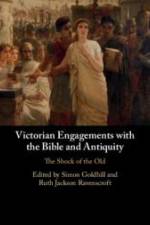
"This is the first book to establish how classical antiquity and the study of the Bible together formed Victorian ideas of the past, and consequently informed the very construction of modernity. Its multidisciplinary approach will be valuable to scholars and graduate students in numerous disciplines across the arts and humanities"--
Fifteen leading scholars and practitioners of theatre systematically explore, from a variety of perspectives, contemporary adaptations of Greek tragedy. The volume offers both a survey of recent developments and much-needed theoretical grounding in what is an increasingly dynamic approach to an ancient dramatic genre.
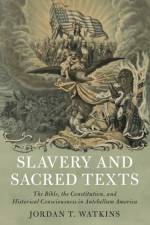
In the decades before the Civil War, Americans appealed to the nation's sacred religious and legal texts - the Bible and the Constitution - to address the slavery crisis. The ensuing political debates over slavery deepened interpreters' emphasis on historical readings of the sacred texts, and in turn, these readings began to highlight the unbridgeable historical distances that separated nineteenth-century Americans from biblical and founding pasts. While many Americans continued to adhere to a belief in the Bible's timeless teachings and the Constitution's enduring principles, some antislavery readers, including Theodore Parker, Frederick Douglass, and Abraham Lincoln, used historical distance to reinterpret and use the sacred texts as antislavery documents. By using the debate over American slavery as a case study, Jordan T. Watkins traces the development of American historical consciousness in antebellum America, showing how a growing emphasis on historical readings of the Bible and the Constitution gave rise to a sense of historical distance.
This Element discusses design information, productive/market/profit performance, design-based comparative advantage, integral/modular architectures, multi-skilling, coordinative capability-building, evolutionary capabilities, industry lifecycle, and architectural evolution in the automobile industry.
This is an indispensable book for all English-speaking lawyers (arbitrators, attorneys-at-law, judges, in-house counsel) interested in international commercial arbitration, as Swiss contract law is often chosen as the law applicable to international commercial contracts. It includes a table of legal terms in English, German, French and Italian.
Figural and non-figural supports are a ubiquitous feature of Roman marble sculpture; they appear in sculptures ranging in size from miniature to colossal and of all levels of quality. At odds with modern ideas about beauty, completeness, and visual congruence, these elements, especially non-figural struts, have been dismissed by scholars as mere safeguards for production and transport. However, close examination of these features reveals the tastes and expectations of those who commissioned, bought, and displayed marble sculptures throughout the Mediterranean in the Hellenistic and Roman periods. Drawing on a large body of examples, Greek and Latin literary sources, and modern theories of visual culture, this study constitutes the first comprehensive investigation of non-figural supports in Roman sculpture. The book overturns previous conceptions of Roman visual values and traditions and challenges our understanding of the Roman reception of Greek art.
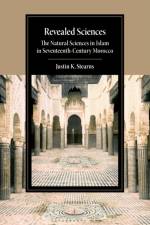
Demonstrating the vibrancy of an Early Modern Muslim society through a study of the natural sciences in seventeenth-century Morocco, Revealed Sciences examines how the natural sciences flourished during this period, without developing in a similar way to the natural sciences in Europe. Offering an innovative analysis of the relationship between religious thought and the natural sciences, Justin K. Stearns shows how nineteenth and twentieth-century European and Middle Eastern scholars jointly developed a narrative of the decline of post-formative Islamic thought, including the fate of the natural sciences in the Muslim world. Challenging these depictions of the natural sciences in the Muslim world, Stearns uses numerous close readings of works in the natural sciences to a detailed overview of the place of the natural sciences in scholarly and educational landscapes of the Early Modern Magreb, and considers non-teleological possibilities for understanding a persistent engagement with the natural sciences in Early Modern Morocco.
The book provides a major reassessment of the global origins and impact of Tricontinentalism. As Cold War interventions revealed the limits of decolonization, socialist revolutions in Asia, Africa, and Latin America used armed revolts and confrontational diplomacy to challenge the United States and the inequitable international system it supported.
This book provides readers with the histories and theories necessary for studying comics. Individual chapters explore comics through several key aspects, including drawing, serialities, adaptations, and transmedia storytelling. It offers close, interdisciplinary readings of vital works, covering more than a century of comics production.
"This book provides readers with the histories and theories necessary for studying comics. Individual chapters explore comics through several key aspects, including drawing, serialities, adaptations, and transmedia storytelling. It offers close readings of vital works, covering a century of comics production"--
An accessible summary of recent research into key topics of interest in English language teaching.
This book describes the clinical aspects of the most common neurodevelopmental disorders, including autism and ADHD, for psychiatrists and other clinicians working in forensic services. It covers policy, legal issues, assessment, therapeutic approaches and pathways through the criminal justice system.
The emergence of slavery in the District of Columbia profoundly transformed constitutional interpretation. Gilhooley's account of this interaction, and how it forms the basis of modern constitutional understandings grounded in the American Founding, is for scholars of the US Constitution, American history and politics, and legal studies.
Clara Schumann's songs have enduring appeal for performers and audiences, and were influential in the history of art song. This first book-length study of Schumann's distinctive contributions to the genre will enable scholars and music-lovers to more fully appreciate the music of Schumann and other women composers.
Showcases innovative approaches to Latin literature by reading textual absence as a generative force for literary interpretation and reception. Includes chapters by a wide range of scholars, covering some of the main authors of the Latin literary tradition, often in dialogue with modern literature and philosophy.
In antiquity living beings are inextricably linked to the cosmos as a whole. A full understanding of one therefore requires a full account of the other, and vice versa. This volume addresses philosophical issues arising from this double relation.
Ancient Greek Lists brings together catalogic texts from a variety of genres, both literary and epigraphic, arguing that the list form was the ancient mode of expressing value through text. Of immense value to students and scholars of Classical literature, ancient history, and ancient languages.
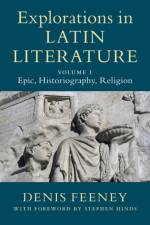
A collection of essays from one of the world's greatest scholars of Latin literature and Roman culture. Covers ancient epic, historiography, lyric, elegy, and drama, with a particular focus on ancient literary criticism, comparative religion, historicism and the technology of the ancient book. With a foreword by Stephen Hinds.
This volume explores the interrelationship of the literature, monuments, and urban landscape of Augustan Rome. Targeting scholars of both literature and material culture, its interdisciplinary studies range from canonical authors (such as Cicero, Livy, and Ovid) to iconic monuments (such as the Rostra, Pantheon, and Meridian of Augustus).
Addresses one of the most important current questions in the study of antiquity - the contribution of the Near East to the mythology of Ancient Greece. Leading specialists from both fields come together to consider both shared and unique stories about gods and their relationships with humankind.
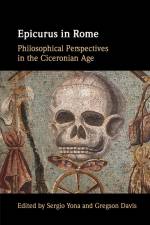
The role of Greek thought in the final days of the Roman republic is a topic that has garnered much attention in recent years. This volume of essays, commissioned specially from a distinguished international group of scholars, explores the role and influence of Greek philosophy, specifically Epicureanism, in the late republic. It focuses primarily (although not exclusively) on the works and views of Cicero, premier politician and Roman philosopher of the day, and Lucretius, foremost among the representatives and supporters of Epicureanism at the time. Throughout the volume, the impact of such disparate reception on the part of these leading authors is explored in a way that illuminates the popularity as well as the controversy attached to the followers of Epicurus in Italy, ranging from ethical and political concerns to the understanding of scientific and celestial phenomena.
Abonner på vårt nyhetsbrev og få rabatter og inspirasjon til din neste leseopplevelse.
Ved å abonnere godtar du vår personvernerklæring.