



















Gjør som tusenvis av andre bokelskere
Abonner på vårt nyhetsbrev og få rabatter og inspirasjon til din neste leseopplevelse.
Ved å abonnere godtar du vår personvernerklæring.Du kan når som helst melde deg av våre nyhetsbrev.

"Offers an innovative theological look at what family might mean that cuts deeper than current, mostly polarised debates. The book taps literary, artistic and biblical sources and brings them into conversation with family studies from humanities and social science to understand why family is currently a controversial topic"--
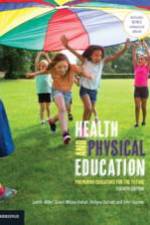
Health and physical education encompasses the development of movement competence and health literacies crucial to child and adolescent health and wellbeing. Health and Physical Education: Preparing Educators for the Future, 2nd edition continues to offer a comprehensive overview of the knowledge, understanding, skills and theoretical underpinnings required to teach health and physical education in Australian schools. This edition outlines the latest developments to the Australian Curriculum: Health and Physical Education, to help pre-service teacher educators understand the application of these concepts in practice. Maintaining a focus on the education of all learning ages, it provides a stronger focus on physical education and development in early childhood, and broader coverage of the perspectives of culturally diverse students. Well-structured and engaging, this edition has been updated to include the latest literature, figures, statistics and resources. Learning is enhanced through further reading, end-of-chapter questions, case studies and an updated and comprehensive companion website.
Based on both qualitative and quantitative data, this pioneering book explores the concepts of second language advancedness (L2) in the context of higher education's need to meet the challenges of an increasingly globalized world. Comprehensive yet engaging, it is essential reading for instructors of L2 language, literature and culture alike.
The Paris Agreement embodies a flexible approach to global cooperation, aimed at encouraging ever more ambitious climate action by a variety of players on all levels of governance. Regional organizations play an important role in mobilizing such action. This Element provides novel insights into the conditions under which policy entrepreneurs can bring about transformative policy change in regional settings, with a focus on the European Union (EU) and the Association of Southeast Asian Nations (ASEAN). It finds that opportunity structures in the EU have been conducive to successful climate-progressive policy entrepreneurship at several key junctures, but not consistently. In contrast, the ASEAN governance context provides few access points for non-elite interests, making it fiendishly difficult for policy entrepreneurs to push for substantive policy change in the face of powerful domestic veto players. This title is also available as Open Access on Cambridge Core.
This Element explores how in the Philippines a 'whiggish' narrative of democracy and good governance triumphing over dictatorship and kleptocracy after the 'people power' uprising against Ferdinand E. Marcos in 1986 was upended by strongman Rodrigo R. Duterte three decades later. Portraying his father's authoritarian rule as a 'golden age, ' Ferdinand R. Marcos, Jr. succeeded Duterte by easily winning the 2022 presidential election, suggesting democratic backsliding will persist. A structuralist account of the inherent instability of the country's oligarchical democracy offers a plausible explanation of repeated crises but underplays agency. Strategic groups have pushed back against executive aggrandizement. Offering a 'structuration' perspective, presidential power and elite pushback are examined as is the reliance on political violence and the instrumentalization of mass poverty. These factors have recurrently combined to lead to the fall, restoration, and now steep decline of democracy in the Philippines
This Element offers a novel, highly relevant perspective towards Multilateral Development Banks (MDBs). It also provides unique insights into MDBs' responses to their dual nature and significantly advances our understanding of MDB lending operations, drawing attention to the complexities involved in the unique MDB business model.
The first full-length study of Byron's masterpiece in over thirty years, this book boldly argues that Don Juan should be recognised as the exemplary epic poem of the nineteenth century. Insightful and convincing, it promises to alter perspectives and invite fresh thinking from both scholars and students of Romanticism.
Addresses a key question in biblical studies: the Elijah narratives' contribution to the theological vision of the book of Kings. Using a canonical-agrarian approach, this book challenges longstanding assumptions to offer a new concept of the narratives' rhetorical and theological contribution and insights into Elijah's iconographical character.
Anyone wishing to understand Christianity deeply must consider the central, formative role of Platonism. It has constituted an essential intellectual resource, and been considered a controversial influence. This volume includes chapters on key concepts, explicates the tradition's history, and engages key issues for contemporary society.
Bringing digital methods to the study of comics, this book traces the emergence of the graphic novel at the intersection of popular and literary culture. Based on a collection of 250 titles, it shows how the genre builds on the style of popular comics while adapting selected features of the novel.
This Element contains information included on the commission and composition of the piece, its premiere by the Boston Symphony Orchestra conducted by Leonard Bernstein, its revision by Messiaen in 1990, and its reception history in both live and recorded performances.
This Element considers patterns of violent behaviour among the inhabitants of the Pacific Islands while their vast region has been undergoing religious change, mainly toward Christianity. Major topics researched are religion-based violent reactions to early intruders; anti-colonial rebellions; and the persistence of traditional modes of violence.
This Element explores how 'tarab' lives on in new contexts through a focus on the work of Hello Psychaleppo, one of Aleppo's displaced musicians and the pioneer of 'electro-tarab', an eclectic style of urban electronic dance music that is conceived as a homage to Aleppo's musical legacy.
The book is designed for undergraduates, graduates, and researchers of mathematics studying fixed point theory or nonlinear analysis. It deals with the fixed point theory for not only single-valued maps but also set-valued maps. The text is divided into three parts: fixed point theory for single-valued mappings, continuity and fixed point aspects of set-valued analysis, and variational principles and their equilibrium problems. It comprises a comprehensive study of these topics and includes all important results derived from them. The applications of fixed point principles and variational principles, and their generalizations to differential equations and optimization are covered in the text. An elementary treatment of the theory of equilibrium problems and equilibrium version of Ekeland's variational principle is also provided. New topics such as equilibrium problems, variational principles, Caristi's fixed point theorem, and Takahashi's minimization theorem with their applications are also included.
This book surveys the role of animals across literary history. It explores how engaging with animals alters our understanding of what it means to write and read, and why this is important for thinking about a series of cultural, ethical, political, and scientific developments and controversies.
This book is for any reader interested in the American graphic novel and its longer history. Going after Art Spiegelman's call "the future of comics is in the past", it studies how contemporary cartoonists redraw from the archives of comics history to envision new modes of transmission.
"Ballots and voting devices are fundamental tools in the electoral process. Despite their importance, scholars have paid little attention to the broader implications of voting procedures. We contend that ballots have significant implications for democratic representation, as they affect the cost associated with voting for citizens and electioneering for elites. In this Element, we explain how ballot designs affect the behavior of voters, the performance of candidates, and the strategies of parties. As for voters, we show how voting procedures structure the likelihood of vote splitting and ballot roll-off. This in turn has implications for candidates. Focusing on gender and experience, we show how ballot form alters the salience of personal vote earning attributes. With respect to political parties, ballot structure can shift both the cost, strategies, and ultimately electoral fortunes of political parties. Finally, we discuss the profound implications ballot forms have for party campaigns and election outcomes"--
The Activity Book, now in colour, covers the target language from the Pupil's Book. One exam practice activity per unit familiarises children with the format of the Cambridge English Qualification for young learners. A unique access code inside the front cover unlocks extra language practice, games and the course audio in an online learning platform.
The Activity Book, now in colour, covers the target language from the Pupil's Book. One exam practice activity per unit familiarises children with the format of the Cambridge English Qualification for young learners. A unique access code inside the front cover unlocks extra language practice, games and the course audio in an online learning platform.
What role could or should the law play in dealing with the climate emergency? In this innovative volume, leading scholars explore fundamental debates at the frontier of climate change law scholarship. They address the key areas of scholarly disagreement about what climate change law is, the legal rules it consists of, and how these rules could be implemented in the real world. The first eleven topics are debated by teams of scholars expressing diametrically opposite points of view on each topic, in traditional debating style; the last seven chapters are presented as an individual author's own reflection on a topic that cannot readily be reduced to a binary debate. Each chapter is written in an accessible and thought-provoking way, emphasizing clear lines of argumentation. The debating-style format is designed to stimulate students to think critically and logically about the law and to fire up debate in and out of class.
We need new governance solutions to help us improve public policies and services, solve complex societal problems, strengthen social communities and reinvigorate democracy. By changing how government engages with citizens and stakeholders, co-creation provides an attractive and feasible approach to governance that goes beyond the triptych of public bureaucracy, private markets and self-organized communities. Inspired by the successful use of co-creation for product and service design, this book outlines a broad vision of co-creation as a strategy of public governance. Through the construction of platforms and arenas to facilitate co-creation, this strategy can empower local communities, enhance broad-based participation, mobilize societal resources and spur public innovation while building ownership for bold solutions to pressing problems and challenges. The book details how to use co-creation to achieve goals. This exciting and innovative study combines theoretical argument with illustrative empirical examples, visionary thinking and practical recommendations.
For several decades, higher education systems have undergone continuous waves of reform, driven by a combination of concerns about the changing labour needs of the economy, competition within the global-knowledge economy, and nationally competitive positioning strategies to enhance the performance of higher education systems. Yet, despite far-ranging international pressures, including the emergence of an international higher education market, enormous growth in cross-border student mobility, and pressures to achieve universities of world class standing, boost research productivity and impact, and compete in global league tables, the suites of policy, policy designs and sector outcomes continue to be marked as much by hybridity as they are of similarity or convergence. This volume explores these complex governance outcomes from a theoretical and empirical comparative perspective, addressing those vectors precipitating change in the modalities and instruments of governance, and how they interface at the systemic and institutional levels, and across geographic regions.
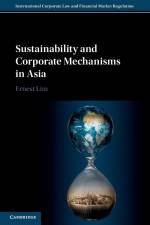
This is the first book to provide a comparative and critical analysis of why and how six corporate mechanisms - (1) sustainability reporting; (2) board gender diversity; (3) constituency directors; (4) stewardship codes; (5) directors' duty to act in the company's best interests; and (6) liability on companies, shareholders and directors - have been or can be used to promote sustainability in the four leading common law jurisdictions in Asia (Singapore, Hong Kong, India and Malaysia). A central challenge is, whether and if so, how the corporate mechanisms should be reconceptualised to promote sustainability in an environment that is characterised by controlling shareholders, particularly the government in state-owned enterprises. Because controlling shareholders are the norm for the majority of the world's companies, and state-owned enterprises play a significant role, this book has important insights on the problems and prospects of advancing sustainability in concentrated and mixed ownership jurisdictions.
Abonner på vårt nyhetsbrev og få rabatter og inspirasjon til din neste leseopplevelse.
Ved å abonnere godtar du vår personvernerklæring.