


















Gjør som tusenvis av andre bokelskere
Abonner på vårt nyhetsbrev og få rabatter og inspirasjon til din neste leseopplevelse.
Ved å abonnere godtar du vår personvernerklæring.Du kan når som helst melde deg av våre nyhetsbrev.

In 1598, the first English convent to be founded since the dissolution of the monasteries was established in Brussels, followed by a further twenty-one foundations, which all self-identified as English institutions in Catholic Europe. Around four thousand women entered these religious houses over the following two centuries. This book highlights the significance of the English convents as part of, and contributors to, national and European Catholic culture. Covering the whole exile period and making extensive use of rarely consulted archive material, James E. Kelly situates the English Catholic experience within the wider context of the Catholic Reformation and Catholic Europe. He thus transforms our understanding of the convents, stressing that they were not isolated but were, in fact, an integral part of the transnational Church which transcended national boundaries. The original and immersive structure takes the reader through the experience of being a nun, from entry into the convent, to day-to-day life in enclosure, how the enterprise was funded, as well as their wider place within the Catholic world.
This book will appeal to anyone interested in the complex meanings of the idea of 'freedom', especially as it relates to other fundamental social values. It will be of interest to philosophers and political theorists, legal scholars, feminists, people in disability studies and other social theorists and critics.
The essays in this volume explore the distinctive features of the Prolegomena, including Kant's discussion of philosophical methodology, his critical idealism, the nature of experience, his engagement with Hume, the nature of the self, the relation between geometry and physics, and what we can cognize about God.
This book makes lesser-known philosophical texts on freedom of the will after Kant available in English for the first time, and will provide a valuable foundation for further research on free will in post-Kantian philosophy.
In On the Origin of Species (1859), Charles Darwin put forward his theory of natural selection. Conventionally, Darwin's argument for this theory has been understood as based on an analogy with artificial selection. But there has been no consensus on how, exactly, this analogical argument is supposed to work - and some suspicion too that analogical arguments on the whole are embarrassingly weak. Drawing on new insights into the history of analogical argumentation from the ancient Greeks onward, as well as on in-depth studies of Darwin's public and private writings, this book offers an original perspective on Darwin's argument, restoring to view the intellectual traditions which Darwin took for granted in arguing as he did. From this perspective come new appreciations not only of Darwin's argument but of the metaphors based on it, the range of wider traditions the argument touched upon, and its legacies for science after the Origin.
The complex phenomenon of responsibility in negligence is analysed from multidisciplinary and interdisciplinary perspectives. The study sheds light on key ethical and legal issues related to agency and negligence to impact substantive law and policy-making in different jurisdictions.
Acts of the Apostles presents Roman officials and militarized police criminalizing, prosecuting, and incarcerating a movement of Jesus followers. This book brings Acts into conversation with ancient and modern understandings of crime by tending to laws and by exploring how different writers portray the criminalized.
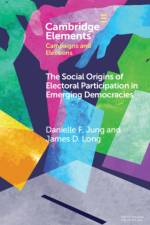
Citizens in emerging democracies vote at high rates, particularly given the high costs of voting. This Element argues that community-level population dynamics and features of the electoral environment specific to recent democratizers increase the likelihood that individuals vote.
Leveraging the natural experiment caused by the dissolution of the USSR and its uniform approach to higher education, this book focuses on university governance across the former Soviet countries, making it essential reading for researchers, students and policy makers. This title is also available as open access on Cambridge Core.
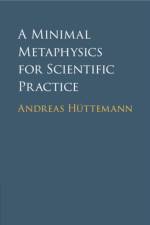
Provides a minimal metaphysics for scientific practice, yielding new accounts of lawhood, causation and reduction.
This book provides comprehensive and up-to-date chapters from experts on the cognition of non-human primates, and describes how primate cognition is studied in labs, zoos, sanctuaries, and in the field. It analyses issues of replicability, open-access, and ethics, with strong emphasis on comparative approaches.
Having built much of their wealth, power, and identities on imperial expansion, how did the Portuguese and, by extension, Europeans deal with the end of empire? Postcolonial People explores the processes and consequences of decolonization through the histories of over half a million Portuguese settlers who 'returned' following the 1974 Carnation Revolution from Angola, Mozambique, and other parts of Portugal's crumbling empire to their country of origin and citizenship, itself undergoing significant upheaval. Looking comprehensively at the returnees' history and memory for the first time, this book contributes to debates about colonial racism and its afterlives. It studies migration, 'refugeeness,' and integration to expose an apparent paradox: The end of empire and the return migrations it triggered belong to a global history of the twentieth century and are shaped by transnational dynamics. However, they have done nothing to dethrone the primacy of the nation-state. If anything, they have reinforced it.
What makes a neo-Nazi become a convinced anti-fascist or a radical left-winger become a devout Salafist? How do they manage to fit into their new environment and gain acceptance as a former enemy? The people featured in this book made highly puzzling journeys, first venturing into extremist milieus and then deciding to switch to the opposite side. By using their extraordinary life-stories and their own narratives, this book provides the first in-depth analysis of how and why people move between seemingly opposing extremist environments that can sometimes overlap and influence each other. It aims to understand how these extremists manage to convince their new group that they can be trusted, which also allows us to dive deep into the psychology of extremism and terrorism. This fascinating work will be of immense value to those studying radicalization and counter-radicalization in terrorism studies, social psychology and political science.
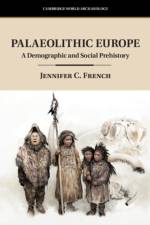
In this book, Jennifer French presents a new synthesis of the archaeological, palaeoanthropological, and palaeogenetic records of the European Palaeolithic, adopting a unique demographic perspective on these first two-million years of European prehistory. Unlike prevailing narratives of demographic stasis, she emphasises the dynamism of Palaeolithic populations of both our evolutionary ancestors and members of our own species across four demographic stages, within a context of substantial Pleistocene climatic changes. Integrating evolutionary theory with a socially oriented approach to the Palaeolithic, French bridges biological and cultural factors, with a focus on women and children as the drivers of population change. She shows how, within the physiological constraints on fertility and mortality, social relationships provide the key to enduring demographic success. Through its demographic focus, French combines a 'big picture' perspective on human evolution with careful analysis of the day-to-day realities of European Palaeolithic hunter-gatherer communities-their families, their children, and their lives.
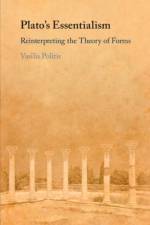
In this book, Vasilis Politis argues that Plato's Forms are essences, not merely things that have an essence. Politis shows that understanding Plato's theory of Forms as a theory of essence presents a serious challenge to contemporary philosophers who regard essentialism as little more than an optional item on the philosophical menu. This approach, he suggests, also constitutes a sharp critique of those who view Aristotelian essentialism as the only sensible position: Plato's essentialism, Politis demonstrates, is a well-argued, rigorous, and coherent theory, and a viable competitor to that of Aristotle. This book will appeal to students and scholars with an interest in the intersection between philosophy and the history of philosophy.
Abonner på vårt nyhetsbrev og få rabatter og inspirasjon til din neste leseopplevelse.
Ved å abonnere godtar du vår personvernerklæring.