













Gjør som tusenvis av andre bokelskere
Abonner på vårt nyhetsbrev og få rabatter og inspirasjon til din neste leseopplevelse.
Ved å abonnere godtar du vår personvernerklæring.Du kan når som helst melde deg av våre nyhetsbrev.

This Element offers a framework for exploring the methodological challenges of neuroethics. The aim is to provide a roadmap for the methodological assumptions, and related pitfalls, involved in the interdisciplinary investigation of the ethical and legal implications of neuroscientific research and technology. It illustrates these points via the debate about the ethical and legal responsibility of psychopaths. Argument and the conceptual analysis of normative concepts such as 'personhood' or 'human agency' is central to neuroethics. This Element discusses different approaches to establishing norms and principles that regulate the practices addressed by neuroethics and that involve the use of such concepts. How to characterize the psychological features central to neuroethics, such as autonomy, consent, moral understanding, moral motivation, and control is a methodological challenge. In addition, there are epistemic challenges when determining the validity of neuroscientific evidence.
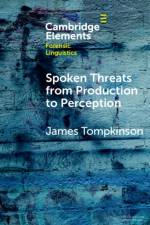
Spoken threats are a common but linguistically complex language crime. Although threatening language has been examined from different linguistic perspectives, there is limited research which critically addresses how people perceive spoken threats and infer traits such as threat and intent from speakers' voices. There is also minimal linguistic research addressing differences between written and spoken threats. By specifically analysing threats delivered in both written and spoken modalities, as well as integrating perceptual phonetic analysis into discussions on spoken threats, this Element offers perspectives on these two under-researched areas. It highlights the dangers of assuming that the way in which someone sounds correlates with, for example, their intention to commit harm, and explores potential problems in assuming that written and spoken threats are equivalent to one another. The goal of the Element is to advance linguistic knowledge and understanding around spoken threats, as well as promote further research in the area.
David Hume (1711-1776) is one of the foremost critics of attempts to provide rational arguments in support of traditional Christian theism in Western philosophy. In this Element, the authors examine Hume's chief objections to the cosmological argument, the design argument, and the argument from miracles, along with some main responses to these objections. The authors also examine Hume's seminal version of the argument from evil, which is deployed in an effort to show that traditional Christian theism is lacking in coherent meaning. Drawing on recent developments in Hume scholarship according to which Hume's ultimate philosophical aim was to further an anti-Christian agenda, an attempt is made to situate Hume's writings on God and religion in an unfolding narrative that is impacted throughout by the trenchant religious criticisms of Hume's chief philosophical predecessor, Thomas Hobbes.
This Element looks at the art of the actress in the eighteenth century. It considers how visual materials across genres, such as prints, portraits, sculpture, costumes, and accessories, contribute to the understanding of the nuances of female celebrity, fame, notoriety, and scandal. The 'art' of the actress refers to the actress represented in visual art, as well as to the actress's labor and skill in making art ephemerally through performance and tangibly through objects. Moving away from the concept of the 'actress as muse,' a relationship that privileges the role of the male artist over the inspirational subject, the author focuses instead on the varied significance of representations, reproductions, and re-animations of actresses, female artists, and theatrical women across media. Via case studies, the Element explores how the archive charts both a familiar and at times unknown narrative about female performers of the past.
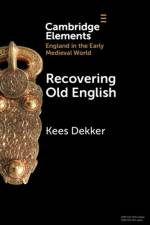
This Element Recovering Old English examines the philological activities of scholars involved in the recovery of Old English in the period between c. 1550 and 1830. This Element focuses on four philological pursuits that dominated this recovery: collecting documents, recording the lexicon editing texts and studying the grammar. This Element demonstrates that throughout the vicissitudes of history these four components of humanist philology have formed the backbone of Old English studies and constitute a thread that connects the efforts of early modern philologists with the global interest in Old English that we see today.
Giftedness often is defined in a transactional way: individuals give something in return for getting something from authorities who label them as gifted; the labeling authority then expects those individuals identified as 'gifted' to act in ways that justify the label. The authors place emphasis on transformational giftedness-giftedness that serves to make the world a better place. This Element stresses the importance of intelligence, not of the kind of narrow intelligence measured by IQ tests and their proxies, but rather the kind of broad intelligence used to adapt to a variety of real-world environments. The authors further discuss the nature of dual exceptionality, whereby individuals may be identified as having a disability yet at the same time act in gifted ways and thereby harbor the potential to contribute to the world in some distinguished fashion.
This Element explores the relationship between science and the public with resources from philosophy of science. It covers science's relationship to the public, public trust in science, science denial, expanded participation in science, and science's obligation to the public.
This Element introduces the philosophical literature on models, with an emphasis on normative considerations relevant to models for decision-making. Chapter 1 gives an overview of core questions in the philosophy of modeling. Chapter 2 examines the concept of model adequacy for purpose, using three examples of models from the atmospheric sciences to describe how this sort of adequacy is determined in practice. Chapter 3 explores the significance of using models that are not adequate for purpose, including the purpose of informing public decisions. Chapter 4 provides a basic framework for values in modelling, using a case study to highlight the ethical challenges in building models for decision making. It concludes by establishing the need for strategies to manage value judgments in modelling, including the potential for public participation in the process.
Ancient philosophers offer intriguing accounts of vice - virtue's bad twin. This Element considers injustice and lawlessness in Plato and Aristotle. Starting with Socrates' paradoxical claim that 'tyrants and orators do just about nothing they want to do' (Gorgias 466d-e), it examines discussions of moral ignorance and corruption of character in Plato's Republic and Aristotle's Nicomachean Ethics. Aristotle's account of vice is indebted to Plato's. But his claims have confounded critics. Why is the vicious agent full of regrets when he acts in accordance with his wish? To what extent is vice a form of moral ignorance? Why will the unjust man never get what he wants? These and other questions yield new insights into ancient Greek ethics and moral psychology, as well as surprising perspectives on contemporary debates.
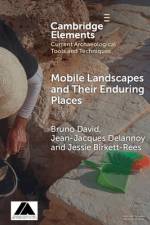
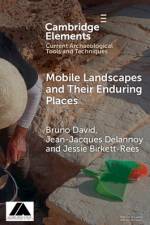
This Element presents emerging concepts and analytical tools in landscape archaeology. It introduces these ideas through new research and multiple case studies from around the world, culminating in how to 'archaeomorphologically' map anthropic constructions in caves and their contemporary environments.
The Element analyses the critical importance of elite women to the conflict conventionally known as the Italian Wars that engulfed much of Europe and the Mediterranean between 1494 and 1559. Through its considered attention to the interventions of women connected to imperial, royal and princely dynasties, the authors show the breadth and depth of the opportunities, roles, impact, and influence that certain women had to shape the course of the conflict in both wartime activities and in peace-making. The work thus expands the ways in which the authors can think about women's participation in war and politics. It makes use of a wide range of sources such as literature, art and material culture, as well as more conventional text forms. Women's voices and actions are prioritized in making sense of evidence and claims about their activities.
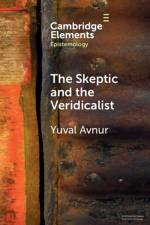
This Element explores the nature and formulation of skepticism about the external world by considering an important anti-skeptical strategy, 'veridicalism.' According to veridicalism, even if you are in a skeptical scenario, your beliefs about the existence of ordinary objects are still true. For example, even if you are in a global simulation, things such as tables exist as simulated objects. Therefore, your ignorance of whether you are in such a scenario does not negate your knowledge that there are tables. This strategy fails because it raises an equally troubling skepticism about what such objects are: is the table you now see a simulated object? That this is equally troubling suggests that the core skeptical problem is about what the causes of our experiences are, regardless of whether they count as ordinary objects like tables. This motivates a reconsideration of the standard formulation of the skeptical argument, and undermines some other anti-skeptical strategies as well.
This Element overviews recent research on children's adjustment to adoption and its relevance for key questions addressed in developmental science. First, a historical perspective on trends in adoption practice and adoptive family life is offered. Second, research on children's adjustment to adoption is reviewed, including the impact of early adversity on their development, as well as biological and social factors related to their recovery from adversity. Third, factors impacting adoptive identity development are examined, followed by research on open adoption and adoption by sexual minority adults. Fourth, different types of postadoption support and services that facilitate family stability and children's emotional well-being are analyzed. Finally, conclusions are drawn, and recommendations for future research and practice are offered.
This Element highlights ten emerging paradigms for future-fit systemic change, discuss how stakeholder mindsets can be developed, and present new skills for leaders and a pathway for companies to become drivers of collaborative transformation. This title is also available as Open Access on Cambridge Core.
This Element Recovering Old English examines the philological activities of scholars involved in the recovery of Old English in the period between c. 1550 and 1830. It is done by collecting documents, recording the lexicon editing texts and studying the grammar.
This Element presents a historical perspective on adoption practice and adoptive family life, research on children's adjustment to adoption, factors impacting adoptive identity development, different types of postadoption support, and services, and recommendations for future research and practice.
Spoken threats are a common but linguistically complex language crime. Although threatening language has been examined from different linguistic perspectives, there is limited research which critically addresses how people perceive spoken threats and infer traits such as threat and intent from speakers' voices. There is also minimal linguistic research addressing differences between written and spoken threats. By specifically analysing threats delivered in both written and spoken modalities, as well as integrating perceptual phonetic analysis into discussions on spoken threats, this Element offers perspectives on these two under-researched areas. It highlights the dangers of assuming that the way in which someone sounds correlates with, for example, their intention to commit harm, and explores potential problems in assuming that written and spoken threats are equivalent to one another. The goal of the Element is to advance linguistic knowledge and understanding around spoken threats, as well as promote further research in the area.
This volume critically assesses the role of intellectual property in pandemic times through lessons learned from the COVID-19 pandemic. It broadens our understanding of the implications of intellectual property protection for both the development and distribution of essential technologies such as vaccines.
In this Element, the authors examine David Hume, a critic in support of traditional Christian theism in Western philosophy, his chief objections to the cosmological argument, the design argument, and the argument from miracles, along with some main responses to these objections.
"In the past two decades, democratic institutions have faced a crisis of representation. From authoritarian backsliding in countries with recent democratic transformations, to severe challenges to established liberal democracies, the meaning of political representation and whether and when it succeeds has become highly debated. In response to an increasingly fraught political climate, Contested Representation brings together scholars from across the United States and Europe to critically assess the performance of representative institutions in Europe and North America. Taking an interdisciplinary, comparative approach, this book looks at the viability of electoral institutions, the responsiveness of government to public preferences, alternative institutions for more inclusive democracy, and the political economy of populism. Chapters also address the broader normative question of how democratic institutions can be adapted to new conditions and challenges. Expertly researched and exceedingly timely, Contested Representation provides critical frameworks that highlight realistic pathways to democratic reform"--
"A comparative, interdisciplinary study of the robustness and fragility of political orders that focuses on leader understandings and their consequences. It includes studies of failed orders, like Weimar and the Soviet Union, current orders, like the United States, and regional - the European Union - and international orders"--
What makes bureaucracy work for the least advantaged? Across the world, countries have adopted policies for universal primary education. Yet, policy implementation is uneven and not well understood. Making Bureaucracy Work investigates when and how public agencies deliver primary education across rural India. Through a multi-level comparative analysis and more than two years of ethnographic field research, Mangla opens the 'black box' of Indian bureaucracy to demonstrate how differences in bureaucratic norms - informal rules that guide public officials and their everyday relations with citizens - generate divergent implementation patterns and outcomes. While some public agencies operate in a legalistic manner and promote compliance with policy rules, others engage in deliberation and encourage flexible problem-solving with local communities, thereby enhancing the quality of education services. This book reveals the complex ways bureaucratic norms interact with socioeconomic inequalities on the ground, illuminating the possibilities and obstacles for bureaucracy to promote inclusive development.
Throughout the early modern period, political theorists in France and England drew on the works of Plutarch to offer advice to kings and princes. Elizabeth I herself translated Plutarch in her later years, while Jacques Amyot's famous translations of Plutarch's The Parallel Lives led to the wide distribution of his work and served as a key resource for Shakespeare in the writing of his Roman plays, through Sir Thomas North's English translations. Rebecca Kingston's new study explores how Plutarch was translated into French and English during the Renaissance and how his works were invoked in political argument from the early modern period into the 18th century, contributing to a tradition she calls 'public humanism'. This book then traces the shifting uses of Plutarch in the Enlightenment, leading to the decline of this tradition of 'public humanism'. Throughout, the importance of Plutarch's work is highlighted as a key cultural reference and for its insight into important aspects of public service.
Athenian democracy was distinguished from other ancient constitutions by its emphasis on freedom. This was understood, Naomi T. Campa argues, as being able to do 'whatever one wished, ' a widely attested phrase. Citizen agency and power constituted the core of democratic ideology and institutions. Rather than create anarchy, as ancient critics claimed, positive freedom underpinned a system that ideally protected both the individual and the collective. Even freedom, however, can be dangerous. The notion of citizen autonomy both empowered and oppressed individuals within a democratic hierarchy. These topics strike at the heart of democracies ancient and modern, from the discursive principles that structure political procedures to the citizen's navigation between the limitations of law and expression of individual will to the status of noncitizens within a state. This title is part of the Flip it Open Programme and may also be available Open Access. Check our website Cambridge Core for details
"This volume tracks and uncovers the Black body as a persistent presence and absence in American literature. It provides an invaluable guide for teachers and students interested in literary representations of Blackness and embodiment. It centers Black thinking about Black embodiment from current, diverse, and intersectional perspectives"--
"This volume tracks and uncovers the Black body as a persistent presence and absence in American literature. It provides an invaluable guide for teachers and students interested in literary representations of Blackness and embodiment. It centers Black thinking about Black embodiment from current, diverse, and intersectional perspectives"--
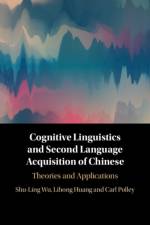
Including sample lesson plans and classroom-ready activities, this book shows how to use key cognitive linguistic concepts to analyze the Chinese language and to advance L2 Chinese teaching and learning. It is ideal for language instructors, as well as academic researchers and students in Chinese linguistics and language pedagogy.
Geopolitics of Digital Heritage analyzes and discusses the political implications of the largest digital heritage aggregators across different scales of governance. The Element employs an interdisciplinary approach and combines critical heritage studies with the study of digital politics and communications.
In recent years, decision theory has increasingly acknowledged the reality of preference change throughout life. This Element provides an accessible introduction and new contributions to the debates on preference change.
This Element presents emerging concepts and analytical tools in landscape archaeology. It introduces these ideas through new research and multiple case studies from around the world, culminating in how to 'archaeomorphologically' map anthropic constructions in caves and their contemporary environments.
Abonner på vårt nyhetsbrev og få rabatter og inspirasjon til din neste leseopplevelse.
Ved å abonnere godtar du vår personvernerklæring.