





Gjør som tusenvis av andre bokelskere
Abonner på vårt nyhetsbrev og få rabatter og inspirasjon til din neste leseopplevelse.
Ved å abonnere godtar du vår personvernerklæring.Du kan når som helst melde deg av våre nyhetsbrev.

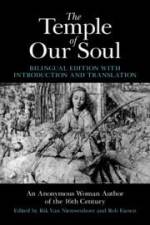
The Temple of our Soul is one of the most attractive spiritual texts of the late Middle Ages and early modern period. Written by an anonymous woman, who was also the author of influential The Evangelical Pearl, this masterpiece offers insights into the mystical aspects of Christianity that were widespread in Rhineland and the Low Countries. For political, socio-economic, and geographical reasons, spiritual writings from the Low Countries were highly influential in France, England, and Spain. Language barriers, however, have made the original texts inaccessible to many scholars and students. This bilingual edition offers the first English translation The Temple of our Soul together with the original Dutch text. This edition includes an introduction that provides insights into the text's key themes and the social context in which it was written. In addition to students of medieval mysticism, it will also be of interest to scholars of late medieval and early modern vernacular literature and feminist theology.
"Throughout history, 'obeying orders' has caused the loss of countless lives. By combining recent studies in social and cognitive neuroscience with accounts from genocide perpetrators, this book explains the brain science behind obedience and how ordinary people can commit awful acts of violence. No background in neuroscience required"--
Drawing on insights from language teaching experts and real students, this Level 4 (CEFR A1) Full Contact with Digital Pack covers all skills and focuses on the most effective and efficient ways to make progress in English. The pack includes the student's book, workbook with downloadable audio, video resource book, audio and video. It comes with an 18-month access code for the eBook and an interactive workbook that allows teachers to easily track the performance of their students. All digital content is online and works on smartphones as well as tablets, laptops and desktop computers.
How can the UN Security Council contribute to the maintenance of international peace and security in times of heightened tensions, global polarisation, and contestation about the principles underlying the international legal and political order? In this Trialogue, experts with diverse geographic, socio-legal, and ideational backgrounds present their perspectives on the Security Council's historic development, its present functions and deficits, and its defining tensions and future trajectories. Three approaches engage with each other: a power-focused approach emphasising the role of China as an emerging actor; an institutionalist perspective exploring how less powerful states, particularly the elected members of the Security Council, exert influence and may strengthen rule-of-law standards; a regionalist perspective investigating how the Security Council as the central actor can cooperate with regional organisations towards maintaining international peace and security. This title is also available as Open Access on Cambridge Core.
"How can the Security Council maintain international peace in times of global polarisation and contestation about principles of international legal and political order? Three experts with diverse geographic, sociolegal, and ideational backgrounds present their views on the Council's functions and deficits, and on tensions and future trajectories"--
"A practical book using ethical paradigms to understand contemporary challenges in suicide research, practices, and policies. Covering topics like medical assistance in dying, helpline rescue policies and suicide promotion over the internet, it is essential reading for people working in suicide prevention, ethics, law and philosophy of suicide"--
The Apocrypha (or Deuterocanonical Books) are ancient texts written during the 400 years between the Old Testament and the New Testament of the Bible, accepted as biblical canon by some, but not all Christian denominations. This slim, hardback features books from the traditional Greek and Slavonic Bibles, as well as books used by Roman Catholics, such and Judith and Tobit. The Apocryphal texts are central background reading for anyone wishing to carry out a scholarly reading of the Bible and its context. The New Revised Standard Version Updated Edition includes a considerable number of changes to the Apocrypha for which a number of texts were consulted to reconstruct these books using the latest goals and methodology. 30 years on from the publication of the NRSV, the NRSV Updated Edition makes extensive use of recent scholarship to produce a meticulously researched, rigorously reviewed, and faithfully accurate translation. With substantial edits, revisions, and grammatical changes, its central value is in its adherence to tradition and accuracy, while also reflecting cultural differences and the sensibilities of modern audiences.
This book analyzes how developmental states contributed to economic prosperity, sometimes with spectacular success, and sometimes with less brilliant results.
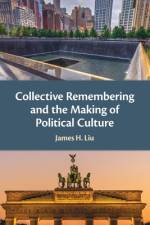
"Collective memory can make and break political culture around the world. Representations and reinterpretations of the past intersect with actions that shape the future. A nation's political culture emerges from complex layers of institutional and individual responses to historical events. Society changes and is changed by these layers of memory over time. Understanding them gives us insight into where we are today. Encompassing examples from colonization and decolonization, revolving around the critical junctures of the world wars, this book illustrates how collective memory is produced and organized through commemoration, through monuments, and through individuals sharing stories. Using concrete examples from around the world, James H. Liu shows how different disciplines can come together through shared concepts like narratives and generational memories to provide mutually enriching perspectives on how political culture is made, and how it changes"--
This practical guide provides 99 case examples of typical and atypical cases of Alzheimer's disease and other dementias, along with useful tools for early identification and post-diagnostic support. Emphasising a collaborative approach between medical and social care, this is a vital resource for those on the frontline in primary care.
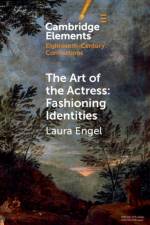
This Element looks at the art of the actress in the eighteenth century. It shows how visual materials across genres contribute to our understanding of the nuances of female celebrity, fame, notoriety, and scandal.
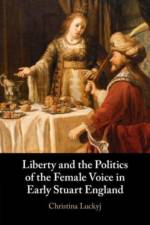
The female voice was deployed by male and female authors alike to signal emerging discourses of religious and political liberty in early Stuart England. Christina Luckyj's important new study focuses critical attention on writing in multiple genres to show how, in the coded rhetoric of seventeenth-century religious politics, the wife's conscience in resisting tyranny represents the rights of the subject, and the bride's militant voice in the Song of Songs champions Christ's independent jurisdiction. Revealing this gendered system of representation through close analysis of writings by Elizabeth Cary, Aemilia Lanyer, Rachel Speght, Mary Wroth and Anne Southwell, Luckyj illuminates the dangers of essentializing female voices and restricting them to domestic space. Through their connections with parliament, with factional courtiers, or with dissident religious figures, major women writers occupied a powerful oppositional stance in relation to early Stuart monarchs and crafted a radical new politics of the female voice.
"During the dark days of World War Two, British actors, politicians, writers and cultural commentators turned to Shakespeare in order to articulate both their national identity and the values for which their country was fighting. According to the literary critic G. Wilson Knight, Shakespeare is "the authentic voice of England"; to the actor Donald Wolfit, "[he] represents more than everything else the fighting spirit of our country"; and for the statesman and future prime minister Anthony Eden "our history is enacted, our philosophy as a people is given expression, in plays which are the greatest gift of English genius to mankind." In these formulations, Shakespeare and his works capture essential qualities of the nation; they serve as a principle of unity, a marker of what binds its people together. It is against this cultural backdrop that we can place Laurence Olivier's Henry V (1944). As Jennifer Barnes has noted, Shakespeare "could be made to function as a trope for the imagined community of the nation in wartime Britain," and Olivier's film, with its depiction of English, Irish, Scottish and Welsh soldiers coming together to form a "band of brothers," represents an important cinematic articulation of that trope, which I term the wartime Shakespeare topos (WST)"--
Provides strong theological arguments for replacing the binary understanding of gender, and for the embracing of sexual minorities.
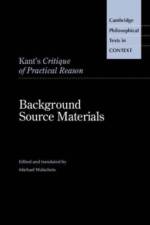
Kant did not initially intend to write the Critique of Practical Reason, let alone three Critiques. It was primarily the reactions to the Critique of Pure Reason and the Groundwork of the Metaphysics of Morals that encouraged Kant to develop his moral philosophy in the second Critique. This volume presents both new and first-time English translations of texts written by Kant's predecessors and contemporaries that he read and responded to in the Critique of Practical Reason. It also includes several subsequent reactions to the second Critique. Together, the translations in this volume present the Critique of Practical Reason in its full historical context, offering scholars and students new insight into Kant's moral philosophy. The detailed editorial material appended to each of the eleven chapters helps introduce readers to the life and works of the authors, outlines the texts translated, and points to relevant passages across Kant's works.
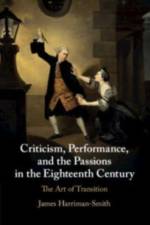
Recovers eighteenth-century appreciation of transition as a critical tool for analysing the expression and reception of emotion in theatre.
An innovative study of empathy, sex, and love between prisoners of war and German women during World War II.
Challenging concepts of religion and secularism, this book shows the English novel rising with the English Bible, not after it.
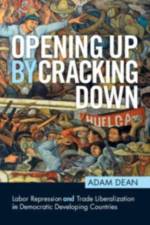
"How did democratic developing countries open their economies during the late twentieth century? Since labor unions opposed free trade, democratic governments often used labor repression to ease the process of trade liberalization. Some democracies brazenly jailed union leaders and used police brutality to break the strikes that unions launched against such reforms. Others weakened labor union opposition through subtler tactics, such as banning strikes and retaliating against striking workers. Either way, this book argues that democratic developing countries were more likely to open their economies if they violated labor rights. Opening Up By Cracking Down draws on fieldwork interviews and archival research on Argentina, Mexico, Bolivia, Turkey, and India, as well as quantitative analysis of data from over one hundred developing countries to places labor unions and labor repression at the heart of the debate over democracy and trade liberalization in developing countries"--
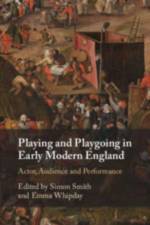
Offers a new, interdisciplinary account of early modern drama through the lens of playing and playgoing.
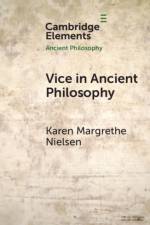
Ancient philosophers offer intriguing accounts of vice - virtue's bad twin. This Element considers injustice and lawlessness in Plato and Aristotle. Starting with Socrates' paradoxical claim that 'tyrants and orators do just about nothing they want to do' (Gorgias 466d-e), it examines discussions of moral ignorance and corruption of character in Plato's Republic and Aristotle's Nicomachean Ethics. Aristotle's account of vice is indebted to Plato's. But his claims have confounded critics. Why is the vicious agent full of regrets when he acts in accordance with his wish? To what extent is vice a form of moral ignorance? Why will the unjust man never get what he wants? These and other questions yield new insights into ancient Greek ethics and moral psychology, as well as surprising perspectives on contemporary debates.
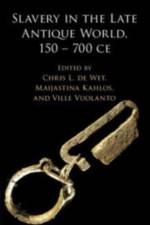
An investigation into slaveholding and slave experience in late antiquity, focusing on ideological, moral and cultural aspects of slavery.
Kant did not initially intend to write the Critique of Practical Reason, let alone three Critiques. It was primarily the reactions to the Critique of Pure Reason and the Groundwork of the Metaphysics of Morals that encouraged Kant to develop his moral philosophy in the second Critique. This volume presents both new and first-time English translations of texts written by Kant's predecessors and contemporaries that he read and responded to in the Critique of Practical Reason. It also includes several subsequent reactions to the second Critique. Together, the translations in this volume present the Critique of Practical Reason in its full historical context, offering scholars and students new insight into Kant's moral philosophy. The detailed editorial material appended to each of the eleven chapters helps introduce readers to the life and works of the authors, outlines the texts translated, and points to relevant passages across Kant's works.
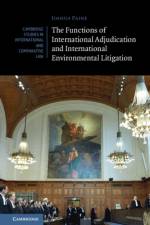
This book will benefit academics and practitioners working in international dispute settlement, public international law, international economic law, and law of the sea. Focusing on environmental disputes, it develops a comparative analysis of the roles of international courts and tribunals across four key sites of international adjudication.
Demonstrates how contemporary fiction in French has become a polycentric and transnational field of vibrant and varied experimentation.
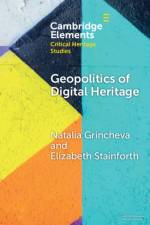
Geopolitics of Digital Heritage analyzes and discusses the political implications of the largest digital heritage aggregators across different scales of governance, from the city-state governed Singapore Memory Project, to a national aggregator like Australia's Trove, to supranational digital heritage platforms, such as Europeana, to the global heritage aggregator, Google Arts & Culture. These four dedicated case studies provide focused, exploratory sites for critical investigation of digital heritage aggregators from the perspective of their geopolitical motivations and interests, the economic and cultural agendas of involved stakeholders, as well as their foreign policy strategies and objectives. The Element employs an interdisciplinary approach and combines critical heritage studies with the study of digital politics and communications. Drawing from empirical case study analysis, it investigates how political imperatives manifest in the development of digital heritage platforms to serve different actors in a highly saturated global information space, ranging from national governments to transnational corporations.
Abonner på vårt nyhetsbrev og få rabatter og inspirasjon til din neste leseopplevelse.
Ved å abonnere godtar du vår personvernerklæring.