



Gjør som tusenvis av andre bokelskere
Abonner på vårt nyhetsbrev og få rabatter og inspirasjon til din neste leseopplevelse.
Ved å abonnere godtar du vår personvernerklæring.Du kan når som helst melde deg av våre nyhetsbrev.

A continuation of the Cambridge Global English pathway from stages 10 to 12 In this print resource with DA you'll find everything you need to deliver the course, including teaching ideas and answers as well as differentiation and formative assessment support. The resource includes editable unit and progress tests, aswellas access to audio recordings for listening activities plus answers. Assessment and differentiation ideas help you cater to variety of learning levels, while differentiated worksheets help you support grammar learning and general classroom learning. Ready-made assessment opportunities with downloadable progress and unit tests with answers save valuable time. There is clear guidance on how to assess written work from sample answers with expert comments.
A continuation of the Cambridge Global English pathway from stages 10 to 12 This write-in workbook with digital access enables students to practise and consolidate what they've learnt and develop the four key skills (reading, writing, speaking, listening). Structured support for their grammar and language learning will build their confidence, with academic vocabulary and grammar tips and glossaries next to the text. Process writing pages consolidate their knowledge of text types. Students will find practice opportunities that support different needs, with explanations, tips and activities differentiated into three tiers: Focus, Practice and Challenge. Clear learning objectives and 'Reflection' questions will help them confidently assess their own progress. Answers are accessed via Cambridge GO.
This interdisciplinary collection studies the internet's effects on traditional media. Part 1 deals with the breakdown of trust in the media; Part 2 outlines the changing law of defamation and privacy; Part 3 analyzes the challenge of online content moderation; and Part 4 considers the financial challenges facing journalistic enterprises.
As universities and governments seek to prepare the next generation of diplomats to manage international affairs, they finally have a teaching tool focusing on the practical knowledge and skills that in the past could be learned only on the job. Edited by Nicholas Kralev, founder of the Washington International Diplomatic Academy, Diplomatic Tradecraft brings together 18 career ambassadors with decades of experience to lift the curtain on a mysterious but vital profession, and to pass on the insights and abilities they gained to those who will succeed them. Beginning with an overview of diplomatic institutions and protocols, the text considers the key attributes of diplomatic communication and negotiation, as well as core specializations including economic, consular and public diplomacy. With compelling narratives, case studies and exercise scenarios, the chapters on various aspects of diplomatic practice form a cohesive and comprehensive volume, written in an accessible and engaging style.
As universities and governments seek to prepare the next generation of diplomats to manage international affairs, they finally have a teaching tool focusing on the practical knowledge and skills that in the past could be learned only on the job. Edited by Nicholas Kralev, founder of the Washington International Diplomatic Academy, Diplomatic Tradecraft brings together 18 career ambassadors with decades of experience to lift the curtain on a mysterious but vital profession, and to pass on the insights and abilities they gained to those who will succeed them. Beginning with an overview of diplomatic institutions and protocols, the text considers the key attributes of diplomatic communication and negotiation, as well as core specializations including economic, consular and public diplomacy. With compelling narratives, case studies and exercise scenarios, the chapters on various aspects of diplomatic practice form a cohesive and comprehensive volume, written in an accessible and engaging style.
The relationship between lifelike machines and mechanistic human behaviour provoked both fascination and anxiety in Victorian culture. This collection is the first to examine the widespread cultural interest in automata - both human and mechanical - in the nineteenth century. It was in the Victorian period that industrialization first met information technology, and that theories of physical and mental human automatism became essential to both scientific and popular understandings of thought and action. Bringing together essays by a multidisciplinary group of leading scholars, this volume explores what it means to be human in a scientific and industrial age. It also considers how Victorian inquiry and practices continue to shape current thought on race, creativity, mind, and agency. This title is part of the Flip it Open programme and may also be available Open Access. Check our website Cambridge Core for details.
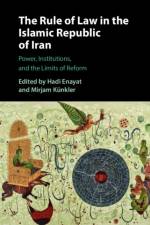
A comprehensive and detail-oriented analysis of the rule of law in the Islamic Republic of Iran and its social, political and historical contexts. The interdisciplinary and comparative nature of the book appeals to readers at the crossroads of comparative law, social science, Middle East and Islamic studies.
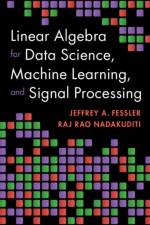
Master basic matrix methods by seeing how the mathematics is used in practice in a range of data-driven applications. Includes a wealth of engaging exercises for quizzes, self-study and interactive learning, as well as online JULIA demos offering a hands-on learning experience for upper-level undergraduates and first-year graduate students.
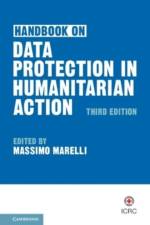
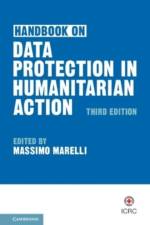
Offering a comprehensive, accessible analysis, this handbook outlines how humanitarian organizations can implement personal data protection law to uphold the rights and dignity of the most vulnerable. It explores legal principles and requirements, new technologies, and humanitarian programming. Available as Open Access on Cambridge Core.
Offering a comprehensive, accessible analysis, this handbook outlines how humanitarian organizations can implement personal data protection law to uphold the rights and dignity of the most vulnerable. It explores legal principles and requirements, new technologies, and humanitarian programming. Available as Open Access on Cambridge Core.
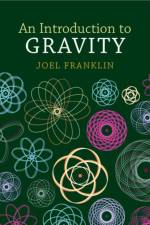
Why can't you take Newtonian gravity, add special relativity, and build a relativistic theory of gravity that matches the predictions of our accepted theory, Einstein's general relativity? Ideal for a one-semester course at junior/senior level, this student-friendly text builds on familiar physics to illuminate the structure of general relativity.
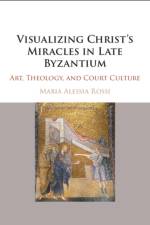
Explores the meanings and iconography of monumental paintings of Christ's miracles in late Byzantine churches, and demonstrates that, far from the formulaic ensembles they are often mistaken to be, these painted cycles were carefully and inventively crafted by the cultural milieu at a pivotal time in the early Palaiologan era.
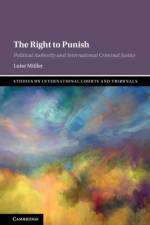
What gives international courts the authority to punish individuals for international crimes? Through a unique philosophical lens, this book explores why international courts are morally justified to pierce a state's sovereignty to punish individuals for genocide, war crimes, crimes against humanity, and other mass human rights violations.
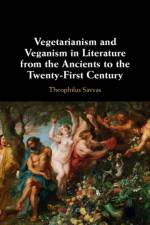
This book traces the development of vegetarianism through literature. Its historical span ranges from ancient thinkers, such as Pythagoras and Ovid, to contemporary writers, including Ruth L. Ozeki and Jonathan Franzen. Its broad historical range is complemented by a cross-cultural focus which emphasises the connections between east and west.
Ways of Living Religion provides a philosophical analysis of different types of religious experience, focusing on the lived experience of religion rather than mere statements of belief or doctrine. Christina M. Gschwandtner distinguishes between experiences by examining their defining features, showing their continuity with human experience.
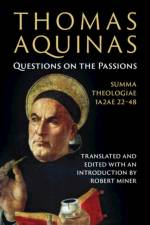
Thomas Aquinas's Questions on the passions form part of the Summa Theologiae, Aquinas's best-known work; this first standalone edition elucidates the work's historical and philosophical significance. This book is for students of ethics, philosophical psychology, and the history of emotions.
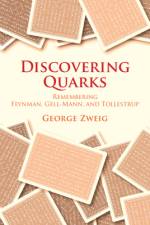
This book describes the development of our understanding of the strong interactions in particle physics, through its competing ideas and personalities, its false starts, blind alleys, and moments of glory - culminating with the author's discovery of quarks, real particles living in a deeper layer of reality. How were quarks discovered, what did physicists think they were, and what did they turn out to be? These questions are answered through a collection of personal remembrances. The focus is on the reality of quarks, and why that reality made them so difficult to accept. How Feynman and Gell-Mann practiced physics, with their contrasting styles and motivations, presented different obstacles to accepting this reality. And how was the author, as a graduate student, able to imagine their existence, and act on it? Science buffs, students, and experts alike will find much here to pique their interest and learn about quarks along the way.
Abonner på vårt nyhetsbrev og få rabatter og inspirasjon til din neste leseopplevelse.
Ved å abonnere godtar du vår personvernerklæring.