
Gjør som tusenvis av andre bokelskere
Abonner på vårt nyhetsbrev og få rabatter og inspirasjon til din neste leseopplevelse.
Ved å abonnere godtar du vår personvernerklæring.Du kan når som helst melde deg av våre nyhetsbrev.

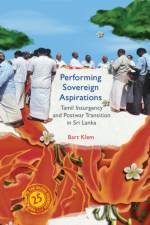
Challenges state-centric interpretations of insurgent politics by offering a performative perspective on Sri Lanka's Tamil nationalist movement.
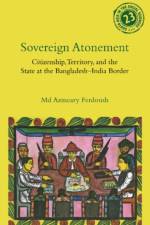
Sovereign Atonement makes an excellent use of a highly specific and in many ways unusual empirical case to build a set of novel theoretical arguments that engages with and contributes to a broad audience of geography, anthropology, political science, post-colonial, and South Asian studies suited for academics, journalists, and practitioners.
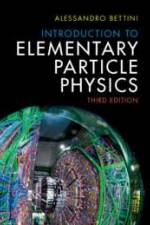
The Standard Model is the most comprehensive physical theory ever developed. This textbook conveys the basic elements of the Standard Model using elementary concepts, without the theoretical rigor found in most other texts on this subject. It contains examples of basic experiments, allowing readers to see how measurements and theory interplay in the development of physics. The author examines leptons, hadrons and quarks, before presenting the dynamics and the surprising properties of the charges of the different forces. The textbook concludes with a brief discussion on the discoveries of physics beyond the Standard Model, and its connections with cosmology. Quantitative examples are given, and the reader is guided through the necessary calculations. Each chapter ends in the exercises, and solutions to some problems are included in the book. Complete solutions are available to instructors at www.cambridge.org/9781107406094.
Founded upon a broad collection of primary documents and commentaries, this global study spans 2000 years of Jewishâ "Christian relations.
"Combining scholarship with readability, Jeremy McInerney's wide-ranging, stimulating new book uncovers the complexity and potency of ancient hybridity. Hybrids, McInerney reveals, confuse categories and so challenge categorical thinking and underlying certainties. Classical Greek hybrids force us to ask ourselves what separates humans from animals"--
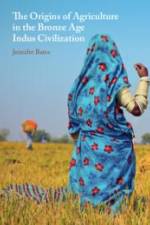
"The Indus civilization in South Asia (c. 3200 - 1500BC) was one of the most important Old World Bronze Age cultures. This study offers new insights into the Indus civilisation through an archaeobotanical reconstruction of its environment. It synthesizes the available data on genetics, archaeobotany, and archaeology"--
This series has been developed for the Cambridge Primary Global Perspectives Curriculum Framework (0838).
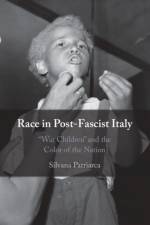
Focusing on the experiences and representations of the 'brown babies' born at the end of World War Two from the encounters between Black Allied soldiers and Italian women, this book explores the persistence of racial thinking and racism in post-fascist and postcolonial Italy. Through the use of a large variety of historical sources, including personal testimonies and the cinema, Silvana Patriarca illustrates Italian - and also American - responses to what many considered a 'problem'. She sensitively analyses the perceptions of race/color among different actors, such as state and local authorities, Catholic clerics, filmmakers, geneticists, psychologists, and ordinary people, and her book is rich in detail about their impact on the lives of the children. Uncovering the pervasiveness of anti-Black prejudice in the early democratic republic, as well as the presence and limitations of anti-racist sensibilities, Race in Post-Fascist Italy allows us to better understand Italy's conflicted reaction to its growing diversity.
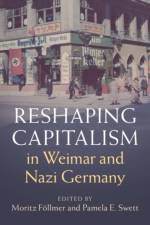
"This volume argues that capitalism had a significant presence in Weimar and Nazi Germany but in a different guise than before World War I. Kapitalismuskritik (critique of capitalism), nationalism, and state intervention all grew in importance, as did uncertainty about the direction that the economy was taking and the ways in which it was intertwined with politics, society, and culture. We are interested in the question of how capitalism was reshaped in this altered context"--
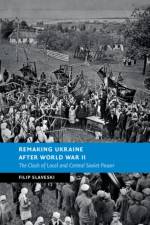
Ukraine was liberated from German wartime occupation by 1944 but remained prisoner to its consequences for much longer. This study examines Soviet Ukraine's transition from war to 'peace' in the long aftermath of World War II. Filip Slaveski explores the challenges faced by local Soviet authorities in reconstructing central Ukraine, including feeding rapidly growing populations in post-war famine. Drawing on recently declassified Soviet sources, Filip Slaveski traces the previously unknown bitter struggle for land, food and power among collective farmers at the bottom of the Soviet social ladder, local and central authorities. He reveals how local authorities challenged central ones for these resources in pursuit of their own vision of rebuilding central Ukraine, undermining the Stalinist policies they were supposed to implement and forsaking the farmers in the process. In so doing, Slaveski demonstrates how the consequences of this battle shaped post-war reconstruction, and continue to resonate in contemporary Ukraine, especially with the ordinary people caught in the middle.
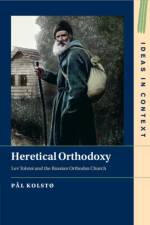
"Throughout his long life, Lev Nikolaevich Tolstoi (1828-1910) grappled with the major questions of human existence. Who are we? What is the purpose of life? Where are we going? (Paperno 2014) Almost all his major fictional characters are concerned with these questions and give different answers to them (Orwin 1993). In the autobiographical trilogy Childhood, Boyhood and Youth, the protagonist 'tries out' various philosophical beliefs, seeking to find what can give meaning to human life. These are also the aspects that elevate War and Peace from being a purely historical epic to becoming an existential drama"--
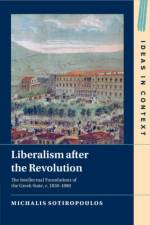
How is a new state built? To what ideas, concepts and practices do authorities turn to produce and legitimise its legal and political system? And what if the state emerged through revolution, and sought to obliterate the legacy of the empire which preceded it? This book addresses these questions by looking at nineteenth-century Greek liberalism and the ways in which it engaged in reforms in the Greek state after independence from the Ottomans (c. 1830-1880). Liberalism after the Revolution offers an original perspective on this dynamic period in European history, and challenges the assumptions of Western-centric histories of nineteenth-century liberalism, and its relationship with the state. Michalis Sotiropoulos shows that, in this European periphery, liberals did not just transform liberalism into a practical mode of statecraft, they preserved liberalism's radical edge at a time when it was losing its appeal elsewhere in Europe.
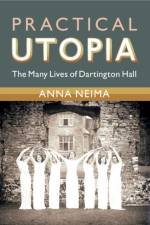
Dartington Hall was a social experiment of kaleidoscopic vitality, set up in Devon in 1925 by a fabulously wealthy American heiress, Dorothy Elmhirst (nee Whitney), and her Yorkshire-born husband, Leonard. It quickly achieved international fame with its progressive school, craft production and wide-ranging artistic endeavours. Dartington was a residential community of students, teachers, farmers, artists and craftsmen committed to revivifying life in the countryside. It was also a socio-cultural laboratory, where many of the most brilliant interwar minds came to test out their ideas about art, society, spirituality and rural regeneration. To this day, Dartington Hall remains a symbol of countercultural experimentation and a centre for arts, ecology and social justice. Practical Utopia presents a compelling portrait of a group of people trying to live out their ideals, set within an international framework, and demonstrates Dartington's tangled affinities with other unity-seeking projects across Britain and in India and America.
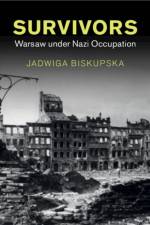
Survivors tells the harrowing story of life in Warsaw under Nazi occupation. As the epicenter of Polish resistance, Warsaw was subjected to violent persecution, the ghettoization of the city's Jewish community, the suppression of multiple uprisings, and an avalanche of restrictions that killed hundreds of thousands and destroyed countless lives. In this study into the unique brutality of wartime Warsaw, Jadwiga Biskupska traces how Nazi Germany set out to dismantle the Polish nation and state for long-term occupation by targeting its intelligentsia. She explores how myriad resistance projects emerged within the intelligentsia who were bent on maintaining national traditions and rebuilding a Polish state. In contrast to other studies on the Holocaust and Second World War, this book focuses on Polish behavior and explains who was in a position to contest the occupation or collaborate with it, while answering lingering questions and addressing controversies about the Nazi empire and the Holocaust in Eastern Europe.
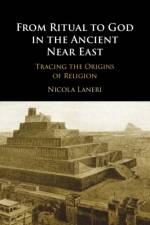
This book traces the transformation of the belief systems that shaped life in ancient Near Eastern communities, from prehistoric times until the advent of religious monotheism in the Levant during the first millennium BCE. It offers new insights into the symbolic value embodied in the religious materiality produced in the ancient Near East.
Abonner på vårt nyhetsbrev og få rabatter og inspirasjon til din neste leseopplevelse.
Ved å abonnere godtar du vår personvernerklæring.