





















Gjør som tusenvis av andre bokelskere
Abonner på vårt nyhetsbrev og få rabatter og inspirasjon til din neste leseopplevelse.
Ved å abonnere godtar du vår personvernerklæring.Du kan når som helst melde deg av våre nyhetsbrev.

In the opening verses of the Book of Ezra-Nehemiah, King Cyrus exhorts the exiled Judeans to return to Jerusalem to restore worship in Jerusalem. It then narrates this restoration through the construction of the temple, the repair of the city walls, and the commitment to the written Torah. In this volume, Roger Nam offers a new and compelling argument regarding the theology of Ezra-Nehemiah: that the Judeans' return migration, which extended over several generations, had a totalizing effect on the people. Repatriation was not a single event, but rather a multi-generational process that oscillated between assimilation and preservation of culture. Consequently, Ezra-Nehemiah presents a unique theological perspective. Nam explores the book's prominent theological themes, including trauma, power, identity, community, worship, divine presence, justice, hope, and others - all of which take on a nuanced expression in diaspora. He also shows how and why Ezra-Nehemiah naturally found a rich reception among emerging early Christian and Jewish interpretive communities.
This book takes as its starting point recent debates over the dematerialisation of subject matter which have arisen because of changes in information technology, molecular biology, and related fields that produced a subject matter with no obvious material form or trace. Arguing against the idea that dematerialisation is a uniquely twenty-first century problem, this book looks at three situations where US patent law has already dealt with a dematerialised subject matter: nineteenth century chemical inventions, computer-related inventions in the 1970s, and biological subject matter across the twentieth century. In looking at what we can learn from these historical accounts about how the law responded to a dematerialised subject matter and the role that science and technology played in that process, this book provides a history of patentable subject matter in the United States. This title is available as Open Access on Cambridge Core.
This Element offers a theoretically informed examination of the manner in which religion, especially newer religious and spiritual movements, are managed by law and legal mechanisms in the authoritarian theocracy of Iran. It highlights how these phenomena have been affected by the intersection of law, politics, and Shiʿi theology in recent Iranian history. The growing interest of Iranian citizens in new religious movements and spiritual currents, fostered by the cultural diffusion of Western writings and ideas, is described. The development of religious diversity in Iran and a corresponding loss of commitment towards some Islamic beliefs and practices are of considerable concern to both the Iranian religious and political establishments. This has led to social control efforts over any religious or spiritual movement differing from the regime's view of Islam. Those efforts, supported in large part by Western anticult ideas, culminated in the passage of stringent legislation in 2021.
Foreign ministers are prominent actors in foreign affairs, often second only to heads of government in their influence. Yet, despite the growing awareness of the importance of key actors, and their backgrounds, in the study of international relations, foreign ministers remain understudied. In this Element, we make an important empirical contribution by presenting an original dataset on the personal and professional background of foreign ministers, spanning thirteen countries and more than 200 years. We use these data to answer three questions: who are the foreign ministers, why are foreign ministers with particular features appointed, and why do some foreign ministers have longer tenure than others? We find that foreign ministers tend to be men of politics who are appointed both on the basis of their affinity to, and to complement the experiences of, the head of government. We also find that foreign ministers stay longer in office when they perform well or are expected to do so, but that they are more likely to lose their posts when conditions make heads of government more prone to 'pin blame' on them to deflect criticism from foreign policy failures.
'Functional Analysis Revisited' is not a first course in functional analysis - although it covers the basic notions of functional analysis, it assumes the reader is somewhat acquainted with them. It is by no means a second course either: there are too many deep subjects that are not within scope here. Instead, having the basics under his belt, the author takes the time to carefully think through their fundamental consequences. In particular, the focus is on the notion of completeness and its implications, yet without venturing too far from areas where the description 'elementary' is still valid. The author also looks at some applications, perhaps just outside the core of functional analysis, that are not completely trivial. The aim is to show how functional analysis influences and is influenced by other branches of contemporary mathematics. This is what we mean by 'Functional Analysis Revisited.'
International Counterterrorism Law is the first book to consider national terrorism legislation in every one of the 197 States worldwide. It explains how international counterterrorism law has become a distinct branch of international law, and what the different components are in both peacetime and armed conflict. The relevance and contribution of international humanitarian law, international criminal law, national criminal law, and international human rights law are examined in combination with global sectoral terrorism treaties and regional instruments to provide a thorough yet manageable account of the law's application. Real-life examples are used to inform the material, from Ukraine to Syria, to Iran and the unlawful actions of the Global War on Terror, so that the reader can understand how domestic and international terrorism has historically been treated by prosecutors and the courts.
The fourth edition of Pedrottis' Introduction to Optics is a comprehensive revision of a classic guide to the fascinating properties of light, now with new authors. Ideally suited for undergraduate optics courses in physics and electrical/electronic engineering departments, this edition adopts a distinctive phenomenological approach, bringing the underlying science to life through interactive simulations and beautifully revised figures. The modular structure and succinct style of previous editions has been maintained, while the content has been modernized, new topics have been added, and a greater consistency of terminology attained. For even more effective learning, a recurring theme of student engagement runs throughout the text, supported by a multifaceted pedagogical package that reinforces key concepts, develops a clear understanding of optical technologies and applications, and connects to students' experiences and observations from everyday life.
Over the past several decades, American society has experienced fundamental changes - from shifting relations between social groups and evolving language and behavior norms to the increasing value of a college degree. These transformations have polarized the nation's political climate and ignited a perpetual culture war. In a sequel to their award-winning collaboration Asymmetric Politics, Grossmann and Hopkins draw on an extensive variety of evidence to explore how these changes have affected both major parties. They show that the Democrats have become the home of highly-educated citizens with progressive social views who prefer credentialed experts to make policy decisions, while Republicans have become the populist champions of white voters without college degrees who increasingly distrust teachers, scientists, journalists, universities, non-profit organizations, and even corporations. The result of this new "diploma divide" between the parties is an increasingly complex world in which everything is about politics - and politics is about everything.
From airport bookstores to deckchairs, as audiobooks downloaded by commuters, and on Kindles and other portable devices, twenty-first century bestsellers move in old and new ways. This Element examines the locations and mobilities of the contemporary bestseller as a multi-format commercial object. It employs paratextual, textual, and site-based analysis of the spatiality of bestsellers and considers the centrality of geography to the commercial promise of these books. Space, Place, and Bestsellers provides analysis of the spatial logic of bestseller lists, evidence-rich accounts of the physical and digital retail sites through which bestsellers flow, and new interpretations of how affixing the label 'bestseller' individual authors and titles generates industrial, social, and textual effects. Through its multi-layered analysis, this Element offers a new model for studying the spatiality of popular fiction.
This monograph examines the ways in which Caribbean content creators use elements of Caribbean Englishes and Creoles in their performances of identity in image macro memes and TikTok videos. It also examines the ideologies that underlie these performances. The data comprises memes from Trinidadian Facebook pages, as well as videos by Guyanese, Barbadian, and Trinidadian TikTokers, and was analysed using the multimodal method designed by Kress. For meme makers, identity is understood as a system of distinction between ingroups and outgroups, and language and other semiotic features, notably emojis, are used to distinguish Trinidadians from other nationalities, and groups of Trinidadians from one another. TikTokers establish their Caribbean identity primarily through knowledge of lexis, but this works in concert with other linguistic features to create authentic identities. Social media content is underpinned by the tension between the acceptance and rejection of standard language ideologies.
Drawing together insights from the history of emotions, cultural history, and studies of philosophical idealism, 'affective relationality' - the channelling of emotion through music's social and cultural synergies - emerges as key to Romantic aesthetic thought. Now familiar concepts such as theatrical illusion, genius, poetic criticism, and the renewed connection of art to mythology and religion opened new spaces for audiences' feelings, as thinkers such as Rousseau, Herder, Germaine de Staël, Joseph Mainzer, Pierre Leroux and George Sand sought alternatives to the political status quo. Building on the sentimental tradition in eighteenth-century art and politics, the Romantics created ways of listening to music imbued not just with melancholic longing for transcendence but also with humour, gothic fantasy, satire, and political solidarity. The consequences have extended far beyond the classical concert hall into numerous domains of popular culture from melodrama, romances and political songwriting to musical theatre and film.
This Manuscript is an analysis of the African Diaspora. It will define the African Diaspora and how the concepts behind the term came to be socially and historically engineered. The African diaspora is then placed into a broader historical context where the diverse, global, and overlapping histories of Africa's ancient-ongoing diasporas will be explored. In particular, themes of injustice, agency, resistance, and diversity (regarding people, diasporas, and experiences) will feature heavily. Through this exploration, this manuscript will interrogate dominating narratives regarding African diaspora-related discourse, seeking to address prevailing ideas that inadequately capture the true complexity and nuance of the subject. It does so to construct a more comprehensive understanding of the subject matter while lining out a more holistic approach to thinking about the very nature of "diaspora." Finally, this manuscript will analyze the present circumstances of the African diaspora, bringing into conversation a progressively global and connected world.
The global race to build the world's first quantum computer has attracted enormous investment from government and industry, and it attracts a growing pool of talent. As with many cutting-edge technologies, the optimal implementation is not yet settled. This important textbook describes four of the most advanced platforms for quantum computing: nuclear magnetic resonance, quantum optics, trapped ions, and superconducting systems. The fundamental physical concepts underpinning the practical implementation of quantum computing are reviewed, followed by a balanced analysis of the strengths and weaknesses inherent to each type of hardware. The text includes more than 80 carefully designed exercises with worked solutions available to instructors, applied problems from key scenarios, and suggestions for further reading, facilitating a practical and expansive learning experience. Suitable for senior undergraduate and graduate students in physics, engineering, and computer science, Building Quantum Computers is an invaluable resource for this emerging field.
Design creativity describes the process by which needs are explored and translated into requirements for change. This Element examines the role of design creativity within the context of healthcare improvement. It begins by outlining the characteristics of design thinking, and the key status of the Double Diamond Model. It provides practical tools to support design creativity, including ethnographic/observational studies, personas and scenarios, and needs identification and requirements analysis. It also covers brainstorming, Disney, and six thinking hats techniques, the nine windows technique, morphological charts and product architecting, and concept evaluation. The tools, covering all stages of the Double Diamond model, are supported by examples of their use in healthcare improvement. The Element concludes with a critique of design creativity and the evidence for its application in healthcare improvement. This title is also available as Open Access on Cambridge Core.
Dynamical systems that are amenable to formulation in terms of a Hamiltonian function or operator encompass a vast swath of fundamental cases in applied mathematics and physics. This carefully edited volume represents work carried out during the special program on Hamiltonian Systems at MSRI in the Fall of 2018. Topics covered include KAM theory, polygonal billiards, Arnold diffusion, quantum hydrodynamics, viscosity solutions of the Hamilton-Jacobi equation, surfaces of locally minimal flux, Denjoy subsystems and horseshoes, and relations to symplectic topology.
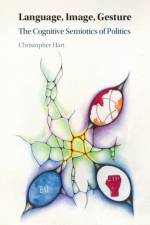
Politics is an inherently symbolic practice. This innovative book advances a framework for the critical analysis of political texts and talk based in cognitive linguistics. Through detailed analyses of attested semiotic practices, it provides a current, comprehensive and authoritative statement on the paradigm of Cognitive Critical Discourse Analysis (Cognitive CDA). The ideological effects of dominant conceptualisations and their implications for the legitimation of social action are explored with reference to political topics that have defined the last decade, including immigration, the rise of nationalism, the right to protest, Brexit and Covid-19. A range of conceptual phenomena are addressed, including image schematic patterning, attentional distribution, viewpoint and metaphor, as they feature in various contexts, genres and modes of political discourse. In a major advancement of the paradigm, the book extends Cognitive CDA to images and gesture to consider the role played by multiple semiotic modes in the discursive performance of politics.
This Element traverses the concept and practice of bot mimicry, defined as the imitation of imitative software, specifically the practice of writing in the style of social bots. Working as both an inquiry into and an extended definition of the concept, the Element argues that bot mimicry engenders a new mode of knowing about and relating to imitative software - as well as a distinctly literary approach to rendering and negotiating artificial intelligence imaginaries. The Element presents a software-oriented mode of understanding Internet culture, a novel reading of Alan Turing's imitation game, and the first substantial integration of Walter Benjamin's theory of the mimetic faculty into the study of digital culture, thus offering multiple unique lines of inquiry. Ultimately, the Element illuminates the value of mimicry - to the understanding of an emerging practice of digital literary culture, to practices of research, and to our very conceptions of artificial intelligence.
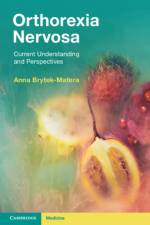
Whilst many people try to make healthy food choices to improve their health, for others the focus on healthy eating can become obsessive and lead to maladaptive eating behaviours and poorer health. Orthorexia nervosa is a preoccupation with the quality of healthy food, where a refusal of certain foods is driven by the desire to be healthy. Orthorexia Nervosa: Current Understanding and Perspectives is the first clinical book that systematically explores this condition. The book contains in-depth information, with chapters highlighting diagnostic criteria, assessment, prevalence, multidimensional characteristics, future directions, and treatment. Additional expert commentary delivers valuable insights to further provide readers with a better understanding of this -condition. This informative and engaging book is a valuable resource for academics, researchers, health professionals, and students interested in eating behaviour. It is an essential read for anyone wanting a better understanding of orthorexia nervosa and its impact on individuals' health.
Establishing a fresh critical paradigm, this volume shows how the 1850s was significantly defined by forms of increasing intellectual, class, and geographical mobility. It saw the flourishing of major Victorian writers, including George Eliot, Elizabeth Gaskell, Charles Dickens, W. M. Thackeray, Matthew Arnold, Charles Kingsley, Anthony Trollope, Tennyson, and Elizabeth Barrett and Robert Browning. Outputs by these writers were read alongside a variety of other genres, including travel writings, learned society reports, statistical returns, popular journalism, working-class writing, and scientific papers in a period which saw an increasing availability of cheap printed matter. Intertextuality and interdisciplinarity are not only key to this volume, but are also one of the most important legacies of the literature of the 1850s. Contributors are attentive to a plethora of voices, disciplines, and forms of knowledge which they read through rigorous 21st-century critical priorities including diversity, cultural and physical geography, and the environment.
Historically, the papacy has had - and continues to have - significant and sustained influence on society and culture. In the contemporary world, this influence is felt far afield from the traditional geographic and cultural center of papal authority in western Europe, notably in the Global South. Volume 3 frames questions around the papacy's cultural influence, focusing on the influence that successive popes and various vectors of papal authority have had on a broad range of social and cultural developments in European and global societies. The range of topics covered here reflects the vast and expanding scope of papal influence on everything from architecture to the construction and contestation of gender norms to questions of papal fashion. That influence has waxed and waned over time as successive popes have had access to greater resources and have had stronger imperatives to use their powers of patronage and regulation to intervene in society at large.
These are the WTO's authorized and paginated reports in English. They are an essential addition to the library of all practising trade lawyers and a useful tool for students and academics worldwide working in the field of international economic or trade law. The form of citation for this volume recommended by the WTO is DSR 2019: I-III.
These are the WTO's authorized and paginated reports in English. They are an essential addition to the library of all practising trade lawyers and a useful tool for students and academics worldwide working in the field of international economic or trade law. The form of citation for this volume recommended by the WTO is DSR 2019: I-III.
"This graduate textbook covers the basic formalism of supergravity, as well as a wide range of its modern applications, suitable for a focused first course. Assuming a working knowledge of quantum field theory, it gives Ph.D. students the tools they need to do research that uses supergravity"--
Abonner på vårt nyhetsbrev og få rabatter og inspirasjon til din neste leseopplevelse.
Ved å abonnere godtar du vår personvernerklæring.