




Gjør som tusenvis av andre bokelskere
Abonner på vårt nyhetsbrev og få rabatter og inspirasjon til din neste leseopplevelse.
Ved å abonnere godtar du vår personvernerklæring.Du kan når som helst melde deg av våre nyhetsbrev.

Written by leading international experts, this handbook provides an accessible resource to task-based language teaching for teachers, as well as academic researchers. Chapters in the volume are presented in a reader-friendly style, with ideas made accessible through case studies, questions for discussion, and suggested further readings.
Edited by an international team of experts in the field, this Handbook is the first truly comprehensive and systematic account of undergraduate research, looking at different countries, disciplines, and methodologies. It is essential reading for anyone wishing to broaden their understanding of how undergraduate research is implemented worldwide.
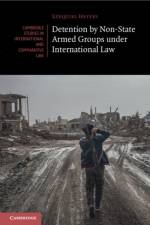
During armed conflict, non-State armed groups deprive individuals of their liberty. While this is not a new phenomenon, its pervasiveness is reflected by recent examples in Colombia, Libya, Syria, Ukraine, Mali and the Democratic Republic of the Congo. Yet, examining these activities goes beyond its mere acknowledgment. It involves questions concerning their legality and the non-State armed groups' motivations when depriving individuals of their liberty. Drawing on his personal experiences while working for various humanitarian organizations, Ezequiel Heffes aims at elucidating how international law can be used as a protective tool in relation to individuals placed in detention by non-State armed groups. Based on case studies of selected groups and a normative and doctrinal analysis, he proposes minimum humanitarian principles applicable to those situations. By addressing a contemporary issue that touches upon a number of legal regimes, this study makes a valuable contribution to the law applicable in armed conflict.
Translation is a rapidly developing subject of study, especially in China, Australia, Europe and the USA. This Handbook offers an accessible and authoritative account of the many facets of this buoyant discipline, intended for students, teachers and scholars of translation studies, modern languages, linguistics, social studies and literary studies.
Material culture studies is an interdisciplinary field that examines the relationships between people and their things: the production, history, preservation, and interpretation of objects. It draws on theory and practice from disciplines in the social sciences and humanities, such as anthropology, archaeology, history, and museum studies. Written by leading international scholars, this Handbook provides a comprehensive view of developments, methodologies and theories. It is divided into five broad themes, embracing both classic and emerging areas of research in the field. Chapters outline transformative moments in material culture scholarship, and present research from around the world, focusing on multiple material and digital media that show the scope and breadth of this exciting field. Written in an easy-to-read style, it is essential reading for students, researchers and professionals with an interest in material culture.
Provides an account of the European legislative process that does justice to the democratic potential inherent in trilogues. In particular, the book offers a systematic appreciation of the relevant legal sources and draws on the insights of legal and political scholarship.
Moving beyond the normative frames of terrorism and counter-terrorism, this book shows how world literatures from the Global South can be used to examine the multiple modalities of violence that pervade contemporary world politics, such as communalism, factionalism, peasant wars, banditry, nationalist struggles, resource wars and acts of vengeance.
This engaging study examines the duality of state responsibility for violations of international law and provides the first in-depth, extensive history of this modern doctrine. Will enrich researchers, practitioners and students interested in diplomacy, international law, legal history and the regulation of international enforcement actions.
Examines the challenges faced by migrant Indian labourers who settled in the former European plantation colonies and their struggles to adapt and forge an identity in these places far from their homes.
Incorporating digital technologies in the classroom can be both a daunting and exciting experience for educators of all age groups. Supporting Innovative Pedagogies with Digital Technologies explores intentional teaching approaches for using digital technologies in the classroom as a tool to support rather than replace established strategies.
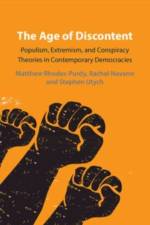
The years following the 2008 financial crisis produced a surge of political discontent with populism, conspiracism, and Far Right extremism rising across the world. Despite this timing, many of these movements coalesced around cultural issues rather than economic grievances. But if culture, and not economics, is the primary driver of political discontent, why did these developments emerge after a financial collapse, a pattern that repeats throughout the history of the democratic world? Using the framework of 'Affective Political Economy', The Age of Discontent demonstrates that emotions borne of economic crises produce cultural discontent, thus enflaming conflicts over values and identities. The book uses this framework to explain the rise of populism and the radical right in the US, UK, Spain, and Brazil, and the social uprising in Chile. It argues that states must fulfill their roles as providers of social insurance and channels for citizen voices if they wish to turn back the tide of political discontent.
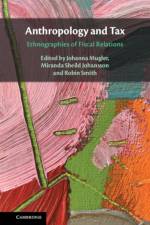
The first substantial collection of anthropological work on tax, this book uses ethnographic data from around the world to elucidate how tax systems shape not just our economic lives, but our social relationships and our values, and how they categorise people and things. It reconceptualises what taxes do in society.
Drawing upon original manuscripts and The Collected Works of Jeremy Bentham, this collection represents the latest scholarship on Bentham's late and mature thought on constitutional law. The contributions cover a diverse range of major topics, from official aptitude or competency to the interests of women, and explore Bentham's writings on courts, codification, and cosmopolitanism. Together, its chapters challenge the received notion, based on early jurisprudential writings, that Bentham's constitutional thought is authoritarian, and show that Bentham, as a constitutional theorist, offers a distinctive liberal perspective. Freeing Bentham's theories from their long sentences and unfamiliar terminology, these essays make accessible Bentham's subtle and important ideas on liberal democracy. By shining a light on Bentham's mature thought, this volume offers a refreshingly comprehensive, detailed, and authentic account of Bentham's theory of democracy.
From sleepy fishing village to samurai capital to vibrant global metropolis, Eiko Maruko Siniawer takes readers through Tokyo's rich history, revealing four centuries of transformation deeply woven into its fabric. This accessible guide introduces a world of shoguns and kabuki theater, riots and earthquakes, wartime devastation and resilience, booms and busts, bright lights and skyscrapers, all viewed through the lived experiences of those who have inhabited and shaped a city of distinctive neighborhoods and different personalities. Emphasizing the city's human heart, Siniawer conveys a vivid sense of time, culture, and place through ten moments that have shaped Tokyo's many lives.
Between 1840 and 1860 the British Empire expanded rapidly in scale, with rampant annexation of territory and ruthless suppression of rebellion. These decades also witnessed an unprecedented movement of people across the Empire and around the world, with over 2.6 million emigrants leaving Britain in the 1850s alone. Managing Mobility examines how the British imperial state facilitated the mass migration of its impoverished subjects as labor assets, shipped across vast expanses of ocean to contribute to the economy of the Empire. Philip Harling analyzes the ideological framework which underpinned these interventions and discusses the journeys taken by emigrants across four continents, considering the varied outcomes of these significant projects of social engineering. In doing so, this study demonstrates how the British imperial state harnessed migration to ensure and maintain a racialised global economic order in the decades after Emancipation.
This Element explores the history of urban planning, city building, and city life in the socialist world. It follows the global trajectories of architects, planners, and ideas about socialist urbanism developed during the twentieth century, while also highlighting features of everyday life in socialist cities. The Element opens with a section on the socialist city as it took shape first in the Soviet Union. Subsequent sections take a comparative and transnational approach to the history of socialist urbanism, tracing socialist city development in the Union of Soviet Socialist Republics (USSR), Eastern Europe, Asia, Africa, and Latin America.
This Element aims to provide an overview of Thai politics with an up-to-date discussion of the characteristics of political regimes, political economy, and identity and mobilization that are grounded in historical analysis stretching back to the formation of the modern nation state. The thematic topics will focus on a) the chronic instability and ever-changing nature of political regimes resulting in the failure of democratic consolidation, b) the nexus of business and politics sustained by a patrimonial state structure, patronage politics and political corruption, and c) the contestation of identity and the causes and consequences of mass mobilization in the civic space and street politics.
This timely collection of essays examines Sino-American relations during the Second World War, the Chinese Civil War and the opening of the Cold War. Drawing on new sources uncovered in China, Taiwan, the UK and the US, the authors demonstrate how 'grassroots' engagements - not just elite diplomacy - established the trans-Pacific networks that both shaped the postwar order in Asia, and continue to influence Sino-US relations today. In these crucial years, servicemen, scientists, students, businesspeople, activists, bureaucrats and many others travelled between the US and China. In every chapter, this innovative volume's approach uncovers their stories using both Chinese and English language sources. By examining interactions among various Chinese and American actors in the dynamic wartime environment, Uneasy Allies reveals a new perspective on the foundations of American power, the brittle nature of the Sino-American relationship, and the early formation of the institutions that shaped the Cold War Pacific.
Objects of knowledge exist within material, immaterial, and conceptual worlds. Once the world is conceived from the perspective of others, the physical ontology of modern science no longer functions as a standard by which to understand other orderings of reality, whether from ethnographical or historical sources. Because premodern and non-western sources attest to a plurality of sciences practiced in accordance with different ways of worldmaking from that of the modern West, their study belongs to the history of science, the philosophy of science, and the sociology of science, as well as the anthropology of science. In Worldmaking and Cuneiform Antiquity, Francesca Rochberg extends an anthropology of science to the historical world of cuneiform texts of ancient Babylonia. Exploring how Babylonian science has been understood, she proposes a new direction for scholarship by recognizing the world of ancient science, not as a less developed form of modern science, but as legitimate and real in its own right.
This Element develops and showcases a new methodological framework in which to study the connections between early modern travel writing and life- and self-writing. Turning the scholarly focus in the study of travel writing from eye-witnessing and proto-ethnography of foreign lands to the 'fashioned' and portrayed selves and 'inner worlds' of travellers - personal memory, autobiographical practices, and lived yet often heavily mediated travel experiences - it opens up perspectives to travel writing in its many modes, that extend both before and after 'lived' travels into their many pre- and afterlives in textual form. This title is also available as Open Access on Cambridge Core.
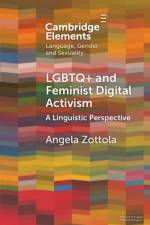
This Element focuses on the linguistic and discursive practices employed by digital citizens to promote their causes on social media, that is to engage in digital activism, drawing attention to the growing importance of this phenomenon in relation to gender identity and sexuality issues. I propose the label LGBTQ+ Digital Activism to join the already existing one Feminist Digital Activism and argue that, while these have been areas of interest from sociology and communication specialists, digital activism is still to be embraced as a field of research by applied linguists. I point out to a number of linguistic and discursive features that are popular among digital activists and support this through the analysis of the use of the hashtag #wontbeerased combining Social Media Critical Discourse Analysis and Corpus-Assisted Discourse Studies. I suggest that further research is needed to explore how language is used to propagate and popularize emancipatory discourses online.
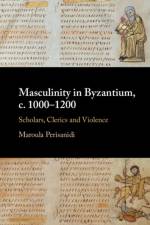
"Exploring the role of learning, violence and religious status in the construction of Byzantine masculinities, this book is valuable for scholars and students of gender, posthumanism and disability in any period as well as of Byzantine and medieval history"--
Abonner på vårt nyhetsbrev og få rabatter og inspirasjon til din neste leseopplevelse.
Ved å abonnere godtar du vår personvernerklæring.