
















Gjør som tusenvis av andre bokelskere
Abonner på vårt nyhetsbrev og få rabatter og inspirasjon til din neste leseopplevelse.
Ved å abonnere godtar du vår personvernerklæring.Du kan når som helst melde deg av våre nyhetsbrev.

Introduces key principles of healthcare supply chains, with practical insights into their design, operation, and application as an improvement approach. This title is also available as open access on Cambridge Core.
In a fresh format Benign Bigotry addresses commonly held cultural myths as the basis for examining subtle forms of racial, sexual, gender and religious bias. Kristin J. Anderson skilfully relates each myth to real world events, emphasizing how errors in individual thinking can affect society as a whole.
"With forty percent of the world's population, twenty-five percent of global GDP and large troves of personal data, BRICS countries (Brazil, Russia, India, China, South Africa) play an increasingly important role in global digital development and policymaking. This is the first book exploring digital sovereignty from a Global South perspective"--
In a world where digital development and policymaking are dominated by Silicon Valley tech giants, the BRICS countries - Brazil, Russia, India, China, and South Africa - play an increasingly important role. With forty percent of the world's population and twenty-five percent of global GDP, these nations possess vast troves of personal data. Yet, their conceptions, narratives, and initiatives of digital sovereignty remain understudied. This volume is the first to explore digital sovereignty from a Global South perspective and offers a forward-looking take on what a world less dependent on Silicon Valley might look like. It brings together excellent analyses of BRICS digital sovereignty issues, from historical imaginaries to up-to-date conceptualizations, e-payment to smart cities, legal analysis to geopolitical assessment. By offering neglected perspectives from the Global South, this book makes important contributions to the digital sovereignty debate. This title is also available as Open Access on Cambridge Core.
This volume examines the uses of technologies in language test design and validation. Following Cyril Weir's socio-cognitive framework, it reports a series of research studies to shed light on the efficacy and challenges of using technologies in key areas of language test validation. Technology has become an important resource for refining methods of assessment and research. This volume focuses on the uses of cutting-edge technologies in language test design and validation. Using Professor Cyril J Weir???s socio-cognitive framework as a basis, diverse contributors explore the potential and limitations of applying innovations in data collection to language assessment research, and address the validity issues arising from the use of artificial intelligence such as automated scoring and feedback. In addition, the volume reflects on how fit-for-purpose the socio-cognitive framework is for language assessment research and practice in light of technological advances.
Covering expert reports of nineteen jurisdictions across four continents, this Handbook re-examines the positions of shareholders in a comparative, global, and empirical setting. Useful for researchers, policymakers, and corporate professionals, it shows how shareholders use their voting rights to finance the activities of their companies.
"Kant on Freedom, Nature and Judgment Kant's Critique of Judgment seems not to be an obviously unified work. Unlike other attempts to comprehend it as a unity, which treat it as serving either practical or theoretical interests, Kristi Sweet's book posits it as examining a genuinely independent sphere of human life. In her in-depth account of Kant's Critical philosophical system, Sweet argues that the Critique addresses the question: for what may I hope? The answer is given in Kant's account of 'territory,' a region of experience that both underlies and mediates between freedom and nature. Territory forms the context in which purposiveness without a purpose, the Ideal of Beauty, the sensus communis, genius and aesthetic ideas, and Kant's conception of life and proof of God are best interpreted. Encounters in this sphere are shown to refer us to a larger, more cosmic sense of a whole to which both freedom and nature belong"
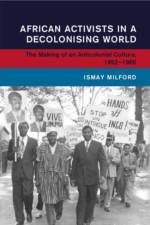
Through the perspective of activists from East and Central Africa, Milford presents a history of global decolonisation and anticolonialism in the 1950s and 1960s. Drawing on multi-archival research, she foregrounds the role of these activists in transnational networks and the limits of the solidarity projects in which they participated.
Drawing on approaches from the history of emotions, Eve Tignol investigates the impact of collective grief on Muslim community formation in north India. This innovative study highlights how emotions were collectively cultivated and debated for the shaping of Muslim identity and for political mobilisation from 1857 to the 1940s.
Analyses the experience of Bengali Muslims on the India side of the India-Bangladesh border. Using the context of neoliberal policies, unequal bilateral relations, labour migration, contested citizenship and xenophobic government rhetoric, Murshid demonstrates that marginalization is based on a variety of historical, social and economic factors.
Abonner på vårt nyhetsbrev og få rabatter og inspirasjon til din neste leseopplevelse.
Ved å abonnere godtar du vår personvernerklæring.