







Gjør som tusenvis av andre bokelskere
Abonner på vårt nyhetsbrev og få rabatter og inspirasjon til din neste leseopplevelse.
Ved å abonnere godtar du vår personvernerklæring.Du kan når som helst melde deg av våre nyhetsbrev.

Much has been written on Simone de Beauvoir, one of France's leading intellectual figures of the 20th century. This study aims to re-evaluate her autobiographical oeuvre, exploring its place in relation to the French autobiographical canon, and in the light of various theorisations of autobiography. It is suitable for scholars in the field.
By analysing paratexts, the relationship between documentation and fiction, as well as plot devices and themes, this study links the evolution of Goncourt's fiction to wider literary debates surrounding Naturalism, Decadence and the renewal of the novel in fin de siecle France.
Written by researchers in their field, this book is about the skills beyond basic word recognition that are necessary for the processing and comprehension of spoken and written language. It offers topics such as: language and text analysis; cognitive processing and comprehension; development of literacy; literacy and schooling; and more.
Examining postcolonial transcultural practice from a range of disciplinary and methodological perspectives, this study seeks to analyse laughter and the postcolonial in their complexity. It gathers a group of international specialists in postcolonial transcultural studies to analyse the functions of humour in a wide range of cultural texts.
In the summer of 1996 the first international conference was held on the medieval chronicle, a genre which until then had received but scant attention from historians or specialists in literary history or art history. There are several reasons why the chronicle is particularly suited as the topic of an international conference. In the first place there is its ubiquity: all over Europe and throughout the Middle Ages chronicles were written, both in Latin and in the vernacular, and not only in Europe but also in the countries neighbouring on it, like those of the Arabic world. Secondly, all chronicles raise such questions as by whom, for whom, or for what purpose were they written, how do they reconstruct the past, what determined the choice of verse or prose, or what kind of literary influences are discernable in them. Finally, many chronicles have been beautifully illuminated, and the relation between text and image leads to a wholly different set of questions.It is the aim of the present volume to provide a representative survey of the on-going research in the field of chronicle studies, illustrated by examples from specific chronicles from a wide variety of countries, periods and cultural backgrounds.
Explores moments of excess and transgression, moments when the very boundaries of 'civilization' are both constructed and challenged. This book includes contributions on topics such as medieval laughter, cursing and swearing, and aspects of violence which highlight the complexity of interrelations between the individual imagination and creativity.
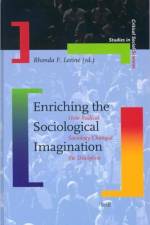
Highlights the wider impact of radical sociology and shows how the work of these and other writers has continued to influence sociology's continuing interest in capitalism, class, race, gender, power, and progressive social change. This book pairs seminal articles with reflective essays written by the founders of progressive sociology.
What are the Faroese and the Greenlanders? Are they peoples in their own right, indigenous peoples or Danish minorities? And what is their status under international law? Do they have the right to national self-determination? And if so, what does this right include?
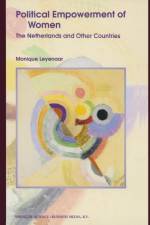
This book explains the high level of current concern for the under-representation of women in politics.
In Misreading England: Poetry and Nationhood Since the Second World War, Raphaël Ingelbien examines how issues of nationhood have affected the works and the reception of several English and Irish poets - Philip Larkin, Ted Hughes, Geoffrey Hill and Seamus Heaney. This study explores the interactions between post-war English poets and the ways in which they transformed or misread earlier poetic visions of England - Romantic, Georgian, Modernist. It also traces often neglected but crucial links between their troubled poetics of Englishness and Seamus Heaney's poetry of Irish nationhood. This radically intertextual approach takes issue with influential accounts of post-war poetry that have drawn on postcolonialism. Instead of being made to reflect contemporary agendas, the poetics of nationhood are here considered in all their textual and ideological complexity, and restored to the historical, intellectual and literary contexts which postcolonial emphases on identity often play down or simplify. Whereas critics in post-devolution Britain increasingly use texts to debunk or promote specific versions of national identity, this study interrogates the very terms in which the debate has been conducted. Its metacritical analyses expose the contradictions of identity politics, and its intertextual readings help re-draw the map of post-war poetry in Britain and Ireland.
"Human Dignity and Human Cloning" contains contributions by philosophers, theologians and lawyers on legal and ethical questions concerning the reproductive and therapeutic cloning of human beings. The main focus lies on the admissibility of cloning in German Constitutional law as well as in public international law. As these legal questions cannot be answered without taking account of the ethical discussion, the topic is analyzed from different cultural and religious viewpoints.
This book discusses the above-mentioned topics from a multidisciplinary perspective.
The book explores the origins, evolution and practice relating to victims' redress for crimes under international law - such as genocide, war crimes or crimes against humanity - in domestic law, regional and universal human rights regimes, humanitarian law, State responsibility, United Nations practice and international criminal law, including the International Criminal Court. The book argues that the international community must now move towards a much more comprehensive redress regime for victims of major crimes, and recommends ways to introduce greater coherence and fairness in victims' redress.
Deals with such questions as: when did European international law become universally binding? Can states, which did not, and could not, participate in its origin and development question some of its rules, which are inimical to their interests? And, how can and does this law change in the absence of any supra-national legislature?
This volume considers the problem of legal universals at the level of the rule of law and human rights, which have fundamentally different pedigrees, and attempts to come to terms with the new unease arising from the universal application of human rights.
Abonner på vårt nyhetsbrev og få rabatter og inspirasjon til din neste leseopplevelse.
Ved å abonnere godtar du vår personvernerklæring.