







Gjør som tusenvis av andre bokelskere
Abonner på vårt nyhetsbrev og få rabatter og inspirasjon til din neste leseopplevelse.
Ved å abonnere godtar du vår personvernerklæring.Du kan når som helst melde deg av våre nyhetsbrev.

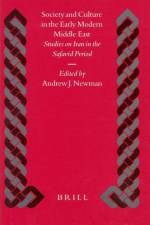
The volume comprises a collection of 20 of the 43 papers presented at the Third International Round Table on Safavid Persia, held at the University of Edinburgh in August, 1998 and edited by the Round Table's organiser. The Third Round Table, the largest of the series to date, continued the emphasis of its predecessors on understanding and appreciating the legacy of the Safavid period by means of exchanges between both established and 'newer' scholars drawn from a variety of fields to facilitate an exchange of ideas, information, and methodologies across a broad range of academic disciplines between scholars from diverse disciplines and research backgrounds with a common interest in the history and culture of this period of Iran's history.
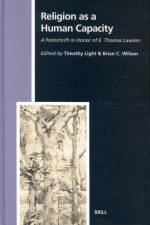
Prepared in honor of E. Thomas Lawson, the essays in "Religion as a Human Capacity" offer a broad range of cognitivist theoretical explorations of religion, as well as cutting-edge applications of cognitive and other contemporary theories to religious data.
This book is a study of the ways in which Galen sought to establish the brain as the regent part (hegemonikon) of the body, utilising a rigorous anatomical epistemology and an often sophisticated (but perforce limited) set of physiological arguments Part One surveys the medical and philosophical past in which the study of the brain occured, and looks at the materials and methods which Galen employs to legitimate his hegemonic argumentation. Part Two examines Galen's anatomical understanding of the brain, especially the ventricles. Part Three offers a critical evaluation of Galen's physiolgy of the brain. This is the first monograph to offer a detailed account of this subject, setting it within the cultural and intellectual contexts of its era, and will be of interest to those in classics, medical history, history andphilosophy of science and the history of ideas.
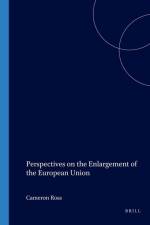
In a historic decision at its Copenhagen Conference in June 1993, the European Union gave the green light to an eastward expansion. Initially, invitations to join the EU went out to just six countries of the former Soviet bloc: Poland, Hungary, the Czech and Slovak republics, Romania, and Bulgaria. However, it was not long before there was a queue of other applicants from Eastern Europe pressing at the EU's gates. There were real fears in some quarters that the economic reforms demanded for entry into the EU would bring about more 'shock' than 'therapy' in Eastern Europe, and that a rapid move to the market would undermine support for democracy. This volume of essays, by a group of internationally recognised experts, focuses on the eastward expansion of the European Union and the EU's relations with the applicant states. The primary aim of the volume is to provide a historical and analytical account of the enlargement process and to provide readers with a scholarly road map to guide them through the intricacies of the rapidly changing enlargement terrain. After region-wide studies of the enlargement process, there are case studies of eight countries: Bulgaria, Romania, the Czech Republic, Slovakia, Croatia, Serbia, Poland, and Estonia.
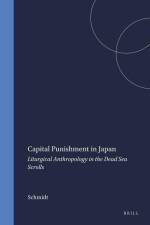
Capital punishment has been carried out in Japan since ancient times. Although ancient Japan uniquely suspended executions for several centuries towards the end of the first millennium, today the death penalty is firmly established in Japan.This volume explores the current state of capital punishment, the domestic discussion on the subject, and the influence of the political orientations of the governments of recent years.The treatise is of current interest especially because of the Aum cult, whose leader Shoko Asahara is at present tried in Tokyo. If found guilty, he may be sentenced to death. After a three years' interval (between 1989 and 1993), Japan is nowadays undergoing a capital punishment "renaissance" with 39 executions between 1993 and 2000.
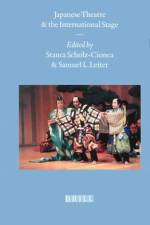
This well-illustrated work is the first attempt to bridge the gap between several specialized discourses concerning Japanese theatre. Central are problems of scholarly and practical reception of Japanese theatre forms in the West. The essays by a careful selection of internationally well-reputed scholars range widely through Japanese theatre, from the ancient to the postmodern, or, one might say, from "kagura to "angura. It deals with reception of Japanese theatre in the West, the treatment of the body in stage art and drama, Western influence, the impact of Japanese theatre practice and theory upon the actor's training, and stage directing in the West. Readers will come across a wide variety of intriguing topics, such as lion dances, "kabuki, "nth, folk theatre, "taishu engeki, and several important modern playwrights, etc. This book truly promises to intensify future dialogue between the many disciplines concerned with Japanese theatre.
This fascinating study examines the customs, legal codes, and socioeconomic mechanisms that evolved from the initial Christian-Muslim encounter on Crusader battlefields. It pinpoints changes in European mentality, and conduct of war, tracing acculturation processes in Frankish society in the Levant. These changes emerged from the need to redeem captives, making payment of ransom to the infidel conceivable and acceptable. The book pays special attention to the story of the vanquished, to the situation of women, to the behavior of the Military Orders toward captives, and to the image of the captive in Crusader literature, in the context of making war and peace.
Focussing on the Great Mosque of Damascus, this volume discusses the scope and significance of the building campaign undertaken by the Umayyad caliph al-Walid b. 'Abd al-Malik (86-96/705-15), and its implications for the development of early Islamic visual culture.
The politics, literature and culture of ancient Rome during the Flavian principate (69-96 ce) have recently been the subject of intense investigation. In this volume of new, specially commissioned studies, twenty-five scholars from five countries have combined to produce a critical survey of the period, which underscores and re-evaluates its foundational importance.
This wide-ranging handbook presents an overview of our current knowledge on the history of the Bible. Divided into three parts, it shows how the collections of canonical and apocryphal books were formed, explains the transmission and translation of the Biblical texts and describes biblical interpretation in Judaism and Christianity. Incorporating the immense amount of information that has become available since the discovery of the Dead Sea Scrolls, the author sets out to bridge the gaps between widely different areas and trends in the field of Biblical Studies: canonical and apocryphal literature, written and oral traditions, rabbinic and Christian exegesis and modern critical exegesis, and literal and allegorical interpretation, among others. Uniquely, Trebolle Barrera also looks at the "Wirkungsgeschichte of the Bible in relation to the Greek and Roman world, the Renaissance and the Enlightenment. Scholars, students and interested lay persons alike will benefit from the wealth of general information found here as well as detailed discussion on many topics currently under debate, from the significance of Qumran to the influence of the Semitic and Greek world on Christianity.
"Priest and Parish in Vienna, 1780 to 1880" details the social, cultural, and political transformation of the Austrian Catholic priesthood in nineteenth-century Vienna. It shows how priests, a very important and influential group in Austria, were changed from servants of the state into political activists working for the contentious Christian Social Party in fin-de-siecle Vienna.
Ritual language, wild and domestic animals, and objects of material culture like houses, palaces, and works of art, are often loaded with symbolic meaning. Reading the landscape, or giving meaning to the natural environment, is a cultural act as well, and one must discover what mountains, coastlines, and islands mean to different groups of people. In this book, written on the occasion of Professor Reimar Schefold s retirement from the Department of Cultural Anthropology at Leiden University, colleagues and former students from the Netherlands and abroad demonstrate the variety and wealth of the field of symbolic anthropology. The regional focus of the book is Indonesia. The studies presented range from small island communities in western, northern, and eastern Indonesia to urban settlements in Java and Sumatra. All the contributions are in one way or another related to Reimar Schefold s work over the past thirty-five years, work that includes extensive studies on material culture, rituals, and the use of symbols in the expression of ethnicity among the various cultural groups of Indonesia.
This work will be a useful guide for those who look for rules and practice on the relations between neighboring States in the absence of maritime boundaries. The main question the author is trying to tackle is how to handle the relations between neighboring coastal States when there is no maritime boundary in place. This book attempts to clarify the legal issues of exploitation of oil, gas and fisheries resources, and jurisdictional conflicts with regard to marine scientific research and protection of the marine environment in disputed areas. This book shows numerous instances of provisional arrangements in disputed areas around the globe together with as many as forty-five valuable maps. The author, a scholar and diplomat of Korea, gives an up-to-date and in-depth analysis of the complicated legal issues of maritime delimitation and provisional arrangements in North East Asia. The English texts of the provisional arrangements in the region annexed to the book are also valuable materials.
This volume deals with temple ritual texts from ancient Mesopotamia, in particularfrom the cities Uruk and Babylon. Key question is whether they are a reliable source of information on the cult practices in Uruk and Babylon during the Hellenistic period. In the book an extensive description is presented of the festivals, rituals, ceremonies and offerings in Hellenistic Mesopotamia. The appendix consists of a selection of the most important temple ritual texts, which are presented in transliteration, translation and with philological comments. Four plates with so far unpublished text fragments are also included. The evidence clearly shows how important the public cults were in Hellenistic times, at least until the first century B.C., and how active the Mesopotamians were in matters of religion and cult during this period.
In spite of the Geneva and The Hague Conventions of the late 19th century, the Twentieth Century has been a century of massacres and genocides: the massacres due to European colonialism, two World Wars, the Holocaust, the Armenian and the Rwanda genocides, the casualties caused by the Communist utopia in the USSR, China and Cambodia, and numerous civil wars.Most of the leaders mainly responsible for these massacres and genocides have enjoyed impunity. However, there is a slow popular awakening to the fact that leaders should be accountable for their crimes. A human rights regime was created after World War II, international criminal law has taken root with the Nuremberg and Tokyo Tribunals, and, in the 1990's with the International Criminal Tribunals for the Former Yugoslavia and for Rwanda. In 1998, the Statute for an International Criminal Court was adopted, while the arrest of former dictator Pinochet in London has created both a political storm and a judiciary advance. The "Princeton Principles on Universal Jurisdiction" have been publicized in an effort to strengthen the application of international law in national legal systems. In Cambodia and Sierra Leone, mixed national/international courts are being set up to try criminal leaders.This unique volume offers the reader an overview of the various models which are emerging to ensure that criminal leaders and their collaborators are made accountable for their schemes and actions, and clearly illustrates how national, international and mixed national/international tribunals are slowly eroding the impunity of criminal leaders.
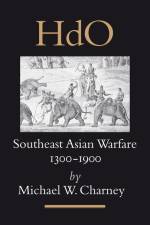
This study offers a comprehensive look at warfare -- its meaning, culture, technology, tactics, and organization -- in an area of the world previously neglected by military historians.
The US administration's pursuit of the Al-Qaeda organisation and Taliban rigime in Afghanistan, responsible for the September 11, 2001 international terrorist attacks, was supported by an international "coalition of the willing" and backed by the full legal authority of UN Security Council Resolutions.The US bid to follow this successful multilateral initiative with similar armed intervention against Saddam Hussein's government failed to rally support in the Security Council.The US then proceeded to act unilaterally, and with British military support, to invade Iraq. The problems for contemporary international law and the UN Charter based World Order system posed by the conflicts within the Security Council and the assorted legal claims advanced, such as a revived doctrine of Humanitarian Intervention; "rigime change as a justification for intervention; Preemptive military strikes as an exercise in Self-defence; and Multilateralism versus Unilateralism in the exercise of the Peace and Security powers under the UN Charter, are canvassed in the present collection of legal opinions.
This study deals with aspects and events of the episcopacy of Cyril of Jerusalem (350-387). Its overall theme is the relationship between the city and its bishop and, in particular, Cyril's efforts to promote Jerusalem as the Christian city "par excellence,"
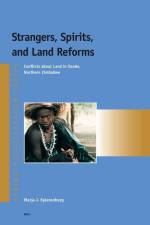
This book describes efforts by the Zimbabwean government to enforce land reforms on African farmers. These compounded the land issue it now allegedly seeks to redress through invasions of white-owned farms. The reforms led to local resistance in which spirit mediums played an important role.
This volume - a Festschrift in honour of the renowned Acts of the Apostles-scholar Eckhard Plumacher- contains various articles on several aspects of Luke's Acts of the Apostles
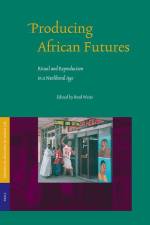
The cumulative implications for Africans of the neoliberal processes (market speculation, shifts in sites of production, new modes of consumption, redefinition of the relation between states and their citizenry) cannot be reduced to single parameters. Three themes are central: the neoliberal production of personhood, the crises of youth and the moral panic in which so many of the wider reforms are registered in experience.
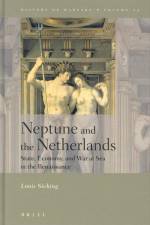
This book, mainly based on primary sources from various countries, provides fascinating new insights into the origin and development of the Admiralty and maritime policy in the Low Countries before the Dutch Revolt, including government interference with maritime strategy, warfare, privateering, prize law, commerce, and fishery.
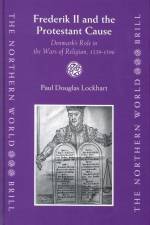
This study of Danish foreign policy in the late sixteenth century examines the efforts of Denmark's King Frederik II (1559-88) to create an international alliance of European Protestants as protection against advances of Counter-Reformation Catholicism.
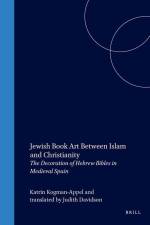
This book discusses the decoration types of Sephardic illuminated Bibles in their broader historical, and social context in an era of cultural transition in Iberia and culture struggle within Spanish Jewry.
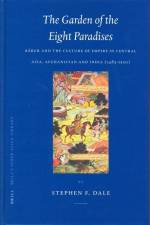
A critical biography of Zah?r al-Din Muhammad B?bur, the founder, in 1526, of the Timurid-Mughal Empire of India, offering
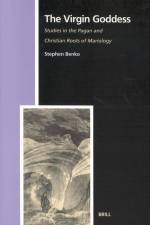
The contemporary search for the feminine face of God requires a re- examination of the relationship of Christianity to the pagan world in which it was born. This study inquires into extra-biblical sources of Marian piety, belief and doctrine. This publication has also been published in hardback, please click here for details.
This book provides a new critical perspective on questions of immigration and society in Israel through a detailed analysis of ethnic formation, identity patterns, political behavior, and cultural orientation among the 1990s immigrants from the former Soviet Union in Israel.
This up-to-date grammar of Egyptian Aramaic of the middle of the first millennium BCE is meant to replace P. Leander's grammar of 1928, but also has a substantial section on syntax, which was totally lacking in Leander's grammar. The grammar is based on a much greater amount of texts than is the case with Leander's grammar, but also on an edition of texts incorporating a personal fresh study of them as presented in Porten and Yardeni's "Textbook of Aramaic Texts from Ancien Egypt" (1986).
This volume explores the late antique countryside, looking at social and political life, landscape change, villas, monasteries, pilgrimage sites and the fate of rural temples. A section is devoted to recent survey work in Turkey and a comprehensive bibliographic essay frames the work. With contributions by Alexandra Chavarria, Tamara Lewit, Peter Sarris, Frank R. Trombley, Beatrice Caseau, John Mitchell, Marcus Rautman, Douglas Baird, Hannelore Vanhaverbeke, Femke Martens, Marc Waelkens, Jeroen Poblome, Joanita Vroom, Carla Sfameni, Lynda Mulvin, Joseph Patrich, Beat Brenk, Etienne Louis, Fabio Saggioro and Archie Dunn.
Abonner på vårt nyhetsbrev og få rabatter og inspirasjon til din neste leseopplevelse.
Ved å abonnere godtar du vår personvernerklæring.