









Gjør som tusenvis av andre bokelskere
Abonner på vårt nyhetsbrev og få rabatter og inspirasjon til din neste leseopplevelse.
Ved å abonnere godtar du vår personvernerklæring.Du kan når som helst melde deg av våre nyhetsbrev.

This study examines the wholesale trade in sugar from Brazil to markets in Europe. The principal market was northwestern Europe, but for much of the time between 1550 and 1630 Portugal was drawn into the conflict between Habsburg Spain and the Dutch Republic. In spite of political obstacles, the trade persisted because it was not subject to monopolies and was relatively lightly regulated and taxed. The investment structure was highly international, as Portugal and northwestern Europe exchanged communities of merchants who were mobile and inter-imperial in both their composition and organization. This conclusion challenges an imperial or mercantilist perspective of the Atlantic economy in its earliest phases.
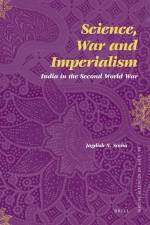
Why could not the Second World War catalyse science in India as it did in the West? This is one of the central questions of this volume on the British policy towards science and technology in India. Its focus is on education, research, innovation and organisation of science in such sectors as industry, agriculture, public health and transport and communications. In the process the author comes across revealing developments where science played a crucial role: an Anglo-American tussle for dominance in the region, the clash between capitalism and socialism, and the entry of neo-colonialism triggering Cold War in Asia. Many faces of humanity and science are on view --- British scientists concerned about Indiaa (TM)s development, and Indian scientists planning for national reconstruction. Of interest to all those aiming for a better understanding of the impact of science, war and international influences on the socio-economic progress in India - or other erstwhile colonies.
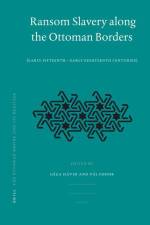
The volume is an ambitious attempt to give a comprehensive picture of trade in captives along the European borders of the Ottoman Empire, especially in Central Europe. It brings together a great deal of so far unpublished archival material and thus integrates a new area into the research.
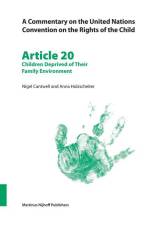
This volume constitutes a commentary on Article 20 of the United Nations Convention on the Rights of the Child, dealing with children deprived of their family environment. It is part of the series, "A Commentary on the United Nations Convention on the Rights of the Child," which provides an article by article analysis of all substantive, organizational and procedural provisions of the CRC and its two Optional Protocols. For every article, a comparison with related human rights provisions is made, followed by an in-depth exploration of the nature and scope of State obligations deriving from that article. The series constitutes an essential tool for actors in the field of children's rights, including academics, students, judges, grassroots workers, governmental, non- governmental and international officers. The series is sponsored by the "Belgian Federal Science Policy Office,"
The principle of complementarity is the corner stone for the operation of the International Criminal Court (ICC). It organizes the functional relationship between domestic courts and the ICC. This is the first careful study of the historical antecedents of the principle of complementarity, which has become so central to the operation of contemporary international criminal law. The study draws upon the first efforts at international prosecution, after the First World War, and then traces the evolution of the concept through the drafting of the 1937 treaty on terrorism, and the post-Second World War tribunals. It examines in an exhaustive manner the work of the International Law Commission that led to the drafting of the Rome Statute of the International Criminal Court, up to the deposit of the draft statute with the UN General Assembly in 1994. It considers the "travaux prA(c)paratoires" of the Rome Statute itself, in a most thorough manner. It also examines the post-Rome developments, particularly the original interpretations of the relevant provisions of the Statute by both the Office of the Prosecutor and the Pre-Trial Chambers. This is a study that is of intrinsic historical interest, but also one that may help to guide interpreters of the Statute in the years to come. a oeThe concept of complementarity lies at the heart not only of the Rome Statute of the International Criminal Court, it is in many respects the underlying paradigm of international criminal justice as a whole. In this important study, Mohamed El Zeidy has drawn on historical sources, tracing the evolution of the concept and then showing how it has become operationalised in the first cases before the International Criminal Court. This book belongs in the library of every international criminal lawyera . "Prof. William A. Schabas," OC MRIA National University of Ireland, Galway.
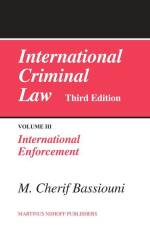
Volume 3 addresses the direct enforcement system, namely international criminal tribunals, how they came about and how they functioned, tracing that history from the end of WWI to the ICC, including the post-WWII experiences. They address the IMT, IMTFE, ICTY, ICTR, the mixed model tribunals and the ICC. It also contains a chapter which addresses some of the problems of the direct enforcement system, namely the general, procedural, evidentiary, and sanctions parts of ICL, which is largely made of what is contained in the statutes of the tribunals mentioned above as well as the jurisprudence of the established tribunals. In addition this volume addresses national experiences with the enforcement of certain international crimes. It is divided into 4 chapters which are titled as: Chapter 1: History of International Investigations and Prosecutions (International Criminal Accountability; International Criminal Justice in Historical Perspective); Chapter 2: International Criminal Tribunals and Mixed Model Tribunals (The International Criminal Tribunal for the Former Yugoslavia; The International Criminal Tribunal for Rwanda; The Making of the International Criminal Court; Mixed Models of International Criminal Justice; Special Court for Sierra Leone; Special Tribunal for Cambodia; East Timor); Chapter 3: National Prosecutions for International Crimes (National Prosecutions for International Crimes; National Prosecutions of International Crimes: A Historical Overview; The French Experience; The Belgian Experience; The Dutch Experience; Indonesia; The U.S. War Crimes Act of 1996; Enforcing ICL Violations with Civil Remedies: The Case of the U.S. Alien Tort Claims Act); Chapter 4: Contemporary Issues in International Criminal Law Doctrine and Practice (Command Responsibility; Joint Criminal Enterprise; The Responsibility of Peacekeepers; The General Part: Judicial Developments; Ne bis in idem; Plea Bargains; Issues Pertaining to the Evidentiary Part of International Criminal Law; Penalties and Sentencing; Penalties: From Leipzig to Arusha; Victimsa (TM) Rights in International Law).
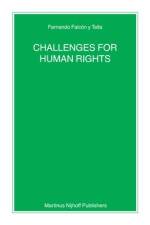
Nowadays we are fortunate enough to be experiencing a boom in human rights - an enormous increase of their importance in the international sphere at all levels (political, economic, social, legal and moral). For the first time the condition of the individual as "citizen," and not just as "subject," has gained importance. Individuals, and not only states, have now become the subjects of international law, as a result of the boom in humanitarian law and international criminal law. However, although there have been many battles won and goals met concerning human rights, the war against injustice continues and the fight has not ended. It is necessary to stay alert and to avoid a potentially paralyzing self-complacency. This collection focusses on topics that are particularly relevant for the present era. It examines issues such as multiculturalism, globalization, international criminal justice (specifically third and fourth generation rights) and, within this thematic framework, the problems that have come about as a result of the expanding reach of the Internet and of new biomedical advances. In addition, it explores the increasingly urgent challenge of how to respond to international terrorism, in view of worldwide events since September 11, 2001, and its resulting aftermath. Originally published in Spanish, this thought-provoking collection will be of interest to human rights scholars and practitioners alike.
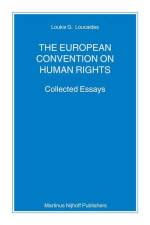
This book comprises 13 articles on topics drawn from the European Convention on Human Rights. The book provides the reader with interesting information on aspects of Human Rights explored for the first time and presented from a critical standpoint.
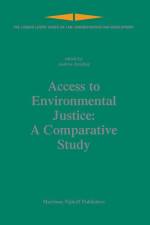
Although it is commonly asserted that enhanced citizen participation results in better environmental policy and improved enforcement of environmental standards, this hypothesis has rarely been subject to testing on a comparative basis. The contributors to this book set out to study the extent to which citizens can and do exert influence over their urban environments through the legal (and extra-legal) 'gateways' in eleven countries spanning several continents as well as different climates, levels and type of economic development, and national legal and constitutional systems, as well as exhibiting a different set of environmental problems.One interviewee questioned about access to environmental justice, dryly remarked that in his city there was no environment, no justice and no access to either. Yet this view, as will be seen, requires to be nuanced.While few people will be surprised by the finding that legal gateways to environmental justice are largely ineffective, the reasons for this are revealing; but also the richness of detail and the comparisons between the different countries, and also the positive aspects which surfaced in several instances, were indeed both encouraging and sometimes surprising.This book presents the first comparative survey of access to environmental justice, and will be of considerable use to lawyers, policy-makers, activists and scholars who are concerned with the environmental issues which so profoundly affect and afflict our habitat and conditions of social justice throughout the world.
This book aims to contribute to the debate on global public goods, a debate which has been taking place for some time in the UN and the World Bank, among the regional development banks and bilaterally among states and donors. There is a need for new visions and strategies and to examine global infrastructure on the basis of the idea that global public goods, including human rights, contribute to cohesion at local, regional and international levels. The book investigates the possibilities and disadvantages of applying the idea of public goods in a global context. It explains the history of the concept and its significance for human rights. The authors include, in addition to academics, representatives from public institutions, civil society organizations, independent consultants, the media and the private sector.
The alarmingly low health status of millions of people in many developing countries is now recognised as a major obstacle to the process of development. In response, increasing numbers of non-governmental organizations are championing the right to health of the disadvantaged, vulnerable and those living in poverty. They are using the right to health in their struggle for access to quality health services, as well as the underlying determinants of health, such as safe drinking water and adequate sanitation. In other words, the right to health, and other fundamental human rights, are seen as a way of promoting development. In a clear style and accessible format, this unique, timely and practical Manual shows health professionals, their associations and other interested non-governmental organizations, some of the practical ways in which they can promote, protect and monitor the right to health in their communities and countries. It considers the obligations of states in relation to individuals within their borders, as well as the human rights responsibilities of states beyond their borders. As befits a human rights manual, it has a particular preoccupation with the right to health of the vulnerable, marginalized and otherwise disadvantaged groups and those living in poverty.
"Color, Line and Space" explores the role of color in spatial vision and represents a truly interdisciplinary approach to visual neuroscience. Several fascinating new phenomena are presented and focus on how color appearance depends on spatio-chromatic interactions.
Under U.S. domestic law and treaty practice, all international agreements concluded by the United States, regardless of their form, designation or title are divided into treaties, which are submitted to the Senate for its advice and consent to ratification, and other international agreements. Treaties which are submitted to the Senate are similar to federal laws, and their legislative history is much the same as the one followed by legislation, except that it is confined to proceedings in the Senate only. This legislative history follows the procedures established by the Senate, and it is based on primary legislative sources.The main part is arranged chronologically by the date of conclusion of the treaty. Each treaty contains the following components: it provides general information about the treaty; it lists chronologically steps taken by the Senate during the treaty approval process; legislative implementation, executive action, following Senate approval; entry into force, and annotations, such as references to related treaties, amendments, and present status. The use of the legislative history is facilitated by appendices and a detailed general index which includes: parties, regional subdivisions, and subjects.
This volume constitutes a commentary on "Article 2" of the United Nations Convention on the Rights of the Child. It is part of the series, "A Commentary on the United Nations Convention on the Rights of the Child," which provides an article by article analysis of all substantive, organizational and procedural provisions of the CRC and its two Optional Protocols. For every article, a comparison with related human rights provisions is made, followed by an in-depth exploration of the nature and scope of State obligations deriving from that article. The series constitutes an essential tool for actors in the field of childrena (TM)s rights, including academics, students, judges, grassroots workers, governmental, non-governmental and international officers. The series is sponsored by the "Belgian Federal Science Policy Office."
Women have been structurally part of the masonic enterprise from at least the middle of the 18th century. Yet, little is known about the ways in which they themselves obtained and exercised power to influence the systems they were involved in, in order to adapt them to be more appropriate to their needs. This volume intends to concentrate on two aspects: Womena (TM)s agency (i.e. the power women gained and exercised in this context) and rituals (i.e. the role of men and women in changing and shaping the rituals women work with). These two aspects are closely related, since it requires some agency to realise changes in existing rituals.
The early modern period is a particularly relevant and fascinating chapter in the history of pain. This volume investigates early modern constructions of physical pain from a variety of disciplines, including religious, legal and medical history, literary criticism, philosophy, and art history. The contributors examine how early modern culture interpreted physical pain, as it presented itself for instance during illness, but also analyse the ways in which early moderns employed the idea of physical suffering as a powerful rhetorical tool in debates over other issues, such as the nature of ritual, notions of masculinity, selfhood and community, definitions of religious experience, and the nature of political power. Contributors include: Emese BAlint, Maria Berbara, Joseph Campana, Andreas Dehmer, Jan Frans van Dijkhuizen, Karl A.E. Enenkel, Lia van Gemert, Frans Willem Korsten, Mary Ann Lund, Jenny Mayhew, Stephen Pender, Michael Schoenfeldt, Kristine Steenbergh, Anne Tilkorn, Jetze Touber, Anita Traninger, and Patrick Vandermeersch.
Based on several years of research on Jewish intellectual life in the Renaissance, this book tries to distinguish the coordinates of a oemodernitya as premises of Jewish philosophy, and vice versa. In the first part, it is concerned with the foundations of Jewish philosophy, its nature as philosophical science and as wisdom. The second part is devoted to certain elements and challenges of the humanist and Renaissance period as reflected in Judaism: historical consciousness and the sciences, utopian tradition, the legal status of the Jews in Christian political tradition and in Jewish political thought, aesthetic concepts of the body and conversion.
Uniquely covering literary, visual and performative expressions of culture, this volume aims to correlate the conjunctions of nation building, gender and representation in late 19th and early 20th century China and Japan. Focusing on gender formation, the chapters explore the changing constructs of masculinities and femininities in China and Japan from the early modern up to the 1930s. Chapters focus on the dynamism that links the remodeling of traditional arts and media to the political and cultural power relations between China, Japan, and the Western world. A true tribute to multidisciplinary studies.
"Models of Charitable Care" analyses the practice of Catholic nuns in Amsterdam in the 19th and 20th century. Attention is paid to the ambiguous ascetic spiritual discourse that underpinned their work: it encouraged charity as solidarity with strangers, but caused intense emotional distance too. Historiography is mainly manufactured by religious and lay academics who shared the congregational perspective and presented fairly positive evaluations. Criticism from within, however, is voiced by care leavers who grew up in homes ran by religious. Some are grateful, others bitter. The sisters were living models who combined an anti-worldly outlook with a practical concern for vulnerable creatures. Relating various theoretical interpretations, a typology of three models is developed with a ~agencya (TM) as the differentiating criterion.
The annual is a venue of publication for sociological studies of Chinese societies and the Chinese all over the world. The main focus is on social transformations in Hong Kong, Taiwan, the mainland, Singapore and Chinese overseas.
"Overcoming Passion" examines the passion for race in contemporary Malaysia. Broadly the essays look at the disjunction between the falsity of race as a scientific category and the entrenched belief that race determines one's rightful identity. They probe the ways in which individual minds and institutions of power fail or refuse to recognise and act in accordance with the knowledge that race exists only insofar as its existence is sustained by the believer's belief in it. The contributors draw from a burgeoning but under-examined archive of Malaysia-related social texts, ranging from media and technological discourse, popular culture and literary production to historical writings, produced originally in English, Malay and Mandarin Chinese.
This book tells a different story about water. Against the backdrop of the end of the Ottoman Empire to the Palestinian uprisings, old Palestinian women recount life before and after piped water. While talking about fetching and managing household water, women also talked about being women. Women, Water and Memory speaks of many different lives. We hear stories about women's own strength and beauty, and about the woman who married a man whose ugly face made her sick. While one woman married the man a oeshe cared fora, another was relieved that her husband died when she was too old to be forced to remarry. We learn about the joy they feel each time they dance at a wedding, the sheer satisfaction of lighting a cigarette, the loyalty and shared despair towards families with members in prison, and about the tears of sorrow at each death and the delight at each birth.
This is a book of great originality that analyses cultural change and experience of development in terms of the pursuit of the a ~good lifea (TM) as a social process. While recent anthropological critiques of development highlight the importance of a ~local knowledgea (TM), this book argues that these critiques have not gone far enough, and suggests that a much more fundamental issue concerns the ends of development as seen from a more holistic, cultural perspective. Based on ethnographic research among an ethnic Tibetan community in the Nepal Himalaya, the book eloquently illustrates how the pursuit of the good life is inextricably tied to space and history, and demonstrates the relevance of ethno-historically generated conceptions of the a ~good lifea (TM) to the practice of development.
Interdisciplinary essays on early modern Germany that address orthodoxy and its challenges in religion, politics, and the arts. Confronting the transformation of normative canons after the Reformation, the essays investigate authority and knowledge in an era of shifting cultural foundations.
In the history of Jewish, Christian and Muslim culture, religious identity was not only formed by historical claims, but also by the usage of certain images: "images of God," "images of the others," "images of the self."This book includes a discussion of the role of these images in society and politics, in theology and liturgy, yesterday and today.
The authors provide a new insight to the practice of medical care in the medieval world. They examine the medicinal prescriptions and references to materia medica of the Cairo Genizah by combining the approaches of ethnobotany and history of medicine.
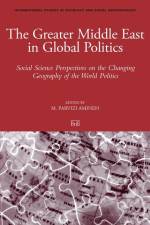
This anthology unites in one volume two studies of the Greater Middle East in global politics - each conceptual and empirical. First, it is a historical-comparative study of politics and societies in selected Greater Middle Eastern countries. Second, it is an empirical case study of states and societies of the Greater Middle East in global politics.
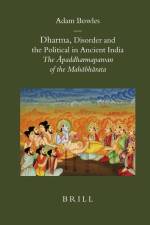
This book is a close study of the Āpaddharmaparvan which situates it within its context in the great Sanskrit epic the Mahābhārata and within Indian political and social thought, and explores the relationship of its didacticism to the broader literary context of the Mahābhārata.
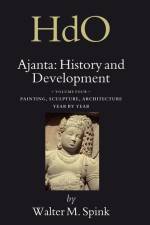
"Ajanta: Year by Year" is planned as a biography of this remarkable site, starting with the earliest caves, dating from some two thousand years, to its startling renaissance in the brief period between approximately 462 and 480. Concentrating on the excavations of the later period, during the reign of the Vakataka emperor Harisena, it attempts to show how, after a surprising gap of some three hundred years, Ajantaa (TM)s proud and pious courtly patrons and its increasingly committed workmen created not only the greatest but the latest monument of Indiaa (TM)s Golden Age. Nearly three hundred illustrations, in color and black and white, reveal the exuberant flowering of Ajanta and related Vakataka monuments, as well as the manner of their sudden demise.
Abonner på vårt nyhetsbrev og få rabatter og inspirasjon til din neste leseopplevelse.
Ved å abonnere godtar du vår personvernerklæring.