








Gjør som tusenvis av andre bokelskere
Abonner på vårt nyhetsbrev og få rabatter og inspirasjon til din neste leseopplevelse.
Ved å abonnere godtar du vår personvernerklæring.Du kan når som helst melde deg av våre nyhetsbrev.

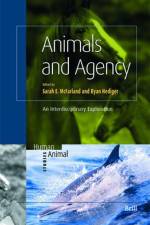
While many scholars who write about animals deal with animal agency in some way, this volume is the first to position the question of nonhuman agency as the primary focus of inquiry. Section I presents studies of actual animals demonstrating agency; Section II moves agency into new terrain while considering key representations of animal agency in literature; Section III analyzes animals as mediators and as conveyances of human-to-human communication;and Section IV investigates the agency of beings who defy conventional species categories. The Envoi demonstrates how the microscopic polyp is interwoven into notions of agency and mythical superagency. This volume's interdisciplinary explorations press hard on issues of agency to open up space for more questions about how we can understand relationships between the human and the nonhuman.
The annual is a venue of publication for sociological studies of Chinese societies and the Chinese all over the world. The main focus is on social transformations in Hong Kong, Taiwan, the mainland, Singapore and Chinese overseas.
In 1917, in Khartoum, Dr. J.B. Christopherson experimentally treated seventy bilharzia patients with injections of antimony tartrate, an early chemotherapy. His was the first successful treatment. Antimony had never been tried on bilharzia patients before, or so he believed. This biography examines the turbulent life of this medical pioneer, his fight for priority and his struggle for professional survival amid the politics of exclusion in General Wingate's Sudan. His was a career full of paradoxes: acclaimed for intercepting a smallpox outbreak, building a hospital and satellite clinics, he battled accusations and removal as director of the Medical Department. From the Boer War, two decades in Sudan, his capture and release in Serbia to his time in France in WW1, controversy seldom left him.
Devoted to assessing the state of ocean and coastal governance, knowledge, and management, the "Ocean Yearbook" provides information in one convenient resource. As in previous editions, articles provide multidisciplinary expert perspectives on contemporary issues. Each new volume draws on policy studies, international relations, international and comparative law, management, marine sciences, economics, and social sciences. Each volume contains key legal and policy instruments and an annually updated global directory of ocean-related organizations. The Yearbook is a collaborative initiative of the International Ocean Institute (www.ioinst.org) in Malta and the Marine & Environmental Law Institute (www.dal.ca/law/MELAW) at Dalhousie Law School.
Nawab Faizunnesa (1834-1903) challenged established notions regarding womena (TM)s position in a Muslim society in colonial Bengal. Her "RupJalal " was the first literary text written by a Bengali Muslim woman. The translated text is placed in the historical context of colonialism and the nationalist movement of colonial Bengal. An analysis of the text is also included in order to invite readers to explore the woman question in context of Islam and/in imperial society. With the translated text, along with a critical overview and textual analysis, this book traces in Faizunnesaa (TM)s life and works the emergence of a self-conscious female voice by addressing the issues of social, political, and economic marginality of women in an Islamic, nationalist, and imperialist culture of colonial Bengal.
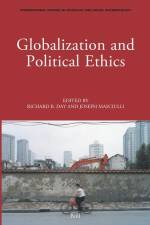
This book measures the current institutional and political realities surrounding globalization against philosophical ideals. Though the contributors share no particular orthodoxy, they do share the conviction that human responsibility is possible in circumstances that often appear to deny human agency.
The standard work in its field, this updated and expanded edition presents an eminently practical "nuts-and-bolts" guide to international human rights law and practice. The contributors, all specialists in their areas of expertise, offer a panoramic yet meticulously detailed survey of the many techniques now available to protect human rights at global, regional, and national levels. Appendices include a bibliographic essay that serves as a mini-guide to contemporary human rights literature, in both print and on-line sources. Published under the auspices of the Procedural Aspects of International Law Institute (PAIL). Paperback version of this title is available for classroom adoption only at cost of $25.00/copy, 10 copy minimum.Published under the Transnational Publishers imprint.
Although the Nijmegen artists Herman, Paul and Jean de Limbourg were barely thirty years old when they suddenly died in 1416, they already had a formidable career behind them. Now, almost six hundred years after their creation, the colourful and highly refined miniatures in the "Belles Heures" and "Tr s Riches Heures du Duc de Berry" still speak vividly to our imagination. In 2005 Museum Het Valkhof in Nijmegen presented the exhibition The Limbourg Brothers. Nijmegen Masters at the French Court (1400-1416) . This was the first time that original miniatures from four manuscripts by the Limbourg brothers were shown in the Netherlands. The exhibition formed an excellent opportunity to invite prominent scholars to share their views on the art of the Limbourg brothers during a two-day conference. This publication presents in written form the conference papers delivered by some of the leading scholars in the field. In that respect, the volume acts as an addendum to the catalogue. Contributors are Hanneke van Asperen, Gregory T. Clark, Herman Th. Colenbrander, Rob D ckers, Eberhard K nig, Margaret Lawson, Stephen Perkinson, Pieter Roelofs and Victor M. Schmidt.
How is the Russian Constitution, ratified in 1993, being implemented today? A team of distinguished scholars assesses the promise and the realities of Russian constitutionalism in a number of critical areas.
Democracy cannot be implemented overnight. Democratization is an often unpredictable process. This book concentrates on that political transformation in one of Indonesia's most 'traditional' islands, Sumba. Why does democratization create such great opportunities for local politicians with their private agenda's? Why does regional autonomy, as part of the national democratization program, promote socio-economic inequality in West Sumba?
Trade flows, cities and kinship relations can all be seen as elements of complex networks. In this collection of essays, all of which deal with Asia, we argue that there are good reasons to envisage them as various dimensions of the same networks.
This monograph offers the first comprehensive history of the decolonization of the Indonesian economy, a process with a different momentum and timing from the achievement of political independence. It traces the origins of economic decolonization to the late-colonial period, covers developments during the Japanese occupation and the Indonesian Revolution as well as continued operations by Dutch enterprises in Indonesia during the 1950s. The account culminates with the takeover and nationalization of Dutch private enterprises in the late 1950s.
While television in today's world increasingly displays a global character, national television systems are still firmly rooted in a specific locality. But in what ways does this locality actually shape the content and performance of national television? What is the significance of local cultures and local languages in these processes of mediation? And how do the local, the national, and the global intersect in discourses of and discourse on television? Taking a critical discourse analysis perspective, Watching Si Doel investigates these and related questions in the context of contemporary Indonesia. Starting from the nationwide popularity of the local television serial Si Doel Anak Sekolahan ("Educated Doel"), it examines the various ways in which the national government, Indonesian television producers, and local audiences shape, interpret, and struggle over the meaning of the phrase 'national television'. In doing so, the book explores what Indonesian television at the turn of the century sounds and looks like--and, significantly, ought to sound and look like--according to those who create and control television and those who watch and interpret it. While providing insight into the production, nature, and reception of television discourse in general, this book particularly seeks to clarify the relationship between television, language, and power in late New Order and post-Soeharto Indonesia.
The study offers an ethnographically rich journey through the variety of healing methods in current Ayfat society: indigenous (obtained during female and male initiation rites), biomedical (the missionary hospital), and Christian (created by ritual healers since the coming of the missionaries). Likewise, the causes ascribed to illness range from sorcery, witchcraft, violation of ancestral or biblical rules, to biomedical conditions, a multiplicity of ways of understanding illness and healing that emerged in the context of religious change. Making choices among the variety of healing performances, and the creation of new performances, are shown to be dynamic processes. At the core are the innovative contributions of local healers, particularly women, who chose to create new performances in the face of religious change. Restoring the Balance looks at indigenous and Christian religious practices, and how people in northwest Ayfat have found a way to integrate the two and bring both sides into balance.
In the literature on Indonesian legal history, the role of language has been paid scant attention. Even the replacement of Dutch by Indonesian as the official language of the law, surely a major event for the work of Indonesian jurists, has not been closely examined. Yet, since the early 1970s, legal usage and terminology have been the topic of a steady stream of highly critical publications by linguists and, remarkably, by jurists as well. Their criticism is focused on the heterogeneity of law language and terminology, and the deviation of legal usage from the official standard language. Government measures (language courses, law dictionaries) have not allayed this criticism. This study exposes two fundamental defects in the government measures and in the criticism itself. Firstly, they are grounded in an instrumental approach to language, an approach that sees language as a mere tool of the jurist, and as secondary in importance to the conceptual world that is considered law's core business. Secondly, they greatly underestimate the impact of the declining knowledge of Dutch upon the development of Indonesian law language. Massier argues that the law must be viewed as inextricably bound up with the language in which it is formulated. Consequently, legal training and practice are examined in this study in terms of language behaviour and conventions, of learning, writing and speaking the languages of the law. The voice of the law in transition provides a language history of Indonesian law and its practitioners.
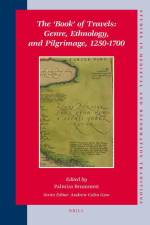
The early modern era is often envisioned as one in which European genres, both narrative and visual, diverged indelibly from those of medieval times. This collection examines a disparate set of travel texts, dating from the thirteenth to the seventeenth centuries, to question that divergence and to assess the modes, themes, and ethnologies of travel writing. It demonstrates the enduring nature of the itinerary, the variant forms of witnessing (including imaginary maps), the crafting of sacred space as a cautionary tale, and the use of the travel narrative to represent the transformation of the authorial self. Focusing on European travelers to the expansive East, from the soft architecture of Timur's tent palaces in Samarqand to the ambiguities of sexual identity at the Mughul court, these essays reveal the possibilities for cultural translation as travelers of varying experience and attitude confront remote and foreign (or not so foreign) space.
This volume examines the role and influence of multiculturalism in general theories of international law; in the composition and functioning of international organizations such as the ICJ, the ILC, the UN, and the ICC; and in the progressive development of substantive international law regarding issues such as anti-terrorism, cultural identity, the Danish cartoons controversy, indigenous peoples, and cultural exemptions at the WTO. With Forewords from Boutros Boutros-Ghali and Shigeru Oda, this authoritative volume contains contributions from 36 distinguished scholars from every continent of the world tackling multiculturalism and international lawa "an ever more topical issuea "in honour of, appropriately, Edward McWhinney, an eminent scholar who has spent a substantial part of his life promoting multiculturalism.
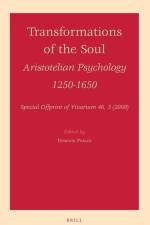
Aristotlea (TM)s "De anima" shaped philosophical debates far beyond the Middle Ages and gave rise to a number of theories about the nature of the soul, its various functions and its relation to the body. The ten contributions to this book, a special issue of the journal "Vivarium," examine some of these theories in the period between Albertus Magnus and Descartes. They pay particular attention to the question of how the metaphysical status of the soul and its parts was explained, and analyze Aristotelian accounts of cognitive activities such as perceiving, imagining and thinking. The ten case studies focus both on defenders of the Aristotelian paradigm and on its critics, arguing that one should not look for a moment of break with Aristotelianism, but for various stages of transformation. Contributors are Lilli Alanen, Joel Biard, Jean-Baptiste Brenet, Richard Cross, Dag Hasse, Peter King, Ian Mclean, Martin Lenz, Lodi Nauta, Dominik Perler and Markus Wild.
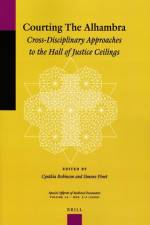
The ceiling paintings in the Hall of Justice of the Alhambra have not received serious scholarly attention for the past thirty years, perhaps due to their difficult incorporation into a discrete program of Christian vs. Islamic art, categories that until recently remained unchallenged themselves. The Alhambra itself continues to elicit the interest of many scholars, and several recent interpretations of the function of the Palace of the Lions, which houses the paintings, have been put forth. This collection brings together art historians, literary critics and historians who suggest new ways of approaching the paintings through their immediate social, historical, architectural and literary contexts, proposing a porous and flexible model for the production of culture in Iberia. Contributors are Jerrylin Dodds, Ana Echevarria, Jennifer Borland, Rosa MarA-a RodrA-guez Porto, Oscar Martin, Amanda Luyster, Cynthia Robinson and Simone Pinet.
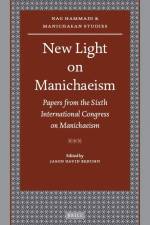
New Light on Manichaeism provides the latest discoveries and insights into the Manichaean religion throughout its more than one thousand year history, ranging from glimpses into the life and thought of Mani himself, to developments in doctrine and practice in the religion's North African, Iranian, Central Asian, and Chinese settings. The volume includes contributions from the leading scholars in the field, offering new reconstructions of Manichaean literary and artistic productions, and innovative analyses of the religious, social, and political dynamics that shaped the rise and fall of this world religion.
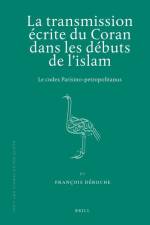
The codex Parisino-petropolitanus is one of the earliest witnesses of the handwritten transmission of the Qur anic text which has survived to this day. The various fragments which were part of the original manuscript are scattered among various collections; once put together, they provide a unique picture of the state of the text during the 7th century (orthography and textual peculiarities) and of the circumstances in which the canonical version as we know it today took shape physically. The present study, first of its kind, paves the way for a more accurate understanding of the beginning of Islam, based on a significant document, and of the evolution of the Qur an during that period. Le codex Parisino-petropolitanus est l'un des plus anciens t moins de la transmission manuscrite du texte du Coran qui aient t conserv s. Ses diff rents fragments sont dispers s entre plusieurs collections; une fois mis ensemble, ils donnent un aper u unique sur l' tat du texte au 7e si cle (orthographe et particularit s textuelles) et sur les conditions dans lesquelles s'est organis e mat riellement la constitution de la version canonique telle que nous la connaissons. Cette tude, premi re de son genre, ouvre la voie une compr hension plus fine, appuy e sur un document significatif, des premiers temps de l'islam et de l' volution du Coran au cours de cette p riode.
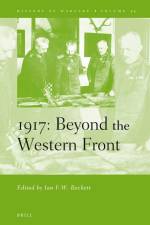
The growing military, political and socio-economic costs for all belligerents as the Great War entered its fourth year were increasingly evident, liberal democracies and authoritarian states alike having to remobilise public opinion for yet greater sacrifices. While the Western Front was facing these challenges, 1917 was also marked by the collapse of Tsarist Russia and by food riots resuting both from the Entente's blockade of Central Europe and the revival of unrestricted submarine warfare by the Central Powers. Ottoman Turkey was feeling the strain of war as well, as British forces advanced in both Palestine and Mesopotamia. For states as yet uncommitted to war, such as the United States and China, 1917 was a year of decision. This volume amply illustrates the significance of this crucial year in the global conflict. Contributors are Lawrence Sondhaus, Eric Grove, Keith Grieves, Matthew Hughes, Kaushik Roy, Vanda Wilcox, Laura Rowe, and Nick Hewitt.
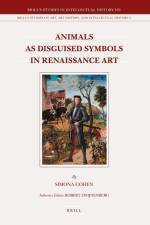
The relationship between medieval animal symbolism and the iconography of animals in the Renaissance has scarcely been studied. Filling a gap in this significant field of Renaissance culture, in general, and its art, in particular, this book demonstrates the continuity and tenacity of medieval animal interpretations and symbolism, disguised under the veil of genre, religious or mythological narrative and scientific naturalism. An extensive introduction, dealing with relevant medieval and early Renaissance sources, is followed by a series of case studies that illustrate ways in which Renaissance artists revived conventional animal imagery in unprecedented contexts, investing them with new meanings, on a social, political, ethical, religious or psychological level, often by applying exegetical methodology in creating multiple semantic and iconographic levels.
Since the discovery of the Cave 4 versions of The Community Rule (Serekh ha-Yaa, ad or S), scholars have been perplexed about its complex textual history. This important charter material for the Dead Sea Scrollsa (TM) authors appears in alternate versionsa "ones with contradictory legal prescriptions and opposing self-referencesa "but exhibits no clear order of chronological development. Benefitting from the entire Qumran library now available to us, this book offers a new, broader model for reading S that better accounts for the long and diverse history behind the text. The resulting paradigm challenges the Qumrancentric lens through which many read the a oesectarian textsa and offers a fresh way of thinking about sectarian community formation among the authors of the Scrolls.
This book throws a penetrating light on the life and work of the physiologist turned neurologist G.G.J. Rademaker against the background of flourishing clinical research in the Netherlands of the early twentieth century. It charts the rise and fall of the branch of experimental neurophysiology of which Rademaker was a master, which was transmitted from Charles Sherrington in England to Rudolf Magnus at Utrecht and then to Rademaker, Magnusa (TM)s most talented pupil. Reaching its apogee in the 1920s and 1930s, it was replaced after World War II by other less invasive approaches. This biography is a fitting memorial to a man who, though somewhat neglected in his own land, was recognised as a genius by his peers worldwide.
Shardza Tashi Gyeltsen (1859-1934) is one of the most important luminaries of the Bon tradition of Tibet and certainly the most striking recent master of the teachings of the "Great Perfection." Throughout his life, he applied the principles of the "Great Perfection" in numerous isolated retreats and perfected both spiritual realization and scholarly erudition. His works have nowadays become immensely important references for the modern Bon tradition, even if, for some lineage holders of this Tibetan school, he is best associated with the movement known as "New Bon." This widely diffused view, however, is wrong as is clearly shown by the analysis of Shardza Rinpoche's Collected Works in the present volume.
Abonner på vårt nyhetsbrev og få rabatter og inspirasjon til din neste leseopplevelse.
Ved å abonnere godtar du vår personvernerklæring.