












Gjør som tusenvis av andre bokelskere
Abonner på vårt nyhetsbrev og få rabatter og inspirasjon til din neste leseopplevelse.
Ved å abonnere godtar du vår personvernerklæring.Du kan når som helst melde deg av våre nyhetsbrev.

Grounded in public relations theory and steeped in common sense, this book advances the global debate on public diplomacy's future in rejecting a power-based, political approach to public diplomacy and proposing a relational framework designed to improve relationships among nations and peoples.
This volume is the first collection of scholarly articles in any modern language devoted to Aristotle s "De caelo." It grew out of series of workshops held at Princeton, Cambridge, and Paris in the late 1990 s. Since Aristotle s "De caelo" had a major influence on cosmological thinking until the time of Galileo and Kepler and helped to shape the way in which Western civilization imagined its natural environment and place at the center of the universe, familiarity with the main doctrines of the "De caelo" is a prerequisite for an understanding of much of the thought and culture of antiquity and the Middle Ages.
Medieval synonym literature is a comprehensive field, which, as a text genre, has not received due attention in philological scholarship until now. This volume contains the first critical edition of Book 29 of Shem Tov ben Isaac's "Sefer ha-Shimmush" and a lexicological analysis of the medico-botanical terms in the first of the two synonym lists of this book. The "Sefer ha-Shimmush" was compiled in Southern France in the middle of the thirteenth century. The list edited in this volume consists of Hebrew or Aramaic lemmas, which are glossed by Arabic, Latin and Romance (Old Occitan and, in part, Old Catalan) synonyms written in Hebrew characters. Containing over 700 entries, this edition is one of the most extensive glossaries of its kind. It gives scholars a wide overview of the formation of medieval medical terminology in the Romance languages and Hebrew, as well as within the Arabic and Latin traditions.
The "Xiamen Academy of International Law " aims to promote academic exchanges among legal communities across the globe, encourage examination of major international issues and, by so doing, seek ways to improve the possibilities for world peace and international cooperation. It seeks to achieve this aim by providing the highest level of education to individuals, particularly those from Asian countries, interested in the development and use of international law persons such as young lecturers in international law, diplomats, practitioners of transnational law, government officials in charge of foreign affairs, and officials of international organizations.The Program of Summer Courses it offers has been designed to be both practical and highly scholarly. These Courses are given in English or French, and are taught by highly qualified legal professionals. They are published in the "Collected Courses of the Xiamen Academy of International Law."
This book offers a reconstruction and analysis in context of the Disputationes, a treatise of Mania (TM)s missionary Adimantus. In it, Adimantus, like Marcion, placed parts of the Old and New Testament opposite each other.
This study examines the "topos" of peace in Ephesians by comparison with Colossians, Dio Chrysostoma (TM)s "Orations," and the Confucian "Four Books"; and shows that Ephesians can be read as a politico-religious letter a oeconcerning peacea within the church.
In this book an international team of scholars from a wide range of academic fields and perspectives reevaluate the Greek goddess Aphrodite, her worship throughout the Mediterranean, manifold roles in Graeco-Roman antiquity, and reception through the Renaissance and beyond.
This volume contains scholarly articles by professor DaniAl den Hengst, in which structural and intertextual aspects of Roman historiographical texts are studied. Special attention is given to the "Historia Augusta" and Ammianus Marcellinus' "Res Gestae," but also relevant texts by Cicero, Livy, Quintilian and Suetonius are discussed.
Though nations are nowadays seen as the product of modernity, comparable processes of community building were taking place even earlier. Thus the history of the Armenian, Coptic, Ethiopian, and Syrian Christians shows that close-knit ethnic groups already existed in Late Antiquity and early medieval times. These communities have endured to the present day. However, there is much debate as to how they came into existence and defined themselves. The role of religion is central to this debate. A major interdisciplinary research project conducted at Leiden University investigated the identity formation of the Syrian Orthodox. It is argued that they started as a religious association. This volume presents the results of the Leiden team together with reactions from a number of other specialists. The cases of the East Syrians, Armenians, Copts, and Ethiopians are discussed in five additional contributions. Contributors include: Naures Atto, Annemarie Weyl Carr, Muriel Debi, Jan van Ginkel, Wim Hofstee, Mat Immerzeel, Steven Kaplan, Theo van Lint, Glenn Peers, Richard Price, Gerrit Reinink, Bas ter Haar Romeny, Uriel Simonsohn, Bas Snelders, David Taylor, Herman Teule, Jacques van der Vliet, and Dorothea Weltecke.
This collaborative commentary on, or dictionary of, Kings, explores cross-cutting aspects of Kings ranging from the analysis of its composition, historically regarded, to its transmission and reception. Ample attention is accorded sources, figures and peoples who play a part in the book. The commentary deals with Kings treatment in translation and role in later ancient literature. While our comments do not proceed verse by verse, the volume furnishes guidance, from contributors highly qualified to advance contemporary discussion, on the book's historical background, its literary intentions and characteristics, and on themes and motifs central to its understanding, both of itself and of the world from which it arose. This volume functions as a meta-commentary, offering windows into the secondary literature, but assembling data more fully than is the case in individual commentaries.
Commentators have traditionally constructed Hobbes's thinking on representation too narrowly, as a self-contained area of his political theory. This book challenges this orthodoxy of Hobbes scholarship, which owes less to Hobbes s thought than to contemporary preconceptions of what counts as political thinking. In her powerful and original analysis, M nica Brito Vieira mines neglected strands of Hobbes's theory of representation, and reinstates it in a much wider pattern of Hobbes s theorizing about human thought and action in relation to widely varied images, roles and fictions. The result is a compelling portrait of how man's natural power to form representations through the imagination and artifice underpins his capacity to break away from nature, and fashion world that best suits his needs.
This collection of essays written between 1989 and 2009 records the authorsa (TM) exploration of the important but elusive genre of ancient doxography. Focusing primarily on the Placita of AAtius, it can be used as a companion volume for the two earlier volumes of AAtiana.
This volume analyzes the emergence of Jewish and Christian discourses of a oereligious violencea within their Roman imperial context with an emphasis on the shared textual practices through which authoritative scriptural traditions were redeployed to represent, legitimate, and indeed sacralize violence.
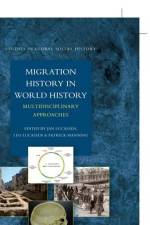
Migration is the talk of the town. On the whole, however, the current situation is seen as resulting from unique political upheavals. Such a-historical interpretations ignore the fact that migration is a fundamental phenomenon in human societies from the beginning and plays a crucial role in the cultural, economic, political and social developments and innovations. So far, however, most studies are limited to the last four centuries, largely ignoring the spectacular advances made in other disciplines which study the deep past, like anthropology, archaeology, population genetics and linguistics, and that reach back as far as 80.000 years ago. This is the first book that offers an overview of the state of the art in these disciplines and shows how historians and social scientists working in the recent past can profit from their insights.
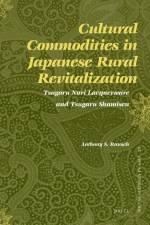
The fate of local places increasingly rests on their capability to capitalize on their highly specific local cultural resources. "Cultural Commodities in Japanese Rural Revitalization: Tsugaru Nuri Lacquerware and Tsugaru Shamisen" examines the dynamics of this reality for the Tsugaru District of the Aomori Prefecture, Japan, and its two dominant cultural commodities, a lacquerware and a musical performance. Organized on teh basis of policy, production and consumption, the research points to historical trajectory and a combinative conceptual-operational space as the means of identifying cultural and economic potential for a cultural commodity. This analytical approach provides both for assessing the local consciousness and identifying informed policy and industry management for the commodity, making it possible to realize its potential in local revitaliszation.
This collection dives head-on into the central contradictions of 21st Century North America and beyond with cutting-edge approaches to conflict-driven social change. Diverse forms of social movement resistance from environmentalists, migrant communities and others are analyzed by distinguished critical sociologists.
What is behind the changing attitudes towards intellectual property in India and China? This exploration of empirically-based research comparisons on the character of intellectual property systems found in these two countries, offers answers to three key questions: what are the drivers that have moved them towards a closer embrace of IP norms, how have domestic and systemic influences shaped the character of this embrace, and how have state and non-state actors interacted within the international system to promote this transformation? Focusing on the software and IT services industries, it illuminates the policy drivers that have influenced IP regime adoption, and helps our understanding the process by providing a clear framework of distinctive phases of technological, political and social development.
Containing sixteen essays and a substantial introduction by noted historians of premodern science, this book provides a fresh look at divergent yet complementary traditions of interpreting the natural world, ranging from Greek mechanics to early modern Chinese theories of dragons.
For centuries, the Chinese have been intermarrying with inhabitants of the Philippines, resulting in a creolized community of Chinese mestizos under the Spanish colonial regime. In contemporary Philippine society, the Chinese are seen as a racialized Other while descendants from early Chinese-Filipino intermarriages as Filipino. Previous scholarship attributes this development to the identification of Chinese mestizos with the equally Hispanicized and Catholic indios. Building on works in Chinese transnationalism and cultural anthropology, this book examines the everyday practices of Chinese merchant families in Manila from the 1860s to the 1930s. The result is a fascinating study of how families and individuals creatively negotiate their identities in ways that challenge our understanding of the genesis of ethnic identities in the Philippines. [This book] helps contribute to the revision of the existing literature on the Chinese and Chinese mestizos with a new perspective that highlights the emerging field of transnational studies. - Prof. Augusto Espiritu, "University of Illinois at Urbana-Champaign" the author does an outstanding job and we recommend that citizens of the Philippine nation, whether they see themselves as Chinese or Filipino would do well to read this work and understand the origins of the racial stereotypes that influence the way they look at particular members of Philippine society, particularly in Manila. - Prof. Ellen Palanca and Prof. Clark Alejandrino, "Ateneo de Manila University"
In a flurry of post-war productivity, Niko Tinbergen re-established his lab in Leiden, wrote landmark papers and his famous book The Study of Instinct, and founded the journal Behaviour to serve the burgeoning field of ethology. Tinbergen and his senior assistant, Jan van Iersel, published their classic paper, "Displacement reactions in the three-spined stickleback," in the first issue of his new journal in 1948. Stickleback are now a powerful model in the fields of behavioural ecology, evolutionary biology, developmental genetics, and ecotoxicology - an extraordinary development for a small fish that began its modeling career among an enthusiastic core of Tinbergen students in the 1930s. From a series of clever experiments with painted model fish to the use of the sequenced genome to analyze the genetic basis of courtship, stickleback science progressed in leaps and bounds, often via seminal studies published in the pages of Behaviour. Tinbergen s Legacy in Behaviour traces sixty years in the development of science using stickleback as a model, with 34 original articles covering topics ranging from homosexuality and cannibalism to genetics and speciation. Desmond Morris, Theo Bakker, Robert Wootton, Michael Bell, Tom Reimchen, Boyd Kynard, Harman Peeke, and Iain Barber provide fresh retrospectives on their republished works. Commentary by Frank von Hippel accompanies the articles and explains the roles they played in the frontiers of science as researchers falsified or expanded upon one another s ideas.
This second volume on Christianity in China covers the period from 1800 onwards up to the present, divided into four main periods, and dealing with the complexities of both Catholic and Protestant aspects. Also in this volume the reader will be guided to and through the Western and Chinese primary and secondary sources by a careful selection of major scholars in the field. With financial support from the Ricci Institute at the University of San Francisco Center for the Pacific Rim.
The present volume is the result of a team research which gathered biblical scholars, philologists, and historians of religions, on the issue of the multiple "Interpretations of Moses" inherited from the ancient mediterranean cultures. The concrete outcome of this comparative inquiry is the common translation and commentary of the fragments from the works of the mysterious Artapanus. The comparative perspective suggested here is not so much methodological, or thematic. It is first of all an invitation to cross disciplinary boundaries and to take account of the contributions of diverse cultures to the formation of a single mythology, in the case, a Moses mythology. With respect to Judea, Greece, Egypt or Rome, and further more an emerging christianity and its "gnostic" counterpart, the figure of Moses is at the heart of a cross-cultural dialogue the pieces of which, if they can be seperated for the confort of their specific study, mostly gain by being put together. Ce volume est le fruit d un travail d quipe, qui a r uni des biblistes, des philologues, et des historiens des religions autour des multiples Interpr tations de Mo se que nous ont l gu es les cultures de la M diterran e antique. Le r sultat pratique de cette enqu te comparatiste culmine dans la traduction et le commentaire douze mains des fragments du myst rieux Artapan, qui ouvrent le volume. Le comparatisme propos dans le pr sent volume ne se veut ni m thodologique ni th matique, mais vise d abord franchir les fronti res disciplinaires, tout en envisageant les apports culturels respectifs contribuant la formation d une mythologie, en l occurrence celle de Mo se. Entre la Jud e, l Egypte, la Gr ce, Rome, et bien-s r le christianisme naissant et l univers gnostique qui l accompagne, la figure de Mo se est au c ur d un dialogue, dont les pi ces, si elles peuvent tre disjointes pour la commodit de l tude, gagnent surtout tre rapproch es.
Garry Winston Trompf (b.1940) in his outstanding academic career has inspired scholars in the fields of Stduies in Religion and the History of Ideals. In this volume his collegues and students critique and expand upon the world of this outstanding academic. The book is divided into four parts, Melanesia, Ancient World Studies, Philosophical and Methodological Considerations and Historiography. Authors address Trompf's research in works such as "The Idea of Historical Recurrence in Western Thought," "Early Christian Historiography" and themes of Melanesian religion that Trompf address in "Payback." No study in the religions of oceania or ideals of millenialism should ignore this critical assessment of Garry Trompf's work.
Space has been reintroduced as an analytical category to the humanities and social sciences in the early 1990s. African Studies is one of the fields of knowledge production where the so-called spatial turn has proved to be extremely fruitful. The continent provides ample evidence for complex processes of deterritorialisation (migration, globalisation, sub-nationalisms) and reterritorialisation (new regionalisms, processes of bordering, etc.). These dialectical processes are driven by a variety of actors: political elites, multinational companies, warlords, donor governments, local traders, international NGOs, etc. As a result substantial parts of Africa witness the emergence of new regimes of territoriality: re-ordered states, transnational and sub-national entities, new localities and transborder formations. This volume brings together contributions from anthropology, history, geography and political science.
The Iguvine Tables ("Tabulae Iguvinae") are among the most invaluable documents of Italic linguistics and religion. Seven bronze tablets discovered in 1444 in the Umbrian town of Gubbio (ancient Iguvium), they record the rites and sacral laws of a priestly brotherhood, the Fratres Atiedii, with a degree of detail unparalleled elsewhere in ancient Italy. Taking an interdisciplinary approach that combines philological and linguistic, as well as ritual analysis, Michael Weiss not only addresses the many interpretive cruces that have puzzled scholars for a century and a half, but also constructs a coherent theory of the entire ritual performance described on Tables III and IV. In addition, Weiss sheds light on many questions of Roman ritual practice and places the Iguvine Tables in their broader Italic and Indo-European contexts.
Luvian is the language of Anatolian hieroglyphic inscriptions and a close relative of Hittite. This book explores the Luvian ethnic history through sociolinguistic methods, with an emphasis on the interpretation of contacts between Luvian and its linguistic neighbors, such as Hittite, Hurrian, and Greek. It is concluded that Luvian was originally spoken in the central part of Anatolia. Subsequent Luvian migrations were connected with the expansion of the Hittite state, where Hittite was the socially dominant language, but the Luvian speakers were more numerous. The unstable balance between the Hittite and the Luvian speakers continued to shift in favor of the second group, to the point that the Hittite elites were fully bilingual in Luvian.
This book presents a detailed critical analysis of the work of Fatima Mernissi. Mernissi is considered to be one of the major figures in Feminist thought for both Morocco and Muslim society in general. This work discusses Mernissi s intellectual trajectory from secular to Islamic feminism in order to trace the evolution of so-called Islamic feminist theory. The book also engages critically with the work of other Muslim feminists, using frameworks and approaches developed in the works of Muslim reformist thinkers, namely Mohammad Arkoun and Nasr Abu Zaid, with the aim of engaging the theorization of this emerging feminism.
Famous for his role as Minister General of the Franciscan Order after the flight of Michael of Cesena and company, Gerald Odonis (ca. 1285-1348) has in recent years attracted attention for his scholarly work. At an increasing pace, studies of specific areas of Odonis thought reveal another side to the man often portrayed as Pope John XXII s creature: a philosopher and theologian who held unique, often controversial positions and defended them with zeal and integrity, whose impact extended beyond the religious and chronological confines of medieval Christendom. Building on the recent scholarship of Bonnie Kent, Christian Trottmann, and especially L.M. de Rijk, this volume gathers together studies by other specialists on Odonis, covering his ideas in economics, logic, metaphysics, ethics, natural philosophy, theology, and politics in works written over the entire span of his career. Contributors are Paul J.J.M. Bakker, Sander W. de Boer, Stephen F. Brown, Giovanni Ceccarelli, William Duba, Roberto Lambertini, Sylvain Piron, Camarin Porter, Chris Schabel, and Joke Spruyt.
Abonner på vårt nyhetsbrev og få rabatter og inspirasjon til din neste leseopplevelse.
Ved å abonnere godtar du vår personvernerklæring.