











Gjør som tusenvis av andre bokelskere
Abonner på vårt nyhetsbrev og få rabatter og inspirasjon til din neste leseopplevelse.
Ved å abonnere godtar du vår personvernerklæring.Du kan når som helst melde deg av våre nyhetsbrev.

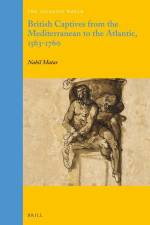
In British Captives from the Mediterranean to the Atlantic, 1563-1760, Nabil Matar furnishes a list of the names of all captives in the British archive and presents a chronological study of the historical and social background of British captivity.
On the occasion of the twenty-first conference of the International Organization for the Study of the Old Testament, Brill and the editorial board ofVetus Testamentum present this publication of ten articles published in the journal between 1950 and today.
The dynastic centre and the provinces were linked by agents and ritual occasions. This book includes contributions by specialists examining these connections in late imperial China, early modern Europe, and the Ottoman empire, suggesting important revisions and an agenda for comparison.This title is available online in its entirety in Open Access
The French pursued victory and colonisation amid a Roman landscape little affected down the centuries by local inhabitants. In the space of two generations they destroyed much of it, re-using its materials to create security and a modern prosperity.
This study is of a modest segment of Germany's experience in the Weimar and Nazi periods. Its purpose is to throw light on one small part of that experience in order to add it to the larger puzzle. It is a study of Neudeutschland, a German Catholic youth organization for students. The membership of the Bund, as it was known, is primarily from the German secondary schools, those which are equivalent to the last two grades of grade school, plus high school and two years of college in the United States. Two ancillary sections of the organization are the Jungvolk, the segment for the youngsters of pre-secondary school age, and the Alterenbund, for those who have graduated and are pur- suing careers in business, the university, and such. The organization was founded in 1919. Its course was relatively stormy until 1924, after which a short respite occurred in which an attempt was made at a unique synthesis. That synthesis can be sum- marized in the phrase, "Catholic youth movement. " Neudeutschland sought to catholicize the "healthy" aspects of the German youth move- ment which had grown after 1900 and which had swept through the secondary schools of Protestant northern Germany prior to the First World War. Mter the war, the impetus towards youth movemen- greatly enhanced by the shattering of the old, restricting authorit- spread among the Catholic students in the secondary schools.
In War, Entrepreneurs and the State, leading authors on the topic of military logistics provide cutting-edge insights into the role of the entrepreneur in making war and building states in Europe and the Mediterranean between 1300 and 1800.
In From the Vanguard to the Margins the late Dr Mark Pittaway offers a path-breaking account of the social history of post-war and contemporary Central and Eastern Europe (CEE) and the role of labour in shaping the politics of the region.
In Systematics of the Sheath Nematodes of the Superfamily Hemicycliophoioidea John Chitambar and Sergei Subbotin provide a detailed review of the taxonomy, molecular and mophological diagnoses, phylogenetics, biology, distribution, host-parasite relationships and ecology of this superfamily of plant-parasitic nematodes.
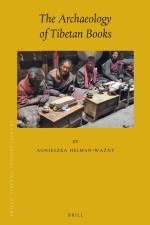
Agnieszka Helman-Ważny's Archaeology of Tibetan Books provides a comprehensive guide to the making of Tibetan books. Concerned with the relation of papers, inks, and layout to questions of provenance and dating, this work is a must-have companion to any textual analysis.
In Transboundary Governance of Biodiversity, African and European specialists provide a critical and comprehensive analysis of the international and regional regulatory frameworks and associated issues pertaining to the transboundary governance of biodiversity.
Coordination in Transition analyzes the evolution of the institutional structure of the Dutch political economy since 1950, focusing on the constant adaptation of deliberative institutions to structural economic change.
Medieval Latin Christian Texts on the Jewish Calendar opens up a previously unknown chapter in the history of Jewish-Christian intellectual exchange during the Middle Ages by presenting critical editions, English translations, and in-depth studies of five Medieval Latin Christian Texts on the Jewish Calendar.
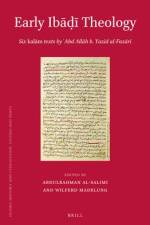
Early Ibāḍī Theology offers the critical edition of six Arabic texts by the Ibāḍī scholar 'Abd Allāh b. Yazīd al-Fazārī (8th c.) recently discovered in Algeria that constitute the earliest extant body of kalām theology in Islam
The Decade of the Great War critically reviews Japan's diplomatic, military, and transnational relations, demonstrating the breadth of Japan's new international relations before and after WWI.
Theoretical Discussions of Biography: Approaches from History, Microhistory, and Life Writing offers comprehensive overviews by 14 academic scholars of the actual state of the field of Biography Studies, specifically by connecting biography with microhistory, journalism, and Life Writing.
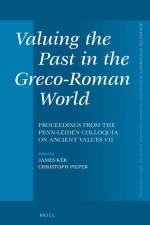
Valuing the Past in the Greco-Roman World is a collaboration between scholars working on diverse areas and periods of ancient Greco-Roman culture. The volume addresses literary and material evidence for ancient notions of valuing (or disvaluing) the deep past.
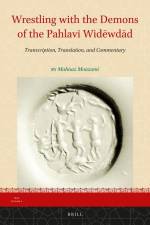
The Pahlavi Widēwdād (Vidēvdād), The Law (Serving to Keep) Demons Away, a fifth-century Middle Persian commentary on the Avestan Vidēvdād, describes regulations to prevent pollution in the perennial struggle against the forces of the Evil Spirit, thereby providing us with a perspective on the community's concerns and conduct.
The correspondence between Raffaele Pettazzoni and Herbert Jennings Rose (1927-1958) sheds light on the behind-the-scenes activity of two great modern scholars and provides an interesting perspective on the history of religions in the first half of the twentieth century.
In Selim III, Social Order and Policing in Istanbul at the End of the Eighteenth Century Betül Başaran examines Selim III's social control measures and Istanbul's dynamic population, urging us to go beyond mechanistic models of borrowing that focus primarily on European influence in discussions of Ottoman "modernity".
Abonner på vårt nyhetsbrev og få rabatter og inspirasjon til din neste leseopplevelse.
Ved å abonnere godtar du vår personvernerklæring.