










Gjør som tusenvis av andre bokelskere
Abonner på vårt nyhetsbrev og få rabatter og inspirasjon til din neste leseopplevelse.
Ved å abonnere godtar du vår personvernerklæring.Du kan når som helst melde deg av våre nyhetsbrev.

Through an examination of a wide range of medieval sources and a close textual study of the account about Ardashīr in the Shāhnāma, Nasrin Askari demonstrates that medieval authors understood Firdausī's opus primarily as a mirror for princes
A collection of the publications and other writings of Joy Hendry, with a biographical introduction also explaining the choice and rationale for the research topics addressed.
Sovereignty in the Age of Global Terrorism: The Role of International Organisations analyses the role of international organisations in adopting counterterrorism measures after 9/11 and the impact of these measures on the sovereignty of their Member States.
Human Rights, Hegemony and Utopia in Latin America explores the evolving relationship between hegemonic and counter-hegemonic visions of human rights, within the context of cases in contemporary Mexico and Colombia, and their broader implications.
In Material Culture and Queenship in 14th-century France Marguerite Keane analyzes the artistic and devotional context of the household of a medieval queen, Blanche of Navarre (1331-1398), as revealed through the evidence of her testaments of 1396 and 1398.
In Lay prophets in Lutheran Europe (c. 1550-1700), Jürgen Beyer provides the first study to investigate angelic apparitions in all Lutheran countries.
Catastrophe and Conflict: Disaster Diplomacy and Its Foreign Policy Implications examines how and why disaster-related activities (disaster response and disaster risk reduction) do and do not lead to diplomatic endeavours.
Scanning the Hypnoglyph by Nathaniel Wallace is concerned with the representation of sleep, with emphasis on postmodern verbal art and literature. Theories of subjectivity, narrative, and gender are considered, along with key works relevant for delineating a contemporary genre.
In Bali in the Early Nineteenth Century Helen Creese offers an account of the earliest Dutch-Balinese encounter together with an edition of the first ethnography of the island, Pierre Dubois' Légère Idée de Balie en 1830/Sketch of Bali in 1830.
The Circulation of Astronomical Knowledge in the Ancient World explores the ways in which astronomical knowledge circulated between different communities of scholars over time and space, and what was done with that knowledge when it was received.
Scholars in the arts, the humanities, and the sciences offer a multi-faceted investigation of the fundamental human experience of temporality--from reproductive politics and temporal logic to music and theater, from law to sustainability, from memory to the Vikings.
In Legal Practice, Ulrich Lau and Thies Staack offer a richly annotated translation of criminal case records from the pre-imperial period of Qin (between 246 BC and 222 BC) and shed new light on the Qin administration of justice.
Michelangelo in the New Millennium addresses the mobility and flexibility of Michelangelo's art regarding placement and intention, considers the artist's late papal painting commissions, and probes deeper into his early religious works.
The volume theme is the distinctiveness of Jesuits and their ministries. It explores the quidditas Jesuitica, or the specifically Jesuit way(s) of proceeding in which Jesuits and their colleagues operated from historical, geographical, social, and cultural perspectives. Thanks to generous support of the Institute for Advanced Jesuit Studies at Boston College, this volume is available in Open Access.
In Jewish Prayer Texts from the Cairo Genizah, Stefan Reif offers scholars and non-specialists a detailed study of twenty-five Genizah fragments that are of singular importance for understanding not only Jewish liturgical history but also medieval Jewish theology, Hebrew linguistic developments and scribal techniques.
The Look of Lyric: Greek Song and the Visual addresses the varied modes of interaction between ancient Greek lyric poetry and the visual arts as well as more general notions of visuality.
In The Newest Sappho Anton Bierl and André Lardinois have edited 21 papers of world-renowned Sappho scholars dealing with the new papyrus fragments of poems by Sappho that were published in 2014.
The aim of this volume is to formulate an alternative account of personification, to demonstrate the ingenuity with which this multifaceted device was utilized by late medieval and early modern authors and artists in Italy, England, Scotland, and the Low Countries
In Exuberant Apotheoses: Italian Frescoes in the Holy Roman Empire, Daniel Fulco offers a vivid account of large-scale Italian frescoes that embellished eighteenth-century German baroque palaces and expressed noble patrons' claim to princely power and political authority during the Enlightenment.
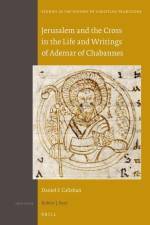
The writings of Ademar of Chabannes (ca 990-1034) on Jerusalem and the Cross offer a valuable, albeit at times, clouded window on many central developments of the pivotal tenth and eleventh centuries and why they are so central.
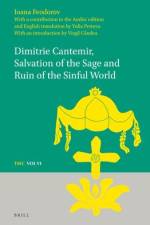
This is a thoroughly revised and expanded version of the first edition of the Arabic version of Dimitrie Cantemir's The Divan or the Sage's Dispute with the World, achieved in 1705 by Athanasios Dabbās, Patriarch of the Antiochian Church.
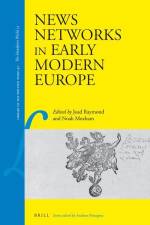
In News Networks 35 scholars from 10 countries give a new account of the history of European news, emphasising its transnational character and the international transmission of forms and modes of news as well as information.
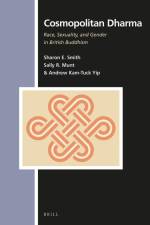
Cosmopolitan Dharma, through an analysis of the diverse voices of racial, sexual and gender minority Buddhists, explores how cultural politics from the ground up can offer a more inclusive philosophy and lived experience of spirituality for Western Buddhism.
This volume rethinks the role of the Sino-Japanese medical classics during the early modern period in light of antiquarianism, languages, and medical philology. Philology in particular allows the authors to address the changing meaning of the same term, which often reflected well-known metaphors in the source language that were transposed to the target language. Each essay touches on the reliability of received medical texts and their modern fate.
In The Kazakh Khanates between the Russian and Qing Empires Jin Noda portrays the structure of the foreign relations that existed between the Kazakh Chinggisid sultans and the Russian and Qing empires during the 18th and 19th centuries
Abonner på vårt nyhetsbrev og få rabatter og inspirasjon til din neste leseopplevelse.
Ved å abonnere godtar du vår personvernerklæring.