


Gjør som tusenvis av andre bokelskere
Abonner på vårt nyhetsbrev og få rabatter og inspirasjon til din neste leseopplevelse.
Ved å abonnere godtar du vår personvernerklæring.Du kan når som helst melde deg av våre nyhetsbrev.

When Storyworlds Collide shows that metalepsis possesses a unique dynamics in popular storytelling and has become an essential device for pop-cultural self-reflection - while still retaining an immense potential to create amusing and entertaining narratives.
Reworlding Art History highlights the significance of contemporary Southeast Asian art and artists, and their place in the globalized art world and the internationalizing field of 'contemporary art'. In the light of the region's modern art history, the book surveys this relatively under-examined area of contemporary art which first found broad international recognition in the 1990s.Richly illustrated and incorporating cross-cultural and interdisciplinary methods, Reworlding Art History is a foundational reference work for those interested in Southeast Asia's contemporary art, including scholars of art history, Asian studies, curatorship, museology, visual culture, and anthropology, as well as professionals working in art and museum contexts.
This collection is a timely reflection on the momentous concept of transculturalism. With its historical roots in globalization, transculturation, oriented to (new) aesthetics, seeks new cultural formations, and, with its heterogeneous author- and readership, enlists active participation by the individual.
Based on Deleuze's idea that philosophy is an activity that appeals to anyone who is attuned to the desire for the ethical life, the contributions in this book question how to live the ethical life today in academia, in art but above all in our multiple ecologies of belonging.
De l'Univers de concentration à l'Univers de Plantation, l'oeuvre d'André et de Simone Schwarz-Bart dépiste les mêmes mécanismes de déshumanisation et la même nécessité à faire un double devoir de mémoire.
The book proposes a new understanding of eighteenth-century Quixotism in English thought and literary production. The world displayed by eighteenth-century English Quixotes reveals a strain of lament and criticism aimed at the rise of commercialism and the pre-eminence of self-interest, religious conformism and imperial designs.
Visions of Alterity: Representation in the Works of John Banville offers detailed and original readings of the work of the Irish author John Banville, one of the foremost figures in contemporary European literature. It investigates one of the fundamental concerns of Banville's novels: mediating the gap between subject and object or self and world in representation. By drawing on the rich history of the problem of representation in literature, philosophy and literary theory, this study provides a thorough insight into the rich philosophical and intertextual dimension of Banville's fiction. In close textual analyses of Banville's most important novels, it maps out a thematic development that moves from an interest in the epistemological and aesthetic representation of the world in scientific theories, over a concern with the ethical dimension of representations, to an exploration of self-representation and identity. What remains constant throughout these different perspectives is the disruption of representations by brief but haunting glimpses of otherness. In tracing these different visions of alterity in Banville's solipsistic literary world, this study offers a better understanding of his insistent and thought-provoking exploration of what it means to be human.
The present volume is the first to address the interrelationship between Goethe's scientific thought and work, his ideas on art and literary oeuvre, and chaos and complexity theories. The eleven studies assembled in it treat one or more elements or aspects of this interrelationship, ranging from basic concepts all the way to a model of an aesthetic-scientific methodology. In the process, the authors scrutinize chaos and complexity both as motif and motor of literary texts and nature within various contexts of past and present. The volume should be of interest to literary scholars, scientists, and philosophers of science, indeed, to all those who are interested in the continuities between the humanities and sciences, culture and nature.
The long twentieth century has witnessed a tremendous upsurge in new drugs, remedies and therapeutic strategies. The cultural environments in which they emerged, the social circumstances from which they sprang, and the social effects that remedies engendered are treated in depth in this collection of essays.
British fictions of the early twentieth century appear obsessed with Europe. Various texts from E.M. Forster and D.H. Lawrence to Bram Stoker and the period's travel writing explore European spaces, constructing the European as an Other threatening the position of the English. What they constantly repeat is England's difference and the secondary role of European spaces, whose representation resembles that of colonial lands. By reading selected texts, both canonized and popular, published between 1894 and 1916, this study argues that this xenophobic construction is a sign of the pervading presence of concerns related to the maintenance of English national identity, Englishness, allegedly threatened by the European Other. By drawing on current postcolonial theory, the case studies in the volume show that the discourse on the Other produced in British writings on Europe contributes more than has been understood to the making and promoting of Englishness. The authors studied include D.H. Lawrence, Katherine Mansfield, Anthony Hope, Arnold Bennett, Mrs Alec Tweedie, Erskine Childers, and Joseph Conrad. The study will renew our understanding of the role of Europe in the period's cultural imagination, showing that the identities of the English are formed in encounters with different internal and external Others.
Contemporary studies of memory focus either on the psychology of remembering, on its archives and media, or on the traditional ars memoriae. The general cultural framework with its social and material factors is largely neglected, despite the obvious impact on both collective and individual mnemonic mentality. But, as in the first half of the seventeenth century or the later twentieth century, the literary and political invocation of religious, collective or national memory occurs most of all in times of historical rupture, and attendant changes of a radical technological and cultural nature. Appeals to the power of memory are not only indicative of the anxiety about the loss of its binding or absolving character. They are already symptomatic of a deep crisis of cultural memory in itself, resulting from an erosion of firm spatial, temporal and historical references along with an increasing tendency towards reflexivity, which calls the apparently self-evident facts of past and present into question. The continuity of remembering, however, as this study argues, presupposes the permanence and recurrence of social and material relations, of representative or symbolic persons, objects and events, in which it can inscribe itself. But owing to the shift in historical consciousness from (typological) past to progressive future and novelty and under the impress of industrial production and modern media (mobility and communications), the Western subject has to cope constantly with new empirical situations, symbolic values and historical or current information whose origin and evolution - indeed, the very memory of them - remain alien to personal identity and memory. The promise of redemption and salvation, still inherent in seventeenth-century collective memory, loses credibility.The study includes a wide range of authors from Donne to Pope, Tennyson to George Eliot and Walter Pater, W.B. Yeats to Don DeLillo and covers the whole period from early modern England to postmodernism. It can thus also be read as a brief history of Western memory and its continuing crises.
The present collection of essays grew out of a conference, held in Dresden in December 2001, exploring the relationship between the public sphere and legal culture. The conference was held in connection with the ongoing research undertaken by the Sonderforschungsbereich 537 'Institutionalisation and Historical Change' and, in particular, by the project 'Circulation of Legal Norms and Values in British Culture from 1688 to 1900'.The conference papers include essays on the theory of the public sphere from a systematic and historical point of view by Gert Melville, by Peter Uwe Hohendahl and by Jürgen Schlaeger, all of whom try to re-evaluate and/or improve upon Jürgen Habermas' seminal contribution to the discussion of the emergence of modernism. Alastair Mann's contribution investigates the situation in Scotland, particularly censorship and the oath of allegiance; Annette Pankratz focuses on the king's body as a site of the public sphere; Heinz-Joachim Müllenbrock looks into the widespread 'culture of contention' at the beginning of the eighteenth century; and Eckhart Hellmuth considers the reform movement at the end of the century and the radical democrats' insistence on the right to discuss the constitution.Ian Bell, who took part in the conference, suggested the inclusion of part of the first chapter of his seminal study Literature and Crime in Augustan England (1991). Beth Swan, Anna-Christina Giovanopoulos, and Christoph Houswitschka respectively analyse the ideologies of justice, the interrelation between journalism and crime, and the juridical evaluation of the crime of incest and its representation in public. Greta Olson investigates keyholes as liminal spaces between the public and the private, Juliet Wightman focuses on theatre and the bear pit, Uwe Böker examines the court room and prison as public sites of discourse, and York-Gothart Mix discusses the German emigrant culture in North America.
This literature-centered study offers an interdisciplinary approach to Romantic culture. If is pioneering in that it employs the complexity method of anthropology. Recent literary studies employ the complexity/chaos theory adapted from the natural sciences; however, here is presented for the first time a complexity method taken from the social/human sciences. This complexity method is useful in mediating not only contradictions within Romanticism, but the chaos of contemporary theories concerning it. One of the intensifying literary debates is that between the so-called "Greens" and "Reds," naturalists and humanists.Mediating Order and Chaos not only traces the split between nature and man to Romantic Culture but finds there, too, a Spinozian vision of man and nature in unity - thereby denying any naturalist/humanist split. This volume is of interest for those who wish to see essays in the holistic approach to culture. Centering on hydraulics, hydrology, and meteorology, this study examines literature, painting, music, economics, and the rhetoric of science, philosophy, and politics, it therewith demonstrates how the water cycle was transformed into a cosmic metaphor that mediated, in the form of several complex adaptive systems, between the chaos of too much change and that of not enough.
This collection of 19 essays is the first one devoted to function-oriented analyses of intermedial interrelationships in literature, art, music, and film. The contributors -- among others, Werner Wolf, James Heffernan, Walter Bernhart, Siglind Bruhn, Claus Clüver, Valerie Robillard, and Tamar Yacobi -- are leading international scholars in the field of intermediality. The common basis of the essays in this volume -- ranging from intermedial studies of medieval liturgical practices, early cinema, modernist art, ekphrasis, music and literature, art and literature, film and literature, hymns, and pop music, to the musical and technological aspects of Concrete poetry -- is the ambition to pay attention to the cultural contexts that enhance the significance of these intermedial works and trends under examination. Since the contributions cover different types of intermedial endeavours from various periods and times, a kind of historicizing perspective is outlined. So, in pursuit of a still lacking coherent historical survey of cultural functions of intermediality, this volume might be recognized as a step towards such a Funktionsgeschichte for intermedial exploration.
Tradition and how far writers fit into or diverge from the demands of tradition is one of the most debated issues in literary discussion. Gender, however, is not often part of discussions which depend on such questions at the decisiveness of the Modernist break with the Victorian period or whether Postmodernism makes tradition meaningless. By contrast the very existence of a specifically female tradition is still an urgent subject of debate, and it is clear that many nineteenth-century women writers were troubled in their search for literary foremothers. This autobiographical impetus can be located in the work of each of the poets discussed in Tradition and the Poetics of Self Nineteenth-Century Women's Poetry: Elizabeth Barrett Browning, Caroline Bowles Southey, Emily Dickinson and Christina Rossetti. An exploration of the self, either in the abstract or in a more closely personal sense, appears in a concern with the craft of poetry and the role of the poet, in a teasing out of language as a marker of a personal encounter with the world, in an adventurous play with genre and a rewriting of myth, and in a bold confrontation with received notions of a woman's place. Adventurousness marks the work of each of these poets and is a central focus of these essays.
Kafka, Gothic and Fairytale is an original comparative study of the novels and some of the related shorter punishment fantasies in terms of their relationship to the Gothic and fairytale conventions. It is an absorbing subject and one which, while keeping to the basic facts of his life, mind-set and literary method, shows Kafka's work in a genuinely new light. The contradiction between his persona with its love of fairytale and his shadow with its affinity with Gothic is reflected in his work, which is both Gothic and other than Gothic, both fairytale-like and the every denial of fairytale. Important subtexts of the book are the close connexion between Gothic and fairytale and between both of these and the dream. German text is quoted in translation unless the emphasis is on the meaning of individual words or phrases, in which case the words in question are quoted and their English meanings discussed. This means that readers without German can, for the first time, begin to understand the underlying ambiguity of Kafka's major fictions. The book is addressed to all who are interested in the meaning of his work and its place in literary history, but also to the many readers in the English and German-speaking worlds who share the author's enthusiasm for Gothic and fairytale.
Addressed to all readers of Our Nig, from professional scholars of African American writing through to a more general readership, this book explores both Our Nig's key cultural contexts and its historical and literary significance as a narrative.Harriet E. Wilson's Our Nig (1859) is a startling tale of the mistreatment of a young African American mulatto woman, Frado, living in New England at a time when slavery, though abolished in the North, still existed in the South. Frado, a Northern 'free black', yet treated as badly as many Southern slaves of the time, is unforgettably portrayed as experiencing and resisting vicious mistreatment. To achieve this disturbing portrait, Harriet Wilson's book combines several different literary genres - realist novel, autobiography, abolitionist slave narrative and sentimental fiction. R.J. Ellis explores the relationship of Our Nig to these genres and, additionally, to laboring class writing (Harriet Wilson was an indentured farm servant). He identifies the way Our Nig stands as a double first: the first separately-published novel written in English by an African American female it is also one of the first by a member of the laboring class about the laboring class. This study explores how, as a result, Our Nig tells a series of disturbing two-stories about America's constitutional guarantee of 'freedom' and the way these relate to Frado's farm life.
The essays assembled in this volume grew out of a conference held at Cornell University in November 2001. The goal of the conference was to examine the claim that the city-state of Hamburg had a unique status in the cultural landscape of eighteenth and nineteenth-century Germany, a status based upon the city's republican political constitution. Hamburg's independence and its tolerant and cosmopolitan political traditions made it a focal point for progressive cultural developments during the period of the Enlightenment and after. The contributions collected here transcend traditional disciplinary boundaries by giving equal attention to literature, music, and theater, as well as to architecture and city planning. Key essays address the role that figures as diverse as C.P.E. Bach, Lessing, Klopstock, Heine, Brahms, and Thomas Mann played in shaping Hamburg's exceptional quality as a center of culture. This volume will be of interest not only to scholars doing research on Hamburg, but also to anyone with an interest in the cultural history of eighteenth, nineteenth, and early twentieth-century Germany.
Allegories of Telling: Self-Referential Narrative in Contemporary British Fiction has as its founding premise Ross Chambers's notion that "one of the important powers of fiction is its power to theorize the act of storytelling in and through the act of storytelling." In this critical study, Lynn Wells presents detailed readings of novels by five prominent British authors - John Fowles, Angela Carter, Graham Swift, A.S. Byatt and Salman Rushdie - with an emphasis on how the texts' self-referential aspects illuminate the acts of reading and writing fiction in contemporary Britain and, by extension, around the world. The book begins by situating contemporary British fiction historically as the product of an "aesthetics of compromise" arising from the "realism versus experimentalism" debate that consumed the English literary establishment during the 1960s. In her discussion of the texts, Lynn Wells then draws on a wide range of theoretical approaches, from narrative and psychoanalytic theory to existentialist philosophy and the historiographic ideas of thinkers such as Walter Benjamin, Michel Foucault and Giambattista Vico. These original readings challenge superficial "postmodern" interpretations of contemporary British fiction as pessimistically anti-historical, and reassert the value of readerly engagement and narrative reconstruction of the past.
Written using critical theory, especially by Walter Benjamin, Blanchot and Derrida, Allegory and the Work of Melancholy: The Late Medieval and Shakespeare reads medieval and early modern texts, exploring allegory within texts, allegorical readings of texts, and melancholy in texts. Authors studied are Langland and Chaucer, Hoccleve, on his madness, Lydgate and Henryson. Shakespeare's first tetralogy, the three parts of Henry VI and Richard III conclude this investigation of death, mourning, madness and of complaint. Benjamin's writings on allegory inspire this linking, which also considers Dürer, Baldung and Holbein and the dance of the dead motifs. The study sees subjectivity created as obsessional, paranoid, and links melancholia, madness and allegorical creation, where parts of the subject are split off from each other, and speak as wholes. Allegory and melancholy are two modes - a state of writing and a state of being - where the subject fragments or disappears. These texts are aware of the power of death within writing, which makes them, fascinating. The book will appeal to readers of literature from the medieval to the Baroque, and to those interested in critical theory, and histories of visual culture.
This book looks at a sector of black and Asian British film and television as it presented itself in the 1990s and early 2000s. For this period, a 'mainstreaming' of black and Asian British film has been observed in criticism and theory and articulated by an increasing number of practitioners themselves, referring to changing modes of production, distribution and reception and implying a more popular and commercial orientation of certain media products. This idea is a leitmotif for the authors' readings of recent films and examples of television drama, including such diverse products as Young Soul Rebels and Babymother, East Is East and Bend It Like Beckham, The Buddha of Suburbia and White Teeth. These analyses are supplemented with a look at earlier landmark productions (like Pressure) as well as relevant social, institutional and aesthetic frameworks. The book closes with a selection of statements by black and Asian media practitioners who operate from within Britain's cultural industries: Mike Phillips, Horace Ové, Julian Henriques, Parminder Vir and Gurinder Chadha.
Poetry and music have seldom been more closely associated than at the end of the nineteenth century, and the texts in which Baudelaire and Wagner, Mallarmé and Scriabin, Maeterlinck and Debussy evoked the reader's and the listener's states of mind are unusually rich in suggestion. Can poetry combine, as music seems to do, the transcendent satisfaction of an all-inclusive viewpoint with the excitement and uncertainty of an unfolding narrative? Can it partake of music's power in order to give a face to the idea, and substitute, without disappointing, a definite variation for the ineffable theme? Symbolist writers intent on achieving musical effects in words looked for ways to overcome the hard division of subjects at the foundation of language, and the strategies they invented, while not always successful, show their supreme expectations concerning the receptive capability of their audience and an unqualified belief in the transforming power of their art.Students of aesthetics, of French and comparative literature should find something of interest in this provocative and original book. For ease of reference, a detailed abstract of the contents is provided, along with English translations of all quotations in other languages.
Kafka's three novels, to be understood as an ever more intricate portrayal of the inner life of one central character (Henry James's 'centre of consciousness'), each reflecting the problems of their self-critical creator, are tantamount to dreams. The hieroglyphic, pictorial language in which they are written is the symbolic language in which dreams and thoughts on the edge of sleep are visualized. Not for nothing did Kafka define his writing as a matter of fantasizing with whole orchestras of [free] associations. Written in a deliberately enhanced hypnagogic state, these novels embody the alternative logic of dreams, with the emphasis on chains of association and verbal bridges between words and word-complexes. The product of many years' preoccupation with its subject, Patrick Bridgwater's new book is an original, chapter-by-chapter study of three extraordinarily detailed novels, of each of which it offers a radically new reading that makes more, and different, sense than any previous reading. In Barthes' terms these fascinating novels are 'unreadable', but the present book shows that, properly read, they are entirely, if ambiguously, readable. Rooted in Kafka's use of language, it consistently explores, in detail, (i) the linguistic implications of the dreamlike nature of his work, (ii) the metaphors he takes literally, and (iii) the ambiguities of so many of the words he chooses to use. In doing so it takes account not only of the secondary meanings of German words and the sometimes dated metaphors of which Kafka, taking them literally, spins his text, but also, where relevant, of Czech and Italian etymology. Split, for ease of reference, into chapters corresponding to the chapters of the novels in the new Originalfassung, the book is aimed at all readers of Kafka with a knowledge of German, for the author shows that Kafka's texts can be understood only in the language in which they were written: because Kafka's meaning is often hidden beneath the surface of the text, conveyed via secondary meanings that are specific to German, any translation is necessarily an Oberflächenübersetzung.
Departing from earlier studies which regarded incest as a literary topos or dramatic metaphor foregrounding political, social, or legal issues, Words and Deeds: The Spectacle of Incest in English Renaissance Tragedy argues that the presence of incest on the Renaissance stage is a strategy for the enactment of the spectator's tragic experience. Incest is explored neither as a sin nor as a crime, but as an "unspeakable" experience filtered through dramatic words and deeds. The incitement of desire, visual pleasure, and unconscious fantasy, as well as traumatic rejection, pain, and horror, are all aspects of this paradoxical and uncanny experience. Aristotelian theory of tragedy, Freudian and Lacanian psychoanalysis, and Michel Foucault's notions of the deployment of sexuality and alliance, concur in the analysis of plays where incest is a central or a secondary motif - Ford's 'Tis Pity She's a Whore, Beaumont and Fletcher's Cupid's Revenge, Webster's The Duchess of Malfi - and others where incest is an effect of language and mise-en-scène - Sackville and Norton's Gorboduc, Shakespeare's King Lear. The variety of topics and the combination of critical perspectives makes In Words and Deeds an attractive book for students and teachers of Renaissance drama, as well as for those with a special interest in psychoanalytic and other new theoretical approaches to the literary text.
After the success of the first international conference on the medieval chronicle, it was decided that another would be in place. It was held in the summer of 1999, and again drew some 150 participants. There are several reasons why the chronicle is particularly suited as the topic of an international conference. In the first place there is its ubiquity: all over Europe and throughout the Middle Ages chronicles were written, both in Latin and in the vernacular, and not only in Europe but also in the countries neighbouring on it, like those of the Arabic world.Secondly, all chronicles raise such questions as by whom, for whom, or for what purpose were they written, how do they reconstruct the past, what determined the choice of verse or prose, or what kind of literary influences are discernable in them. Finally, many chronicles have been beautifully illuminated, and the relation between text and image leads to a wholly different set of questions. Like its predecessor this volume of conference papers aims to provide a representative survey of the on-going research in the field of chronicle studies, illustrated by examples from specific chronicles from a wide variety of countries, periods and cultural backgrounds. They are introduced by the opening address by David Dumville, on the question What is a chronicle?
Ideas about the human mind are culturally specific and over time vary in form and prominence. The Life of the Mind in Old English Poetry presents the first extensive exploration of Anglo-Saxon beliefs about the mind and how these views informed Old English poetry. It identifies in this poetry a particular cultural focus on the mental world and formulates a multivalent model of the mind behind it, as the seat of emotions, the site of temptation, the container of knowledge, and a heroic weapon. The Life of the Mind in Old English Poetry treats a wide range of Old English literary genres (in the context of their Latin sources and analogues where applicable) in order to discover how ideas about the mind shape the narrative, didactic, and linguistic design of poetic discourse. Particular attention is paid to the rich and slippery vernacular vocabulary for the mind which suggests a special interest in the subject in Old English poetry. The book argues that Anglo-Saxon poets were acutely conscious of mental functions and perceived the psychological basis not only of the cognitive world, but also of the emotions and of the spiritual life.
Bible translations in Indonesian languages, period 1900-1970.
The twenty-four studies in this volume propose a new approach to framing the debate around the history of medieval art and architecture to highlight the multiple roles played by women, moving beyond today's standard division of artist from patron.
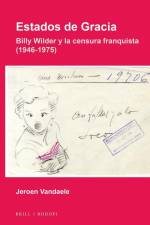
In the midst of National-Catholic outrage and censorship, Billy Wilder's films helped open up the repertoire for moviegoers during Francoism. Vandaele's Estados de Gracia contends that this explains why Wilder is still considered a cinematic god in Spain.En medio de la indignación y la censura nacional-católica, Billy Wilder contribuyó a renovar el cine para el público del franquismo. En Estados de Gracia, Vandaele sugiere que ello explica por qué Billy Wilder sigue siendo un dios del cine en España.
Abonner på vårt nyhetsbrev og få rabatter og inspirasjon til din neste leseopplevelse.
Ved å abonnere godtar du vår personvernerklæring.