






Gjør som tusenvis av andre bokelskere
Abonner på vårt nyhetsbrev og få rabatter og inspirasjon til din neste leseopplevelse.
Ved å abonnere godtar du vår personvernerklæring.Du kan når som helst melde deg av våre nyhetsbrev.

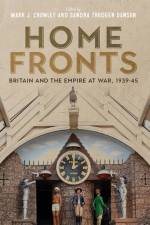
Examines the "e;home front"e; war effort from an overall imperial perspective, assessing the contribution of individual imperial territories.There is increasing interest in the "e;home front"e; during the Second World War, including issues such as how people coped with rationing, how women worked to contribute to the war effort, and how civilian morale fluctuated over time. Most studies on this subject are confined to Britain, or to a single other colonial territory, neglecting the fact that Britain controlled a large Empire and that there were numerous "e;home fronts"e;, each of which contributed greatly to the war effort but each in slightly different ways. This book considers "e;home fronts"e; from an overall imperial perspective and in a broad array of territories - Australia, India, South Africa, Ceylon, Palestine and Kenya aswell as Britain. It examines many aspects of wartime life - food, communications, bombing, volunteering, internment and more, and discusses important themes including identity, gender, inequality, and the relationship between civilians and the state. Besides case studies outlining the detail of the situation in different territories and in different areas of life, the book assesses "e;home fronts"e; across the Empire in a comprehensive way, setting the case studies in their wider context, and placing the subject in, and advancing, the historiography. MARK J. CROWLEY is Associate Professor of History at Wuhan University, China. SANDRA TRUDGEN DAWSON is an Instructor in the Department of History at the University of Maryland. Contributors: NUPUR CHAUDHURI, MARK J. CROWLEY, SANDRA TRUDGEN DAWSON, NADJA DURBACH, ASHLEY JACKSON, RITIKA PRASAD, LINSEY ROBB, SHERENE SEIKALY, JEAN SMITH,ANDREW STEWART, PETER THORSHEIM, CHRISTINE WINTER
An overview of the history of yachting in its social, cultural, political and economic contexts.
An examination of changes in religious practice over the course of the long fourteenth century.Ripon Minster was St Wilfrid's church, and its vast parish at the edge of the Yorkshire dales was his domain, his memory living on among the people of his parish centuries after his death. Wilfrid was a saint for all seasons: histhree feast days punctuated the cycle of the agricultural year and an annual procession sought his blessings on the growing crops each May. This procession brought together many of the parish's earthly lords - the clergy and the gentry - as they carried the relics of their celestial patron. In death they hoped that they too would be remembered, and so remain a part of parish society for as long as their tombs survived or prayers were said for them in the church of Ripon. This book charts the developments in the practice of religion, and in particular the commemoration of the deceased, from the late fourteenth to the early sixteenth centuries in this important parish. In particular, it shows how the twin necessities of honouring the minster's patron saint and remembering the parish dead had a profound effect on the practice of religion in late medieval Ripon, shaping everything from the ritual calendarto weekly and daily religious routines. It provides, moreover, insights into the state of English religion on the eve of the Reformation. Stephen Werronen completed his PhD at the University of Leeds and is currently a visiting researcher at the Arnamagnaean Institute, University of Copenhagen.
Traces the processes and paradoxes at work in the late parodic poetry of Luis de Gongora and Lope de Vega, illuminating correlations and connections.Co-Winner of the 2014 Publication Prize awarded by the Association of Hispanists of Great Britain and Ireland Kerr traces the processes and paradoxes at work in the late parodic poetry of Luis de Gongora and Lope de Vega, illuminating the correlations and connections between two poets who have more often than not been presented as enemies.The analysis follows the parallel development of the complex parodic genre through Gongora's late mythological parody, from his 1589 Hero and Leander romance through to his culminating parody, La fabula de Piramo y Tisbe (1618) and Lope de Vega's alter ego Tome de Burguillos, whose anthology, Rimas humanas y divinas del licenciado Tome de Burguillos, was published a year before Lope's death, in 1634. Working from the premise that parody provides a Derridean supplement to exhausted, dominant genres (e.g. pastoral, lyric, epic), this study asks: what do these texts achieve by their supplementarity, and how do they achieve it?, and, the overarching question, why do these erudite poets turn to parody in an age of decline? Lindsay Kerr received her PhDin Spanish at Queen's University Belfast.
The first full-length examination of the medieval Charlemagne tradition in the literature and culture of medieval England, from the Chanson de Roland to Caxton.
Translation and facing text of an important female-authored work from the late middle ages.
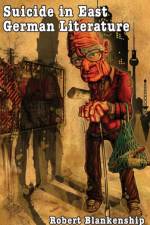
This first book-length study of fictional suicides in East German literature provides insight into the complex and dynamic rhetoric of the GDR and the literariness of its literature.
Abonner på vårt nyhetsbrev og få rabatter og inspirasjon til din neste leseopplevelse.
Ved å abonnere godtar du vår personvernerklæring.