








Gjør som tusenvis av andre bokelskere
Abonner på vårt nyhetsbrev og få rabatter og inspirasjon til din neste leseopplevelse.
Ved å abonnere godtar du vår personvernerklæring.Du kan når som helst melde deg av våre nyhetsbrev.

The Empire of Habit critiques the traditional interpretation of Locke's political thought, revealing that the foundation of Lockean liberalism is not natural law but discipline and habit.
Cutting-edge scholarly articles on diverse aspects of Goethe and the Goethezeit, featuring in this volume a special section on Goethe and visual culture.The Goethe Yearbook is a publication of the Goethe Society of North America, encouraging North American Goethe scholarship by publishing original English-language contributions to the understanding of Goethe and other authors of the Goethezeit while also welcoming contributions from scholars around the world. Volume 23 features a special section on visual culture with contributions on the visual aesthetics of Goethe's 1815 production ofProserpina (Bersier); on the Farbenlehre (Lande); on Tableaux Vivants in Goethe's Die Wahlverwandtschaften (Solanki); on the relationship between Goethe and C. G. Carus and their respective views on the representation of nature in art and science (Allert); and on visual and verbal bricolage in Clemens Brentano's Gockel, Hinkel und Gackeleia (MacLeod). There are also articles on Goethe and ancient mystery religions (Amrine); on Goethe's fairy-tale aesthetics (Brown); on the concept of neutrality (Holland); on the concept of the mathematical infinite (Smith); on virginity and maternity in Werther (Nossett); on the Classical aesthetics of Schlegel'sLucinde (ter Horst); and on motherless creations in Faust (Nielsen). Contributors: Beate Allert, Frederick Amrine, Gabrielle Bersier, Jane K. Brown, Jocelyn Holland, Joel B. Lande, Catriona MacLeod, WendyC. Nielsen, Lauren Nossett, John H. Smith, Tanvi Solanki, Eleanor ter Horst. Adrian Daub is Associate Professor of German at Stanford. Elisabeth Krimmer is Professor of German at the University of California Davis. Bookreview editor Birgit Tautz is Associate Professor of German at Bowdoin College.
This collection of seventeen original essays by leading authorities offers, for the first time, a comprehensive overview of the significant authors and important aspects of fifteenth-century English poetry.
Excerpts from texts (with translation) from the French of medieval England offer a guide to medieval literary theory.
Essays using feminist approaches to offer fresh insights into aspects of the texts and the material culture of the middle ages.
A major study sure to fascinate musicians, Brahms enthusiasts and those interested in the history of recorded music.How did Brahms conduct his four symphonies? What did he want from other conductors when they performed these works, and to which among them did he give his approval? And crucially, are there any stylistic pointers to these performances in early recordings of the symphonies made in the first half of the twentieth century? For the first time, Christopher Dyment provides a comprehensive and in-depth answer to these important issues. Drawing together thestrands of existing research with extensive new material from a wide range of sources - the views of musicians, contemporary journals, memoirs, biographies and other critical literature - Dyment presents a vivid picture of historic performance practice in Brahms's era and the half-century that followed. Here is a remarkable panorama showcasing Brahms himself conducting, together with those conductors whom he heard, among them Levi, Richter, Nikisch, Weingartner and Fritz Steinbach, and their disciples, such as Toscanini, Stokowski, Boult and Fritz Busch. Here, too, are other famed Brahms conductors of the early twentieth century, including Furtwangler and Abendroth, whose connections with the Brahms tradition are closely examined. Dyment then analyses recordings of the symphonies by these conductors and highlights aspects which the composer might well have commended. Finally, Dyment suggests the importanceof his conclusions for those contemporary conductors who are currently attempting to rediscover genuine performance traditions in their own re-creations of the symphonies. This major study is complemented with forty photographs and a frontispiece. It is sure to fascinate musicians, Brahms enthusiasts and those interested in the history of recorded music. CHRISTOPHER DYMENT is author of Felix Weingartner: Recollections and Recordings(Triad Press 1976) and Toscanini in Britain (The Boydell Press 2012). He has published many articles about historic conductors over the last forty years.
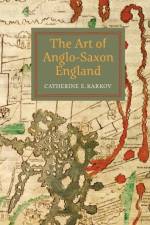
A fresh appraisal of the art of Anglo-Saxon England, focusing on art as an aesthetic vehicle and art as an active political force.
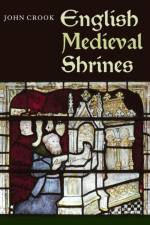
Survey of the growth and development of the magnificent shrines which reached their apogee during the middle ages.
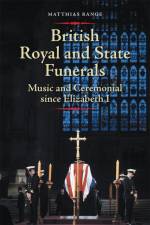
The first in-depth study of the ceremonial and music performed at British royal and state funerals over the past 400 years.British royal and state funerals are among the most elaborate and solemn occasions in European history. This book is the first in-depth study of the ceremonial and the music performed at these events over the past 400 years, fromthe funeral of Elizabeth I in 1603. Covering funerals of both royalty and non-royalty, including Nelson, Wellington and Churchill, this study goes up to the funerals of Queen Elizabeth The Queen Mother in 2002 and the ceremonial funeral of Baroness Thatcher in 2013. While some of these funerals have received a good deal of attention - especially the 1997 funeral of Diana, Princess of Wales - these extraordinary events have largely not been discussed in their longer historical context. The book examines the liturgical changes in the Anglican funeral rite since the Reformation and also the change from the so-called 'public' to 'private' funerals. It includes many new findings onthe development of the ceremonial and its intricate peculiarities, as well as new insights into the music and its performance. British Royal and State Funerals shows that, despite a strong emphasis on continuity in the choice of music, the ceremonial itself has shown an astonishing flexibility over the last four centuries. Overall, the book also contributes to the debate on the monarchy's changing public image over time by paying particular attention to topics such as tradition and propaganda. Drawing on substantial research in principal libraries and archives, including those of Westminster Abbey, the College of Arms, Lambeth Palace and the British Library, this book is an exhaustive resource for musicologists, musicians and historians alike, providing an unprecedented insight into this most sombre of royal and state occasions. MATTHIAS RANGE is author of Music and Ceremonial at British Coronations (2012). He is a post-doctoral researcher for the Digital Image Archive of Medieval Music and its partner AHRC-funded Tudor Partbooks project at the Faculty of Music, University of Oxford.
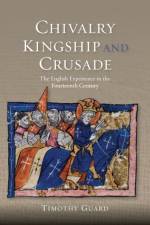
A fresh perspective on the Crusade shows its ideal and practice flourishing in the fourteenth century.
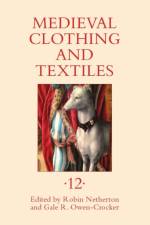
The best new research on medieval clothing and textiles, drawing from a range of disciplines.The studies collected here range through art, artifacts, documentary text, and poetry, addressing both real and symbolic functions of dress and textiles. John Block Friedman breaks new ground with his article on clothing for pets and other animals, while Grzegorz Pac compares depictions of sacred and royal female dress and evaluates attempts to link them together. Jonathan C. Cooper describes the clothing of scholars in Scotland's three pre-Reformation universities and the effects of the Reformation upon it. Camilla Luise Dahl examines references to women's garments in probates and what they reveal about early modern fashions. Megan Cavell focuses on the treatment of textiles associated with the Holy of Holies in Old English biblical poetry. Frances Pritchard examines the iconography, heraldry, and inscriptions on a worn and repaired set of embroidered fifteenth-century orphreys to determine their origin.Finally, Thomas M. Izbicki summarizes evidence for the choice of white linen for the altar and the responsibilities of priests for keeping it clean and in good repair.
This book is the first-ever study of Malta's major eighteenth-century composer, Benigno Zerafa (1726 - 1804), a specialist in sacred music composition.This book is the first-ever study of Malta's major eighteenth-century composer, Benigno Zerafa (1726-1804), a specialist in sacred music composition. Zerafa's large-scale and small-scale vocal and choral works, mostly written during his long service as musical director at the Cathedral of Mdina, have been winning increased recognition in recent years. In addition to describing and analysing this extensive corpus, the book gives an account of Zerafa's sometimes eventful career against the wider background of the rich musical and cultural life in Malta, especial attention being paid to its strong links with Italy, and particularly Naples, where Zerafa was a student for six years. Itexamines in detail the complex relationship of music to Catholic liturgy and investigates the distinctive characteristics of the musical style, intermediate between baroque and classical, in which Zerafa was trained and always composed: one that today is commonly labelled "e;galant"e;. Well stocked with music examples, the book makes copious reference to Italian and Maltese composers from Zerafa's time and to modern analytical studies of Italian music from the middle decades of the eighteenth century, thereby offering a useful general commentary on the galant period. Its central aim, however, is to stimulate further interest in, and revival of, Zerafa's music. To this end the book contains a complete work-list with supplementary indexes. Scholars and students of eighteenth-century music, in particular sacred music, the galant style and Italian music, will find it invaluable. FREDERICK AQUILINAis Senior Lecturer in Music Studies at the University of Malta.
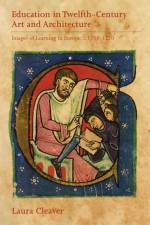
A study of the representation of education in material culture, at a period of considerable change and growth.
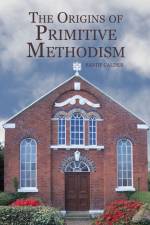
The Primitive Methodist Connexion's mature social character may have been working-class, but this did not reflect its social origins.
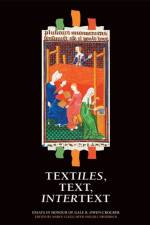
Essays centred round the representation of weaving, both real and imagined, in the early middle ages.The triple themes of textile, text, and intertext, three powerful and evocative subjects within both Anglo-Saxon studies and Old English literature itself, run through the essays collected here. Chapters evoke the semantic complexities of textile references and images drawn from the Bayeux Tapestry, examine parallels in word-woven poetics, riddling texts, and interwoven homiletic and historical prose, and identify iconographical textures in medieval art. The volume thus considers the images and creative strategies of textiles, texts, and intertexts, generating a complex and fascinating view of the material culture and metaphorical landscape of the Anglo-Saxon peoples. It is therefore a particularly fitting tribute to Professor Gale R. Owen-Crocker, whose career and lengthy list of scholarly works have centred on her interests in the meaning and cultural importance of textiles, manuscripts and text, and intertextual relationships between text and textile. MAREN CLEGG HYER is Associate Professor and Graduate Coordinator in the Department of English at Valdosta State University; JILL FREDERICK is Professor of English at Minnesota State University Moorhead. Contributors: Marilina Cesario, Elizabeth Coatsworth, Martin Foys, Jill Frederick, Joyce Hill, Maren Clegg Hyer, Catherine E. Karkov, Christina Lee, Michael Lewis, Robin Netherton, Carol Neuman de Vegvar, Donald Scragg, Louise Sylvester, Paul Szarmach, Elaine Treharne.
A compelling account of the role of Fado and the fadista in Portuguese film and the wider culture.
Reveals Ann Tizia Leitich, American correspondent for Austrian newspapers in the 1920s and 1930s, as an important cultural mediator between the two countries.After the First World War, Vienna was overrun by jazz, Hollywood movies, and Fordism; its citizens were both fascinated and appalled by the waves of American ideas and products. To make sense of the American phenomenon, readers turned to Ann Tizia Leitich, the New York-based correspondent for Vienna's prominent daily Neue Freie Presse and other newspapers. Rob McFarland tells the story of Leitich's escape, occasioned by a personal crisis, from Austria to America in 1921, and of her rise as a journalist, cultural historian, and novelist. By the early 1930s, she had met President Coolidge, Senator Sol Bloom, the writer Upton Sinclair, and the critic H. L. Mencken. Her devotedreaders - including the novelist Stefan Zweig and the Austrian chancellor Ignatz Seipl - sought in her witty, insightful descriptions of the United States some American vitality to invigorate their own moribund culture and economy. Chronicling Leitich's career as a journalist, cultural historian, and novelist and providing close readings of her writings about America, this book reveals her as an important cultural mediator between Austria and America. Rob McFarland is Associate Professor of German at Brigham Young University.
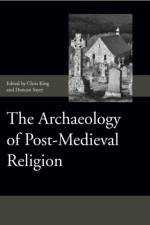
Evidence gleaned from archaeology sheds dramatic new light on religious practices and identities between the later sixteenth and the nineteenth centuries.
A survey of the critical reception of George Eliot's fiction in Victorian periodicals.
Two further editions bring the number of published volumes of the Anglo-Saxon Chronicleseries to Edition with scholarly introduction, evaluating the relationship of the Abingdon Chronicle to other Chronicle manuscripts.
Studies of the evolution of the hero, from Beowulf to Lancelot.
A major contribution to the history of Parliament, to medieval English history, and to the study of the English constitution. ENGLISH HISTORICAL REVIEW
A major contribution to the history of Parliament, to medieval English history, and to the study of the English constitution. ENGLISH HISTORICAL REVIEW
A major contribution to the history of Parliament, to medieval English history, and to the study of the English constitution. ENGLISH HISTORICAL REVIEW
Essays dealing with the cultural and linguistic diversity of the romance form from 12c-15c in England.
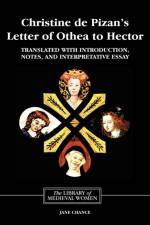
One of the "Library of Medieval Women", this volume contains a translation of the medieval French "Letter of Othea to Hector", together with an introduction, notes and interpretative essays on the subject of its author, the first French woman poet to make her living by the pen, Christine de Pizan.
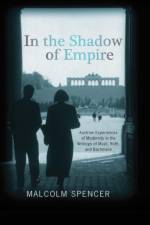
The first book to consider together the responses of the great Austrian writers Musil, Roth, and Bachmann to the crisis of modernity.
A study of the literary criticism of the famous and influential German play fragment Woyzeck.
Abonner på vårt nyhetsbrev og få rabatter og inspirasjon til din neste leseopplevelse.
Ved å abonnere godtar du vår personvernerklæring.