









Gjør som tusenvis av andre bokelskere
Abonner på vårt nyhetsbrev og få rabatter og inspirasjon til din neste leseopplevelse.
Ved å abonnere godtar du vår personvernerklæring.Du kan når som helst melde deg av våre nyhetsbrev.

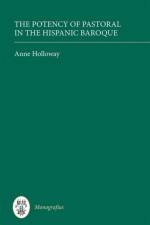
A careful re-evaluation of pastoral poetics in the early modern Hispanic literature of Spain and Latin America.
Terukina ofrece una nueva biografia de Bernardo de Balbuena y analiza la compleja matriz interdisciplinaria de Grandeza mexicana (1604). Terukina offers an updated biography of Bernardo de Balbuena and analyzes the complex interdisciplinary matrix within which Grandeza mexicana (1604) is articulated.
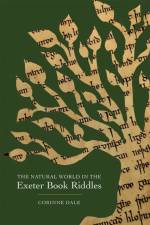
An investigation of the non-human world in the Exeter Book riddles, drawing on the exciting new approaches of eco-criticism and eco-theology.Humanity is a dominant presence in the Exeter Book riddle collection. It is frequently shown using, shaping and binding the physical world in which it lives. The riddles depict master and craftsman and use the familiar human worldas a point of orientation within a vast, overwhelming cosmos. But the riddles also offer an eco-centric perspective, one that considers the natural origins of man-made products and the personal plight of useful human resources. This study offers fresh insights into the collection, investigating humanity's interaction with, and attitudes towards, the rest of the created world. Drawing on the principles of eco-criticism and eco-theology, the study considers the cultural and biblical influences on the depiction of nature in the collection, arguing that the texts engage with post-lapsarian issues of exploitation, suffering and mastery. Depictions of marginalised perspectives ofsentient and non-sentient beings, such as trees, ore and oxen, are not just characteristic of the riddle genre, but are actively used to explore the point of view of the natural world and the impact humanity has on its non-human inhabitants. The author not only explores the riddles' resistance to anthropocentrism, but challenges our own tendency to read these enigmas from a human-centred perspective. Corinne Dale gained her PhD from Royal Holloway, University of London.
An investigation of the depiction of the story of Theophilus in both its original texts, and images.
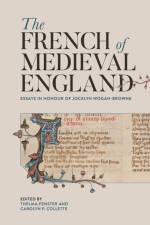
Essays on the complexity of multilingualism in medieval England.Professor Jocelyn Wogan-Browne's scholarship on the French of England - a term she indeed coined for the mix of linguistic, cultural, and political elements unique to the pluri-lingual situation of medieval England - is of immenseimportance to the field. The essays in this volume extend, honour and complement her path-breaking work. They consider exchanges between England and other parts of Britain, analysing how communication was effected where languagesdiffered, and probe cross-Channel relations from a new perspective. They also examine the play of features within single manuscripts, and with manuscripts in conversation with each other. And they discuss the continuing reach ofthe French of England beyond the Middle Ages: in particular, how it became newly relevant to discussions of language and nationalism in later centuries. Whether looking at primary sources such as letters and official documents, orat creative literature, both religious and secular, the contributions here offer fruitful and exciting approaches to understanding what the French of England can tell us about medieval Britain and the European world beyond. Thelma Fenster is Professor Emerita of French and Medieval Studies, Fordham University; Carolyn Collette is Professor of English Language and Literature at Mount Holyoke College. Contributors: Christopher Baswell,Emma Campbell, Paul Cohen, Carolyn Collette, Thelma Fenster, Robert Hanning, Richard Ingham, Maryanne Kowaleski, Serge Lusignan, Thomas O'Donnell, W. Mark Ormrod, Monika Otter, Felicity Riddy, Delbert Russell, Fiona Somerset, +Robert M. Stein, Andrew Taylor, Nicholas Watson, R.F. Yeager
Peter Field's new edition of the Morte Darthur has been hailed as "our standard critical edition of Malory". This paperback of Vol 1 only makes the complete definitive original spelling text edition available, with the same pagination as in Vol 1 of the original two-volume hardback edition.
An invigorating annual for those who are interested in medieval textual cultures and open to ways in which diverse post-modern methodologies may be applied to them. Alcuin Blamires, Review of English StudiesNew Medieval Literatures is an annual of work on medieval textual cultures, aiming to engage with intellectual and cultural pluralism in the Middle Ages and now. Its scope is inclusive of work across the theoretical, archival, philological, and historicist methodologies associated with medieval literary studies, and embraces both the British Isles and Europe. Essays in this volume engage with the relations between humans and nonhumans; the power of inanimate objects to animate humans and texts; literary deployments of medical, aesthetic, and economic discourses; the language of friendship; and the surprising value of early readers' casual annotations. Texts discussed include Beowulf, works by Rolle, Chaucer, Langland, Gower, and Lydgate; lyrics of the Occitan troubadour Marcabru and the French poet Richard de Fournival; and the Anglo-Saxon versions of Boethius's De Consolatione Philosophiae and Augustine's Soliloquia. Wendy Scase is Geoffrey Shepherd Professor of Medieval English Literature at the University of Birmingham; David Lawton is Professor of English at Washington University, StLouis; Laura Ashe is Associate Professor of English at Worcester College, Oxford. Contributors: Diane Cady, Aaron Hostetter, Boyda Johnstone, R. Jacob McDonie, Michael Raby, Joe Stadolnik, Spencer Strub, Eliza Zingesser,
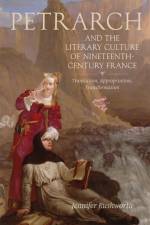
A consideration of Petrarch's influence on, and appearance in, French texts - and in particular, his appropriation by the Avignonese.Was Petrarch French? This book explores the various answers to that bold question offered by French readers and translators of Petrarch working in a period of less well-known but equally rich Petrarchism: the nineteenth century. It considers both translations and rewritings: the former comprise not only Petrarch's celebrated Italian poetry but also his often neglected Latin works; the latter explore Petrarch's influence on and presence in French novels aswell as poetry of the period, both in and out of the canon. Nineteenth-century French Petrarchism has its roots in the later part of the previous century, with formative contributions from Voltaire, Rousseau, and, in particular, the abbe de Sade. To these literary catalysts must be added the unification of Avignon with France at the Revolution, as well as anniversary commemorations of Petrarch's birth and death celebrated in Avignon and Fontaine-de-Vaucluse across the period (1804-1874-1904). Situated at the crossroads of reception history, medievalism, and translation studies, this investigation uncovers tensions between the competing construction of a national, French Petrarch and a local, Avignonese or Provencal poet. Taking Petrarch as its litmus test, this book also asks probing questions about the bases of nationality, identity, and belonging. Jennifer Rushworth is a Junior Research Fellowat St John's College, Oxford.
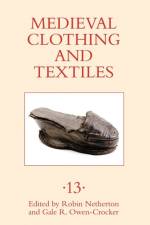
The best new research on medieval clothing and textiles, drawing from a range of disciplines.Three of the essays in this collection focus on Italy, with contributions on footwear in Lucca based on documentary evidence of the fourteenth century; aristocratic furnishings as described in a royal letter of the fifteenth century, along with its first translation into English; and Boccaccio's treatment of disguise involving Christian/Islamic identity shifts in his Decameron. The Bayeux Tapestry is discussed as a narrative artwork that adopts various costumes for semiotic purposes. Another chapter considers surviving artefacts: a detailed study of a piece of quilted fabric armour, one of two such items surviving in Lubeck, Germany, reveals how it was made and suggests reasons for some of the unusual features. The volume also includes an investigation of the commercial vocabulary related to the medieval textile and fur industries: the terms used in Britain for measuring textile and fur are listed and discussed, especially the unique use of Anglo-French "e;launces"e; in a document of 1300. Contributors: Jane Bridgeman, Mark C. Chambers, Jessica Finley, Ana Grinberg, Christine Meek, Gale R. Owen-Crocker
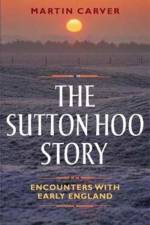
A definitive account of Sutton Hoo, its discovery, history and famed treasure.
A richly sourced account of diplomatic practice in the British mission to Istanbul from 1661 to 1807.
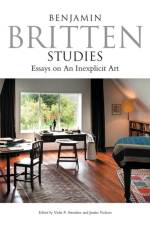
Bringing together established authorities and new voices, this book takes off the 'protective arm' around Britten.
Between 1700 and 1900, the subject of disinterment (exhumation) attracted the attention of antiquaries, who constructed a comprehensive memory of the past by 'reading' corpses as documents describing an idealised past.
Illuminates the relationship between Hume the political thinker, Hume the historian, and Hume the political economist and highlights the social, economic and institutional changes which he wove into an innovative theory of causationDavid Hume's six-volume History of England: From the Invasion of Julius Caesar to the Revolution in 1688 (1754-61) is probably his most important work as a constitutional historian and political theorist. Jia Wei's book shows that the History can be understood in two ways: firstly, as Hume's own narrative of England's state formation, and secondly, as his answer to the question of how eighteenth-century Britain could cope with the challengesof commercial revolution. It illuminates the relationship between Hume the political thinker, Hume the historian, and Hume the political economist and highlights the social, economic and institutional changes which he wove into aninnovative theory of causation. The first part of the book considers Hume's account of the fundamental rationale of maritime trade and England's unique approach to liberty in the modern era. The second part looks at his views concerning the profound impact of maritime trade on English politics. From his perspective, the problem of how to cope with the challenges posed by the commercial revolution in eighteenth-century Britain was closely linked tothe question of how transoceanic trade had fundamentally recast English politics from the sixteenth century onwards. This study shows how these two narratives were interwoven into Hume's History and will be of interest to scholars and students not only of David Hume and political theory but of historiography, eighteenth-century British history and Enlightenment studies. JIA WEI received her PhD from the University of Cambridge.
Essays reflecting the interests and scholarship of one of our most important and influential historians.For almost four decades Carole Rawcliffe has been a towering figure among historians of the later Middle Ages. Although now best known for her pioneering contributions to medical history, including major studies of hospitals, leprosy and public health, her published works range far more broadly to encompass among other subjects the English nobility, Members of Parliament, the regional history of East Anglia and myriad aspects of political and social interaction. The essays collected in this festschrift, written by a selection of her colleagues, friends and former students, cover a wide spectrum of themes and introduce such diverse characters as an estranged queen, a bankrupt aristocrat, a female apothecary, a flute-playing Turkish doctor and a medieval "e;Dad's Army"e; conscripted to defend England's coasts. Linda Clark is Editor of the 1422-1504 section of the History of Parliament; Elizabeth Danbury is an Honorary Senior Research Fellow at the Institute of English Studies, School of Advanced Study, University of London, and Honorary Research Fellow at the Department of Information Studies, University College London. Contributors: Jean Agnew, John Alban, Brian Ayers, Caroline Barron, Christopher Bonfield, Carole Hill, Peregrine Horden, Hannes Kleineke, Nicholas Vincent.
Edition of original letters and other documents sheds light on a major ecclesiastical controversy.
This study of recruitment to the ministry of the Church of England in the late eighteenth and early nineteenth centuries overturns many long-standing assumptions about the education and backgrounds of the clergy in late HanoverianEngland and Wales.This study of recruitment to the ministry of the Church of England in the late eighteenth and early nineteenth centuries overturns many long-standing assumptions about the education and backgrounds of the clergy in late HanoverianEngland and Wales. It offers insights into the nature and development of the profession generally and into the role that individual bishops played in shaping the staffing of their dioceses. In its exploration of how it was possible for boys of relatively humble social origins to be promoted into the pulpits of the established Church, it throws light on mechanisms of social mobility and shows how aspirant clergy went about fashioning a credible social andprofessional identity. By examining how would be clergymen were educated and professionally formed, the book shows that, alongside the well-known route through the universities, there was an alternative route via specialist grammar schools. Prospective ordinands might also seek out clerical tutors to help them to study for the academic parts of ordination exams and to prepare for the spiritual and pastoral aspects of their role. These alternativemethods of ordination preparation were sometimes under the cognizance of bishops, and occasionally under their control, but they were generally authored by parish clergy and were small-scale, self-supporting, bottom-up solutions to the needs of upcoming generations of clergy. This book has much to interest historians of religion, culture, class and education, and illustrates how in-depth prosopographical study can offer fresh perspectives.SARA SLINN is Research Fellow at the School of History & Heritage, University of Lincoln.
A fresh look at William of Malmesbury which not only demonstrates his real greatness as a historian and his European vision, but also the breadth of his learning across a number of other disciplines.
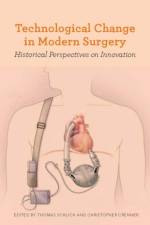
Examining the complex dynamics of medical treatment options and the variable character of surgical technologies, this volume broadens and transcends the notion of technological innovation.Surgery is an ideal field for examining the processes of technological change in medicine. The contributors to this book go beyond the concept of innovation, with its focus on a single technology and its sharp dichotomy of acceptance versus rejection. Instead they explore the historical contexts of change in surgery, looking at the complex dynamics of the various treatment options available -- old and new, surgical and nonsurgical -- as well as the variable character of the new technologies themselves, thus broadening and transcending the notion of technological innovation. CONTRIBUTORS: Christopher Crenner, Sally Frampton, Delia Gavrus, Lisa Haushofer, David S. Jones, Beth Linker, Shelley McKellar, Thomas Schlich Thomas Schlich is the James McGill Professor of the History of Medicine at the Department of Social Studies of Medicine at McGill University. Christopher Crenner is the RalphMajor and Robert Hudson Professor and chair of the Department of History and Philosophy of Medicine at the University of Kansas Medical Center.
This interdisciplinary volume investigates the cultural and political landscapes of Colombia through citizenship, displacement, local and global cultures, grass-root movements, political activism, human rights, environmentalism, and media productions.Territories of Conflict offers a comprehensive view of the cultural and political landscapes of Colombia through in-depth analyses of citizenship, displacement, local and global cultures, grassroots movements, political activism, human rights, environmentalism, and media production. The volume investigates conflict as a creative force but one that is not devoid of its destructive meaning for Colombia. It is precisely through conflict that the nation's social and cultural fabric is being mapped out, thus resulting in territories -- understood in both a literal and a metaphorical sense -- that paradoxically coexist in discordance. Contributors to this interdisciplinary volumeinclude historians, sociologists, political scientists, musicologists, and environmentalists, as well as literary, media, and cultural studies specialists from the United States, Colombia, and Europe. CONTRIBUTORS: Maurizio Ali, Ingrid Johanna Bolivar Ramirez, Margarita Cuellar Barona, Andrea Fanta Castro, Hector Fernandez L'Hoeste, Joaquin Llorca Franco, David Fernando Garcia, Felipe Gomez Gutierrez, Alvaro Diego Hro-Olaizola, Stacey Hunt, Camilo Alberto Jimenez Alfonso, Gregory J. Lobo, Tatjana Louis, Felipe Martinez-Pinzon, Maria Ospina, Kate Paarlberg-Kvam, Diana Pardo Pedraza, Aldona Bialowas Pobutsky, Chloe Rutter-Jensen, Claudia Salamanca Sanchez, Sven Schuster, Silvia Serrano, Andrea Fanta Castro is Assistant Professor of Spanish at Florida International University; Alejandro Herrero-OIaizola is the Arthur F. Thurnau Professor of Spanish & Latin American Studies at the University of Michigan; and Chloe Rutter-Jensen is Associate Professor of Cultural Studies at the Universidad de los Andes, Bogota, Colombia.
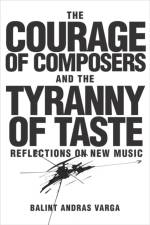
All-new interviews with 33 of the world's leading composers--from Adams and Crumb to Gubaidulina and Rihm--give unique insights into the creative process.Balint Andras Varga is perhaps the world's most respected interviewer of living composers. For The Courage of Composers and the Tyranny of Taste: Reflections on New Music, Varga has confronted thirty-three composers with quotations carefully chosen to elicit their thoughts about an issue that is crucial for any serious creative artist: How can one find courage to deal with the sometimes tyrannical expectations of the outside world? The result is an imaginary roundtable at which we encounter fresh, revealing, previously unpublished statements from such world-renowned composers as John Adams, Friedrich Cerha, George Crumb, Sofia Gubaidulina, Georg Friedrich Haas, Giya Kancheli, Gyorgy Kurtag, Helmut Lachenmann, Libby Larsen, Robert Morris, and Wolfgang Rihm. Also represented are composers who are becoming more prominent with the passing years -- Chaya Czernowin, Pascal Dusapin, and Rebecca Saunders -- as well as conductor-composer Michael Gielen, festival director Nicholas Kenyon, and music critics Paul Griffiths and Arnold Whittall. In The Courage of Composers and the Tyranny of Taste, composers and other insightful individuals comment on choices made, traps avoided, unforeseen consequences, proud accomplishments, occasional regrets: the whole range of experiences central to artistic creativity. Balint Andras Varga isthe acclaimed author of Gyorgy Kurtag: Three Interviews and Ligeti Homages; Three Questions for 65 Composers; and From Boulanger to Stockhausen: Interviews and a Memoir (all available from University of Rochester Press).
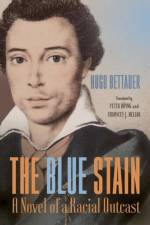
A European novel of racial mixing and "passing" in early twentieth-century America that serves as a unique account of transnational and transcultural racial attitudes that continue to reverberate today.
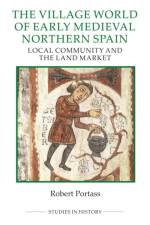
The pattern of rural life in early medieval Spain is here vividly brought to life through careful examination of contemporary documents.
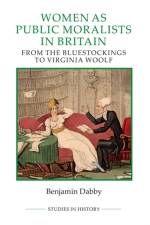
An examination of how women's writings shaped public opinion and morality from the Victorians to the mid-twentieth century.In nineteenth-century Britain, public debates about the nation's moral health and about men's and women's responsibility for it were shaped decisively by a tradition of female moralists. This book looks at the cultural criticism of eight of the most significant of these writers: Anna Jameson, Hannah Lawrance, Margaret Oliphant, Marian Evans ("e;George Eliot"e;), Eliza Lynn Linton, Beatrice Hastings, Rebecca West and Virginia Woolf, providing a detailed and compelling account of how their writing on history, literature and visual art changed contemporaries' understanding of the lessons to be drawn from each field at the same time as they contested and redefined contemporary understandings of masculinity and femininity. It recovers these moralists' understanding of themselves as part of a tradition of women of letters stretching from eighteenth-century bluestockings to their own time, and the growing consensus across the political range of periodicals that women's intellectual potential was equal to men's, and not determined by their sex. Benjamin Dabby is an independent historian.
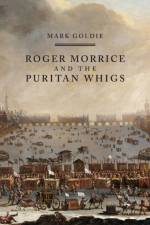
Mark Goldie's authoritative and highly readable introduction to the political and religious landscape of Britain during the turbulent era of later Stuart rule.
How did Britain manage the transportation of large numbers of troops to French controlled territory during the French Revolutionary and Napoleonic Wars and successfully land them?
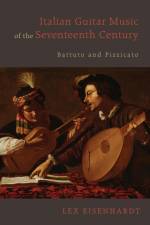
One of Europe's foremost experts on early guitar music explores this little known but richly rewarding repertoire.
Abonner på vårt nyhetsbrev og få rabatter og inspirasjon til din neste leseopplevelse.
Ved å abonnere godtar du vår personvernerklæring.