![Charlotte Perkins Gilman [pb] af Sheryl L. Meyering](https://cdnbackdoor.tales.as/thumbnail/150x225/00061/95924/cover.1500911335.jpg)








Gjør som tusenvis av andre bokelskere
Abonner på vårt nyhetsbrev og få rabatter og inspirasjon til din neste leseopplevelse.
Ved å abonnere godtar du vår personvernerklæring.Du kan når som helst melde deg av våre nyhetsbrev.

First study of American women composers and attitudes towards women musicians in the nineteenth century.
Analysis of a group of images of kingship and queenship from Anglo-Saxon England explores the implications of their focus on books, authorship and learning.
A detailed comparison of Machiavelli with Shakespeare, grounded in their common use of rhetoric.Although the question of Machiavellian influence on Shakespeare has been thoroughly debated, this book represents the first attempt to compare the two authors in detail. The playwright and the political philosopher share a commonground, a fascination with the motives and morality of political action, which makes for remarkable similarities in their presentation of the subject. In his deploying of the argument, the author of Il Principe emerges as a dramatic writer, like his English counterpart. The book, while taking in an obvious "e;Machiavel"e; figure such as Richard III, considers Machiavelli in relation to Shakespeare's depiction of more conventionally noble princes such as Henry V, together with other monarchs from the Henriad - Richard II and Henry IV - as well as King John. Though the Shakespearean focus falls on the histories, tragic heroes such as Hamlet and Macbeth also receive attention. The study concludes with two chapters on the Roman plays and assesses Shakespeare's representation of the problem of conscience (Julius Caesar) and magnanimity (Antony and Cleopatra) in the light of Machiavelli's republicanism.
The wider repercussions and consequences of Charles II's personal rule are discussed, with special reference to the fledgling Tory and Whig parties.
Tales from the dawn of Christianity to the age of the Plantagenets reveal a mythology in its time as potent as that of the classical world.
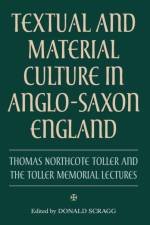
Significant Anglo-Saxon papers, with postscripts, illustrate advances in knowledge of life and culture of pre-Conquest England.
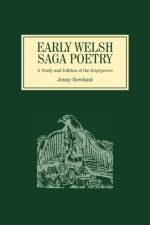
A study of the early Welsh saga "Englynion", which are lyric poems long presumed to be the poetic remains of lost stories, told in a mixture of prose and verse. Three main cycles survive which centre on Llywarch Hen, Urien Rheged and Heledd. There are also many non-cyclical poems featured.
Original essays by leading media scholars and historians of medicine that explore the rich history of health-related films.
Traces the evolution of medical education at Barts from its foundation in 1123 to the college's merger with The London Hospital and Queen Mary & Westfield College in 1995.
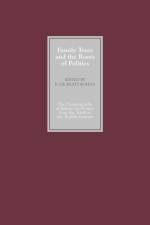
Articles on the significance of genealogy and kinship ties in determining political events in the middle ages.
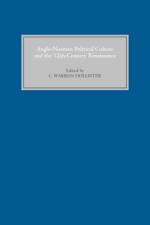
Papers exploring the impact of change on aspects of the twelfth-century Anglo-Norman world.
Pioneer catalogue for one of the most important collections of English legal manuscripts.
A lively, discerning companion to the beauty, myth and history of a fascinating and lovely region."A consistently first-rate series." THE TIMES
This volume is devoted to medievalism in England, including: The Antiquarian Impulse in England, 1500-1730, The Two Noble Kinsmen and the Problem of Chivalry, From Medievalism to Historicism, Catholic History and the MiddleAges, Rossetti's Quest for God's Graal.
New research on kings and kingship in the middle ages, in Britain and Europe.
The adaptation of Late Latin grammars from the schools of the Roman Empire for use in a foreign Christian society culminated in the British Isles in the 7th and 8th centuries in the development of two distinct types of grammar designed respectively for elementary and for more advanced students.
Critical essays and studies reflecting the latest thinking on two major figures in 20c music.
One of the classic "Companion Guides" series, this presents in one volume de Jongh's original Companions to Mainland Greece and Southern Greece. It combines an expert knowledge of history, archaeology and mythology with an understanding of the Greek people and a feeling for the landscape.
Overview of the critical history of the German novella.
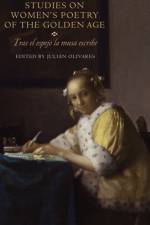
Women's poetry of the Spanish early modern period.This collection of fourteen scholarly essays on women's poetry from Spain's early modern period shows that women did indeed have a Golden Age, and that they were significant cultural actors in the realms of poetic production. Thestudies of secular verse demonstrate how female poets of this period devised strategies to confront the dominant masculine poetic discourse, while the essays on sacred poetry explore the multiple manifestations of female piety andmysticism. The women's words are brought to life and modern readers helped to understand the socio-cultural, interpersonal, and aesthetic components of the poets' oeuvre. The volume, a companion to Julian Olivares' and ElizabethBoyce's revised anthology "e;Tras el espejo la musa escribe"e;: Lirica femenina de los Siglos de Oro, constitutes an authoritative critical enterprise focused on the recuperation of the female literary voice, and marks an important step forward in the battle to include women's writing as part of Spain's literary canon. Contributors: Electa Arenal, Aranzazu Borrachero Mendibil, Anne J. Cruz, Adrienne L. Martin, Rosa Navarro Duran, Julian Olivares, Inmaculada Osuna, Amanda Powell, Elizabeth Rhodes, Stacey Schlau, Lia Schwartz, Alison Weber, Judith Whitenack. JULIAN OLIVARES is Professor of Spanish at the University of Houston and editor of Caliope, Journal ofthe Society for Renaissance and Baroque Hispanic Poetry.
New essays attempt to survey and map out the increasingly significant discipline of medievalism.
Close examination of the significant theme of other-worldly encounters in Norse myth and legend, including giantesses, monsters and the Dead.
The question of the British presence in Anglo-Saxon England readdressed by archaeologists, historians, linguists, and place-name specialists.
Explores Wagner's lengthy stays in Venice, his death there, and the meaning of his works -- and his death -- for that great city and its mystique.
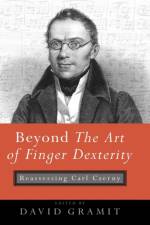
The first English-language book on Czerny, and the broadest survey of his activity in any language.Within the history of European music, Carl Czerny (1791-1857) is simultaneously all too familiar and virtually invisible. During his lifetime, he was a highly successful composer of popular piano music, and his pedagogical works remain fundamental to the training of pianists. But Czerny's reputation in these areas has obscured the remarkable breadth of his activity, and especially his work as a composer of serious music, which recent performances and recordings have shown to hold real musical interest. Beyond "e;The Art of Finger Dexterity"e; explores Czerny's multifaceted career and its legacy and provides the first broad assessment of his work as a composer. Prominent North American and European musicians and scholars explore topics including Czerny's life and its context; his autobiographical writings and efforts to promote his teacher, Beethoven; his activity as a pedagogue, both as teacher of Liszt and as the authority held up to innumerable amateur women pianists; his role in shaping performance traditions of classical music; the development of his image during and after his lifetime; and his work in genres including the Mass, the symphony, the string quartet, and the piano fantasy. This is the first English-language book on Czerny, and the broadest survey of his activity in any language. Contributors: George Barth, Otto Biba, Attilio Bottegal, Deanna C. Davis, James Deaville, Ingrid Fuchs, David Gramit, Alice M. Hanson, Anton Kuerti, Marie Sumner Lott, James Parakilas, Michael Saffle, Franz A. J. Szabo, Douglas Townsend, and John Wiebe. DavidGramit [University of Alberta] is the author of Cultivating Music: The Aspirations, Interests, and Limits of German Musical Culture, 1770-1848.
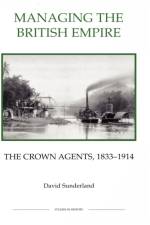
The Crown Agents Office played a crucial role in colonial development.
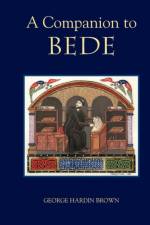
A full and accessibly-written survey of Bede and his works, including a chapter on his legacy for subsequent history.
Romance studies from the twelfth century to the era of the printed book.
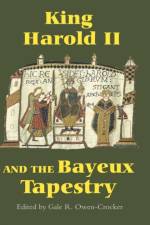
Essays on the brief but tumultuous reign of Harold II, and one of our most important sources of knowledge of the time - the Bayeux Tapestry.
Abonner på vårt nyhetsbrev og få rabatter og inspirasjon til din neste leseopplevelse.
Ved å abonnere godtar du vår personvernerklæring.