









Gjør som tusenvis av andre bokelskere
Abonner på vårt nyhetsbrev og få rabatter og inspirasjon til din neste leseopplevelse.
Ved å abonnere godtar du vår personvernerklæring.Du kan når som helst melde deg av våre nyhetsbrev.

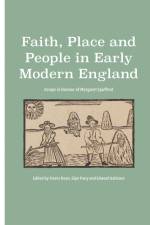
A collection that celebrates the research of Margaret Spufford, a "e;game-changing"e; historian who shifted the focus away from the political and social elite in urban communities to the "e;other 98%"e; in local and rural areas.This collection celebrates and evaluates the seminal research of Margaret Spufford, a leading historian of early modern English social and economic history. Spufford played a crucial role in the broadening of English social and cultural history, shifting the focus away from the political and social elite in urban communities to the "e;other 98%"e; in local and rural areas and challenging assumptions about the limited intellectual worlds of rural people. She was also an early historian of consumption patterns, whose work on the clothing trade remains the authoritative history of this industry and its consumers. Faith, Place and People in Early Modern England reassesses Spufford's contribution to the shape of historical study. Each chapter rethinks a key aspect of her work on local and rural communities: the value of particular historical records; the interactions between religious conformists anddissenters; social and religious change; credit and finance; clothing and consumption. Throughout, the contributors develop Spufford's model of integrating close community studies into a broader picture, while retaining an awareness of the singularity of individuals and localities. In doing so, the book indicates how far "e;Spuffordian"e; approaches can continue to shape the future direction of early modern history . TREVOR DEAN is Professor of History at the University of Roehampton; GLYN PARRY is Professor of Early Modern History at the University of Roehampton; EDWARD VALLANCE is Professor of Early Modern British political culture at the University of Roehampton. Contributors: ADRIAN AILES, DAVID CRESSY, TREVOR DEAN, CATHERINE FERGUSON, HENRY FRENCH, STEVE HINDLE, CHRISTOPHER MARSH, GLYN PARRY, WILLIAM SHEILS, PETER SPUFFORD, DANAE TANKARD, EDWARD VALLANCE, PATRICIA WYLLIE
A complete new edition of Beethoven's conversation books, now translated into English in their entirety for the first time. Covering a period associated with the revolutionary style of what we call "late Beethoven", these often lively and compelling conversations are now finally accessible in English for the scholar and Beethoven-lover.
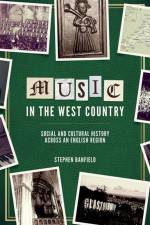
The first regional history of music in England.Music in the West Country is the first regional history of music in England. Ranging over seven hundred years, from the minstrels, waits, and cathedral choristers of the fourteenth century to the Bristol Sound of the late twentieth, the book explores the region's soundscape, from its gateway cities of Bristol and Salisbury in the east to the Isles of Scilly in the west, and examines music-making in tiny villages as well as conditions in important centres such as Bath, Exeter, Plymouth, and Bournemouth. What emerges is both a study of the typical - musical practices which would apply to any English region - and a portrait of the unique - features born of the region's physicalisolation and charm, among them the growth of festival culture, the mythologising of folk music, the late survival of parish psalmody and nonconformist carolling, and the unique continuance, today, of a professional resort orchestra, the Bournemouth Symphony Orchestra. Banfield's vividly written and extremely readable history of music in the west country considers an array of subjects, firmly centred on people's stories: musical inventions and theidea of tradition, music as cultural capital, the economics of musical employment and the demographics of musicianship, musical networks, the relationship of the hinterlands to the metropolis, the influence of topography, the importance of institutions and events, and the question of how to measure value. A study in prosopography, it shows how people went about their lives with music and explores how things changed for them - or did not. STEPHENBANFIELD is Emeritus Professor of Music at the University of Bristol.
A rigorous investigation of Socrates' early education, pinpointing the thought that led Socrates to turn from natural science to the study of morality, ethics, and politicsPlato's Parmenides is regarded as a canonical work in ontology. Depicting a conversation between Parmenides of Elea and a young Socrates, the dialogue presents a rigorous examination of Socrates' theory of the forms, the most influential account of being in the philosophic tradition. In this commentary on the Parmenides, Alex Priou argues that the dialogue is, in actuality, a reflection on politics. Priou begins from the accepted view that the conversation consists of two discrete parts -- a critique of the forms, followed by Socrates' philosophical training -- but finds a unity to the dialogue yet to be acknowledged. By paying careful attention to what Parmenides calls the "e;greatest impasse"e; facing Socrates' ontology, Priou reveals a political context to the conversation. The need in society for order and good rule includes the need, at a more fundamental level, for an adequate andefficacious explanation of being. Recounting here how a young Socrates first learned of the primacy of political philosophy, which would become the hallmark of his life, Becoming Socrates shows that political philosophy, and not ontology, is "e;first philosophy."e; Alex Priou is an instructor in the Herbst Program in the Humanities in Engineering at the University of Colorado Boulder.
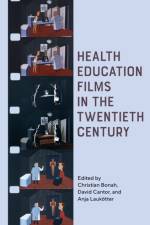
Examines the impact and importance of the health education film in Europe and North America in the first half of the twentieth century.During the twentieth century, film came to be seen as a revolutionary technology that could entertain, document, instruct, and transform a mass audience. In the fields of medicine and public health, doctors, educators, health advocates, and politicians were especially enthusiastic about the potential of the motion picture for communicating about health-related topics, including sexually transmitted diseases, cancer, tuberculosis, smoking, alcoholism, and contraception. Focusing on the period from the 1910s to the 1960s, this book is the first collection to examine the history of the public health education film in Europe and North America. It explores how a variety of commercial, governmental, medical, and public health organizations in Europe and North America turned to movies to educate the public, reform their health behaviors, and manage their anxieties and hopes about health, illness, and medical and public health interventions. Moreover, by looking at categories of movies as well as individual examples, the book tackles questions of the representativeness of individual films and the relationship between the publichealth film and other forms of motion picture. CONTRIBUTORS: Christian Bonah, Tim Boon, David Cantor, Ursula von Keitz, Anja Laukotter, Elizabeth Lebas, Vincent Lowy, Kirsten Ostherr, Miriam Posner, Alexandre Sumpf Christian Bonah is a professor of the history of health and life sciences at the University of Strasbourg. David Cantor is a historian at the National Institutes of Health and the School of Public Health, University of Maryland, College Park. Anja Laukotter is a historian at the Center for the History of Emotions at the Max Planck Institute for Human Development, Berlin.
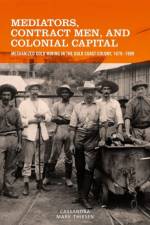
An innovative study of labor relations, particularly the interactions of recruitment agents and migrant workers, in the mining concessions of Wassa, Gold Coast Colony, 1879 to 1909.Recent years have seen renewed interest in the historical study of labor in Africa. Unlike those of the past, these new studies are rooted in the recognition of Africa's dynamic, expansive, and productive informal sector. While this book focuses on one of West Africa's earliest large-scale industries, namely the Wassa gold mines in the southwest Gold Coast, it is not solely concerned with the traditional working class. Rather, it explores the plurality oflabor relations that characterized the mining concessions during the period 1879 to 1909, including the presence of migrants from various parts of West Africa as well as casual and tributary laborers, both male and female.In capturing the phenomenon of labor mobility as it played out in Wassa, Mediators, Contract Men, and Colonial Capital presents one of the fullest accounts of the labor agents who regularly brought groups of migrant laborers to the mines. The narrative discusses these agents' means of employment and roles in the informalization and indentureship of labor; in addition, it explores the regional dynamics of the recruitment machinery and confronts issues of coercion and choice. Scholars interested in African history, global labor history, economic history, and women's work in Africa will find much of value in this innovative study. Cassandra Mark-Thiesen is aResearch Fellow of the Swiss National Science Foundation (Marie-Heim Vogtlin Grant) in the history department of the University of Basel.
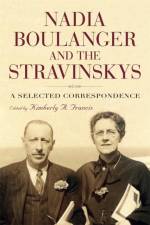
Published for the first time: a rich epistolary dialogue revealing one master teacher's power to shape the cultural canon and one great composer's desire to embed himself within historical narratives.Nadia Boulanger and Igor Stravinsky began corresponding in 1929 when Stravinsky sought someone to supervise the musical education of his younger son, Soulima. Boulanger accepted the position and began what would prove to be a warmand lasting dialogue with the Stravinsky family. For fifty years, Boulanger exchanged letters with Igor Stravinsky. An additional 140 letters exist written to Boulanger from Stravinsky's immediate family: his wife Catherine, hismother Anna, and his sons Theodore and Soulima. Nadia Boulanger and the Stravinskys: A Selected Correspondence makes available a rich selection from this many-sided dialogue. The letters are published here in English translation (most for the first time in their entirety or at all). The little-known French originals are available on the book's companion website. The letters allow us to follow the conversation shared between Boulanger andthe Stravinskys from 1929 until 1972, the year following Igor Stravinsky's death. Through the words they exchanged, we see Boulanger and Stravinsky transition from respectful colleagues to close friends to, finally, distant icons, with music serving always as a central topic. These letters are a testament to one master teacher's power to shape the cultural canon and one composer's desire to embed himself within historical narratives. Their words touch upon matters professional and personal, musical and social, with the overall narrative reflecting the turmoil of life during the twentieth century and the fragility of artists hoping to leave their mark on the modernist period. Kimberly A. Francis is Associate Professor of Music at the University of Guelph, Canada.
New essays examining the intellectual allegiances of Coetzee, arguably the most decorated and critically acclaimed writer of fiction in English today and a deeply intellectual and philosophical writer.
New essays on the acclaimed Australian Indigenous author's entire body of work, including his novels, short stories, poetry, and his work with Indigenous language and health.
Newest volume of the central scholarly forum for discussion of Brecht and aspects of theater and literature of particular interest to him, especially the politics of literature and theater in a global context.
The first comprehensive study of the reception of the classical tradition in medieval Catalan letters.This book offers the first comprehensive study of the reception of the classical tradition in medieval Catalan letters, a multilingual process involving not only Latin and Catalan, but also neighbouring vernaculars like Aragonese,Castilian, French, and Italian. The authors survey the development of classical literacy from the twelfth-century Aragonese royal courts until the arrival of the printing press and the dissemination of Italian Humanism. Aimed atstudents and scholars of medieval and early modern Iberia - and anyone interested in medieval Romance literatures and the classical tradition - this volume also provides a concise introduction to the medieval Crown of Aragon, a catalogue of translations into Catalan of texts from classical antiquity through the Italian Renaissance, and a critical study of the influence of the classics in five major works: Bernat Metge's Lo somni, Joanot Martorell'sTirant lo Blanc, the anonymous Curial e Guelfa, Ausias March's poetry, and Joan Rois de Corella's prose. Lluis Cabre is associate professor of medieval Catalan literature at the Universitat Autonoma dercelona; Alejandro Coroleu is ICREA research professor of Renaissance Humanism at the Universitat Autonoma de Barcelona; Montserrat Ferrer is a research associate at the Universitat Autonoma de Barcelona; Albert Lloret is associate professor of Spanish and Catalan at the University of Massachusetts Amherst; Josep Pujol is associate professor of medieval Catalan literature at the Universitat Autonoma de Barcelona.
Important aspects of fifteenth-century England and Europe assessed in this new collection.
Women's role in crusades and crusading examined through a close investigation of the narratives in which they appear.
New interpretations of the effect of Magna Carta and other aspects of the reign of King John.
An examination of Ireland's advanced mid nineteenth-century health policy, focusing on the Medical Charities Act of 1851 and the Irish Poor Law Commission.
Andalucia in its heyday, after the invasion of the Moors in 711, was famous for its wealth and fertility, and the province has a distinct Moorish character. The Moors cultivated science and the arts, and their influence was felt throughout western Europe. This is a guide to the South of Spain.
New essays providing an account of the shaping beliefs, preoccupations, motifs, and values of Weimar Classicism.
Makes available in reliable English translation Wagner's original Siegfried libretto and his early essay on the Nibelung myth.
One of the most important medieval writers studied in historical and literary context.
The idea of place, and of being displaced, is a powerful leit-motif in Northern Irish poetry. It is here explored in depth, from the 1960s to the present day.
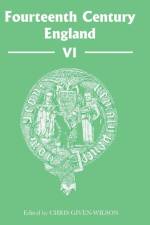
Fourteenth Century England has quickly established for itself a deserved reputation for its scope and scholarship and for admirably filling a gap in the publication of medieval studies. HISTORY
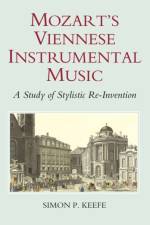
The music Mozart composed in Vienna closely examined, bringing out the processes of re-invention and re-formulation it displays.
The first comprehensive study of the role of gender in British Protestant missionary expansion into China and India during the late 19th and early 20th centuries.
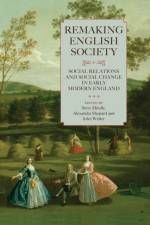
Written by leading authorities, the volume can be considered a standard work on seventeenth-century English social history.
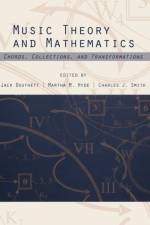
Essays in diatonic set theory, transformation theory, and neo-Riemannian theory -- the newest and most exciting fields in music theory today.
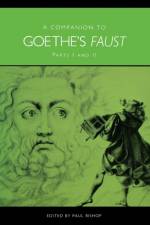
Cutting-edge criticism on major aspects of Goethe's best-known work.
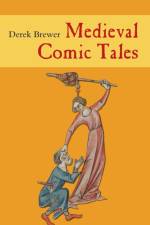
Medieval humour revealed in an anthology of 80 tales from England, France, Italy, Germany and Spain.
A guide to the interpretation of the Golden-Age ballad.
New analysis and interpretation of law and legal institutions in the "long eighteenth century".
Text and facing translation of a selection of French narrative lays, with Arthurian subject matter and interest.
Abonner på vårt nyhetsbrev og få rabatter og inspirasjon til din neste leseopplevelse.
Ved å abonnere godtar du vår personvernerklæring.