


Gjør som tusenvis av andre bokelskere
Abonner på vårt nyhetsbrev og få rabatter og inspirasjon til din neste leseopplevelse.
Ved å abonnere godtar du vår personvernerklæring.Du kan når som helst melde deg av våre nyhetsbrev.

An essential book for scholars and students of renaissance music, as well as the history of music publishing and print.
First full-scale examination of the phenomenon of the English Vernacular minuscule, analysing the full corpus and giving an account of its history and development.
First full English translation of the 12C Chronicle of Hainaut, offering fascinating insights into European history of the time.
A comprehensive study of the occupational health of employed children within the broader context of social, industrial and environmental change between 1780 and 1850.
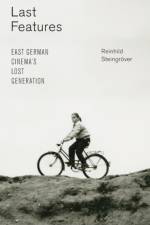
Drawing on archival research and interviews with directors, writers, and editors, Last Features is the story of forgotten films made during the time of German unification.
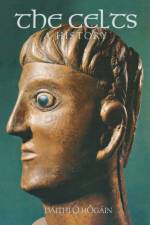
The history and lasting influence of the Celts, from their origins in eastern Europe through the upheaval of the early middle ages to "twilight" and decline in the west.
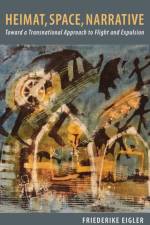
Explores how contemporary novels dealing with flight and expulsion after the Second World War unsettle traditional notions of Heimat without abandoning place-based notions of belonging.
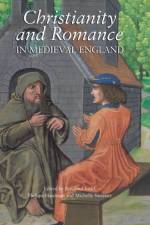
Essays examining the genre of medieval romance in its cultural Christian context, bringing out its chameleon-like character.
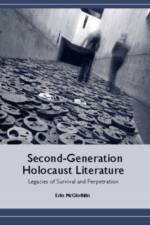
Expands the definition of second-generation literature to include texts written from the point of view of the children of Nazi perpetrators.
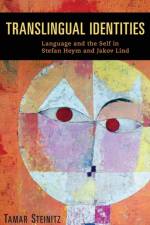
Explores the psychology of literary translingualism in the works of two authors, finding it expressed as loss and fragmentation in one case and as opportunity and mediation in the other.The works of translingual writers-those who write in a language other than their native tongue-present a rich field for study, but literary translingualism remains underresearched and undertheorized. In this work Tamar Steinitz explores the psychological effects of translingualism in the works of two authors: the German Stefan Heym (1913-2001) and the Austrian Jakov Lind (1927-2007). Both were forced into exile by the rise of Nazism; both chose English asa language of artistic expression. Steinitz argues that translingualism, which ruptures the perceived link between language and world as the writer chooses between systems of representation, leads to a psychic split that can be expressed in the writer's work as a schizophrenic existence or as a productive doubling of perspective. Movement between languages can thus reflect both the freedom associated with geographical mobility and the emotional price it entails. Reading Lind's and Heym's works within their postwar context, Steinitz proposes these authors as representative models, respectively, of translingualism as loss and fragmentation and translingualism as opportunity and mediation. Tamar Steinitz teaches English literature at Queen Mary and Goldsmiths colleges, University of London. She has also worked as a literary translator.
The figure and role of the late-medieval father is reappraised through a close reading of a range of documents from the period, including both letters and romances.Late medieval English society placed great weight on the practices of primogeniture, patrilineal descent, and patriarchal government, and the significance of the father had cultural resonance beyond the rule of law. Yet despite aburgeoning interest in both the family and gender, "e;the father"e; has to date received little attention from medievalists. This book takes an interdisciplinary approach to the analysis of the "e;fictions"e; of fatherhood, the ideological constructs that underpinned late medieval conceptions of fathers and patriarchy. Its focus on gentry and mercantile readers and writers also offers new insights into the literary culture of late medieval England by considering how texts were produced and received within gentry and bourgeois communities, and demonstrates the ability of texts to not only reflect but also shape hegemonic norms and cultural anxieties. Through close examination of late medieval letters and romances, it shows how the father was the dominant figure not only of medieval domestic life, but also of the medieval imagination. Dr RACHEL E. MOSS is a Lecturer in History at the University of Northampton.
Enchanted Calvinism's surprising central proposition is that Ghanaian Presbyterian communities have become more enchanted -- i.e., attuned to spiritual explanations of and remedies for suffering -- as they have become moreintegrated into capitalist modes of production.
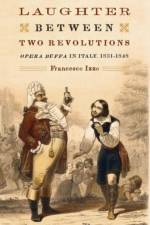
Tells the forgotten story of post-Rossinian opera buffa, with attention to masterpieces by Donizetti and fascinating comic works by Luigi Ricci, the young Verdi, and other composers.
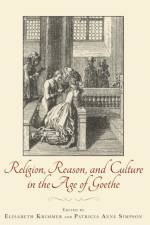
Investigates how culture in the Age of Goethe shaped and was shaped by a sustained and multifaceted debate about the place of religion in politics, philosophy, and culture.The eighteenth century is usually considered to be a time of increasing secularization in which the primacy of theology was replaced by the authority of reason, yet this lofty intellectual endeavor played itself out in a social and political reality that was heavily impacted by religious customs and institutions. This duality is visible in the literature and culture of late eighteenth- and early nineteenth-century Germany. On the one hand, authors such asGoethe, Schiller, and Kleist are known for their distance from traditional Christianity. On the other hand, many canonical texts from the late eighteenth and early nineteenth centuries -- from Goethe's Faust to Schiller's Die Jungfrau von Orleans to Kleist's Michael Kohlhaas -- are not only filled with references to the Bible, but invoke religious frameworks. Religion, Reason, and Culture in the Age of Goethe investigates how culture in the Age of Goethe shaped and was shaped by a sustained and multifaceted debate about the place of religion and religious difference in politics, philosophy, and culture, enriching our understanding of the relationship between religion and culture during this foundational period in German history. Contributors: Frederick Amrine, Claire Baldwin, Lisa Beesley, Jane K. Brown, Jeffrey L. High, Elisabeth Krimmer, Helmut J. Schneider, Patricia Anne Simpson, John H. Smith, Tom Spencer. Elisabeth Krimmer is professor of German at the University of California, Davis. Patricia Anne Simpson is professor of German at Montana State University.
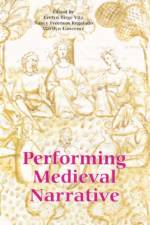
Broad and wide-ranging survey of and investigation into the important question of whether medieval narrative was designed for performance.
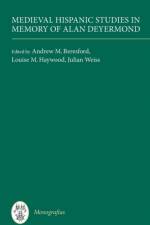
The essays in this volume cover lyric, hagiography, clerical verse narrative, frontier balladry, historical and codicological studies, and include the draft of an unpublished essay found amongst Professor Deyermond's papers.Professor Alan Deyermond was one of the leading British Hispanists of the last fifty years, whose work had a formative influence on medieval Hispanic studies around the world. There were several tributes to his work published during his lifetime, and it is fitting that this one, in his memory, should be produced by Tamesis, the publishing house that he helped establish and to which he contributed so much as author and editor right up to his death. The contributors to this volume are some of Professor Deyermond's former colleagues, doctoral students, and members of the Medieval Hispanic Research Seminar. Given Professor Deyermond's breadth of expertise, the span of the essays is appropriately wide, ranging chronologically from the thirteenth to the sixteenth century, and covering lyric, hagiography, clerical verse narrative, frontier balladry, historical and codicological studies. The volume opens with a personal memoir of her father by Ruth Deyermond, and closes with the draft of an unpublished essay found amongst Professor Deyermond's papers, and edited by his literary executor, Professor David Hook. Andrew M. Beresfordis Reader and Head of Hispanic Studies at the University of Durham. Louise M. Haywood is Reader in Medieval Iberian Literary and Cultural Studies, and Head of the Department of Spanish and Portuguese at the University of Cambridge. Julian Weiss is Professor of Medieval & Early Modern Hispanic Studies at King's College London.
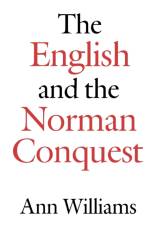
Applies a critical and scholarly approach to a topic that has long commanded attention... Williams's book represents a remarkable scholarly achievement. THE TIMES LITERARY SUPPLEMENT
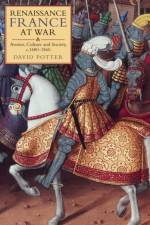
The rulers of Renaissance France regarded war as hugely important. This book shows why, looking at all aspects of warfare from strategy to its reception, depiction and promotion.
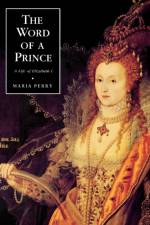
She gives the general reader fresh access to Elizabeth's mind and ideas, her wit, verve, eloquence, circumlocution, and formidable learning. OBSERVER
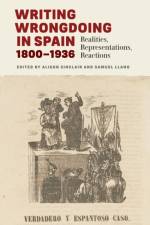
Tracks the emergence and vicissitudes of attitudes to wrongdoing in Spain from the 19th century through the decades before the Civil War.The international contributors to this volume explore the rich diversity of cultures and representations of wrongdoing in Spain through the 19th century and the decades up to the Civil War. Their line of enquiry is predicated on the belief that cultural constructions of wrongdoing are far from simple reflections of historical or social realities, and that they reveal not a line of historical development, but rather variation and movement. Voices and discourses arise in response to the social phenomena associated with wrongdoing. They set out to persuade, to shock, to entice, and in so doing provide complex windows on to social aspiration and desire. The book's three sections (Realities, Representations, and Reactions) offer distinct points of focus, and move between areas where control is paramount and on the agenda from above and those where the subtleties of emotional response take pride of place. Alison Sinclair was Professor of Modern Spanish Literature and Intellectual History at the University of Cambridge until retirement in 2014. Samuel Llano is a Lecturer in Spanish Cultural Studies at the Universityof Manchester.
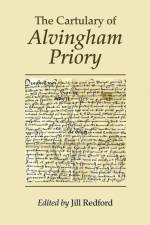
Edition of documents from a Gilbertine "double house" of monks and nuns reveals much about religious life at the time.
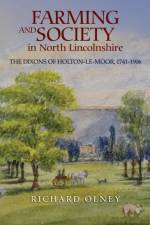
Engaging account of the fortunes of a farming family during the eighteenth and nineteenth centuries.
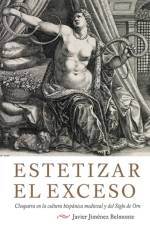
La primera monografia academica en ocuparse de la historia del icono cleopatrico en la cultura espanola. The first thorough study of the history of the Cleopatra icon in Spanish culture.
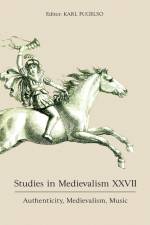
Essays tackling the difficult but essential question of how medievalism studies should look at the issue of what is and what is not "e;authentic"e;.Given the impossibility of completely recovering the past, the issue of authenticity is clearly central to scholarship on postmedieval responses to the Middle Ages. The essays in the first part of this volume address authenticitydirectly, discussing the 2017 Middle Ages in the Modern World conference; Early Gothic themes in nineteenth-century British literature; medievalism in the rituals of St Agnes; emotions in Game of Thrones; racism in Disney's Middle Ages; and religious medievalism. The essayists' conclusions regarding authenticity then inform, even as they are tested by, the subsequent papers, which consider such matters as medievalism in contemporary French populism; nationalism in re-enactments of medieval battles; postmedieval versions of the Kingis Quair; Van Gogh's invocations of Dante; Surrealist medievalism; chant in video games; music in cinematic representations of the Black Death; and sound in Aleksei German's film Hard to Be a God. Karl Fugelso is Professor of Art History at Towson University in Baltimore, Maryland. Contributors: Aida Audeh, Tessel Bauduin, Matthias Berger, Karen Cook, Timothy Curran, Nickolas Haydock, Alexander Kolassa, Carolyne Larrington, David Matthews, E.J. Pavlinich, Lotte Reinbold, Clare Simmons, Adam Whittaker, Daniel Wollenberg.
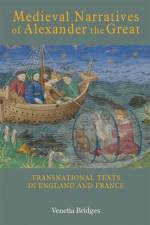
An investigation into the depiction and reception of the figure of Alexander in the literatures of medieval Europe.
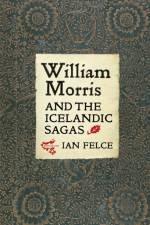
An examination of how greatly the sagas and other literature of Iceland shaped the poems of William Morris.The work of William Morris (1834-1896) was hugely influenced by the medieval sagas and poetry of Iceland; in particular, they inspired his long poems "e;The Lovers of Gudrun"e; and Sigurd the Volsung. Between 1868 and 1876, Morris not only translated several major sagas into English for the first time with his collaborator the Icelander Eirikur Magnusson (1833-1913) but he also travelled on horseback twice across the Icelandic interior, journeys which led him through the best known of the saga sites. By looking closely at his translations of the sagas and the texts on which he based them, the journals of his travels in Iceland, and his saga-inspired long poems and lyric poetry, this book shows how Morris conceived a unique ideal of heroism through engaging with Icelandic literature. It shows the sagas and poetry of Iceland as crucial in shaping his view of the best life a man could live and spurring him on in the subsequent passions on which much of his legacy rests. IAN FELCE gained his PhD from Cambridge University.
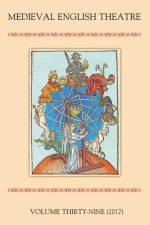
Newest research into drama and performance of the middle ages.Medieval English Theatre is the premier journal in early theatre studies. Its name belies its wide range of interest: it publishes articles on theatre and pageantry from across the British Isles up to the opening of the London playhouses and the suppression of the civic mystery cycles, and also includes contributions on European and Latin drama, together with analyses of modern survivals or equivalents, and of research productions of medieval plays. This volume features essays on stagecraft, performance, and reception across a wide range of theatrical genres. Overlapping themes include a return to the York Corpus Christi Play, the practicalities of pageant waggon construction and maintenance, mechanical stage effects, international influences, East Anglian theatre and "e;folk"e; happenings, academic Latin drama, and private gentry festivities. Contributors include Jamie Beckett, Phil Butterworth, Peter Happe, James McBain, Tom Pettitt, James Stokes, and Diana Wyatt.
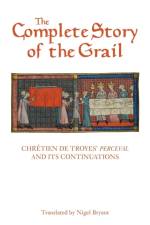
The first ever translation of the whole of the rich and compelling body of tales contained in Chretien's poem and its four Continuations.
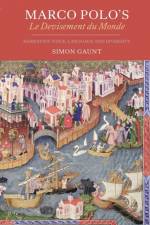
The first book in English to examine one of the most important and influential texts from a literary perspective.
Abonner på vårt nyhetsbrev og få rabatter og inspirasjon til din neste leseopplevelse.
Ved å abonnere godtar du vår personvernerklæring.