



Gjør som tusenvis av andre bokelskere
Abonner på vårt nyhetsbrev og få rabatter og inspirasjon til din neste leseopplevelse.
Ved å abonnere godtar du vår personvernerklæring.Du kan når som helst melde deg av våre nyhetsbrev.

Employing close reading of a kind usually associated with the study of lyric poetry, this book offers a general framework for reading African-American (and American) literature.This book springs from two premises. The first is that, with a nod toward Marianne Moore, America is - has always been - an imaginary place with real people living in it. The second is that slavery and its legacies explain how andwhy this is the case. The second premise assumes that slavery - and, after that fell, white supremacy generally - have been necessary adjuncts to American capitalism. Mark Richardson registers these two premises at the level of style and rhetoric - in the texture as much as in the "e;arguments"e; of the books he engages. His book is written to appeal to a general reader. It begins with Frederick Douglass, continues with W. E. B. Du Bois, Charles Chesnutt, andRichard Wright, and treats works by writers not often discussed in books concerning race in American literature - for example, Stephen Crane and Jack Kerouac. It brings to bear on such books as Douglass's My Bondage and My Freedom, Du Bois's The Souls of Black Folk, and Crane's The Red Badge of Courage a degree and quality of attention one usually associates with the study of lyric poetry. The book offers a general framework within which to read African-American (and American) literature. Mark Richardson is Professor of English at Doshisha University, Kyoto, Japan. He is co-editor of The Letters of Robert Frost (Harvard University Press) andauthor of The Ordeal of Robert Frost (University of Illinois Press, 1997).
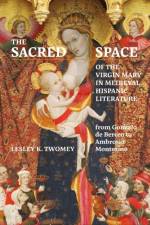
An examination of typology about place in relation to the Virgin Mary.
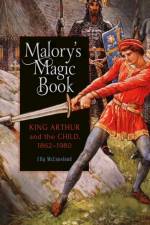
An examination of the numerous adaptations of Malory's Morte Darthur for children in the nineteenth and twentieth centuries.From the time when the writer J.T. Knowles first adapted Thomas Malory's Morte Darthur for a juvenile audience in 1862, there has been a strong connection between children and the Arthurian legend. Between 1862 and 1980, numerous adaptations of the Morte were produced for a young audience in Britain and America. They participated in cultural dialogues relating to the medieval, literary heritage, masculine development, risk, adventure and mental health through their reworking of the narrative. Covering texts by J.T. Knowles, Sidney Lanier, Howard Pyle, T.H. White, Roger Lancelyn Green, Alice Hadfield, John Steinbeck and Susan Cooper, among others, this volume explores how books for children frequently become books about children, and consequently books about the contiguity and separation of the adult and the child. Against the backdrop of Victorian medievalism, imperialism, the rise of child psychology and two world wars, the diverse ways in which Malory's text has been altered with a child reader in mind reveals changing ideas regarding the relevance of King Arthur, and the complex relationship between authors and their imagined juvenile readers. It reveals the profoundly fantasised figures behind literary representations of childhood, and the ways in which Malory's timeless tale, and the figure of King Arthur, have inspiredand shaped these fantasies. Dr ELLY MCCAUSLAND is Senior Lecturer in British and American literature at the University of Oslo.
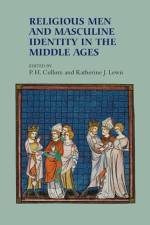
Essays offering new approaches to the changing forms of medieval religious masculinity.
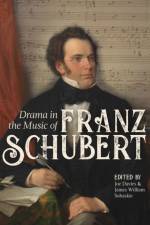
This book challenges the assumption that Franz Schubert (1797-1828), best known for the lyricism of his songs, symphonies and chamber music, lacked comparable talent for drama.It is commonly assumed that Franz Schubert (1797-1828), best known for the lyricism of his songs, symphonies, and chamber music, lacked comparable talent for drama. Challenging this view, Drama in the Music of Franz Schubert provides a timely re-evaluation of Schubert's operatic works, while demonstrating previously unsuspected locations of dramatic innovation in his vocal and instrumental music. The volume draws on a range of critical approaches and techniques, including semiotics, topic theory, literary criticism, narratology, and Schenkerian analysis, to situate Schubertian drama within its musical and cultural-historical context. In so doing, the study broadens the boundaries of what might be considered 'dramatic' within the composer's music and offers new perspectives for its analysis and interpretation. Drama in the Music of Franz Schubert will be of interest to musicologists, music theorists, composers, and performers, as well as scholars working in cultural studies, theatre, and aesthetics. JOE DAVIES is College Lecturer in Music at Lady Margaret Hall, University of Oxford. JAMES WILLIAM SOBASKIE is Associate Professor of Music at Mississippi State University. Contributors: Brian Black, Lorraine Byrne Bodley, Joe Davies, Xavier Hascher, Marjorie Hirsch, Anne Hyland, Christine Martin, Clive McClelland, James William Sobaskie, Lauri Suurpaa, Laura Tunbridge, Susan Wollenberg, Susan Youens
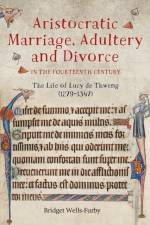
The life of "e;that notorious woman"e;, Lucy de Thweng, is used as a prism through which to consider the agency of aristocratic women in the Middle Ages.The Yorkshire heiress, Lucy de Thweng, was married as a child to her first husband but later divorced him, entered into an adulterous relationship with another man, was forced into marriage to a second husband, and then, after a period of widowhood, married for the third time to a congenial partner of her own choice. This sounds a remarkable and unusual story - but was it? This book uses the episodes of Lucy's life to explore how far she was exceptional in her time and rank and highlights aspects of personality and personal relationships which are not often recognized. It undertakes extensive investigations into divorce in contemporary aristocratic families and extra-marital sexual relationships by women, as well as discussing the marriage of heiresses and the pressures to remarry which widows endured. These show that the theoretical religious and secular restraints on marriage and sex were often ignored, by both men and women, and how women, particularly if they were heiresses, were able to make their own decisions in these matters. As the legitimate procreation of children within the licensed environment of marriage was the forum for the succession to landed estates, the book also considers how this behaviour affected those estates. BRIDGET WELLS-FURBY is an independent scholar whose interests lie chiefly in late medieval landed estates and their context.
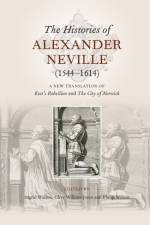
Alexander Neville was an English humanist, scholar, author and translator who made his reputation as a Latinist and worked as a secretary for Matthew Parker, Archbishop of Canterbury. The book offers the Latin text and modern translations of his De furoribus Norfolciensium Ketto Duce, Norwicus, and Ad Walliae proceres apologia.Alexander Neville (1544-1614) was an English humanist, author, poet and translator. His skill as a Latinist brought him to the attention of Matthew Parker, Elizabeth I's first Archbishop of Canterbury, who appointed him one of hissecretaries. This book presents Neville's Latin texts of De furoribus Norfolciensium Ketto Duce and Norwicus (1575) and Ad Walliae proceres apologia (1576) alongside modern English translations. Neville's account ofKett's Rebellion is one of the earliest and most important sources on the 'Commotion Tyme' of 1549, when England was rocked by a series of uprisings triggered by socio-economic conditions and the impacts of religious change. Oneof the first published urban histories, The City of Norwich offers a unique perspective on the development of Tudor historiography and demonstrates Neville's skill in weaving his source materials into a polished expression of national and civic pride. At the same time, its account of the city's bishops honours the life and work of Neville's patron, Archbishop Parker, who was himself a Norwich man. The Reply to the Welsh Nobility challenges the accusationsof libel that followed the publication of De furoribus and is a small masterpiece of Ciceronian forensic oratory. Drawing on the editors' combined expertise in Renaissance Latin, early modern history and translation studies, these texts and translations are prefaced by a wide-ranging introductory section that examines what is known of Neville's life, his texts' origins and literary contexts, their significance in the development of Tudor historiography and the ways in which they reflect contemporary politico-religious concerns. The translators' preface discusses the role of translations in the appreciation of historical sources, using recent developments in translation theory. Together, these three texts reveal much about the uses of rhetoric and historiography in legitimating the actions of Tudor governing elites, affirming national identity and promoting the Elizabethan Religious Settlement. INGRID WALTON was formerly Head of Library and Information Services at the John Innes Centre, Norwich. CLIVE WILKINS-JONES is a Fellow of the Royal Historical Socety and a Research Fellow in the School of History atthe University of East Anglia. PHILIP WILSON is an Honorary Research Fellow in the School of Politics, Philosophy, Language and Communication Studies at the University of East Anglia.
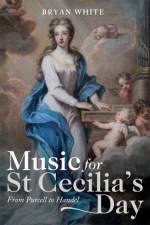
In 1683 English court musicians and the Musical Society of London joined forces to celebrate St Cecilia's Day (22 November) with a feast and the performance of specially composed music. The most prominent composers and poets of the age wrote for these occasions, including Henry Purcell, John Blow, John Dryden and William Congreve.
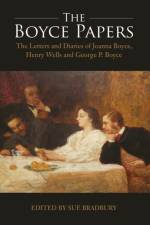
The first full edition of the correspondence, between three artists Joanna Boyce, her brother George P. Boyce and Henry Wells, who she eventually married. It dates from the period 1845 to 1861, and covers artistic life in both Paris and London, including the Pre-Raphaelites.This correspondence, between three artists Joanna Boyce, her brother George P. Boyce and Henry Wells, whom she eventually married, dates from the period 1845 to 1861. They were all friends of Rossetti and the Pre-Raphaelite circle, but in addition Henry and Joanna both studied in Paris, and Joanna wrote extensively about her time there, training with Thomas Couture. She wrote for The Saturday Review as well as painting a small number of very interesting and much admired pictures. Her brother George established himself as a successful watercolourist and member of the Old Watercolour Society, having been encouraged both by David Cox on his Welsh sketching expeditions,and by Ruskin, whose letters advising him what to paint in Venice are included here. Henry Wells was primarily a portrait painter. At first he specialised in miniatures, and was commissioned to paint Mary, princess of Cambridge byQueen Victoria. There are vivid accounts of visits to country houses to carry out commissions from their owners. The three wrote constantly about techniques of painting and about the new colours that became available at this period, and about their visits to exhibitions both in Paris and London. They all contributed to the Royal Academy and other exhibitions. In addition, there is the extraordinary story of Joanna's and Henry's courtship and marriage, at first encouraged and then viciously opposed by Joanna's recently widowed mother. The correspondence survives only in an unpublished transcript made in the 1940s, as the originals were all destroyed in a bombing raid on Bath during the second world war. Excerpts from George P. Boyce's diaries were published in the 1930s, but the present edition contains a considerable amount of new material.
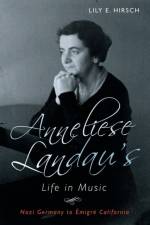
A detailed and moving account of the life of Anneliese Landau, who, in Nazi Germany and later in emigre California, fought against prejudice to do notable work in music.
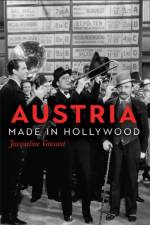
Considers over sixty Hollywood films set in Austria, examining the film industry, the influence of domestic factors on images of a foreign country, and the persistence of cliches.
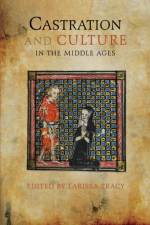
Essays exploring medieval castration, as reflected in archaeology, law, historical record, and literary motifs.
Contributes to a better understanding not only of ecclesiastical power and politics but of life in an elite household in seventeenth-century BritainThe Lambeth and Croydon Palace accounts for William Laud, Archbishop of Canterbury, represent the only extant record of the archiepiscopal household during his tenure in office. Spanning the period from December 1635 to January 1642, they offer a unique prism through which to view the highs and the lows of Laud's controversial career. They provide a wealth of new insights into his formal role, his private life and his personal habits, while at the same time casting new light on his associations with men and women from across the social hierarchy, including courtiers, privy councillors, merchants, MPs and, of course, the king. Yet the document itself, lost between 1642 and 1912 andnow housed in the National Archives, Kew, has almost entirely escaped the attention of modern scholars. This important manuscript is edited and analysed here in full for the first time. A lengthy introduction provides an overview of the ways in which the document brings to life both the household and its head, demonstrating how the household responded to its immediate social environment and the wider political context; interrogating the gifts and their givers to identify networks of people in social, political and religious terms; and, more generally, teasing out the relationship between material objects and political power. This is followed by a complete text of the manuscript, with contextual footnotes. Thus, the volume contributes to a deeper understanding not only of ecclesiastical power and politics, but of life in an elite household in seventeenth-century Britain. LEONIE JAMESis Lecturer in History at the University of Kent, Canterbury and author of 'This Great Firebrand': William Laud and Scotland, 1617-1645 (Boydell Press, 2017).
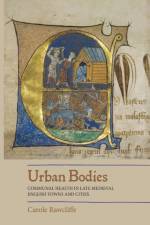
The idea of English medieval towns and cities as filthy, muddy and insanitary is here overturned in a pioneering new study.
The complex relationship between myths and music is here investigated.
An examination of the growth and different varieties of anchoritism throughout medieval Europe.
The first modern edition of eight contemporary chronicles covering the Wars of the Roses up to the return of Edward IV in 1471.
Essays discussing the medieval book, its owners and its readers.Reading, writing, sharing texts, and book ownership in the fifteenth and sixteenth centuries, and how they fostered social and intellectual links and networks between individuals, particularly among women: these are subjects whichthe pioneering work of Mary C. Erler has done so much to illuminate. The essays here, in this volume in her honour, build on her scholarship, engaging with Professor Erler's characteristic use of bibliography in the service of biography by investigating how the physical object of the book can enlighten our understanding of medieval readers and writers. They analyze, for example, what "e;reading"e; means in terms of the act itself (and the accessories, such asbookmarks, that helped to set the stage for reading), whether done aloud or silently, in such different venues as an aristocratic court, bourgeois household, village community, and monastic cloister. They also consider the culture of medieval reading practices, especially those of women, across social classes, and in terms of the transition between the pre- and post-Reformation periods; the fluidity of genre boundaries; and changes in devotional reading and writing in this liminal period. A wide variety of genres are covered, including secular romance, devotional texts, schoolbooks, and the illustrated Old Testament preface to the famous Queen Mary Psalter, which recasts the story and image of ancient Israelites to suit elite readerly taste. MARTIN CHASE is Professor of English and Medieval Studies at Fordham University; MARYANNE KOWALESKI is Joseph Fitzpatrick S.J. Distinguished Professor of History and Medieval Studies at Fordham University. CONTRIBUTORS: Allison Alberts, Caroline M. Barron, Heather Blatt, Martin Chase, Joyce Coleman, Sheila Lindenbaum, Joel T. Rosenthal, Michael G. Sargent, Kathryn A. Smith.
Examines Liszt's piano arrangements of music originally created for other instruments, especially the symphony orchestra and the Hungarian Gypsy band.
Offers a radical political interpretation of history that generates fresh insights into the emancipatory potential of ordinary Nigerians and their precolonial cultural institutions
First representative English collection of the Sturm und Drang writer Lenz, suited for the classroom and anyone interested in German literature, the European Enlightenment, or the theory and practice of theater.Jakob Michael Reinhold Lenz (1751-1792) is, after Goethe, the most important writer of the German Sturm und Drang. Crucial in the reinvention of German literature through the reception of Shakespeare, his works contain a scathing critique of the ethical, political, and sexual regimes then prevailing in German and Eastern European territories. Both aesthetically and politically, Lenz strongly influenced later German writers - most notably Georg Buchner and Bertolt Brecht. In Germany, Lenz is still widely read and performed. Given his importance and lasting reception, it is surprising that many of his texts are not available in English. While his best-known dramas have been translated, many of his essays have not, and none of his stories or poems have been. This is especially astonishing given the growth of English-language Lenz scholarship over recent decades. This volume contains new - and, in many cases, first - English translations of Lenz's most important plays, stories, essays, and poems. It is the first representative English collection of Lenz's works. Providing reliable translations of Lenz's key writings and succinct glosses of historical and literary references, this book is a valuable resource for classroom use and for anyone interested in German literature, the European Enlightenment, or the theory and practice of theater. Martin Wagner is Assistant Professor of German at the University of Calgary. Ellwood Wiggins is Assistant Professor of German at the University of Washington.
The Deeds of the abbots of St Albans records the history of one of the most important abbeys in England, closely linked to the royal family and home to a school of distinguished chroniclers, including Matthew Paris and Thomas Walsingham. It offers many insights into the life of the monastery, its buildings and its role as a maker of books, and covers the period from the Conquest to the mid-fifteenth century.
The continued influence and significance of the legend of Arthur are demonstrated by the articles collected in this volume.The enduring appeal and rich variety of the Arthurian legend are once again manifest here. Chretien's Erec et Enide features first in a case study of the poet's endings and medieval theories of poetic composition. Next follows an essay that comes to the rather surprising-but- convincing conclusion that the "e;traitor"e; spoken of in the opening lines of Sir Gawain and the Green Knight is neither Aeneas nor Antenor, but Paris. Another essay dealing with Sir Gawain, this time in Malory's Morte Darthur, offers among other things an answer to the question of how Gawain knows the exact hour of his death. Few native Irish Arthurian tales have come down to us: a discussion of "e;The Tale of the Crop-Eared Dog"e; shows it to be both bizarre and popular, as witnessed by the many manuscripts in which it is preserved. The materiality of the Arthurian legend is represented here by a detailed treatment of the lead cross supposedly found in the grave of King Arthur at Glastonbury Abbey in 1191. Finally, this volume continues Arthurian Literature's tradition of publishing unfamiliar or previously unknown Arthurian texts, in this instance an original Middle English translation of the story of the sword in the stone, from the Old French Merlin. ELIZABETH ARCHIBALD is Professor of English Studies at Durham University, and Principal of StCuthbert's Society; DAVID F. JOHNSON is Professor of English at Florida State University, Tallahassee. Contributors: Lindy Brady, David Carlton, Neil Cartlidge, Nicole Clifton, Oliver Harris, Richard Moll, Rebecca Newby.
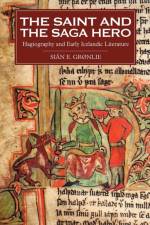
A compelling argument that far from developing in a literary vacuum, saga literature interacts in lively, creative and critical ways with one of the central genres of the European middle ages.The relationship between that most popular of medieval genres, the saint's life, and the sagas of the Icelanders is investigated here. Although saga heroes are rarely saints themselves - indeed rather the reverse - they interact with saints in a variety of ways: as ancestors or friends of saints, as noble heathens or converts to Christianity, as innocent victims of violent death, or even as anti-saints, interrogating aspects of saintly ideology. Via detailed readings of a range of the sagas, this book explores how saints' lives contributed to the widening of medieval horizons, allowing the saga authors to develop multiple perspectives (moral, eschatological, psychological) on traditional feud narratives and family dramas. The saint's life introduced new ideals to the saga world, such as suffering, patience and feminine nurture, and provided, through dreams, visions and signs, ways of representing the interior life and of engaging with questions of merit and reward. In dialogue with the ideology of the saint, the saga hero develops into a complex and multi-faceted figure. Sian Gronlie is Associate Professor and Kate Elmore Fellow in English Language and Literature at St Anne's College, Oxford.
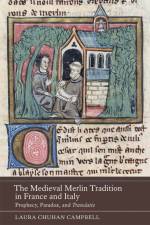
Ideas of translation and adaptation in the middle ages investigated through the lens of the Merlin tradition.The medieval figure of Merlin is intriguing, enigmatic, and riddled with contradictions. Half human, half devil, he possesses a supernatural knowledge that allows him to prophesy the future. This book examines the reinterpretationof Merlin's character in French and Italian Arthurian literature, in which chivalric romance and political prophecy become increasingly intertwined. As the Merlin story crosses the fluid cultural and linguistic boundaries between vernacular dialects on either side of the Alps, the protagonist accumulates histories, futures, and discourses from multiple texts within his omniscient knowledge. From his first appearance in Geoffrey of Monmouth's HistoriaRegum Britanniae, through thirteenth-century French romance, to fifteenth-century Venice, Merlin is the voice of political and spiritual truths that originate beyond the sphere of human comprehension. The study also shows howthe conversion of Merlin's prophetic speech from his omniscient mind into human languages parallels the work of the medieval translator. At the same time, the transmission of the Merlin story between vernacular French and Italiandialects presents an alternative model of translation, one that relies not on the displacement of previous texts, but instead on the accretion of information from text to text. Laura Chuhan Campbell is Assistant Professor of French at Durham University.
The notion of what it means to "e;distort"e; a text is here explored through a rich variety of individual case studies.Distortion is nearly always understood as negative. It can be defined as perversion, impairment, caricature, corruption, misrepresentation, or deviation. Unlike its close neighbour, "e;disruption"e;, it remains resolutely associatedwith the undesirable, the lost, or the deceptive. Yet it is also part of a larger knowledge system, filling the gap between the authentic event and its experience; it has its own ethics and practice, and it is necessarily incorporated in all meaningful communication. Need it always be a negative phenomenon? How does distortion affect producers, transmitters and receivers of texts? Are we always obliged to acknowledge distortion? What effect does a distortive process have on the intentionality, materiality and functionality, not to say the cultural, intellectual and market value, of all textual objects? The essays in this volume seek to address these questions,They range fromthe medieval through the early modern to contemporary periods and, throughout, deliberately challenge periodisation and the canonical. Topics treated include Anglo-Saxon manuscripts, Reformation documents and poems, Global Shakespeare, the Oxford English Dictionary, Native American spiritual objects, and digital tools for re-envisioning textual relationships. From the written to the spoken, the inhabited object to the remediated, distortion is demonstrated to demand a rich and provocative mode of analysis. Elaine Treharne is Roberta Bowman Denning Professor of Humanities, Professor of English, Director of the Centre for Spatial and Textual Analysis, and Director of Stanford Technologies at Stanford University; Greg Walker is Regius Professor of Rhetoric and English Literature at the University of Edinburgh. Contributors: Matthew Aiello, Emma Cayley, Aaron Kelly, Daeyeong (Dan) Kim, Sarah Ogilvie, Timothy Powell, Giovanni Scorcioni, Greg Walker, Claude Willan.
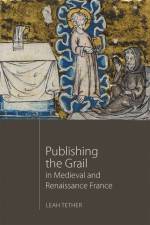
The early "e;publishing industry"e; examined through the prism of the Grail legend.The Grail is one of the most enduring literary motifs in publishing history. In spite of an ever-changing world, the reading public has maintained a fascination for this enigmatic object, as well as the various adventures and characters associated with it. But the nature and reception of the Grail have not remained static. Thanks to the fact that the first known author of a Grail story, Chretien de Troyes, died c.1180-90 before completing his tale and revealing the meaning of the Grail, authors and publishers across history have reimagined, reinterpreted and re-packaged Grail literature so as to appeal to the developing tastes and interests of their target audiences. This bookanalyses the developing publication practices associated with French Grail literature in medieval and Renaissance France. Arguing for pre-print book production as constituting an early incarnation of a publishing trade, it discusses such matters as the disclosure of authorship and patronage, and the writing and formatting of blurbs, as well as tactics of compilation and production techniques that bear evidence of common commercial motivations between pre-and post-print publication. The distinctive investigation of manuscript and early-print evidence brings medieval and early-modern publishers and their concepts of both product and market into focus. Leah Tether is Reader in Medieval Literature and Digital Cultures, and Co-Director of the Centre for Medieval Studies at the University of Bristol. She is the author of The Continuations of Chretien's Perceval: Content and Construction, Extensionand Ending (D.S. Brewer, 2012).
Edition and translation of important documents, providing an account of the foundation of a Cambridge college.
First full-length survey of the fluid relationship between these two areas at a time of rapid change.
Abonner på vårt nyhetsbrev og få rabatter og inspirasjon til din neste leseopplevelse.
Ved å abonnere godtar du vår personvernerklæring.