







Gjør som tusenvis av andre bokelskere
Abonner på vårt nyhetsbrev og få rabatter og inspirasjon til din neste leseopplevelse.
Ved å abonnere godtar du vår personvernerklæring.Du kan når som helst melde deg av våre nyhetsbrev.

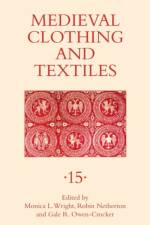
The best new research on medieval clothing and textiles, drawing from a variety of angles and approaches.The essays in this volume continue the Journal's tradition of groundbreaking interdisciplinary work. The volume opens with a survey of the discipline of medieval clothing and textiles, written by founding editor Gale R. Owen-Crocker. The range of the other essays extends chronologically from the early Middle Ages through the fifteenth century and covers a variety of disciplines. Topics include the conception of the author as a "e;wordweaver"e; in the literatures of Anglo-Saxon England; intertextual literary identities established through clothing in the Nibelungenlied and the Volsunga Saga; the historical record of clothing and textiles at the court of King John of England; medallion silks, their use in Western Europe, and their representation in art; the vestments of Beguines and other penitential movements in the thirteenth and fourteenth centuries; and a depiction of heraldic textile weaving inlate-medieval art. Contributors: Tina Anderlini, Joanne W. Anderson, Maren Clegg Hyer, Alejandra Concha Sahli, Gale R. Owen-Crocker, Elizabeth M. Swedo, Hugh Thomas
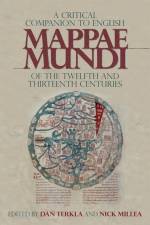
First full collection on the seven most significant English mappae mundi from the twelfth and thirteenth centuries.
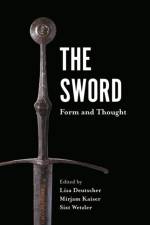
A multidisciplinary overview of current research into the enduringly fascinating martial artefact which is the sword.
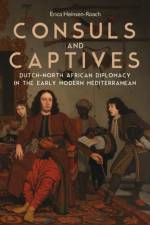
Analyzes how negotiations between Dutch consuls and North African rulers over the liberation of Dutch sailors helped create a new diplomatic order in the western Mediterranean.
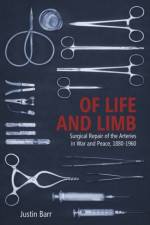
Examining the history of arterial repair, Of Life and Limb investigates the process of surgical innovation by exploring the social, technological, institutional, and martial dynamics shaping the introduction and adoption ofa new operation.
An encyclopedic selection of original documents from the Austrian capital's pathbreaking, progressive interwar period, translated and with contextualizing introductions and commentaries.
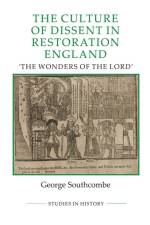
The voices of non-conformity are brought to the fore in this new exploration of late seventeenth-century politics, religion and literature.Whilst scholars have recently offered a much deeper and more persuasive account of the centrality of religious issues in shaping the political and cultural worlds of Restoration England, much of this has been broad-brush and the voices of individual established Church figures have been much more clearly heard than those of dissenters. This book offers a fresh and challenging new approach to the voices that the confessional state had no prospect of silencing. It provides case studies of a range of very different but highly articulate dissenters, focusing on their modes of political activism and on the varieties of dissenting response possible, and demonstrating the vitality and integrity of witnesses to a spectrum of post-revolutionary Protestantism. It also seeks, through an exploration of textual culture and poetic texts in particular, to illuminate both the ways in which nonconformists sought to engage with central authorities in Church and State, and the development of nonconformist identities in relation to each other. GEORGE SOUTHCOMBE is Director of the Sarah Lawrence Programme, Wadham College, Oxford.
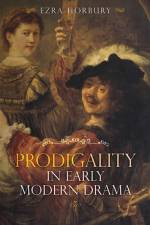
Examination of the motif of the prodigal son as treated in early modern drama, from Shakespeare to Beaumont and Fletcher.
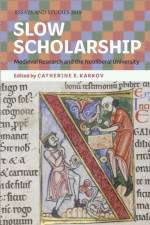
A powerful claim for the virtues of a more thoughtful and collegiate approach to the academy today.This book offers a response to the culture of metrics, mass digitisation, and accountability (as opposed to responsibility, or citizenship) that has developed in higher education world wide, as exemplified by the UK's Research Excellence Framework exercise (REF), and the increasing bureaucracy that limits the time available for teaching, research, and even conversation and collaboration. Ironically, these are problems that will be solved only by academicsfinding the time to talk and to work together. The essays collected here both critique the culture of speed in the neoliberal university and provide examples of what can be achieved by slowing down, by reclaiming research and research priorities, and by working collaboratively across the disciplines to improve conditions. They are informed both by recent research in medieval studies and by the problematic culture of twenty-first century higher education. The contributions offer very personal approaches to the academic culture of the present moment. Some tackle issues of academic freedom head-on; others more obliquely; but they all have been written as declarations of theacademic freedom that comes with slow thinking, slow reading, slow writing and slow looking and the demonstrations of its benefits. CATHERINE E. KARKOV is Professor and Chair of Art History at the University of Leeds. Contributors: Lara Eggleton, Karen Jolly, Chris Jones, James Paz, Andrew Prescott, Heather Pulliam
Reads the imagined history of the long term relationship between pagan and Christian through quasi-factual fifteenth-century Middle English writings, from Lydgate's Troy Book to the hagiographies of Bokenham, Barclay and Capgrave and Mandeville's Travels.
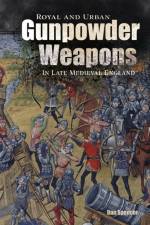
First comprehensive study of English artillery in the late Middle Ages, bringing out its full impact on areas beyond the military.One of the most important technological developments of the Middle Ages was the adoption of gunpowder weapons in medieval Europe. From the fourteenth century onwards, this new technology was to eventually transform the conduct ofwarfare beyond all recognition with important implications for European and global history. Guns came to be used in all aspects of military operations, with kings, nobles and burgesses all spending large sums of money on these prestigious weapons. The growing effectiveness of gunpowder artillery prompted major changes in the design of fortifications, the composition of armies, the management of logistics and administrative systems. This book is the first full-length study of the unique English experience of gunpowder weapons, tracing their development from their introduction in the reign of Edward III to the end of the fifteenth century. The rich records of the English Exchequer and urban accounts are used to explore their role in campaigns, in sieges, on the battlefield, at sea and their role in the defence of towns, royal castles and the fortifications of the Pale of Calais. It provides a comprehensive framework for the speed of technological advances and the factors responsible for these changes, as well as an in-depth discussion of individual gun types. DAN SPENCER obtained his PhD from the University of Southampton.
This volume traces the evolution of Whig and Tory, Puritan and Anglican ideas across a tumultuous period of British history, from the mid-seventeenth century through to the Age of Enlightenment.This volume, a tribute to Mark Goldie, traces the evolution of Whig and Tory, Puritan and Anglican ideas across a tumultuous period of British history, from the mid-seventeenth century through to the Age of Enlightenment. Mark Goldie, Fellow of Churchill College and Professor of Intellectual History at Cambridge University, is one of the most distinguished historians of later Stuart Britain of his generation and has written extensively about politics, religion and ideas in Britain from the Restoration through to the Hanoverian succession. Based on original research, the chapters collected here reflect the range of his scholarly interests: in Locke, Tory and Whig political thought,and Puritan, Anglican and Catholic political engagement, as well as the transformative impact of the Glorious Revolution. They examine events as well as ideas and deal not only with England but also with Scotland, France and the Atlantic world. Politics, Religion and Ideas in Seventeenth- and Eighteenth-Century Britain will be of interest to later Stuart political and religious historians, Locke scholars and intellectual historians more generally. JUSTIN CHAMPION is Professor of History at Royal Holloway, University of London. JOHN COFFEY is Professor of Early Modern History at the University of Leicester. TIM HARRIS is Professor of History at Brown University. JOHN MARSHALL is Professor of History at John Hopkins University. CONTRIBUTORS: Justin Champion, John Coffey, Conal Condren, Gabriel Glickman, Tim Harris, Sarah Irving-Stonebraker, Clare Jackson, Warren Johnston, Geoff Kemp, Dmitri Levitin, John Marshall, Jacqueline Rose, S.-J. Savonius-Wroth, Hannah Smith, Delphine Soulard
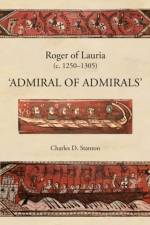
An account of the naval commander Roger of Lauria and his command of warfare at sea.
How did Wagner's experiences in Paris influence his works and social character? And how does his sometime desire for recognition by the French cultural establishment square with his German national identity and with the related idea of a universally valid art?
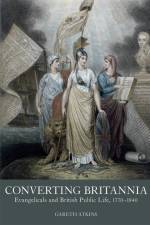
A compelling study of Anglican Evangelicalism in the Age of Wilberforce revealing its potency as a political machine whose reach extended into every area of the British establishment and its nascent Empire.SHORTLISTED for the shortlisted for the EHS Book Prize 2020 The moralism that characterized the decades either side of 1800 - the so-called 'Age of William Wilberforce' - has long been regarded as having a massive impact on British culture. Yet the reasons why Wilberforce and his Evangelical contemporaries were so influential politically and in the wider public sphere have never been properly understood. Converting Britannia shows for thefirst time how and why religious reformism carried such weight. Evangelicalism, it argues, was not just an innovative social phenomenon, but also a political machine that exploited establishment strengths to replicate itself at home and internationally. The book maps networks that spanned the churches, universities, business, armed forces and officialdom, connecting London and the regions with Europe and the world, from business milieux in the Cityof London and elsewhere through the Royal Navy, the Colonial Office and East India and Sierra Leone companies. Revealing how religion drove debates about British history and identity in the first half of the nineteenth century, itthrows new light not just on the networks themselves, but on cheap print, mass-production and the public sphere: the interconnecting technologies that sustained religion in a rapidly modernizing age and projected it into new contexts abroad. GARETH ATKINS is a Bye-Fellow at Queens' College, University of Cambridge.
The image of Vienna as a musical city is a familiar one. This book explores the history of music in Vienna, focussing on three different epochs, 1700, 1800 and 1900.
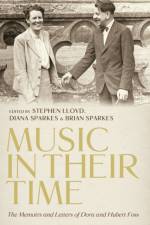
An intimate and readable account, filled with interesting and amusing anecdotes, of a highly creative period in English musical historyHubert J. Foss (1899-1953) is best known for his work as founder and first music editor for Oxford University Press. Foss promoted composers in England between the World Wars, most notably Ralph Vaughan Williams, William Walton, Constant Lambert, and Peter Warlock. The first part of this book is based on the memoirs of his wife Dora, who was herself a professional singer. The book - through the presentation of memoirs and letters - recreates a vivid picture of the musical world during the inter-war period when there was a renaissance of English music. Foss's work for OUP saw the music department expand from publishing a limited number of sheet music items to a comprehensive inventory of operas, orchestral compositions, chamber and vocal works, and piano pieces. Foss also greatly expanded the press's publication of books on music, music analysis, and music appreciation. Leaving OUP's music department in1941, Foss pursued a number of freelance musical occupations, serving as critic, reviewer, journalist, author and frequent broadcaster. The book includes letters sent to and received from such luminaries as Hamilton Harty,Constant Lambert, Edith Sitwell, Donald Tovey, Ralph Vaughan Williams, William Walton, Henry J. Wood, Arthur Bliss, Benjamin Britten, Roger Quilter, Percy Scholes, Leopold Stokowski, Michael Tippett, Thomas Hardy, James Joyce andWalter de la Mare. Many of the letters presented here have never been published before. An authoritative introduction by Simon Wright (Head of Rights & Contracts, Music, OUP) provides a detailed overview of Hubert Foss and his place in music publishing. STEPHEN LLOYD is the author of William Walton: Muse of Fire and Constant Lambert: Beyond the Rio Grande (both published by Boydell). DIANA SPARKES is the daughter of Hubert and Dora Foss. BRIAN SPARKES is her husband and an Emeritus Professor of Classical Archaeology.
Documents the rich allusiveness and intellectual probity of experimental filmmaking-a form that thrived despite having been officially banned-in East German socialism's final years.
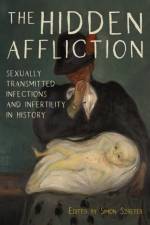
Multidisciplinary collection of essays on the relationship of infertility and the "e;historic"e; STIs--gonorrhea, chlamydia, and syphilis--producing surprising new insights in studies from across the globe and spanning millennia.A multidisciplinary group of prominent scholars investigates the historical relationship between sexually transmitted infections and infertility. Untreated gonorrhea and chlamydia cause infertility in a proportion of women and men. Unlike the much-feared venereal disease of syphilis--"e;the pox"e;--gonorrhea and chlamydia are often symptomless, leaving victims unaware of the threat to their fertility. Science did not unmask the causal microorganisms until thelate nineteenth and twentieth centuries. Their effects on fertility in human history remain mysterious. This is the first volume to address the subject across more than two thousand years of human history. Following asynoptic editorial introduction, part 1 explores the enigmas of evidence from ancient and early modern medical sources. Part 2 addresses fundamental questions about when exactly these diseases first became human afflictions, withnew contributions from bioarcheology, genomics, and the history of medicine, producing surprising new insights. Part 3 presents studies of infertility and its sociocultural consequences in nineteenth- and twentieth-century Africa, Oceania, and Australia. Part 4 examines the quite different ways the infertility threat from STIs was perceived--by scientists, the public, and government--in late nineteenth- and early twentieth-century Germany, France, and Britain, concluding with a pioneering empirical estimate of the infertility impact in Britain. Simon Szreter is Professor of History and Public Policy, University of Cambridge, and Fellow of St. John's College, Cambridge.
How gunpowder technology exploded heroes, heroics, and war stories from 1400 to 1700, and how German writers tried to glue them back together
A study of women who left their nunneries: their motives and actions, and the consequences for them.To make a vow is a matter of the will, to fulfill one is a matter of necessity, declared late medieval canon law, and religious profession involved the most solemn of those vows. Professed nuns could never renege on their vows and if they did attempt to re-enter secular society, they became apostates. Automatically excommunicated, they could be forcibly returned to their monasteries where, should they remain unrepentant, penalties, including imprisonment, might be imposed. And although the law imposed uniform censures on male and female apostates, the norms regarding the proper sphere of activity for women within the Church would prohibit disaffected nuns from availing themselvesof options short of apostasy that were readily available to monks similarly unhappy with the choices that they had made. This book is the first to address the practical and legal problems facing women religious, both in England and in Europe, who chose to reject the terms of their profession as nuns. The women featured in these pages acted, and were acted upon, by the law: the volume shows alleged apostates petitioning for redress and actual apostates seeking to extricate themselves, via self-help and litigation, from the moral and legal consequences of their behaviour. ELIZABETH MAKOWSKI is Emerita Professor of History at Texas State University, San Marcos.
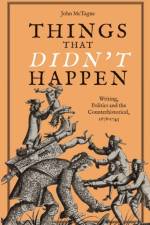
An innovative exploration of fake news and alternative reality in late Stuart and early Hanoverian political and literary culture, from the Popish Plot and the South Sea Bubble to the Dunciad.James Francis Edward Stuart, the Prince of Wales born in 1688, was not a commoner's child smuggled into the queen's birthing chamber in a warming pan, but many people said he was. In 1708, the same prince did not quite land in Scotland with a force of 5,000 men in order to claim the Scottish crown, but writers busied themselves with exploring what would have happened if he had succeeded. These fictions had as potent an effect on the political culture of late Stuart and early Hanoverian Britain as many events that really did happen. From the alleged "e;Popish Plot"e; of Titus Oates to the South Sea Bubble, John McTague draws on a rich variety of sources - popular, archival and literary - to investigate the propagandic and literary exploitation of three kinds of things that did not occur at this time: failures which inspired "e;what if"e; narratives, speculative futures which failed to come to pass and "e;pure"e; fictions created and disseminated for political gain. Finally, a ground-breaking reading of the various versions of Pope's Dunciad reveals a work that in its exploration of historic causation and agency and its repurposing ofthe material of contemporary political and literary culture deploys many of the strategies explored in earlier chapters to present Hanoverian reality as if it were counterhistory. JOHN MCTAGUE is Lecturer in English Literature at Bristol University.
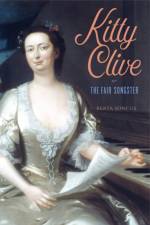
Kitty Clive (1711-1785) was a top London stage star. She dominated spoken as well as musical comedy. From the 1740s onwards, her reputation suffered a sharp decline. For anyone curious about star production in eighteenth-century Britain, her story is not to be missed.Kitty Clive (1711-1785) was a top London stage star. Singing powered her ascent and, for twenty years, was foundational to her success as she came to dominate spoken as well as musical comedy. Her protean powers transfixed audiences, whether in low-style productions or in works by masters like Purcell, Shakespeare, and Dryden. Celebrities such as Handel and Henry Fielding wrote vehicles for her. Clive's career was unique. Despite a sometimes awkward biography - her father was a disgraced Irish Catholic; she defied managers; her marriage was almost certainly a social ruse and her 'husband' a homosexual - her musical voice helped her to become the champion of British song, of patriotism, and of propriety. Yet in the 1740s, critical opinion turned against Clive and the financial power she wielded. Salvaging her career with David Garrick's help, Clive gutted her legacy. She quit serious song and took to caricaturing herself on stage, winning back audiences by disparaging her earlier achievements. Altering works mid-performance, creating and re-shaping stage genres, and leveraging press coverage while seeming not to, she was above all a shrewd manager and a fascinating stage artist. Clive's career reveals to us gorgeous song otherwise lost and perspectives previously unknown. For music historians, musicologists, theatre scholars, and anyone curious about performance history and star production in eighteenth-century Britain, her story is not to be missed. BERTA JONCUS is Senior Lecturer in Music at Goldsmiths, University of London.
Offers an intimate view of a contemporary composer's creative world and how others may interpret it.
Presents research conducted in three difficult-to-access Cuban archives with rare textual resources, upon which very little analysis has ever previously been published.This book offers an innovative and provocative analysis of the much-studied Cuban Revolution by reminding us that Fidel Castro's was actually the second of the island's twentieth-century revolutions. By bringing 1959 into criticalcommunication with the revolution of 1933, the book explores Cuba's trajectory from colony to republic to revolution, not as a linear inevitability, but as a rite of collective passage punctuated by turning points in which publicdebate turned to almost obsessive reflection on national 'identity' and national 'destiny'. In re-reading important works of many of Cuba's most significant intellectual and political figures, whilst also revealing little known but truly transcendental contributions to the collective narrative during both revolutionary periods, this book makes a major contribution to a more complex, nuanced and sophisticated understanding of Cuban cultural history and Cuban national identity in the twentieth century. In both periods, the book reveals revolutionary zeal challenged by dogged ambivalence, nihilism undercut by remembrance, the teleological pursuit of 'The End' of the national narrative displaced by 'An End', always and forever 'to be continued'. STEPHEN M. FAY is a Lecturer in Spanish at Aston University.
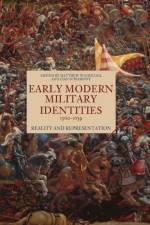
An investigation into how soldiers of this period considered and presented themselves.Within the large-scale historiography of sixteenth- and seventeenth-century warfare and the early modern military revolution there remain many unanswered questions about the individual soldier and their relationship to the profession of arms. What was it that distinguished a soldier from the rest of society? How was the military life perceived in this period by those with first-hand experience of soldiery, or who represented soldiers on the page and stage?How were nationality, class, and gender used to construct military identities? And how were such identities also shaped by classical and medieval models? This book examines how early modern fighting men and their peers viewed and represented themselves in military roles, and how they were viewed and fashioned by others. Focusing on English, Irish and Anglo-Irish soldiers active between the 1560s and 1630s, and using sources including poetry, petitions, sermons, military treatises and manuals, campaign records, and plays by Shakespeare, Middleton and their contemporaries, a combination of historians and literary scholars offer new investigations into the construction, representation and interpretation of military identity, and consider the personal and political implications of martial self-fashioning. Drawing on a variety of disciplines and methodologies, the essays here demonstrate how the study of military identity-and military identities-intersects with that of life-writing, digital humanities, gender, disability, the history of emotions, and the relationship between early modern literature and martial culture. MATTHEW WOODCOCK is Professor of Medieval and Early Modern Literature, University of East Anglia; CIAN O'MAHONY is an Independent Scholar. Contributors: Angela Andreani, Benjamin Armintor, Ruth Canning, David Edwards, Andrew Hadfield, Andrew Hiscock, Adam McKeown, Philip Major, Cian O'Mahony, James O'Neill, Vimala Pasupathi, Clodagh Tait, David Trim, Matthew Woodcock.
A fresh approach to the works and manuscripts of this influential monk, whose writings synthesised some of the finest minds of the period.
First full analysis of the rich records surviving from medieval English town courts.Town courts were the principal institution responsible for the delivery of justice and urban administration within medieval towns. Their records survive in large quantities in archives across England, and they provide an unparalleled insight into the lives and work of thousands of men and women who lived in these towns. The court rolls tell us much about the practice of law at the local level within towns, as well as yielding a broad range of perspectiveson the economy, society and administration of towns. This volume is the first collection dedicated to the analysis of town courts and their records. Through a wide range of approaches, it offers new interpretations of the role that these courts played. It also demonstrates the wide range of uses to which court records can be put to in order to more fully understand medieval urban society. The volume draws on the records of a considerable number of towns and their courts across England, including London, York, Norwich, Lincoln, Nottingham, Lynn, Chester, Bromsgrove and Shipston-on-Stour. RICHARD GODDARD is Associate Professor in the Department of History at the University of Nottingham; TERESA PHIPPS is Honorary Research Fellow in the Department of History at Swansea University. Contributors: Christopher Dyer, Richard Goddard, Jeremy Goldberg, Alan Kissane, Maryanne Kowaleski, JaneLaughton, Esther Liberman Cuenca, Susan Maddock, Teresa Phipps, Samantha Sagui
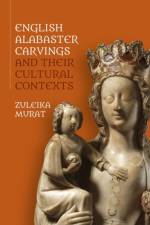
New interpretations of an art form ubiquitious in the Middle Ages.English alabasters played a seminal role in the artistic development of late medieval and early modern Europe. Carvings made of this lustrous white stone were sold throughout England and abroad, and as a result many survived the iconoclasm that destroyed so much else from this period. They are a unique and valuable witness to the material culture of the Middle Ages. This volume incorporates a variety of new approaches to these artefacts, employing methodologies drawn from a number of different disciplines. Its chapters explore a range of key points connected to alabasters: their origins, their general history and their social, cultural, intellectual and devotional contexts. ZULEIKA MURAT is a Research Fellow and Lecturer in the History of Medieval Art at the University of Padua. Contributors: Jennifer Alexander, Jon Bayliss, Claire Blakey, Stephanie De Roemer, Rachel King, AndrewKirkman, Aleksandra Lipinska, Zuleika Murat, Luca Palozzi, Sophie Phillips, Nigel Ramsay, Christina Welch, Philip Weller, Kim Woods, Michaela Zoschg
New study and edition of the remarkable letter collection of Margaret of Anjou, bringing all her correspondence together in one volume for the first time.
Abonner på vårt nyhetsbrev og få rabatter og inspirasjon til din neste leseopplevelse.
Ved å abonnere godtar du vår personvernerklæring.