





Gjør som tusenvis av andre bokelskere
Abonner på vårt nyhetsbrev og få rabatter og inspirasjon til din neste leseopplevelse.
Ved å abonnere godtar du vår personvernerklæring.Du kan når som helst melde deg av våre nyhetsbrev.

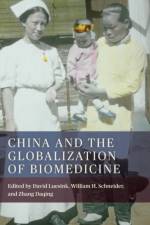
Argues that developments in biomedicine in China should be at the center of our understanding of biomedicine, not at the peripheryToday China is a major player in advancing the frontiers of biomedicine, yet previous accounts have examined only whether medical ideas and institutions created in the West were successfully transferred to China. This is the firstbook to demonstrate the role China played in creating a globalized biomedicine between 1850 and 1950. This was China's "e;Century of Humiliation"e; when imperialist powers dominated China's foreign policy and economy, forcing it to join global trends that included limited public health measures in the nineteenth century and government-sponsored healthcare in the twentieth. These external pressures, combined with a vast population immiserated by imperialism and the decline of the Chinese traditional economy, created extraordinary problems for biomedicine that were both unique to China and potentially applicable to other developing nations. In this book, scholars based in China, the United States, and the United Kingdom make the case that developments in biomedicine in China such as the discovery of new diseases, the opening of the medical profession to women, the mass production of vaccines, and the delivery ofhealthcare to poor rural areas should be at the center of our understanding of biomedicine, not at the periphery. CONTRIBUTORS: Daniel Asen, Nicole Barnes, Mary Augusta Brazelton, Gao Xi , He Xiaolian, Li Shenglan, David Luesink, William H. Schneider, Shi Yan, Yu Xinzhong, DAVID LUESINK is Assistant Professor of History at Sacred Heart University. WILLIAM H. SCHNEIDER is Professor Emeritus of History and Medical Humanities at Indiana University Purdue University Indianapolis. ZHANG DAQING is Professor and Director, Institute of Medical Humanities at Peking University in Beijing.
A rethinking of the factors which led to the American entry into the war.
Survey of the neglected naval campaign of the Crimean War highlights its impact on international relations with China and Japan as well as Russia.
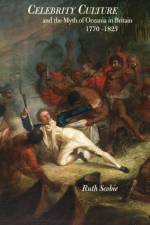
An intriguing case study on how popular images of Oceania, mediated through a developing culture of celebrity, contributed to the formation of British identity both domestically and as a nascent imperial power in the eighteenth century.At the end of the eighteenth century metropolitan Britain was entranced by stories emanating from the furthest edge of its nascent empire. In the experience of eighteenth-century Britain, Oceania was both a real place, evidencedby the journals of adventurers like Joseph Banks, the voyage books of Captain James Cook and the growing collection of artefacts and curiosities in the British Museum, and a realm of fantasy reflected in theatre, fashion and the new phenomenon of mass print. In this innovative study Ruth Scobie shows how these multiple images of Oceania were filtered to a wider British public through the gradual emergence of a new idea of fame - commodified, commercial, scandalous - which bore in some respects a striking resemblance to modern celebrity culture and which made figures such as Banks and Cook, Fletcher Christian and his fellow mutineers on Pitcairn Island into public icons. Bringing together literary texts, works of popular culture, visual art and theatrical performance, Scobie argues that the idea of Oceania functioned variously as reflection, ideal and parody both in very local debates over the problemsof contemporary fame and in wider considerations of national identity, race and empire. RUTH SCOBIE is a Stipendiary Lecturer at Mansfield College, University of Oxford.
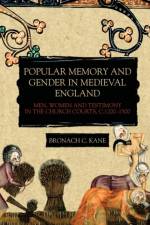
An exploration of the influence of gender on the workings of memory in the Middle Ages, focussing on the non-elite.
Widor's pedagogical writings, translated for the first time, offer essential guidance for interpreting his organ compositions as well as those of his followers in the French Romantic organ school.
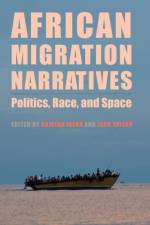
Examines the representations of migration in African literature, film, and other visual media, with an eye to the stylistic features of these works as well as their contributions to debates on migration
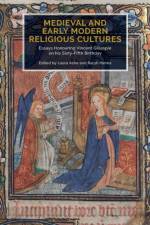
New approaches to religious texts from the Middle Ages, highlighting their diversity and sophistication.From the great age of pastoral expansion in the thirteenth century, to the revolutionary paroxysms of the English Reformation, England's religious writings, cultures, and practices defy easy analysis. The diverse currents of practice and belief which interact and conflict across the period - orthodox and heterodox, popular and learned, mystical and pragmatic, conservative and reforming - are defined on the one hand by differences as nuanced as the apophatic and cataphatic approaches to understanding the divine, and on the other by developments as profound and concrete as the persecution of declared heretics, the banning and destruction of books, and the emergence of printing.The essays presented in this volume respond to and build upon the hugely influential work of Vincent Gillespie in these fields, offering a variety of approaches, spiritual and literary, bibliographical and critical, across the Middle Ages to the Protestant Reformation and beyond. Topics addressed include the Wycliffite Bible; the Assumption of the Virgin as represented in medieval English culture; Nicholas Love and Reginald Pecock; and the survival of latemedieval piety in early modern England. LAURA ASHE is Professor of English Literature and Tutorial Fellow, Worcester College, Oxford; RALPH HANNA is Professor of Palaeography (emeritus), Keble College, Oxford.Contributors: Tamara Atkin, James Carley, Alexandra da Costa, Anne Hudson, Ian Johnson, Daniel Orton, Susan Powell, Denis Renevey, Michael G. Sargent, Annie Sutherland, Nicholas Watson, Barry Windeatt.
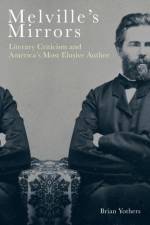
An accessible and highly readable guide to the story of Melville criticism as it has developed over the past century and a half.
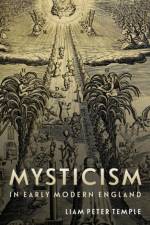
Mysticism in Early Modern England traces how mysticism featured in polemical and religious discourse in seventeenth-century England and explores how it came to be viewed as a source of sectarianism, radicalism, and, most significantly, religious enthusiasm.
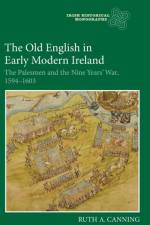
Examines the divided loyalties of the descendants of Ireland's Anglo-Norman conquerors during the wars against the Irish confederate rebels.
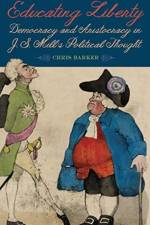
A comprehensive study of Mill's theory of liberty, uncovering Mill's solution to the problem of democracy, the tyranny of the majorityAlexis de Tocqueville famously identified the problem of democracy as the "e;tyranny of the majority,"e; where the rule of the majority oppresses or marginalizes minorities and individuals. John Stuart Mill, perhaps more than any other liberal thinker, attempted to find a solution to this problem. In this study of Mill's political theory, Chris Barker shows how Mill's civic education transforms individuals into citizens who are free to form opinions, analyze arguments, and wield a power capable of moderating the irresponsible power of the ruling majority. Barker examines Mill's thought as it is applied to five prominent components of democratic life-marriage, economic participation, scientific expertise, representative politics, and religion-with particular emphasis on gender and economic reform. Barker concludes that Mill's interpretation of liberty is not well described as either negative or positive. Instead, liberty consists in the mental independence or thinking power of the educated individuals composing and challenging majorities. CHRIS BARKER is Assistant Professor of Political Science at the American University in Cairo.
The accounts of one of the great estates of medieval England, from 1209. A remarkable survival, they supply detailed evidence on a range of issues.
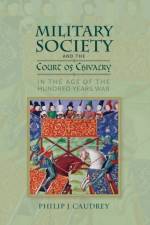
An investigation into three of the best-known cases tried under the Court of Chivalry reveals much about gentry military society.
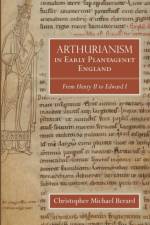
First full-scale account of the use of the Arthurian legend in the long twelfth century.
Eleven articles on aspects of the Renaissance, chief among them women writers, art, and drama.
Newest annual volume of selected essays on aspects of the Renaissance.
An examination of the growth of civic power in the turbulent arena of late medieval London.In the late fourteenth century, London's government, through mismanagement and negligence, experienced a series of crises. Relationships with the crown were tested; competing factions sought to wrest power from the hands of the once all-powerful victualling guilds; revolt in the streets in 1381 targeted the institutions of royal as well as civic power; and, between 1392 and 1397, King Richard removed the liberties of the city and appointed his own wardensto govern in place of the mayor of London. This book examines the strategies employed by the generation of London aldermen who governed after 1397 to regain control of their city. By examining a range of interdisciplinary sources, including manuscript and printed books, administrative records, accounts of civic ritual and epitaphs, the author shows how, by carefully constructing the idea of a civic community united by shared political concerns and spiritual ambitions, a small number of men virtually monopolised power in the capital. More generally, this is an exploration of the mentalities of those who sought civic power in the late Middle Ages and provokes the question: whygovern, and for whom? DAVID HARRY is Lecturer in History at the University of Chester.
The first book to offer a cutting-edge discussion of contemporary travel writing in German, Anxious Journeys looks both at classical tropes of travel writing and its connection to current debates.The rich contemporary literature of travel has been the focus of numerous recent publications in English that seek to understand how travel narratives, with their distinctive representations of identities, places, and cultures, respond to today's globalized, high-speed world characterized by the dual mass movements of tourism and migration. Yet a corresponding cutting-edge discussion of twenty-first-century travel writing in German has until now been missing. The fourteen essays in Anxious Journeys redress this situation. They analyze texts by leading authors such as Felicitas Hoppe, Christoph Ransmayr, Julie Zeh, Navid Kermani, Judith Schalansky, Ilija Trojanow, and others, as well as topics such as Turkish-German travelogues and the relationship of comics to travel writing. The volume examines how writers engage with classic tropes of travel writing and how they react to the current sense of crisis and belatedness. It also links travel to ongoing debates about the role of the nation, mass migration, and the European project, as well as to Germany's place in the larger world order. Contributors: Karin Baumgartner, Heather Merle Benbow, Anke S. Biendarra, John Blair and Muriel Cormican, Nicole Coleman, Carola Daffner, Christina Gerhardt, Nicole Grewling, Gundela Hachmann, Andrew Wright Hurley, Christina Kraenzle, Magda Tarnawaska Senel, Monika Shafi, Sunka Simon. Karin Baumgartner is Professor of German at the University of Utah. Monika Shafi is Elias Ahuja Professor of German at the University of Delaware.
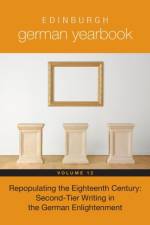
In essays that examine particular non-canonical works and writers in their wider cultural context, this volume "e;repopulates"e; the German Enlightenment.German literature and thought flourished in the eighteenth century, when a culture considered a European backwater came to assert worldwide significance. This was an age in which repeated attempts to reform German literary and philosophical culture were made - often only to be overtaken within a few decades. It ushered in generations of exceptionally gifted poets and thinkers including Klopstock, Lessing, Goethe, Kant, and Schiller, whose names still dominate our understanding of the German Enlightenment. Yet the period also brought with it new means of accessing and disseminating culture and a rapid increase in cultural production. The leading lights of eighteenth-century German culture operated against the backdrop of a yet more diverse and vivid cast of literary and philosophical figures since consigned to the second tier of German culture. Through essays that examine particular non-canonical works and writers in their wider cultural context, this collection repopulates the German Enlightenment with these largely forgotten movements, writers, and literary circles. It offers new insights into the development of genres such as thenovel, the fable, and the historical drama, and assesses the dynamics that led to individual authors, circles, and schools of thought being left behind in their time and passed over or inadequately understood to this day.Contributors: Johannes Birgfeld, Stephanie Blum, Julia Bohnengel, Kristin Eichhorn, Sarah Vandegrift Eldridge, Jonathan Blake Fine, J. C. Lees, Leonard von Morze, Ellen Pilsworth, Joanna Raisbeck, Ritchie Robertson, Michael Wood. Michael Wood is British Academy Postdoctoral Fellow in German at the University of Edinburgh. Johannes Birgfeld teaches Modern German Literature at the University of the Saarland.
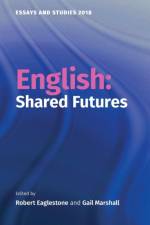
Essays exploring the opportunities for and challenges to the discipline of English language and literature in education.The study of English literature, language, culture and creative writing is an important and dynamic enterprise. English: Shared Futures celebrates the discipline's intellectual strength, diversity and creativity, explores its futures in the nations of the UK and across the world, and brings together the huge scholarly, cultural and social energy of the biggest subject in the Arts and Humanities in Higher and in Secondary education: the most staff, the most students. It represents the synergies produced when practitioners and students from across the discipline come together, and aims to enable new understanding of the challenges that the discipline faces within schools and universities, the vital cultural and political role that English plays, and a renewed appreciation of the intellectual vitality and commitment of its scholars and students. Overall, it demonstrates the rich ecosystem of a subject crucial to social, cultural, and economic well-being, and offers ways in which its vitality can be ensured in the face of new challenges within and beyond the academy. ROBERT EAGLESTONE is Professor of Contemporary Literature and Thought, Royal Holloway, University of London; GAIL MARSHALL is Head of the School of Literature and Languages at the University of Reading. Contributors: James Annesley, Katherine Baxter, Barbara Bleiman, Elleke Boehmer, Kirsti Bohata, Benjamin A. Brabon, Linda Bree, Susan Bruce, Billy Clark, Stefan Collini, Jane Davis, Sarah Dillon, Clare Egan, Elizabeth English, Emily Ennis, Martin Paul Eve, Corinne Fowler, Barbara Gallego Larrarte, Marcello Giovanelli, Diya Gupta, Rob Hawkes, Ann Hewings, Keith Jarrett, Clara Jones, Seraphima Kennedy, Ben Knights, Simon Kovesi, Clare A. Lees, Alison Lumsden, Andrea Macrae, Lewi Mondal, Paul Munden, Daniel O'Gorman, Lynda Prescott, Ilse A. Ras, Catherine Redford, Rick Rylance, Helen Saunders, Jenny Stevens, Marion Thain, Stephen Watkins, Harry Whitehead
A cultural history of the representations of Sir Francis Drake, from contemporary accounts to the present day.
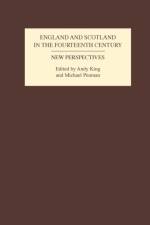
Were the English and the Scots always at loggerheads in the fourteenth century? The essays here offer a more nuanced picture.
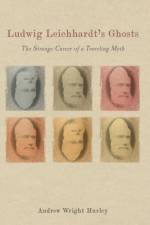
A fascinating cultural studies account of the "e;afterlife"e; of Leichhardt, revealing both German entanglement in British colonialism in Australia, and in a broader sense, what happens when we maintain an open stance to the ghosts ofthe past.After the renowned Prussian scientist and explorer Ludwig Leichhardt left the Australian frontier in 1848 on an expedition to cross the continent, he disappeared without a trace. Andrew Hurley's book complicates that view by undertaking an afterlife biography of "e;the Humboldt of Australia."e; Although Leichhardt's remains were never located, he has been sought and textually "e;found"e; many times over, particularly in Australia and Germany. He remains a significant presence, a highly productive ghost who continues to "e;haunt"e; culture. Leichhardt has been employed for all sorts of political purposes. In imperial Germany, he was a symbol of pure science, but also a bolster for colonialism. In the 20th century, he became a Nazi icon, a proto-socialist, the model for the protagonist of Nobel laureate Patrick White's famous novel Voss, as well as a harbinger of multiculturalism. He has also been put to useby Australian Indigenous cultures. Engaging Leichhardt's ghosts and those who have sought him yields a fascinating case study of German entanglement in British colonialism in Australia. It also shows how figures from the colonialpast feature in German and Australian social memory and serve present-day purposes. In an abstract sense, this book uses Leichhardt to explore what happens when we maintain an open stance to the ghosts of the past. Andrew Wright Hurley is Associate Professor in German Studies at the University of Technology Sydney. His book Into the Groove: Popular Music and Contemporary German Fiction was published by Camden House in 2015.
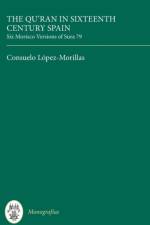
Contents Acknowledgements Introduction Language of the Texts Tapsir The Texts Glossary Photographs of the Texts Bibliography and Abbreviations
The current volume contains nine articles reflecting a wide range of approaches to Renaissance literary performance and theory.
New research on political, social, legal and religious history of England and neighbours, 7c-13c
Edition of twelfth-century Ordinal from Fecamp, giving a detailed view of monastic liturgy.
A compelling account of the establishment of Tanzania's stable and ambitious government in the face of external threats and internal turmoil.
Abonner på vårt nyhetsbrev og få rabatter og inspirasjon til din neste leseopplevelse.
Ved å abonnere godtar du vår personvernerklæring.