







Gjør som tusenvis av andre bokelskere
Abonner på vårt nyhetsbrev og få rabatter og inspirasjon til din neste leseopplevelse.
Ved å abonnere godtar du vår personvernerklæring.Du kan når som helst melde deg av våre nyhetsbrev.

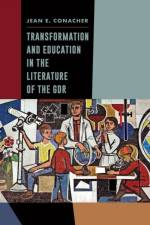
This book explores how writers adhered to, played with, and subverted the formulaic precepts of educational transformation in the German Democratic Republic.Perhaps never before has a state emphasized education to citizenship more than in the new nation founded in 1949 as the German Democratic Republic. For forty years, educational and cultural policy played a pivotal role in effortsto build and sustain a socialist state on German soil. Party and state held teachers and writers responsible for demonstrating the superiority of socialism, infusing pupils and readers with a commitment to the emerging state, andproviding persuasive role models of der neue Mensch each was challenged to become. Utilizing an innovative triangular framework, this book demonstrates how mentor-protege(e) rubrics, traditionally associated with the socialist Bildungsroman, came to characterize text-external and text-internal relations within diverse narrative forms. Thus, leading writers such as Hermann Kant, Christa Wolf, Brigitte Reimann, and Christoph Hein played with the genre's patterns of transformation as they engaged with the intellectual, societal, and aesthetic dilemmas of GDR life. This book shows that understanding representations of educational transformation in GDR literature, a topic largely overlooked by critics, is central to an aesthetic appreciation of that literature more broadly. Jean E. Conacher is Senior Lecturer in German within the School of Modern Languages and Applied Linguistics atthe University of Limerick, Ireland.
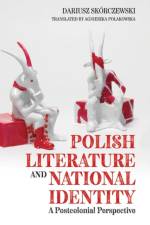
A postcolonial study of Polish literature from Romanticism to the twenty-first century
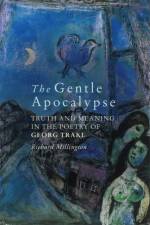
Through close readings of poems covering the span of Georg Trakl's lyric output, this study traces the evolution of his strangely mild and beautiful vision of the end of days.Like much German-language poetry of the years preceding the First World War, the poems of Georg Trakl (1887-1914) are imbued with a sense of historical crisis, but what sets his work apart is the mildness and restraint of his images of universal disintegration. Trakl typically couched his vision of the end of days in images of migrating birds, abandoned houses, and closing eyelids, making his poetry at once apocalyptic, rustic, and intimate. The argument made in this study is that this vision amounts to a unitary worldview with tightly interwoven affective, ethical, social, historical, and cosmological dimensions. Often termed hermetic and obscure, Trakl's poems become more accessible when viewed in relation to the evolution of his methods and concerns across different phases, and the idiosyncrasies of his strangely beautiful later works make sense as elements of a sophisticated system of expression committed to "e;truth"e; as a transcendental order. Through close readings of poems covering the span of his lyric output, this study traces the evolution of Trakl's distinctive style and themes while attending closely to biographical and cultural contexts. Richard Millington is Senior Lecturer in German at Victoria University of Wellington (Aotearoa New Zealand). He is the author of Snow from Broken Eyes: Cocaine in the Lives and Works of Three Expressionist Poets (2012).
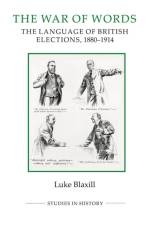
A radical new approach to the political speeches delivered during this period.
First modern analysis of the custom of the "royal touch" in the Tudor and Stuart reigns.
London Zoo examined in its nineteenth-century context, looking at its effect on cultural and social life
The physical nature of the medieval cartulary examined alongside its textual contents.Medieval cartularies are one of the most significant sources for a historian of the Middle Ages. Once viewed as simply repositories of charters, cartularies are now regarded as carefully curated collections of texts whose contentsand arrangement reflect the immediate concerns and archival environment of the communities that created them. One feature of the cartulary in particular that has not been studied so fully is its materiality: the fact that it is amanuscript. Consequently, it has not been recognised that many cartularies are multi-scribe manuscripts which "e;grew"e; for many decades after their initial creation, both physically and textually. This book offers a new methodology which engages with multi-scribe contributions in two cartulary manuscripts: the oldest cartularies of Glasgow Cathedral and Lindores Abbey. It integrates the physical and textual features of the manuscripts in order to analyse how and why they grew in stages across time. Applying this methodology reveals two communities that took an active approach to reading and shaping their cartularies, treating these manuscripts as a shared space. This raises fundamental questions about the definition of cartularies and how they functioned, their relationship to archives of single-sheet documents, and as sources for institutional identity. It therefore takes a fresh look at the "e;genre"e; ofmedieval cartularies through the eyes of the manuscripts themselves, and what this can reveal about their medieval scribes and readers. JOANNA TUCKER gained her PhD from the University of Glasgow.
A fresh look at the idea of bastard feudalism, deploying little-used records to provide new insights.
The London firm of Gray (later Gray & Davison) was one of Britain's leading organ-makers between the 1790s and the 1880s.
A study of the archival turn in contemporary German memory culture, drawing on recent memorials, documentaries, and prose narratives that engage with the material legacy of National Socialism and the Holocaust.With the passing of those who witnessed National Socialism and the Holocaust, the archive matters as never before. However, the material that remains for the work of remembering and commemorating this period of history is determined by both the bureaucratic excesses of the Nazi regime and the attempt to eradicate its victims without trace. This book argues that memory culture in the Berlin Republic is marked by an archival turn that reflects this shift from embodied to externalized, material memory and responds to the particular status of the archive "e;after Auschwitz."e; What remains in this late phase of memory culture is the post-Holocaust archive, which at once ensures and hauntsthe future of Holocaust memory. Drawing on the thinking of Freud, Derrida, and Georges Didi-Huberman, this book traces the political, ethical, and aesthetic implications of the archival turn in contemporary German memory culture across different media and genres. In its discussion of recent memorials, documentary film and theater, as well as prose narratives, all of which engage with the material legacy of the Nazi past, it argues that the performanceof "e;archive work"e; is not only crucial to contemporary memory work but also fundamentally challenges it. Dora Osborne is Senior Lecturer in German at the University of St Andrews.
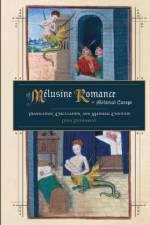
The legend of Melusine examined in a pan-European context.
First book to deal with de Vere's life and extraordinary career, during the Wars of the Roses and beyond.
After the murder of Edmund Ironside in 1016, Canute the Dane seized the crown of Wessex, banishing Edmund's small sons, Edmund and Edward, to Sweden with a 'letter of death'. Drawing on sources from as far afield as Iceland and Kievan Russia, this work offers an account of the extraordinary years of the princes' exile.
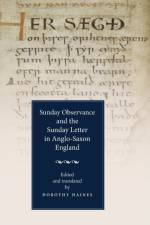
Edition and translation of Anglo-Saxon text, shedding light on Sunday observance and other issues.
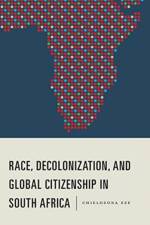
Examines the importance of South Africa's peaceful transition to democracy, especially in light of Nelson Mandela's belief that cosmopolitan dreams are not only desirable but a binding duty.Nelson Mandela and Desmond Tutu left an enduring legacy of forgiveness, openness, and solidarity in South Africa. This book looks at how the country's historic transition to democracy has not only changed the negative narrative about South Africa but also provided a model for a new form of ethical participation in the world. In addition to Mandela and Tutu, this book considers South African cultural theorists, poets, and novelists such as J. M. Coetzee, Nadine Gordimer, Zakes Mda, Njabulo Ndebele, and Antjie Krog, all of whom have engaged with the struggle to overcome the legacies of apartheid and create a more humane society. Most of these figures share common cultural and moral traits with Mandela and Tutu, the most outstanding of which is their belief in the notion of global citizenship. In engaging the latter concept, this work seeks to answer the following questions: How can we understand being human in a world that is increasingly marked by hatred of others? Can Mandela's vision of his society provide us with a theory of how to live in our globalized world? This wide-ranging volume will appeal to scholars and students of history, African studies, literature, ethics, and international affairs. CHIELOZONA EZE is Professor of African literature and cultural studies at Northeastern Illinois University, Chicago, Extraordinary Professor of Englishat Stellenbosch University, and a fellow at Stellenbosch Institute for Advanced Studies, South Africa.
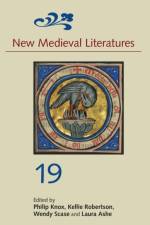
An invigorating annual for those who are interested in medieval textual cultures and open to ways in which diverse post-modern methodologies may be applied to them. Alcuin Blamires, Review of English StudiesNew Medieval Literatures is an annual of work on medieval textual cultures, aiming to engage with intellectual and cultural pluralism in the Middle Ages and now. Its scope is inclusive of work across the theoretical, archival, philological, and historicist methodologies associated with medieval literary studies, and embraces both the British Isles and Europe. Essays in this volume trace institutional histories, examining the textual and memorial practices of religious institutions across the British Isles; explore language games that play with meaning in Anglo-French poetry; examine the interplay of form and matter in Italian song; position Old Norse sagas in an ecocritical and a postcolonial framework; consider the impact of papal politics on Middle English poetry; and read allegorical poetry as a privileged site for asking fundamental questions about the nature of the mind. Texts discussed include lives of St Aebbe of Coldingham, with a focus on the twelfth-century Latin Vita and its afterlives; a range of Latin and vernacular works associated with institutional houses, including the Vie de Edmund le rei by Denis Piramus and the Ecclesiastical History of Orderic Vitalis; both the didactic and lyrical writings of Walter de Bibbesworth; the trecento Italian caccia, especially examples by Vincenzo da Rimini and Lorenzo Masini;Barar saga, Egils saga, and other Old Norse works that reveal the traces of encounters with a racial other; John Gower's Confessio Amantis, in striking juxtaposition with late-medieval accounts of ecclesiastical crisis; and Alain Chartier's Livre de l'Esperance. PHILIP KNOX Is University Lecturer in English and Fellow of Trinity College, Cambridge; KELLIE ROBERTSON is Professor of English and Comparative Literature at theUniversity of Maryland; WENDY SCASE is Geoffrey Shepherd Professor of Medieval English Literature at the University of Birmingham; LAURA ASHE is Professor of English at the University of Oxford and Fellow and Tutor at Worcester College, Oxford. Contributors: Daisy Delogu, Thomas Hinton, Thomas O'Donnell, Daniel Remein, Jamie L. Reuland, Zachary Stone, Christiania Whitehead.
Critica metaforica de los reinados de Felipe III y de Felipe IV en las obras dramaticas de Lope de Vega, Tirso de Molina y Calderon de la Barca.
A synchronic study that highlights the importance of printed packaging, rather than notes on the page, to the complex relationship between composers, publishers, and consumers of music.
Based on private diaries, correspondence, and unpublished writings, George Rochberg, American Composer, reveals the impact of personal trauma on the creative and intellectual work of a leading postmodern composer.
Assesses the relevance of the works of Fontane, perhaps the foremost German novelist between Goethe and Mann, for the twenty-first century.Theodor Fontane remains a canonical figure in German literature, the most important representative of poetic realism, and likely the best German-language novelist between Goethe and Mann, yet scholarly attention to his works oftenlags behind his stature, at least in the English-speaking academy. This volume, coinciding with Fontane's 200th birthday in 2019, assesses the relevance of his works for us today and also draws attention to the most current English-language research. Much has changed in the last two decades in critical theory, and the volume highlights how new methodological approaches and new archival research can update our understanding of Fontane's works. Although his novels are famously rooted in the details of quotidian life in nineteenth-century Germany, they also reflect larger historical transformations that resonate with our world today (e.g., financial crisis, class conflict, changing gender roles, and migration) and so speak to contemporary critical interests. The volume's contributors draw on literary and cultural studies approaches including gender and sexuality studies, emotion studies, transnationalismand globalization, media and visual studies, rhetorical criticism, paratextual criticism, and digital humanities. Their contributions survey a wide range of Fontane's literary production in order to speak to both German and non-German audiences in the twenty-first century. Contributors: James N. Bade, Russell A. Berman, Katharina Adeline Engler-Coldren, Todd Kontje, John B. Lyon, Ervin Malakaj, Nicolas von Passavant, Lynne Tatlock, Christian Thomas, Brian Tucker, Michael J. White, Holly A. Yanacek. John B. Lyon is Professor of German at the University of Pittsburgh. Brian Tucker is Associate Professor of German at Wabash College.
Provides new insights into German-language cinema around 1968 and its relationship to the period's epoch-making cultural and political happenings.The epoch-making revolutionary period universally known in Germany as '68 can be argued to have predated that year and to have extended well into the 1970s. It continues to affect German and Austrian society and culture to this day. Yet while scholars have written extensively about 1968 and the cinema of other countries, relatively little sustained scholarly attention has thus far been paid to 1968 and West German, East German, and Austrian cinemas. Now, five decades later, Celluloid Revolt sets out to redress that situation, generating new insights into what constituted German-language cinema around 1968 and beyond. Contributors engage a range of cinemas, spanning experimental and avant-garde cinema, installations and exhibits; short films, animated films, and crime films; collectively produced cinemas, feminist films, and Arbeiterfilme (workers' films); as well as their relationship to cinemas of other countries, such as French cinema verite and US direct cinema. Contributors: Marco Abel, Tilman Baumgartel, Madeleine Bernstorff, Timothy Scott Brown, Michael Dobstadt, Sean Eedy, Thomas Elsaesser, IanFleishman, Christina Gerhardt, Lisa Haegele, Randall Halle, Priscilla Layne, Ervin Malakaj, Kalani Michell, Evelyn Preuss, Patricia Anne Simpson, Fabian Tietke, Andrew Stefan Weiner. Christina Gerhardt is Associate Professor of German and Film Studies at the University of Hawai'i at Manoa. Marco Abel is Professor of English and Film Studies at the University of Nebraska-Lincoln.
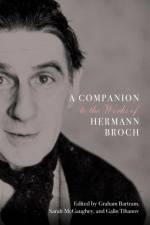
Covers the major modernist literary works of Broch and constitutes the first comprehensive introduction in English to his political, cultural, aesthetic, and philosophical writings.Hermann Broch (1886-1951) is best known for his two major modernist works, The Sleepwalkers (3 vols., 1930-1932) and The Death of Virgil (1945), which frame a lifetime of ethical, cultural, political, and social thought. A textile manufacturer by trade, Broch entered the literary scene late in life with an experimental view of the novel that strove towards totality and vividly depicted Europe's cultural disintegration. As fascism took over and Broch, a Viennese Jew, was forced into exile, his view of literature as transformative was challenged, but his commitment to presenting an ethical view of the crises of his time was unwavering. An important mentor and interlocutor for contemporaries such as Arendt and Canetti as well as a continued inspiration for contemporary authors, Broch wrote to better understand and shape the political and cultural conditions for a postfascist world. This volume covers the major literary works and constitutes the first comprehensive introduction in English to Broch's political, cultural, aesthetic, and philosophical writings. Contributors: Graham Bartram, Brechtje Beuker, GiselaBrude-Firnau, Gwyneth Cliver, Jennifer Jenkins, Kathleen L. Komar, Paul Michael Lutzeler, Gunther Martens, Sarah McGaughey, Judith Ryan, Judith Sidler, Galin Tihanov, Sebastian Wogenstein. Graham Bartram retired as Senior Lecturer in German Studies at the University of Lancaster, UK. Sarah McGaughey is Associate Professor of German at Dickinson College, USA. Galin Tihanov is the George Steiner Professor of Comparative Literature at Queen Mary University of London, UK.
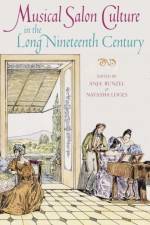
This book reconsiders the significance of the salon as a social and cultural phenomenon and as a source of artistic innovation and exchange in the long nineteenth century.This collection explores the idea of music in the salon during the long nineteenth century, both as a socio-cultural phenomenon, and as a source of artistic innovation and exchange. Drawing on a wide range of scholarly approaches,this book uses the idea of the salon as a springboard to examine issues such as gender, religion, biography and performance; to explore the ways in which the salon was represented in different media; and to showcase the heterogeneity of the salon through a selection of case studies. It offers fresh considerations of familiar salons in large cultural centres, as well as insights into lesser-known salons in both Europe and the United States. Bringing together an international group of scholars, the collection underscores the enduring impact of the European musical salon. ANJA BUNZEL holds a research position at the Czech Academy of Sciences. She gained her PhD in Musicology from Maynooth University and has published on Johanna Kinkel and nineteenth-century salon culture in both English and German. NATASHA LOGES is Head of Postgraduate Programmes at the Royal College of Music, London. Her publications include Brahms in the Home and the Concert Hall (Cambridge, 2014) and Brahms and his Poets (Boydell Press, 2017). She is a pianist, broadcaster and critic. Contributors: Maren Bagge, PeterBozo, Anja Bunzel, Katie A. Callam, Beatrix Darmstadter, Mary Anne Garnett, Harald Krebs, Clemens Kreutzfeldt, Veronika Kusz, Natasha Loges, Jennifer Ronyak, Kirsten Santos Rutschman, R. Larry Todd, Katharina Uhde, Michael Uhde, Harry White, Petra Wilhelmy-Dollinger, Susan Youens
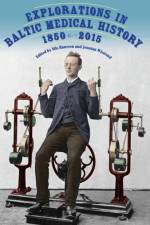
Examines medical history in northern Europe from 1850 to 2015 and sheds new light on the circulation of medical knowledge in that regionThe Baltic Sea region in northern Europe, with its history of multiple cultural and social transformations, as well as mixture of national and regional scientific styles, has lately attracted much attention from scholars of various disciplines. This book explores the history of medicine in the Baltic Sea region and provides different answers to one central question: How has the circulation of knowledge in the Baltic Sea region influenced medicine as a discipline, and illness as an experience, during the nineteenth and twentieth centuries? The anthology consists of ten chapters that shed new light on how medical ideas and devices were developed in different contexts. Illuminating currents of traditions, contact zones, and areas of conflict, essays in this collection discuss technological, social, and economic aspects relevant for the exchange of medical knowledge across the Baltic Sea. The contributing authors are historians, physicians, geographers, ethnologists, and scholars of literature. CONTRIBUTORS: Katharina Beier, Motzi Eklof, Frank Gruner, Martin Gunnarson, Nils Hansson, Axel C. Huntelmann, Ken Kalling, Michaela Malmberg, Joanna Nieznanowska, Anders Ottosson, Maike Rotzoll, Erki Tammiksaar, Jonatan Wistrand NILS HANSSON is Associate Professor in the Department of the History, Theory, and Ethics of Medicine at the University of Dusseldorf in Germany. JONATAN WISTRAND teaches in the Department of Medical History, Lund University, Sweden.
A detailed examination of the March system - the special administrative arrangements which applied on both sides of the border - how it was applied and how it evolved as national political circumstances changed.
A comprehensive survey of one of the most important texts of the Middle Ages.
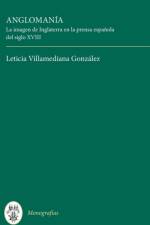
Este libro ofrece la primera revision en forma de volumen monografico de las transferencias culturales de Gran Bretana a Espana en el siglo XVIII. A close reading of the cultural exchanges between England and Spain in the18th century as seen in the periodical press.Este libro ofrece la primera revision en forma de volumen monografico de las transferencias culturales de Gran Bretana a Espana en el siglo XVIII, centrandose en particular en el genero mas novedoso del setecientos, la podica. Para ello, explora el fenomeno hasta ahora difuso de la anglomania - moda de las ideas, influencias y estilos ingleses que domino la Europa del setecientos - y su fenomeno opuesto, la anglofobia, en tres tipos de prensa bien diferenciados, todo ello en conjuncion con la propia coyuntura nacional y el programa de reformas borbonico. Ademas, esta obra enfatiza la labor de estos periodistas y periodicos, asi como sus conexiones con el poder, a la vez que los situa como agentes fundamentales de esa red europea de intercambios materiales e intelectuales que sustento la Republica de las Letras. Con todo ello, este volumen contribuye a la serie de debates dedicados a la reevaluacion de la Ilustracion espanola que buscan situarla en el mapa de las Luces Europeas de entonces y de ahora. LETICIA VILLAMEDIANA GONZALEZ es Profesora Titular en el Departamento de Modern Languages and Cultures, University of Warwick. This book constitutes the first monographic study of the cultural transfers from Great Britain to Spain through 18th-Century periodical press, one of the most innovative genres of the period. It exploresthe notion of anglomania - the craze for all things English which spread throughout all Europe - and its reactive phenomenon, anglophobia, offering a contextualised analysis of the transmission, reception and adaptation of BritishEnlightened ideas and reforms in three different types of Spanish periodicals. In so doing, this volume brings to the fore the work of some understudied writers and journalists and situates these important periodicals and their connections to power as a key part of a wider European context of material and intellectual exchanges that sustained the Republic of Letters. This in turn, contributes to recent scholarship arguing for a central place of Spain in the intellectual map of the Enlightenment. LETICIA VILLAMEDIANA GONZALEZ is a Senior Teaching Fellow in Hispanic Studies at the University of Warwick.
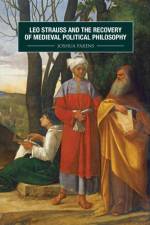
A thorough treatment of Leo Strauss's controversial interpretation of medieval political thought
Abonner på vårt nyhetsbrev og få rabatter og inspirasjon til din neste leseopplevelse.
Ved å abonnere godtar du vår personvernerklæring.