










Gjør som tusenvis av andre bokelskere
Abonner på vårt nyhetsbrev og få rabatter og inspirasjon til din neste leseopplevelse.
Ved å abonnere godtar du vår personvernerklæring.Du kan når som helst melde deg av våre nyhetsbrev.

A reassessment of the Anglo-Dutch wars of the second half of the seventeenth century, demonstrating that the conflict was primarily about trade.This book re-examines the history of Anglo-Dutch conflict during the seventeenth century, of which the three wars of 1652-4, 1665-7 and 1672-4 were the most obvious manifestation. Low-intensity conflict spanned a longer period. From 1618-19 hostilities in Asia between the Dutch and English East India Companies added new elements of tension beyond earlier disputes over the North Sea fisheries, merchant shipping and the cloth trade. The emerging multilateraltrades of the Atlantic world added new challenges. This book integrates the European, Asian, American and African dimensions of the Anglo-Dutch Wars in an authentically global view. The role of the state receives special attention during a period in which both countries are best understood as 'fiscal-naval states'. The significance of seapower is reflected in the public history of the Anglo-Dutch wars, acknowledged in the concluding chapters. The book includes important new research findings and imaginative new thinking by leading historians of the subject. DAVID ORMROD is an Emeritus Professor of History at the University of Kent. GIJS ROMMELSE is Head of History at the Haarlemmermeer Lyceum in Hoofddorp, the Netherlands, and an Honorary Visiting Fellow at the University of Leicester. CONTRIBUTORS: Richard Blakemore, Pepijn Brandon, Ann Coats, Remmelt Daalder, Roger Downing, Elizabeth Edwards, John B. Hattendorf, Martine Julia van Ittersum, Jaap Jacobs, Alan Lemmers, Erik Odegard, David Ormrod, Gijs Rommelse, Paul Seaward, Nuala Zahedieh
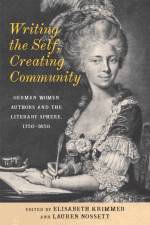
This volume examines the world of German women writers who emerged in the burgeoning literary marketplace of eighteenth-century Europe.Beginning in the 1770s, the German literary market experienced unprecedented growth. The enormous demand for reading materials that stimulated this burgeoning market created new opportunities for women writers. At the same time, they still faced numerous obstacles. The new opportunities and limitations imposed on women writers are the subject of this book. The eleven essays contained within look beyond the negative strategies women writers employed, such as hiding their intellectual accomplishments or legitimizing their works by subordinating them to non-artistic purposes. Instead, they ask how women wrote about their own creative processes both directly, for example, by sketchinga female poetology, and indirectly, through literary representations of female authorship. This volume examines concepts of female authorship as they are presented in women's correspondence, theoretical statements, and literary works. The contributors bring to life the collaborative literary world of female writers through explorations of familial and professional mentorships, salons, writing circles, and their correspondences. They consider how female authors positioned themselves within contemporary intellectual discourses and analyze the tropes that shaped ideas about their authorship throughout the emerging literary marketplace of eighteenth century Europe. Contributors: Karin Baumgartner, Margaretmary Daley, Ruth P. Dawson, Denise M. Della Rossa, Renata Fuchs, Amy Jones, Julie L. J. Koehler, Elisabeth Krimmer, Sara Luly, Monika Nenon, Lauren Nossett, Angela Sanmann. Elisabeth Krimmer is Professor of German at the University of California, Davis, and Lauren Nossett is Visiting Assistant Professor of German at Randolph-Macon College.
Identifies and explores Roman modes of poetry as received by twentieth- and twenty-first-century Anglo-American, German, and French poets.Analogies with Rome have been a powerful motif in American thought - and poetry - since the Founding Fathers. They resurged in the twentieth century, and especially after World War II, when the US saw its mission as analogous to that of Augustan Rome - a theme conspicuous in Robert Frost's poem for the Kennedy inauguration, which prophesied "e;The glory of a next Augustan age."e; This theme showed up in the poetry of other countries too. The Roman mode that Frost proclaimed was evident in not only American, but also French and German treatments of Virgil's Eclogues. Horace figures in poets from Bertolt Brecht and Ezra Pound down to James Wright. The Augustan poets were displaced during the more cynical postwar years by their Republican counterparts: the poet/scientist Lucretius (especially in Germany), the poet/lover Catullus, and the outsider Propertius. And the poets of the empire - Ovid, Seneca,and Juvenal - added certain dissonances to the Roman harmony. In a period when all the arts have looked increasingly to the past for models, the Roman poets have offered modern ones a wide variety of attitudes - from the patriotic fervor of Virgil and Horace to the cultural cynicism of Juvenal. All these tones are evident in the Anglo-American, German, and French examples discussed in this book. Theodore Ziolkowski is Professor Emeritus of German and Comparative Literature, Princeton University.
Analyzes the transformation of German-language pastoral from a portrayal of the idyllic lives of herdsmen into a vehicle for the concerns and aspirations of the middle class.
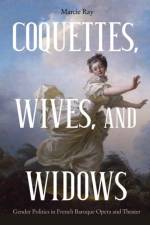
A revelatory study of how composers and dramatists of seventeenth- and eighteenth-century France criticized and trivialized independent women in their portrayals of them in works of theater and opera.Seventeenth- and eighteenth-century French theatrical works created an uneasy dialogue with the often-blistering depictions of marriage in contemporary writings by literary women. For over a century, composers and librettists attempted to silence such anti-traditionalist views through dramas that ridicule, banish, or, even more violently, silence and subjugate female characters who resist marriage. These dramas portray independent-minded women as agents ofchaos who deploy their sexuality to destabilize class demarcations, or to destroy families and at times the monarchy itself. Coquettes, Wives, and Widows: Gender Politics in French Baroque Opera and Theater shows how dramatists wrested narratives away from women and weaponized those narratives in a defense of the status quo. It examines a wide range of works of different types: from Jean-Philippe Rameau's Platee, ou Junon jalouseand Andre Campra's Arethuse, ou la Vengeance de l'Amour to representative works from the Comedie Francaise, the Comedie Italienne, and the fairgound theaters. Each theater offered denigrating portraits of independent womenas dissolute, obstinate, and extremist. The operas and other theatrical works explored in Coquettes, Wives, and Widows reveal who (in the view of many at the time) should exercise authority to make choices aboutwomen's lives. They also give evidence of widespread fears about how society might change if it were to grant women themselves that responsibility. Marcie Ray is Associate Professor of Musicology at Michigan State University.
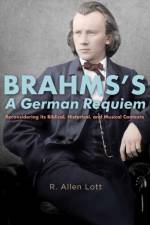
Examines in detail the contexts of Brahms's masterpiece and demonstrates that, contrary to recent consensus, it was performed and received as an inherently Christian work during the composer's life.Despite its entirely biblical text, Brahms's long-beloved A German Requiem is now widely considered a work in which the composer espoused a theologically universal view. R. Allen Lott's comprehensive reconsideration of thework's various contexts challenges that prevailing interpretation and demonstrates that in its early years the Requiem was regarded as a traditional Christian work. Brahms's "e;A German Requiem"e; systematicallydocuments, for the first time, the early performance history and critical reception of this masterful work. A German Requiem was effortlessly incorporated into traditional Christian observances, and reviews of these performances and other appraisals by respected critics and scholars consistently deemed that the work possessed not only a Christian perspective, but a specifically Protestant one. A discussion of the musical traditions used byBrahms demonstrates how the work is imbued with the language of Lutheran church music through references to chorales and through allusions to preceding masterworks by Schutz, Bach, Mendelssohn, and others. Lott also offers an insightful exegesis of the Bible verses that Brahms selected. Altogether, this richly detailed study leads to a thorough reappraisal of Brahms's masterpiece. R. ALLEN LOTT is Professor of Music History in the School of Church Music and Worship at Southwestern Baptist Theological Seminary in Fort Worth.
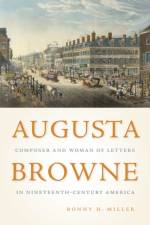
The first comprehensive biography of any American woman musician born before the Civil War brings to life a composer whose story is both old-fashioned and strikingly modern.Augusta Browne's five-decade career in music and letters reveals a gifted composer and author. Hailed as "e;one of the most prolific women composers in the USA before 1870,"e; Augusta Browne Garrett (c. 1820-1882) was also a dedicatedmusic educator and music journalist. The Americanness of her story resounds across the decades: an earnest little girl growing up amidst a troubled family business; a young professor of music who burst onto the New York City musical scene; and an entrepreneur who resolutely sought publication of her music and prose to her final day. In Augusta Browne: Composer and Woman of Letters in Nineteenth-Century America, author Bonny Miller presents Browne'sunfamiliar story, assesses her musical works, and describes her literary publications. Browne's outsider status and self-agency offer a potent narrative that transcends antebellum and Victorian-era norms. She used the public arena of newspapers and magazines as conduits for her work during an era when women were ridiculed for public speaking. And yet in many ways her persona as a tenacious entrepreneur conflicted with her adherence to strict Christian precepts, despite her assertion of woman's equality with man. Making use of recently digitized sheet music as well as archives of newspapers and books of the period, Miller's narrative provides the first-ever comprehensive, nuanced account of this notable life in American music. BONNY H. MILLER is a pianist and independent scholar who has taught at universities in Georgia, Florida, Louisiana, and Virginia.
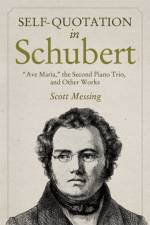
Examines the history of musical self-quotation, and reveals and explores a previously unidentified case of Schubert quoting one of his own songs in a major instrumental work.Enthusiasts and experts have long relished Schubert's quotations of his own music. This study centers on a previously unidentified pairing: "e;Ave Maria,"e; one of his most beloved songs, and the Piano Trio no. 2, a masterpiece that holds a unique position in his career. Messing's Self-Quotation in Schubert interrogates the concept of self-quotation from the standpoints of terminology and authorial intent, and it demonstrates, for the first time, how Schubert's practice of self-quotation relates to prevailing practices in the late eighteenth and early nineteenth centuries. Messing goes on to analyze in detail the musical relationships between the two works and to investigate thecircumstances that led Schubert to compose each of them. "e;Ave Maria"e; is one of the few Schubert songs for which we have documentation of some early private performances, and the trio stood at the heart of Schubert's only public concert devoted to his works. Messing establishes that Schubert sought to convey an associative meaning with this self-quotation, trusting in his contemporaries' familiarity with the original melody and with Walter Scott's poem, a text that carried profound resonances in Catholic Vienna. Scrutinizing this evidence yields the symbolic purpose behind Schubert's allusion to "e;Ave Maria"e; in the piano trio: honoring the recently deceased Beethoven andvalidating Schubert as his legatee. SCOTT MESSING is Charles A. Dana Professor of Music Emeritus at Alma College.
Shows us how such key innovations as roll film and the light, hand-held camera helped the Eastman Kodak Company dominate the world market. This book draws a portrait of the man behind the money.
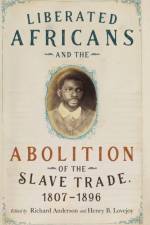
Interrogates the development of the world's first international courts of humanitarian justice and the subsequent "e;liberation"e; of nearly two hundred thousand Africans in the nineteenth century.In 1807, Britain and the United States passed legislation limiting and ultimately prohibiting the transoceanic slave trade. As world powers negotiated anti-slave-trade treaties thereafter, British, Portuguese, Spanish, Brazilian,French, and US authorities seized ships suspected of illegal slave trading, raided slave barracoons, and detained newly landed slaves. The judicial processes in a network of the world's first international courts of humanitarian justice not only resulted in the "e;liberation"e; of nearly two hundred thousand people but also generated an extensive archive of documents. Liberated Africans and the Abolition of the Slave Trade, 1807-1896 makes use of theserecords to illuminate the fates of former slaves, many of whom were released from bondage only to be conscripted into extended periods of indentured servitude. Essays in this collection explore a range of topics relatedto those often referred to as "e;Liberated Africans"e;-a designation that, the authors show, should be met with skepticism. Contributors share an emphasis on the human consequences for Africans of the abolitionist legislation. The collection is deeply comparative, looking at conditions in British colonies such as Sierra Leone, the Gambia, and the Cape Colony as well as slave-plantation economies such as Brazil, Cuba, and Mauritius. A groundbreaking intervention in the study of slavery, abolition, and emancipation, this volume will be welcomed by scholars, students, and all who care about the global legacy of slavery. Richard Anderson is a lecturer at the University of Exeter. Henry B. Lovejoy is an assistant professor at the University of Colorado, Boulder.
First full-length consideration of the role played by young singers, bringing out its full significance and its development over time.Young singers played a central role in a variety of religious institutional settings: urban cathedrals, collegiate churches, monasteries, guilds, and confraternities. The training of singers for performance in religious services was so crucial as to shape the very structures of ecclesiastical institutions, which developed to meet the need for educating their youngest members; while the development of musical repertories and styles directly reflected the ubiquitous participation of children's voices in both chant and polyphony. Once choristers' voices had broken, they often pursued more advanced studies either through an apprenticeship system or at university, frequently with the help of the institutions to which they belonged. This volume provides the first wide-ranging book-length treatment of the subject, and will be of interest to music historians - indeed, all historians - who wish to understand the role of the young in sacred musical culture before 1700. SUSAN BOYNTON is Associate Professor of Historical Musicology at Columbia University; ERIC RICE is Assistant Professor of Music at the University of Connecticutat Storrs. CONTRIBUTORS: SUSAN BOYNTON, SANDRINE DUMONT, JOSEPH DYER, JANE FLYNN, ANDREW KIRKMAN, NOEL O'REGAN, ALEJANDRO PLANCHART, RICHARD RASTALL, COLLEEN REARDON, ERIC RICE, JUAN RUIZ JIMENEZ, ANNE BAGNALL YARDLEY
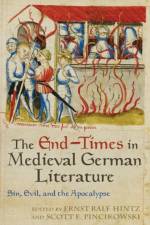
Drawing upon the most current methodologies, the essays in this book pursue the multifarious functions of end-times in medieval German texts.
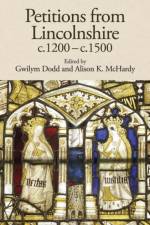
Stories of injustice, feuding, chicanery and natural disasters told through the words of Lincolnshire people in the Middle Ages.
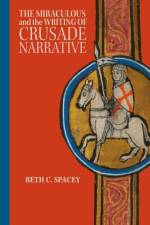
First comprehensive study of miracles in Crusade narrative, showing how and why they were deployed by their authors.The medieval Latin Christian narratives of the crusades are replete with references to miracles, visions and signs. Mysterious white-clad knights lead crusader armies to victory in battle, Christ and the saints offer guidance in visions, and great signs are seen in the skies. However, despite the frequent appearance of these themes in the sources, and the evident importance of these ideas to the narratives which describe them, scholars have often analysedexamples in isolation. This book represents the first far-reaching examination of the miraculous in crusade narrative, offering an analysis of the role of miracles, marvels, visions, dreams, signs and augury in narratives ofthe crusades of 1096 to 1204 and produced between c.1099 and c.1250. It argues that the miraculous and its related themes represented a powerful tool for the authors of crusade narrative because of its ability to convey divine agency and will, ideas which were central to the belief held among Latin Christian contemporaries that crusade was divinely inspired and spiritually salvific. Overall, the volume demonstrates how the authors of crusade narrative drewupon various intellectual authorities on the miraculous in the service of their narrative agendas and reveals how the use of the miraculous changed as authors were forced to respond to the challenges of narrating crusade during this period. BETH C. SPACEY is a Postdoctoral Research Fellow at the University of Queensland.
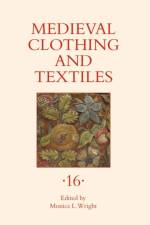
The best new research on medieval clothing and textiles, drawing from a range of disciplines.Following the Journal's tradition of drawing on a range of disciplines, the essays here also extend chronologically from the tenth through the sixteenth century and cover a wide geography: from Scandinavia to Spain, with stops in England and the Low Countries. They include an examination of the lexical items for banners in Beowulf, evidence of the use of curved template for the composition in the Bayeux Tapestry, a discussion of medieval cultivation of hemp for use in textiles in Sweden, a reading of the character of Lady Mede (Piers Plowman) in the context of costume history, the historical context of the Spanish verdugados (in English, the farthingale)and its use as political propaganda, an analysis of the sartorial imagery on a tabletop painting (attributed to Bosch) depicting the Seven Deadly Sins, and the reconstruction of one of the sixteenth-century London Livery companies' crowns.
Covering classical to popular to neo-traditional musics, the topics covered in Postmodernity's Musical Pasts mirror the eclectic and diverse nature of the postwar era.Postmodernity's Musical Pasts covers topics from classical to popular and neo-traditional musics to concerns of the disciplines of musicology. These provide insights how the progression of time and history can be conceptually understood after 1945. It covers an extensive and varied spectrum of topics, from both the centre and the periphery of the musicological canon, that mirror the eclectic and diverse nature of the postwar era itself. The first section, 'Time and the (Post)Modern', investigates how to understand manifestations of the past in musical composition with regard to time, on the one hand, and with regard to genre, style, and idiom, on the other. The second section, 'Manifestations of History', shows how time and history manifest themselves in art music. A third section, 'Receptions of the Past', takes the contrasts and transitional moments of post-1945 practices further by looking at the temporality of reception from different angles. A final part investigates questions of nostalgia and the temporalities of belonging. The volume subverts the understanding of temporality as linear progression of past, present, and future. It offers new avenues of conceptual thinking relevant for those engaged in the study of music history and culture and for the humanities at large. TINA FRUHAUF is Adjunct Assistant Professor at Columbia University, New York and serves on the faculty of The Graduate Center, CUNY. CONTRIBUTORS: Michael Arnold, Susana Asensio Llamas, Georg Burgstaller, Caitlin Carlos, Daniela Fugellie, Tina Fruhauf, John Koslovsky, Lawrence Kramer, Beate Kutschke, Laurenz Lutteken, Max Noubel, Joshua S. Walden
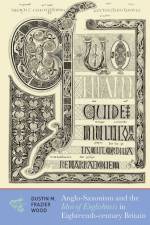
The importance of the Anglo-Saxon past to England in the eighteenth century, politically and culturally, is here brought out.
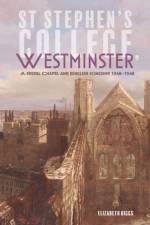
First full-length account of St Stephen's Chapel, bringing out its full importance and influence throughout the Middle Ages.In St Stephen's College, the royally-favoured religious institution at the heart of the busy administrative world of the Palace of Westminster, church and state met and collaborated for two centuries, from its foundation to pray for the royal dead by Edward III in 1348, until it was swept away by the second wave of the Reformation in 1548. Monarchs and visitors worshipped in the distinctive chapel on the Thames riverfront. Even when the king and his household were absent, the college's architecture, liturgy and musical strength proclaimed royal piety and royal support for the Church to all who passed by. This monograph recreates a lost institution, whose spectacular cloister still survives deep within the modern Houses of Parliament. It examines its relationship with every English king from Edward III to Edward VI, how it defined itself as the "e;king's chief chapel"e; through turbulent dynastic politics,and its contributions to the early years of the English Reformation. It offers a new perspective on the workings of political, administrative and court life in medieval and early modern Westminster. Dr ELIZABETH BIGGSstarted work on St Stephen's College as part of the large research project "e;St Stephen's Chapel: Visual and Political Culture, 1292-1941"e; at the University of York. She has taught at York and the University of the West of England.
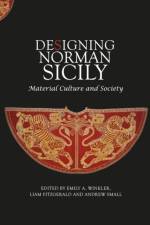
Essays showing how the stuff of Norman Sicily, its mosaics, frescoes, art and architecture, was used to construct its history.Material culture played a crucial role in developing the cultural narrative of Norman Sicily. The essays in this book consider how images, designs, artifacts, structures and objects were used to help create the story of the medieval kingdom, and what they reveal about the complex political and social dynamics that underpinned the so-called "e;multicultural"e; state. Arguing that a visual language developed in medieval Sicily and southern Italy in this period,the contributions journey through both familiar and unexplored aspects of Siculo-Norman art, in particular those areas which have only been made possible with recent advances in technology and international academic collaboration.Topics addressed include manuscripts and mosaics, textile diplomacy, the drama of coins and trade, new readings of old buildings, and the insights of archaeological excavations into everyday life. All of the ideas presented in this volume converge on the central theme of how material culture helped to develop story and society in the medieval kingdom of Sicily. EMILY A. WINKLER is a Fellow of St Edmund Hall and member of the History Faculty atthe University Oxford; LIAM FITZGERALD is a PhD student at King's College London; ANDREW SMALL is a DPhil student at Exeter College, University of Oxford. Contributors: Martin Carver, Emma Edwards, Liam Fitzgerald, Katherine Jacka, Alessandra Molinari, Lisa Reilly, Fabio Scirea, Margherita Tabanelli, William Tronzo, Sarah Whitten, Emily A. Winkler.
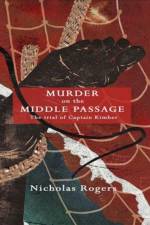
How the death of a fifteen-year-old girl aboard the slave ship Recovery shook the British establishment.
No classical composer put more drama or originality into his opening ideas than Beethoven, so this first special study of these musical beginnings is particularly welcome. LEWIS LOCKWOOD This book discusses the myriad waysin which Beethoven begins his works and the structural, rhetorical, and emotional implications of these beginnings for listeners. Examining the opening moments of nearly 200 compositions, it offers a new method of analysis of Beethoven's music. At the same time, it sets Beethoven's work in context through a close study of beginnings in the compositions of Haydn, Mozart, and many other, lesser-known composers of the Classical Era. The book opens byexamining how a beginning works in musical and rhetorical theory and by looking at findings from neuroscience and psychology to show how a beginning is received by our brains. It then considers categories of beginnings in depth:their structure, sonority, texture, and dynamics; the establishment of a beginning as a "storehouse" or for wit or humor; beginnings as public statements, as attention getters, as sneaky fade-ins; beginnings that deceive, puzzle,or pretend; beginnings that are endings; and beginnings that nod to another composer. The author carefully and sensitively observes the strategies that Beethoven and others employed, enabling consideration of issues of originality, emulation, influence, competition, and cross-fertilization. Analysis of the composer's manuscript scores shows how Beethoven can be seen in the process of refining his ideas of how to open a work. The book closes by examiningthe correlation between the psychology of listening and the creative ways composers of the eighteenth and early nineteenth centuries, especially Beethoven, crafted their opening gestures. It will appeal not only to Beethoven scholars but to all those interested in listening closely to music of the Classical Era. JEREMY YUDKIN is Professor of Music and Co-Director of the Center for Beethoven Research at Boston University.
Ground-breaking study of the enigmatic and unique tabernacles from fourteenth-century Italy, which for the first time combined relics and images.
Bringing together researchers in modern British religious, political, intellectual and social history, this volume considers the persistence of the Church's public significance, despite its falling membership.
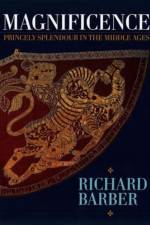
This highly-illustrated volume, by bestselling author Richard Barber, shows how medieval princes proclaimed their special status through displays of magnificence.
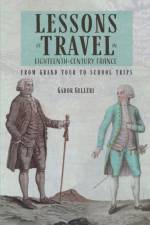
A study of the literature of the 'art of travel' in eighteenth-century France, showing how consideration of who should travel and for what purpose provided an occasion for wider debate about the social status quo.
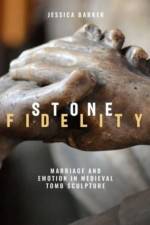
Pioneering investigation of the popular "double tomb" effigies in the Middle Ages.
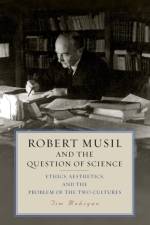
A major new study of Robert Musil by one of the world's leading Musil scholars. Musil's extraordinary works, the study reveals, emerged from the problem of the "e;two cultures."e;The modern era is marked by the separate life of two cultures of understanding, one derived from art and its discourses, the other from science and its practices. This "e;problem of the two cultures"e; (as coined by C.P. Snow) describes the difficulty of bringing these distinct ways of understanding the world together. The works of the Austrian author Robert Musil (1930-33) represent the most distinguished treatment of this problem in the modern era. Nevertheless, doubts persist about Musil's true intentions. Did he maintain that the separation between art and science could be resolved? Or did he rise above the problem by advocating a new order of being or "e;other condition"e; that would dispense with it altogether? Mehigan's study moves these questions to center stage. He lends new clarity to the debate about Musil's position in regard to the two cultures by shining a light on ethical questions the author ultimately wished to clarify. It is the shape of a hard-won ethics, Mehigan argues, that provides the key to an effective response to the problem of the two cultures - an ethics, in the end, that can only be put forward as a new kind of art. Tim Mehigan is Professor of German and Deputy Director of the Institute for Advanced Studies in the Humanities at the University of Queensland, Australia.
The first-ever comprehensive examination of Tzvetan Todorov's cultural theory and his place in European thought.Originally known for his groundbreaking work in literary studies, the Bulgarian-born French scholar Tzvetan Todorov (1939-2017) was one of the world's foremost cultural theorists. His interventions cover an astounding range of topics, from narratology to ethics, from painting to politics, and from the Enlightenment to current affairs. This collection of essays is the first-ever comprehensive examination of Todorov as a cultural critic. It offers in-depth discussions of the crucial elements of his thought since his historical and cultural turn in the early 1980s: his "e;marginal centricity"e; within the French intellectual field, and his relations with other French thinkers; his philosophical precursors and influences, notably Jean-Jacques Rousseau and Mikhail Bakhtin; his conception of the Enlightenment; his views on historiography, and on the possibility and limitations of passing historical judgments; his defense of a European identity; and his political philosophy, including his critique of totalitarianism, neoconservativism, and neoliberalism. Written by international experts in the fields of Enlightenment studies, literary and cultural studies, critical theory, and intellectual history, this volume offers both an introduction to one of the most important postwar European thinkers and discussions of some of the most hotly debated topics in cultural studies today. Contributors: Christine Baycroft, Henk de Berg, Maxime Goergen, Richard J. Golsan, Evgenia Ilieva, Eric B. Litwack, David McCallam, Carl Niekerk, Adam Piette, Robert Zaretsky, Karine Zbinden. HENK DEBERG is Professor of German at the University of Sheffield, UK; KARINE ZBINDEN is Teaching Associate in French Studies and Honorary Research Fellow at the Bakhtin Centre, also at the University of Sheffield.
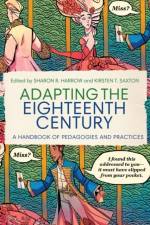
A collection of pedagogical essays that presents proven strategies for the teaching of adaptation and eighteenth-century textsThe eighteenth century was a golden age of adaptation: classical epics were adapted to contemporaneous mock-epics, life writing to novels, novels to plays, and unauthorized sequels abounded. In our own time, cultural products of the long eighteenth century continue to be widely adapted. Early novels such as Robinson Crusoe and Gulliver's Travels, the founding documents of the United States, Jane Austen's novels, Mary Shelley's Frankenstein-all of these have been adapted so often that they are ubiquitous cultural mythoi, even for people who have never read them. Eighteenth-century texts appear in consumer products, comics, cult mashups, fan fiction, films, network and streaming shows, novels, theater stagings, and web serials. Adapting the Eighteenth Century provides innovative, hands-on pedagogies for teaching eighteenth-century studies and adaptation across disciplines and levels. Among the works treated in or as adaptations are novels by Austen, Defoe, and Shelley, as well as the current worldwide musical sensation Hamilton. Essays offer tested models for the teaching of practices such as close reading, collaboration, public scholarship, and research; in addition, they provide a historical grounding for discussions of such issues as the foundations of democracy, critical race and gender studies, and notions of genre. The collection as a whole demonstrates the fruitfulness of teaching about adaptation in both period-specific and generalist courses across the curriculum.
Abonner på vårt nyhetsbrev og få rabatter og inspirasjon til din neste leseopplevelse.
Ved å abonnere godtar du vår personvernerklæring.