






![Text and Image in Rene d'Anjou's Livre des Tournois [3 volume set] af Justin (Author) Sturgeon](https://cdnbackdoor.tales.as/thumbnail/150x225/products/00152/93792/text-and-image-in-rene-danjous-livre-de-tournois-constructing-authority-and-identity-in-fifteenth-century-court-culture-three-volume-set.jpg)


Gjør som tusenvis av andre bokelskere
Abonner på vårt nyhetsbrev og få rabatter og inspirasjon til din neste leseopplevelse.
Ved å abonnere godtar du vår personvernerklæring.Du kan når som helst melde deg av våre nyhetsbrev.

A major history of the evolution of political journalism in the late Stuart and early Hanoverian period.The reign of Queen Anne (1702-1714) saw a remarkable boom in political journalism and newspaper culture in London, in which some of the leading literary lights of the age, Swift, Defoe, Addison, Steele, were heavily involved. While scholars have dealt at length with the physical development and circulation of these newspapers and with their literary contribution, much less has been done to trace the evolving ideologies of London's political newspapers inthis period. In this major contribution to the study of eighteenth-century political culture, Ashley Marshall shows how the ideologies of the leading papers evolved in direct and indirect response to one another. She offersprovocative re-readings of well-known journals, including Defoe's Review, Swift's Examiner and the various publishing ventures of Richard Steele, and first accounts of the wealth of smaller, short-lived journals which made up the ecosystem of periodical publishing at the time. A ground-breaking final chapter looks at the radically different ways in which periodical writers imagined and addressed their public. Drawing out the distinction between the Whig ideal of a highly engaged citizenry and a Tory press which conditioned its readers to be dutiful subjects rather than active citizens, Marshall argues that these rhetorical differences reflected an ongoing debate about the ultimate role of journalism. Ashley Marshall is Professor and Chair of English at the University of Nevada, Reno.
This collection situates the North-East within a developing nationwide account of British musical culture.Music in North-East England provides a wide-ranging exploration of musical life in the North-East of England during the early modern period. It contributes to a growing number of studies concerned with developing a nationwide account of British musical culture. By defining the North-East in its widest sense, the collection illuminates localised differences, distinct musical cultures in urban centres and rural locations, as well as region-wide networks, and situates regional musical life in broader national and international contexts. Music in North-East England affords new insights into aspects of musical life that have been the focus of previous studies of British musical life - such as public concerts - but also draws attention to aspects that have attracted less scholarly attention in histories of early modern British musical culture: the musical activities and tastes of non-elite consumers; interactions between art music and cheap print and popular song; music education beyond London and its satellite environs; the recovery of northern urban soundscapes; and the careers of professional musicians who have not previously been the focus of major published musicological studies. STEPHANIE CARTER is a music historian and archivist. KIRSTEN GIBSON is Senior Lecturer and Head of Music at Newcastle University. ROZ SOUTHEY is a music historian and novelist. CONTRIBUTORS: Stephanie Carter, Kirsten Gibson, Roz Southey, Diana Wyatt, Magnus Williamson, Matthew Gardner, Simon D.I. Fleming, Christopher Roberts, Eleanor Warren, Andrew Woolley, Stephen A. Marini, Amanda Eubanks Winkler, Amelie Addison, Barbara Crosbie, Oskar Cox Jensen.
First full English translation of a major text, narrating the adventures of the Jouvencel whilst interweaving them with advice on military tactics and strategies.
Examination of the role played by key figures around the monarchy in the Wars of the Roses.The reigns of Edward IV and Richard III have long engendered fascination and debate, not least concerning the extent of the authority and power of key individuals surrounding the court at the time. This book examines the most influential men and women at the centre of their regimes: the political power-brokers. They served the king in matters of diplomacy, warfare, court ceremony, local government, and the attempt to keep order amid the ongoing crisis of kingship sparked by the Wars of the Roses. Their close royal association to the king led to rapid increases in their power and fortune. Among their ranks are well-documented figures such as the tragic "e;Kingmaker"e;, Richard Neville,earl of Warwick, and the steadfast baron William, Lord Hastings. This volume however is also concerned to bring to the forefront lesser discussed figures, including Sir Thomas Montgomery, Edward's close friend whose career was remade by the Yorkist usurpation, and Sir John Fogge, one of the leading men of Kent who prospered under Yorkist rule, yet risked everything by rejecting Richard's right to rule. Grounded on extensive archival research, this book offers a more detailed and nuanced image of the influence the power-brokers wielded and their place in the Yorkist state. It analyses the manifestation of their power and the manner in which they exercised their influence publicly and privately; and establishes their importance in the foundation, maintenance, and downfall of the Yorkist dynasty. ALEXANDER BRONDARBIT gained his PhD from the University of Winchester; he is now an Academic Planning Analyst at the University of California, Santa Cruz.
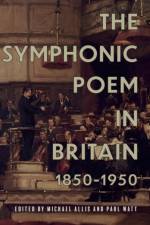
The Symphonic Poem in Britain 1850-1950aims to raise the status of the genre generally, and in Britain specifically, by reaffirming British composers' confidence in dealing with literary texts.
What are the key topics that define Romantic violin playing?This book discusses key issues (and barriers) of putting into practice nineteenth-century violin performing practices. It deals with a number of well-known problems concerning romantic performance including the widely perceived 'gap' between scholarship and the act of performance. Taking account of a modernist revolution in performing practices and aesthetic thought in the twentieth century, the book focuses on key topics to define romantic violin playing. Practically-focused chapters discuss key aspects of performing practice evidence. The book then moves into a case-study phase to discuss examples from the author's long experience. It concludes with practical advice and exercises to enable students to begin experimenting with the assimilation of such practices into their own performance. In this way, the proposed structure aims to be a 'handbook' proper. The handbook ends by looking to the future and suggesting practical ways for violinists to adopt what has been discussed in the text. The continued centrality of nineteenth-century music in contemporary concert life makes the importance of the topic self-evident. DAVID MILSOM is Senior Lecturer in Music and Head of Performance at the University of Huddersfield. Milsom is a performing and recording Violinist.
A timely examination of the ways in which sixteenth-century understandings of the world were framed by classical theory.The long sixteenth century saw a major shift in European geographical understanding: in the space of little more than a hundred years Western Europeans moved to see the world as a place in which all parts of the sphere were made by God for human exploitation and to interact with one another. Taking such a scenario as its historical backdrop, Framing the Early Modern World examines the influence of Greek and Roman ideas on the formulation of new geographical theories in sixteenth-century western Europe. While discussions of inhabitability dominate the geographical literature throughout the sixteenth century, humanist geographers of the sixteenth century, trained in Greek and Roman writings, found in them the key intellectual tools which allowed the oikoumene (the habitable world) to be redefined as a globally-connected world. In this world, all parts of the sphere were designed to be incommunication with one another. The coincidence of the Renaissance and the period of European exploration enabled a new geographical understanding fashioned as much by classical theory as by early modern empirical knowledge. Newlydiscovered lands could then be defined, exploited and colonized. In this way, the author argues, the seeds of the modern era of colonization, expansionism and ultimately globalization were sown. Framing the Early Modern World is a timely work, contributing to a growing discourse on the origins of globalization and the roots of modernity. MARGARET SMALL is Lecturer in Early Modern History (Europe and the Wider World) at the School of History and Cultures, University of Birmingham.
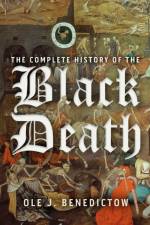
A truly definitive work, this magisterial study draws on the latest evidence from across Europe to show in exhaustive detail the nature of the disease, its origin, spread, mortality, and its profound impact on history.
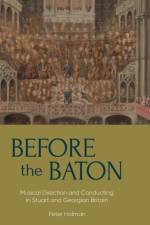
How was large-scale music directed or conducted in Britain before baton conducting took hold in the 1830s?This book investigates the ways large-scale music was directed or conducted in Britain before baton conducting took hold in the 1830s. After surveying practice in Italy, Germany and France from Antiquity to the eighteenth century,the focus is on direction in two strands of music making in Stuart and Georgian Britain: choral music from Restoration cathedrals to the oratorio tradition deriving from Handel, and music in the theatre from the Jacobean masque to nineteenth-century opera, ending with an account of how modern baton conducting spread in the 1830s from the pit of the Haymarket Theatre to the Philharmonic Society and to large-scale choral music. Part social and musical history based on new research into surviving performing material, documentary sources and visual evidence, and part polemic intended to question the use of modern baton conducting in pre-nineteenth-century music, Before the Baton throws new light on many hitherto dark areas, though the heart of the book is an extended discussion of the evidence relating to Handel's operas, oratorios and choral music. Contrary to near-universal modern practice, he mostlypreferred to play rather than beat time. PETER HOLMAN is Emeritus Professor of Historical Musicology at Leeds University. When not occupied with writing and research, he organises performances of seventeenth- and eighteenth-century music, mostly directing them from the keyboard. He is director of The Parley of Instruments, Leeds Baroque, the Suffolk Villages Festival and the annual Baroque Summer School run by Cambridge Early Music.
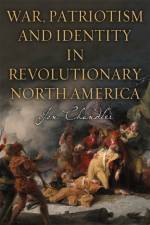
An intriguing study of the revolutionary army as a powerful and yet contested symbol of nascent national identity among the American colonies.In spite of various and growing discontents, the British inhabitants of the thirteen North American colonies continued to see themselves as an integral part of the British imperial project right up to the beginning of the AmericanRevolutionary War. By its end eight years later, a distinctive continental identity had developed, brought into being by the manifold stresses of internecine conflict. The Continental Army emerged as the first embodiment of this national consciousness, and Jon Chandler's innovative study charts the various conflicting forces at work in this process. He shows how local and political allegiances were assimilated into a national ideal through various forms of print from newspapers to plays and pictures, and through public rituals of celebration and commemoration, but also how this continental turn was resisted not only by those who had least to gain from the new order - loyalists, slaves, Native Americans and civilians exposed to the worst excesses of the conflict - but also more surprisingly by elements within the army, which increasingly defined itself as a military community distinct from civilsociety. Nonetheless, as the war unfolded it was the ideas and rituals of the continent which most ordinary Americans absorbed and which would shape the national idealism of the early United States. JON CHANDLER is Teaching Fellow in History at University College London.
Drawing on a wealth of unpublished sources surrounding Kinkel, this book explores the extent to which Kinkel's Lieder reflect and transcend compositional-aesthetic, cultural, and socio-political facets typically associated with the first half of the nineteenth century.
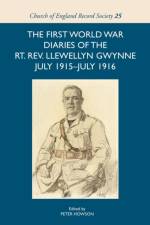
The Right Reverend Llewellyn Gwynne's diaries offer a unique insight into a period of change for the army, chaplains and the Church of England during a critical period of the First World War.
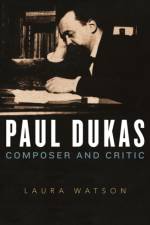
As a noted composer and critic, Paul Dukas was a major figure in fin-de-siecle and early twentieth-century French music. Best known for L'Apprenti sorcier, he was internationally recognised as an artist and intellectual ofdistinction who contributed significantly to Parisian musical cultures and critical debates.As a noted composer and critic, and later an editor and composition teacher, Paul Dukas (1865-1935) was a major figure in fin-de-siecle and early twentieth-century French music. Although his catalogue of published scores was relatively modest in quantity, he was internationally recognised as an artist and intellectual of distinction who contributed significantly to Parisian musical cultures and critical debates as they evolved from the 1890s until the 1930s Moving in the same circles as Debussy and Faure, as well as networking with trailblazers such as the Ballets Russes director Sergei Diaghilev and the conductor Serge Koussevitzky, Dukas created works that reflect French sensibilities but also resonate with transnational audiences. L'Apprenti sorcier is still his best-known work, while the opera Ariane et Barbe-Bleue has been revived and remains relevant for the twenty-first century. Works such as the Piano Sonata and the ballet La Peri respectively exemplify the twin attractions of tradition and progress for the composer. Intensely self-critical, however, he ended up destroying many of his scores. This book is the first full-length Anglophone study of Dukas. It perceives his critical essays as a form of creative, philosophical thought that synthesised the riches of the Parisian music scene yet also represented the formationand development of his own artistic voice. Investigating Dukas's interrelated identities as composer and critic, it seeks to explain his broad aesthetic motivations and artistic agenda. LAURA WATSON is Lecturer in Musicat Maynooth University.
A study of the life and career of one of Scotland's leading magnates during a turbulent period.
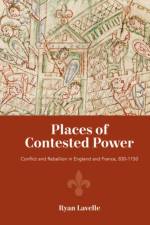
First full examination of why and how certain locations were chosen for opposition to power, and the meaning they conveyed.The direct contestation of power played a crucial role in early medieval politics. Such actions, often expressed through violence, reveal much about established authorities, power and lordship. Here the hitherto neglected role of place and landscape in acts of opposition and rebellion is explored for its meaning and significance to the protagonists. The book includes consideration of a range of factors relevant to the choice of location for such events, and examines the declarations and motivations of political actors, from disaffected princes to independently minded nobles, as well as those who responded to rebellion, to show how places and landscapes became used in political disputes. These include both "e;public"e; and "e;private"e;, religious, urban and rural space. Covering a long period in England and northern France, from the late Carolingian period through to the emergence of cross-Channel polities inthe aftermath of the Norman Conquest, this book casts valuable light on the political relations of the early and central Middle Ages. RYAN LAVELLE is Professor of Early Medieval History in the Department of History atthe University of Winchester.
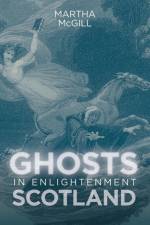
An examination of how and why Scotland gained its reputation for the supernatural, and how belief continued to flourish in a supposed Age of Enlightenment.SHORTLISTED for the Katharine Briggs Award 2019 Scotland is famed for being a haunted nation, "e;whare ghaists and houlets nightly cry"e;. Medieval Scots told stories of restless souls and walking corpses, but after the 1560Reformation, witches and demons became the focal point for explorations of the supernatural. Ghosts re-emerged in scholarly discussion in the late seventeenth century, often in the guise of religious propagandists. As time went on, physicians increasingly reframed ghosts as the conjurations of disturbed minds, but gothic and romantic literature revelled in the emotive power of the returning dead; they were placed against a backdrop of ancient monasteries,castles and mouldering ruins, and authors such as Robert Burns, James Hogg and Walter Scott drew on the macabre to colour their depictions of Scottish life. Meanwhile, folk culture used apparitions to talk about morality and mortality. Focusing on the period from 1685 to 1830, this book provides the first academic study of the history of Scottish ghosts. Drawing on a wide range of sources, and examining beliefs across the social spectrum, it shows howghost stories achieved a new prominence in a period that is more usually associated with the rise of rationalism. In exploring perceptions of ghosts, it also reflects on understandings of death and the afterlife; the constructionof national identity; and the impact of the Enlightenment. MARTHA MCGILL completed her PhD at the University of Edinburgh.
Gilles li Muisit was the abbot of the Benedictine monastery of St. Martin of Tournai, a city on the north-eastern border of France. This region was a at the centre of Edward III's campaigns in Flanders at the beginning of the Hundred Years War. Le Muisit's chronicle covers events in France and Flanders from the point of view of a well informed contemporary. He kept records of important events from around 1330 onwards, and when he went blind in 1345, he occupied his time by writing up these notes, which were read to him. He then dictated the text to a scribe. An operation for cataracts restored his sight in 1352, but he never managed to revise his text. It consists of a full chronicle up to 1348, and then annals after that. He is a spirited writer, and his comments on fashion (with illuminations) are often quoted; he also has a remarkable passage on how it is impossible for anyone to know what is goingon in a battle (apropos of the battle of Crécy), let alone for a historian to produced an accurate account afterwards. He uses some written records, and writes at first hand of the siege of Tournai in 1340. Much of his informationcomes from the distinguished guests who visited his abbey, but he is very wary about what he hears. 'What they say is partly false, partly true... if I write down things about which I may not be certain, my whole work will be indisrepute'. He is a largely realistic counterweight to the narratives of chivalrous exploits in Jean le Bel and Froissart, who cover the same place and period. And his voice speaks not for the nobility, for whom war represented glory and profit, but for the defenceless and weak who were the main sufferers.
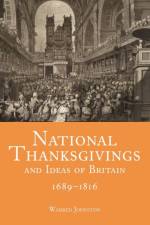
Examines sermons preached at national thanksgiving celebrations to show in detail what it meant to be properly British in the period.This book is the first concentrated study of almost 600 sermons from over forty national thanksgivings in Britain during the long eighteenth century. These included celebrations of the 'Glorious' Revolution, the Union of Englandand Scotland, the Hanoverian succession, and the numerous military successes stretching from the reigns of William and Mary and Queen Anne to the Battle of Waterloo. Preachers used such occasions to reinforce ideas associated withBritain and being British during a significant period of national growth. Although the thanksgiving ceremonies were instigated through royal order, and accompanied by prescribed liturgies, the composition and delivery of sermonsby clergymen in thousands of churches resulted in numerous and diverse expressions on developments within British society across a period of over 125 years. Topics included assertions about Britain's favoured position in the world, perceptions of the growth of empire, ideas on the impact of war and of peace, views on the effects of commerce and trade, opinions on politics, responses to religious and cultural diversity, and reactions to the French Revolution. The sermons were written by ministers from across England, as well as some from Scotland, Ireland, Wales, and colonial North America. In addition to those from Anglican pulpits, many of the sermons were by dissenting ministers.Overall, the book presents a vast array of information from a wide range of viewpoints, demonstrating how prominent national commemorations were used by preachers to convey compelling ideas about Britain and Britons from 1689 to1816. WARREN JOHNSTON is Associate Professor in the Department of English and History at Algoma University, Sault Ste Marie, Ontario, Canada. He is the author of Revelation Restored: The Apocalypse in Later Seventeenth Century England (Boydell Press, 2011).
New insights into key texts and interpretive problems in the history of England and Europe between the eighth and thirteenth centuries.
The book highlights the scale of disorder and the many difficulties faced by the authorities.This book explores the connexion between collective action, popular politics and policing in Ireland from the end of the Williamite war in 1691 to the outbreak of the Whiteboy agrarian protest in 1761. It considers the impact madeby the people who maintained order - civilian officers, the army and militias, and bands of irregular forces - outlining not only the many problems that they faced but also the effects on Irish society of their abuses. The book highlights the conflict between authorities, who were enforcing laws, and crowds, who were enforcing popular notions of justice, as well as the changes taking place in the ethics of law enforcement. It shows how increasing taxes collected by the Irish government, used mainly to pay for the British army, resulted in a proliferation of violent protests in most parts of Ireland in the early eighteenth century. In addition, the book discusses popular attitudesand belief systems, examines the conduct of rioters and members of the forces of order and reveals the moral compasses used during violent confrontations on both sides of the legal divide. Overall, the book's investigation of large-scale disorder leads us to a better understanding of the relationships between rulers and the ruled in Ireland in this period. TIMOTHY D. WATT is a Post-Doctoral Fellow in the School of History at University College Dublin.
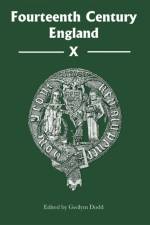
The fruits of new research on the politics, society and culture of England in the fourteenth century.Drawing on a diverse range of documentary, literary and material evidence, the essays collected here consider a wide range of important issues for the period. Political and institutional history is addressed in essays on Edward II's personal expenditure and the development and workings of parliament, including an analysis of those neglected "e;parliamentarians"e; of the period, the parliamentary proctors. Important new insights into the social history of the fourteenth century are provided by chapters on marriage and the accumulation of lay estates, the brokerage of royal wardship and the important and difficult subject of sexual violence towards under-age girls. Another chapter considers the enormously costly and complex task of feeding and supplying medieval armies across the "e;long"e; fourteenth century, while two final pieces offer important new insights into the material culture of the age, focusing in turn on St Stephen's Chapel, Westminster, and the phenomenon of royal reburial. Richly textured with personal and local detail, these new studies provide numerous insights into the lives of great and small in this fascinating period ofmedieval history. GWILYM DODD is Associate Professor of Medieval History at the University of Nottingham. Contributors: Elizabeth Biggs, Anna M. Duch, Bridget Wells-Furby, Alan Kissane, Ilana Krug, Alison K.McHardy, Seymour Phillips, Laura Tompkins, Kathryn Warner.
An illustrated manual showing how a medieval tournament was organised, here presented in three volumes with essays on various aspects of the manuscript.
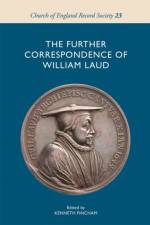
The correspondence of William Laud, archbishop of Canterbury from 1633 to 1645, provides revealing insights into his mind, methods and activities, especially in the 1630s, as he sought to remodel the church and the clerical estatein the three kingdoms.
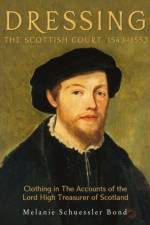
Analysis of accounts disbursed by the royal treasury, alongside text and translation in excerpt, provides richly detailed information on clothing at the time.The Accounts of the Lord High Treasurer of Scotland document money spent by the royal treasury and contain numerous references to clothing and textiles. This volume is designed to make the rich material in the Accounts from the regency of the Earl of Arran (whose ward was Mary Queen of Scots) available to those interested in the study of dress and accessories. In addition to overviews of the various types of garments mentioned in the Accounts and discussion of a number of specialty categories, such as wedding and funeral clothing, this book includes the original text of every entry from the Accounts pertaining to secular clothing, with facing translation into modern English. The Accounts' entries include information on materials and labour, and describe thousands of items for dozens of people, from court fools to nobles. They are grouped here by recipient, in "e;wardrobe biographies"e; which gather all ofthe entries for a particular person together in chronological order. Through the numerous clothing-related entries from this period it is possible to track the wardrobes of a number of people connected to the Scottish court, the popularity of various garments and accessories, details about their construction, and insights into the relationships of the people involved. MELANIE SCHUESSLER BOND is Professor of Costume Design, Eastern Michigan University.
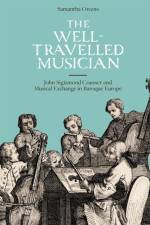
John Sigismond Cousser, as performer and composer, was a pioneering figure in the musical history of the European Baroque era.
An international collaboration between leading scholars showcases a broad spectrum of observations on Handel and his music, covering many aspects of modern interdisciplinary and traditional philological musicology.
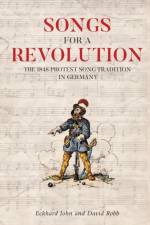
Makes available twenty-two protest songs of the period up to and including the 1848 Revolution in Germany along with a reception history of the songs through their revival after 1945.The socially volatile period of the Vormarz (1830-1848) and the 1848 Revolution in Germany produced a wealth of political protest song. Songs for a Revolution makes available twenty-two prominent protest songs from that time, both lyrics (in German and English) and melodies. It also chronicles the songs' reception: suppressed after the revolution, they fell into obscurity, despite intermittent revivals by the workers' movement and later in the Weimar Republic, until they were appropriated as democratic cultural heritage by the folk and political song movements of East and West Germany after 1945. The songs reflect the new, oppositional political consciousness that emerged during the post-1830 period of restoration and led to the revolution. The book makes use of broadsides, songbooks, newspaper reports, and manuscripts to document the songs' transmission and shed light on the milieus in which they circulated. It also demonstrates how the appropriation of these songs by the German Liedermacher and folk scene shaped today's cultural memory of the 1848 period. It illuminates the functioning of political ideology in these reception processes, which in turn have given rise to myths that have influenced the discourse on the 1848 songs. ECKHARD JOHN is Senior Research Fellow in the Center for Popular Culture and Music at the University of Freiburg. DAVID ROBB is Senior Lecturer in Music at Queens University Belfast.
Offers readings of key contemporary trends and themes in the vibrant genre of short-story writing in Germany, Austria, and Switzerland, with attention to major practitioners and translations of two representative stories.
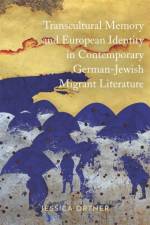
Examines how German-Jewish writers from Eastern Europe who migrated to Germany during or after the Cold War have widened European cultural memory to include the traumas of the Gulag.
Abonner på vårt nyhetsbrev og få rabatter og inspirasjon til din neste leseopplevelse.
Ved å abonnere godtar du vår personvernerklæring.