

Gjør som tusenvis av andre bokelskere
Abonner på vårt nyhetsbrev og få rabatter og inspirasjon til din neste leseopplevelse.
Ved å abonnere godtar du vår personvernerklæring.Du kan når som helst melde deg av våre nyhetsbrev.

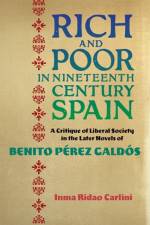
A full exploration of Galdos's treatment of questions relating to the creation and distribution of wealth in the modern money-centred society of Restoration Spain.Winner of the 2017 Peter Bly Award of the Asociacion Internacional de Galdosistas Rich and Poor follows Galdos's narrative of the ascent of the bourgeoisie in the speculative climate which resulted from the economic policies of the liberal State. The book also considers the way he portrays the consequences of these policies on the people left behind by the development of capitalism in Spain. Ridao Carlini brings recent scholarshipon nineteenth-century Spanish history together with a wealth of contemporary material--journalism, essays, pamphlets and costumbrista sketches of manner. In this way Galdos's novels are shown to participate in the varied currentsof critical thought - both conservative and socially radical--which questioned the theoretical basis of the Spanish liberal system from the mid-nineteenth century onwards. To this day no other critical work on Galdos has analysed the financial and economic aspects of Galdos's mature novels in the depth they deserve. Ridao Carlini shows that these aspects are central, both to the novels' narrative and to Galdos's understanding of Spanish society as the nineteenth century drew to a close. She also reveals Galdos's perception--one which he shares with other contemporary authors--that he was living through a time of unforeseeable social transformation. Galdos's work appears particularly relevant to us today, since we, like him, live in a time marked by a perception of social and economic uncertainty. Inma Ridao Carlini is a Teaching Fellow in Hispanic Studies, University of Leicester.
How do contemporary female authors in Latin America tackle gender violence in their writings?
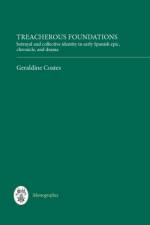
Representations of treachery in medieval and early modern Spain.Treacherous Foundations is the first sustained study of the theme of treachery in the founding myths of the Iberian Peninsula. It considers literary versions, in epic, chronicle and theatre, of the legends of Fernan Gonzalez, Bernardo del Carpio and King Sancho II from medieval and early modern Spain and compares the representation of treachery across two critical periods in Spanish history, assessing its political, ideological, and cultural function. This book explores the role played by representations of treachery in foundational texts in highlighting the ideological tensions that arise from movements toward the creation of collective identities. It discusses in particular visions of nationhood and the monarchical state in the thirteenth and late sixteenth centuries. The theme of treachery is expanded to cover all aspects of treason and political disloyalty and, engaging with loyalty, trust and the nature of kingship, the volume sheds new light on aspects of Spanish cultural and political history, and provides insight into the nature of myth and collective memory, historical change and the collective response to crisis. GERALDINE COATES lectures in Medieval Spanish Literature at the University of Oxford.
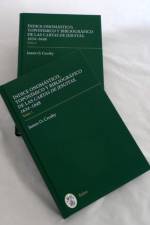
Acceso fidedigno y comprensivo a las 3.451 paginas de los siete tomos impresos de la correspondencia de los Jesuitas espanoles.
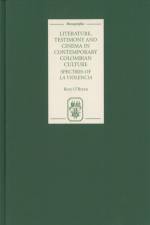
Memory and mourning in Colombia.
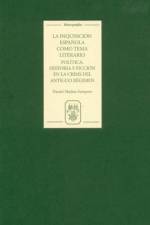
Versiones literarias de los tormentos inquisitoriales
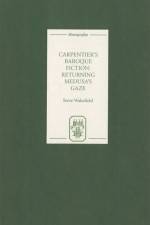
Carpentier was one of the first novelists to introduce a version of magical realism and the neo-baroque into Latin American fiction.
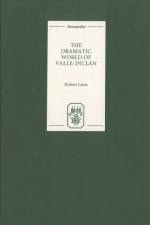
Valle-Inclan considered as actor, director and playwright, with bibliography of his plays.
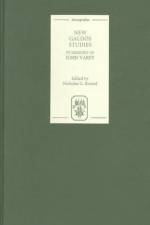
The master of the realist novel of nineteenth-century Spain, Benito Perez Galdos, is the subject of these new studies.
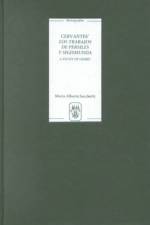
A study which highights the ironic intrusion of novelistic elements in Persiles y Sigismunda, subverting its categorization as pure romance fiction.
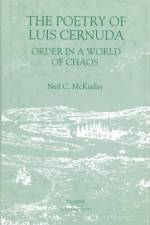
A study of the work of the Spanish poet Luis Cernuda (1902-1963).
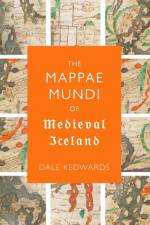
An innovative, interdisciplinary approach to the understudied Icelandic mappae mundi.
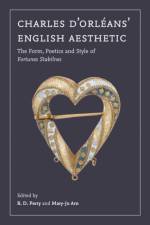
New investigations into Charles d'Orleans' under-rated poem, its properties and its qualities.The compilation Fortunes Stabilnes, the English poetry Charles d'Orleans wrote in the course of his twenty-five year captivity in England after Agincourt, requires a larger lens than that of Chaucerianism, through which ithas most often been viewed. A fresh view from another perspective, one that attends to form and style, as well as to the poet's French traditions, reveals a more conceptually complex and innovative kind of poetry than we have seenuntil now. The essays collected here reassess him in the light of recent work in Middle English studies. They detail those qualities that make his text one of the most accomplished and moving of the late Middle Ages: Charles's use of English, his metrical play, his felicity with formes fixes lyrics, his innovative use of the dits structure and lyric sequences, and finally, above all, his ability to write beautiful poetry. Overall, theybring out the underappreciated contribution made by Charles to the canon of English poetry. MARY-JO ARN is an independent scholar, and editor of Fortunes Stabilnes; R.D. PERRY is Assistant Professor of English and Literary Arts at the University of Denver. Contributors: B.S.W. Barootes, J.A. Burrow, Andrea Denny-Brown, Simon Horobin, Richard Ingham, Philip Knox, Jenni Nuttall, Ad Putter, Jeremy J. Smith, Elizaveta Strakhov, Eric Weiskott.
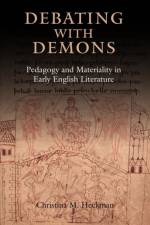
A consideration of the theme of demons as teachers in early English literature.
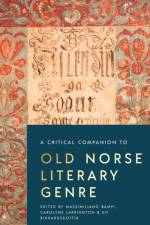
A comprehensive guide to a crucial aspect of Old Norse literature.
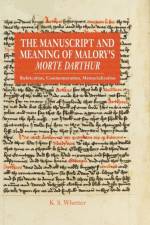
An examination of the rubricated letters in the Morte makes a convincing case for the design being by Malory himself.
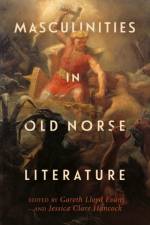
First full investigation of masculinities in Old Norse-Icelandic literature.Compared to other areas of medieval literature, the question of masculinity in Old Norse-Icelandic literature has been understudied. This is a neglect which this volume aims to rectify. The essays collected here introduce and analyse a spectrum of masculinities, from the sagas of Icelanders, contemporary sagas, kings' sagas, legendary sagas, chivalric sagas, bishops' sagas, and eddic and skaldic verse, producing a broad and multifaceted understanding of what it means to be masculine in Old Norse-Icelandic texts. A critical introduction places the essays in their scholarly context, providing the reader with a concise orientation in gender studies and the study of masculinities in Old Norse-Icelandic literature. This book's investigation of how masculinities are constructed and challenged within a unique literature is all the more vital in the current climate, in which Old Norse sources are weaponised to support far-right agendas and racist ideologies are intertwined with images of vikings as hypermasculine. This volume counters these troubling narratives of masculinity through explorations of Old Norse literature that demonstrate how masculinity is formed, how it is linked to violence and vulnerability, how it governs men's relationships, and how toxic models of masculinity may be challenged. JESSICA HANCOCK is a Lecturer in Educational Development at City, University of London; GARETH LLOYD EVANS is Lecturer in Medieval Literature at St Hilda's College, Oxford. Contributors: Asdis Egilsdottir, David Ashurst, Brynja orgeirsdottir, Gareth Lloyd Evans, Oren Falk, Alison Finlay, Jessica Clare Hancock, Johanna Katrin Fridriksdottir, Philip Lavender, Thomas Morcom, Carl Phelpstead, Matthew Roby.
Essays demonstrating how the careful study of individual words can shed immense light on texts more broadly.Dedicated to honoring the remarkable achievements of Dr Antonette di Paolo Healey, the architect and lexicographer of the Old English Concordance, the Dictionary of Old English Web Corpus, and the Dictionary of Old English, the essays in this volume reflect firsthand the research made possible by Dr. Healey's landmark contributions to her field. Each chapter highlights how the careful consideration and study of words can lead to greater insights, from an understanding of early medieval English concepts of time and identity, to reconceptualizations of canonical Old English poems, reappraisals of early medieval English authors and their works, greater understanding of the semantic fields of Old English words and manuscript traditions, and the solving of lexical puzzles. MAREN CLEGG HYER is Professor of English at Valdosta State University; HARUKO MOMMA is Professor of English at NewYork University; SAMANTHA ZACHER is Professor of English and Medieval Studies at Cornell University. Contributors: Brianna Daigneault, Damian Fleming, Roberta Frank, Robert Getz, Joyce Hill, Joan Holland, Maren Clegg Hyer, Christopher A. Jones, R.M. Liuzza, Haruko Momma, Katherine O'Brien O'Keeffe, Andy Orchard, Stephen Pelle, Christine Rauer, Terri Sanderson, Donald Scragg, Paul Szarmach, M. J. Toswell, Audrey Walton, Samantha Zacher.
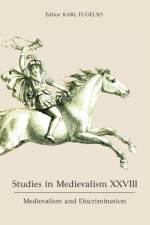
The difficult and nuanced issue of discrimination - race, gender, ethicity, religion - is the focus of this volume.Discrimination has long played a part in medievalism studies, but it has rarely been weaponized as thoroughly and publicly as in recent exchanges. The essays in the first part of this volume respond to that development by examining some of the many forms discrimination has taken in medievalism (studies) relative to race, gender, sexual orientation, religion, and ethnicity. These papers thus inform many of the subsequent chapters, which address a wide variety of aspects of medievalism, showing how many cultural areas it touches upon. Subjects include Evelyn Underhill's literary interest in the Arts and Crafts Movement; the Anchoresses of the filmmaker Chris Newby and novelist RobynCadwallader; cinematic battle orations; contemporary representations of Viking helmet horns; modern board-game culture; and Vincent Van Gogh's Studio of the South. The volume also includes a transcription and contextualization ofthe celebrated scholar Helen Waddell's notes on medieval texts. KARL FUGELSO is Professor of Art History at Towson University. Contributors: Carla Arnell, Aida Audeh, Peter Burkholder, Christopher Caldiero,Michael Evans, Jennifer FitzGerald, Jonathan Godsall, Angus J. Kennedy, Nadia Margolis, Lauryn Mayer, Timothy S. Miller, Tison Pugh, Richard Utz, Kim Wilkins, Karen A. Winstead, Helen Young
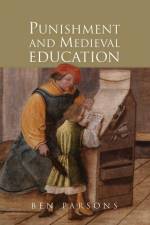
An exploration of the contours imposed on physical punishment by education, establishing how pedagogues accommodated violence into a system of rules, rituals and objectives.What meanys shall I use to lurne withoute betynge?, asks a pupil in a translation exercise compiled at Oxford in 1460s. One of the most conspicuous features of medieval education is its reliance on flogging. Throughout the period, the rod looms large in literary and artistic depictions of the schoolroom: it appears in teaching manuals, classroom exercises, and even in the iconography of instruction, which invariably personifies Grammatica as a woman brandishing a birch or ferule. However, as this book seeks to demonstrate, the association between teaching and beating was more than simply conventional. Medieval pedagogues and theorists did not merely accept the utility of punishment without question, but engaged with the issue in depth and detail. Almost every conceivable aspect of discipline was subject to intense scrutiny: the benefits it might transmit to learners, the relationship between mental development and physical correction, and the optimal ways in which chastisement should be performed, were all carefully examined. This book unpicks the various levels of this debate. It surveys material from multiple languages and discourses, in order to build up the fullest possible picture of medieval thought and practice. Each chapter addresses a specific aspect of punishment in school: topics include the classical inheritance of medieval teaching, therituals and structures of discipline, theoretical accounts of its effects, and the responses of students themselves to grammar's regimen. As a whole, the study not only exposes the impressive rigour with which beating was defined, but also some of the doubts, paradoxes, and even anxieties that surrounded its usage. At the same time, it also raises larger questions about the presence of violence across medieval culture, and how we might confront it withoutplaying into the reductive stereotype of "e;a barbaric age"e;. BEN PARSONS is Lecturer in Medieval and Early Modern Literature at the University of Leicester.
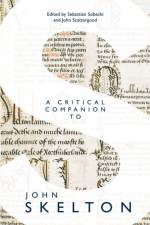
Introduces Skelton and his work to readers unfamiliar with the poet, gathers together the vibrant strands of existing research, and opens up new avenues for future studies.
The first full listing of the pamphlets, tracts and other material collected by Samuel Pepys under the headings Maritime, Political and Religious.Samuel Pepys's unique collection of 3000 books has been, as he directed, preserved intact at his old Cambridge college since 1724. Its various facets were not widely appreciated until the publication between 1978 and 1994 of a complete catalogue under the editorship of Robert Latham. The present volume presents a detailed conspectus of the Collections, pamphlets bound up as books. There are five such 'collections' in the Pepys Library, which are catalogued only as volumes containing a number of items on the same subject. This is a full listing of the pamphlets, tracts and other material in each of these bound collections, information which is otherwise unavailable except in the library's own archive. The collections are Maritime, Political and Religious in the present volume. Those entitled Popular, Dramatic, Shorthand, Almanacs and General will be in the second volume.
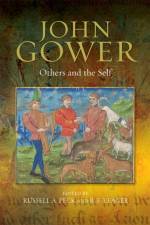
New essays on aspects of Gower's poetry, viewed through the lens of the self and beyond.
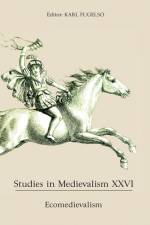
Essays on the post-modern reception and interpretation of the Middle Ages, with a particular concentration on environmental matters.Ecoconcerns and ecocriticism are a rising trend in medievalism studies, and form a major focus of this collection. Topics under discussion in the first part of the volume include figurations in nineteenth- and twentieth-century medievalism; environmental medievalism in Sidney Lanier's Southern chivalry; nostalgia and loss in T.H. White's "e;forest sauvage"e;; and green medievalism in J.R.R. Tolkien's elven realms. The eleven subsequent articles continue to take in such themes more tangentially, testing and buillding on the methods and conclusions of the first part. Their subjects include John Aubrey's Middle Ages; medieval charter-horns in early modern England; nineteenth-centuryreimaginings of Chaucer's Griselda; Dante's influence on Harlan Ellison's "e;I Have No Mouth and I Must Scream"e;; multi-layered medievalisms in George R.R. Martin's A Song of Ice and Fire; (coopted) feminism via medievalism inDisney's Maleficent; (neo)medievalism in Babylon 5 and Crusade; cosmopolitan anxieties and national identity in Netflix's Marco Polo; mapping Everealm in The Quest; undergraduate perceptions ofthe "e;medieval"e; and the "e;Middle Ages"e;; and medievalism in the prosopopeia and corpsepaint of Mayhem's De Mysteriis Dom Sathanas. Karl Fugelso is Professor of Art History at Towson University in Baltimore, Maryland. Contributors: Dustin M. Frazier Wood, Daniel Helbert, Ann F. Howey, Carol Jamison, Ann M. Martinez, Kara L. McShane, Lisa Myers, Elan Justice Pavlinich, Katie Peebles, Scott Riley, Paul B. Sturtevant, Dean Swinford, Renee Ward, Angela Jane Weisl, Jeremy Withers.
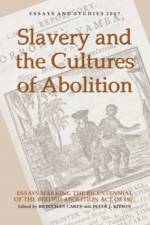
Slavery as depicted in literature and culture is examined in this wide-ranging collection.
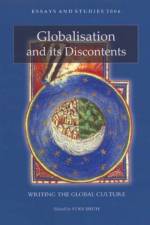
Essays discussing the concept of globalisation as present in works of art and literature.
Text with facing translation of the earliest Italian Tristan romance, providing new evidence for the development of the Tristan strand of the Arthurian legend.
Abonner på vårt nyhetsbrev og få rabatter og inspirasjon til din neste leseopplevelse.
Ved å abonnere godtar du vår personvernerklæring.