Gjør som tusenvis av andre bokelskere
Abonner på vårt nyhetsbrev og få rabatter og inspirasjon til din neste leseopplevelse.
Ved å abonnere godtar du vår personvernerklæring.Du kan når som helst melde deg av våre nyhetsbrev.

This long-awaited autobiography is a must-read for classical musical enthusiasts and those fascinated by some of the twentieth century's star performers. It also offers unique insights into the history of music, the BBC and arts broadcasting in twentieth-century Britain.
Incorporates etymology, history, art, drawing, and reflective writing to support medical students in the integration of the science and humanity of anatomy.
This long-awaited study of the life and music of Anglo-Irish composer Ernest John Moeran (1894-1950) finally provides a full biography of the last senior figure in early twentieth-century British Music to have been without one.This long-awaited study of the life and music of Anglo-Irish composer Ernest John Moeran (1894-1950) finally provides a full biography of the last senior figure in early twentieth-century British Music to have been without one. Although Moeran's work was widely performed during his lifetime, he suffered neglect in the years following his death. It was not until a re-awakening of appreciation for the music of the folksong-inspired English pastoralism in the latter part of the twentieth century that Moeran's tuneful, well-crafted and approachable music began to attract a new audience. However, widely accepted misconceptions about his life and character have obscured a clearunderstanding of both man and composer. Written with the benefit of access to previously unknown or unresearched archives, Ernest John Moeran: His Life and Music strips away a hitherto unchallenged mythological framework, and replaces it by a thorough-going examination and analysis of the life and work of a musician that may reasonably be asserted as having been unique in British music history.
One opens each new volume expecting to find the unexpected - new light on old arguments, new material, new angles. MEDIUM AEVUM
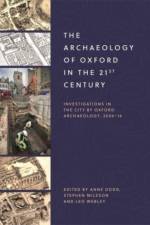
The Archaeology of Oxford in the 21st Century presents the results of eleven excavations carried out by Oxford Archaeology within the historic walled city of Oxford and in the extramural area just to the north. The investigations shed fresh light on the character of medieval Oxford, both before and after the Norman Conquest, and on the early modern city, including its Civil War defences. Of special interest are remains which supply the first very likely medieval Jewish signature in British zooarchaeology. The findings are set within a larger context by a chapter outlining the key findings (by Anne Dodd), a new synthesis of current knowledge of Oxford's archaeology (by David Radford), and an examination of the changing aims and methods of archaeology carried out in the city over the last fifty years (by Tom Hassall). Viewed as a whole, the book represents a significant new contribution to knowledge of Oxford's archaeology and history.
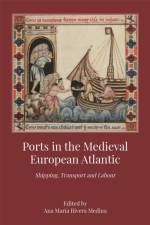
Presents a wealth of original research findings on how medieval ports actually worked, providing new insights on shipping, trade, port society and culture, and systems of regional and international integration.
A valuable resource on the social and economic life of medieval EnglandInquisitions post mortem are the single most important source for the history of medieval English landed society and are indispensable to social, economic, and political historians of the later middle ages; they were compiled with the help of jurors from the area, as a county-by-county record of a deceased individual's land-holdings and associated rights, where the individual held land directly of the crown. It is this explicit connection with land and locality - in economic, social, political, and topographical terms - that makes these documents of such comprehensive interest. This volume calendars the inquisitions and related documents from the short reigns of Edward V and Richard III, from the protectorate to the battle of Bosworth (1483-1485). It looks at 101 individuals across 181 inquisitions and includes valuable information and detailed returns on the estates of the greater aristocracy, among them Henry Bourchier, earl of Essex and William Lord Hastings [d. 1483], alongside lesser landholders, jurors' names and full manorial extents. The volume incorporates not only inquisitions post mortem but also assignments of dower and a proof of age from across the counties of England and the Marches of Wales. It is especially rich in inquisitions relating to the lands of the royal justices and widowed dowagers and documents how many landholders had conveyed lands to trustees, thus escaping royal wardship and prompting remedial legislation by Richard's parliament. Standard information includes medieval descriptions of towns and villages and the charting of land and its descent at all social levels. The volume also provides comprehensive indexes of jurors, persons, places, and subjects.
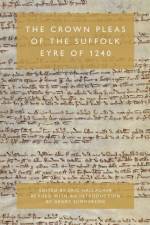
Edition of the records of a medieval Suffolk eyre reveal rich details of life at the time.
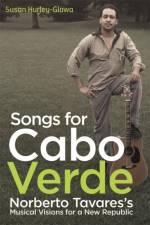
Chronicles the work of Norberto Tavares, a Cabo Verdean musician and humanitarian who served as the conscience of his island nation during the transition from Portuguese colony to democratic republic.Based on twenty years of collaborative fieldwork, Songs for Cabo Verde: Norberto Tavares's Musical Visions for a New Republic focuses on the musician Norberto Tavares but also tells a larger story about postcolonial nation building, musical activism, and diaspora life within the Lusophone sphere. It follows the parallel trajectories of Cabo Verdean independence and Tavares's musical career over four decades (1975-2010). Tavares lived and worked in Cabo Verde, Portugal, and the United States, where he died in New Bedford, Massachusetts at age fifty-four. Tavares's music serves as a lens through which we can view Cabo Verde's transition from a Portuguese colony to an independent, democratic nation, one that was shaped in part through the musician's persistent humanitarian messages.
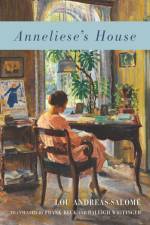
The first English translation of a presciently modern portrayal of emerging feminist sensibilities in a nineteenth-century family, by one of Germany's leading pre-First World War writers.Best known now for her involvement with Nietzsche, Rilke, and Freud, Lou Andreas-Salome (1861-1937) first became famous for fiction and criticism that engaged provocatively with "e;the woman question."e; In recent years, the author's literary treatment of the challenges facing women in a patriarchal society has awakened renewed interest. Anneliese's House is the first English translation of her last and most masterful work of fiction, the 1921 Das Haus: Familiengeschichte vom Ende vorigen Jahrhunderts (The House: A Family Story from the End of the Nineteenth Century). Anneliese Branhardt, the book's protagonist, long ago renounced a career as a pianist to raise a family with her physician husband, Frank. She worries about her son Balduin - an aspiring poet modeled on Rilke - and about her equally free-spirited daughter Gitta. She is haunted by memories of a daughter who died in childhood and anxious about a risky, late pregnancy. With her domestic harmony threatened by her own stirrings of autonomy and her children's growing independence, Anneliese finds the future both frightening and promising. The edition is fully annotated, with a critical introduction and bibliography.
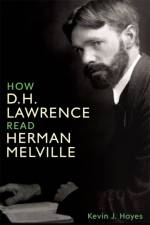
Details Lawrence's reception of Melville and reveals his underacknowledged role in the Melville Revival, while contributing to the history of the book and the study of the creative process.How Lawrence Read Melville is a highly focused account of D. H. Lawrence's discovery and reception of Herman Melville, from when he first read Moby-Dick as a young man to his final references to Melville in his late works. It shows Lawrence's initial reaction to Moby-Dick; how it led him to other works by Melville, namely Typee and Omoo; and how Melville affected Lawrence's critical and creative writing and shaped his philosophy.This book is a study of the creative process that shows how one great writer inspired another, but it also makes a major contribution to the history of the book and two of its subfields: the history of reading, and reception studies. By his death in 1891, Melville had been forgotten except by a small circle of English enthusiasts. That group put Lawrence onto Melville, whereupon he became a - until now largely unacknowledged - leader of the Melville Revival that rescued the great writer from obscurity. This Swiss army knife of a book will appeal to scholars and booklovers alike.
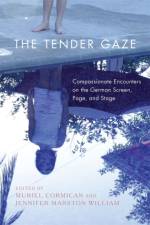
By exploring the concept of the "tender gaze" in German film, theater, and literature, this volume's contributors illustrate how perspective-taking in works of art fosters empathy and prosocial behaviors.
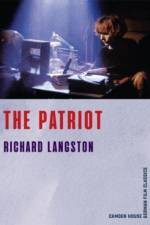
Revitalizes Alexander Kluge's classic 1979 film, showing it to be not just great storytelling but also an exploration of the poetic force of Frankfurt School Critical Theory.
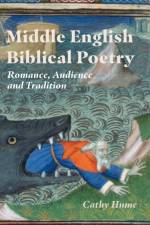
A new analysis of the neglected genre of medieval Biblical poetry.
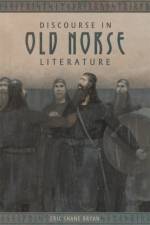
An examination of what dialogues and direct speech in Old Norse literature can convey and mean, beyond their immediate face-value.
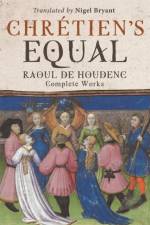
By his contemporaries, Raoul de Houdenc was 'mentioned in the same breath as Chretien de Troyes as one of the masters of French poetry' (Keith Busby, The New Arthurian Encyclopaedia).The writers of later romances deemed Raoul's work worthy of memory on a par with the Prose Lancelot, and placed Raoul and Chretien on the same level in terms of authority.Raoul de Houdenc was a major and innovative figure in 13th-century French literature. His surviving works are unusually diverse: they include an impassioned tract about the values of chivalry (The Romance of the Wings), two superbly crafted Arthurian romances (Meraugis of Portlesguez and The Avenging of Raguidel), and a swingeing polemic against declining standards especially among the bourgeoisie (The Burgess's Burgeoning Blight). And with his hugely influential satire The Dream of Hell he was the very first to compose allegory in the vernacular, mastering to perfection the art of parody and the unexpected.After a long period of neglect Raoul is finally receiving the scholarly attention he deserves, and this is the first translation into English of his complete surviving works.The Avenging of Raguidel 'must surely be counted as one of the most fascinating and innovative of the French Gawain romances' - Norris J. Lacy.
Arthurian Literature has established its position as the home for a great diversity of new research into Arthurian matters. It delivers fascinating material across genres, periods, and theoretical issues. TIMES LITERARY SUPPLEMENT
An investigation into the remarkable "poetics of the atom" in English literary texts from the mid to late seventeenth century.
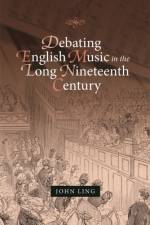
Situates the controversial narrative of 'The English Musical Renaissance' within its wider historical context.
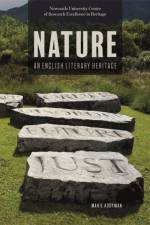
A journey through texts on, about, or reflecting our experience of the natural world.
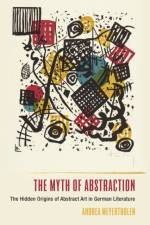
An alternative genealogy of abstract art, featuring the crucial role of 19th-century German literature in shaping it aesthetically, culturally, and socially.Once upon a time (or more specifically, in 1911!) there was an artist named Wassily Kandinsky who created the world's first abstract artwork and forever altered the course of art history - or so the traditional story goes. A good story, but not the full story. The Myth of Abstraction reveals that abstract art was envisioned long before Kandinsky, in the pages of nineteenth-century German literature. It originated from the written word, described by German writers who portrayed in language what did not yet exist as art. Yet if writers were already writing about abstract art, why were painters not painting it? To solve the riddle, this book features the work of three canonical nineteenth-century authors - Heinrich von Kleist, Johann Wolfgang von Goethe, and Gottfried Keller - who imagine, theorize, and describe abstract art in their literary writing, sometimes warning about the revolution it will cause not just in art, but in all aspects of social life. Through close readings of their textual images and visual analyses of actual paintings, Andrea Meyertholen shows how these writers anticipated the twentieth-century birth of abstract art by establishing the necessary conditions for its production, reception, and consumption. The first study to bring these early descriptions of abstraction together and investigate their significance, The Myth of Abstraction writes an alternative genealogy featuring the crucial role of literature in shaping abstract art in aesthetic, cultural, and social terms.
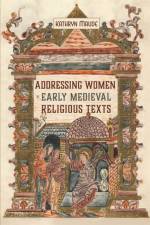
An investigation into texts specifically addressed to women sheds new light on female literary cultures.
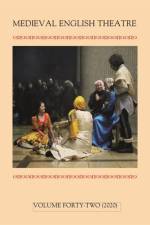
Essays on the performance of drama from the Middle Ages, ranging from the well-known cycles of York to matter from Iran.Medieval English Theatre is the premier journal in early theatre studies. Its name belies its wide range of interest: it publishes articles on theatre and pageantry from across the British Isles up to the opening of the London playhouses and the suppression of the civic mystery cycles, and also includes contributions on European and Latin drama, together with analyses of modern survivals or equivalents, and of research productions of medieval plays. Theatrical performance is central to the groups and communities discussed in this volume, and to their particular and local expressions of faith. The articles presented explore the drama of a variety of different communities from religious orders and houses, through local, medieval and post-medieval lay communities, to contemporary worshippers. Contributors examine complex relationships between theatrical performance and faith, understanding religious theatre as a mode of worship and a method of exploring belief, as well as a site for the study of synchronous and asynchronous connections and fractures within communities. Particular topics addressed include the fragments of play-scripts surviving from the monastery at Mont-St-Michel; the Barking Abbey Easter celebrations; and how the sixteenth-century community which owned the surviving copy of the Towneley plays might have understood them in relation to their own faith. The volume is completed with an exploration of traditional Iranian religious theatre from an ethnographic perspective, in a bid to uncover and understand its very particular effects on the contemporary communities who perform and attend it in the twenty-first century.ELISABETH DUTTON and OLIVA ROBINSON run the Medieval Convent Drama project, based at the University of Fribourg and funded by the Swiss National Science Foundation, which provides the impetus for this special issue of Medieval English Theatre. Contributors: Aurelie Blanc, Eleanor Lucy Deacon, George Gandy, Camille Marshall, James Stokes
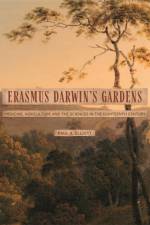
This first full study of Erasmus Darwin's gardening, horticulture and agriculture shows he was as keen a nature enthusiast as his grandson Charles, and demonstrates the ways in which his landscape experiences transformed his understanding of nature.
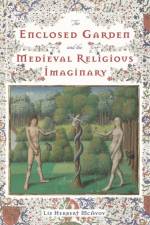
During the Middle Ages, the arresting motif of the walled garden - especially in its manifestation as a sacred or love-inflected hortus conclusus - was a common literary device.
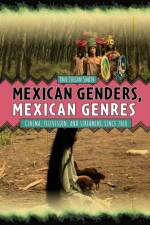
Gender and the contemporary audio-visual landscape of MexicoThis book focusses on gender and the audio-visual landscape of Mexico since 2010, examining popular culture as expressed in the still distinct but rapidly converging media forms of cinema, television, and streaming platforms. It tracks how changes in producers and genres coincide with changes in gender representations and engages with depictions of feminism, women's sexuality, masculinity, and teen homosexuality. It aims to move beyond the art, auteur or specialist film that is vaunted by film festivals but little seen by Mexicans at home, focussing instead on a wider world of media content and practices available in Mexico itself. Close attention is also paid to the social media footprint of the productions studied and the way it is used for promotion and engagement with the target audience. The book proposes a new approach to audio-visual studies, combining textual analysis with field surveys and the useof industrial sources perhaps unfamiliar to scholars in Anglo-American Hispanism and Latin American media studies in the UK and USA. PAUL JULIAN SMITH is Distinguished Professor in the Latin American, Iberian, and Latino Cultures Program at the Graduate Center of the City University of New York.
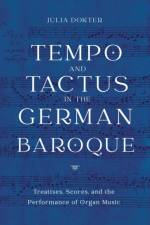
Guides modern performers and scholars through the intricacies of German Baroque metric theory, via analyses of treatises and organ music by J.S. Bach and other leading composers, such as Buxtehude, Bruhns, and Weckman.Before the advent of the metronome ca. 1800, there was little in the way of a standardized, commonly accessible method for precisely communicating how fast musical compositions should be performed. Instead of absolute time (that is, plottable on a metronome), Baroque musicians developed notational cues for relative speed: this was accomplished primarily through combinations of time signatures and note values. Julia Dokter's Tempo and Tactus in the German Baroque helps decode these tempo cues for modern performers.Part 1 investigates metric theory in music treatises from roughly 1600 to 1790. Parts 2 and 3 explore the organ scores of pivotal composers such as J. S. Bach, Dieterich Buxtehude, Matthias Weckman, and Nicolaus Bruhns, and present case studies demonstrating how Baroque tempo indications may interact in performance situations. Readers will discover how Baroque musicians modified the Renaissance mensural system to incorporate tempo shifts; how the various duple, triple, and compound meters interrelated; how the technical display of stylus phantasticus writing affected tempo; how tempo words (such as allegro) functioned; and how the choice of performing forces-chorus, solo keyboard, and so on-could affect the way tempo was notated. By addressing questions of tempo fundamental to German Baroque music, this book lays important groundwork for organists and for performers of other instrumental music of this period.
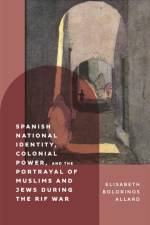
How were Moroccan Muslim and Jewish cultures depicted in Spanish literature, journalism, and photography during the Rif War (1909-27) and what did this portrayal reveal about conflicting visions of Spanish identity?
Abonner på vårt nyhetsbrev og få rabatter og inspirasjon til din neste leseopplevelse.
Ved å abonnere godtar du vår personvernerklæring.