


Gjør som tusenvis av andre bokelskere
Abonner på vårt nyhetsbrev og få rabatter og inspirasjon til din neste leseopplevelse.
Ved å abonnere godtar du vår personvernerklæring.Du kan når som helst melde deg av våre nyhetsbrev.

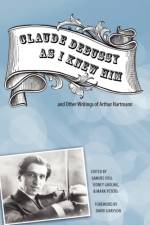
A record of a ten-year personal friendship, with letters, and insights on other contemporaries.
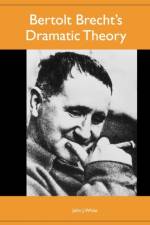
Detailed analysis of Brecht's extensive theoretical writings on the theater, including newly available works.
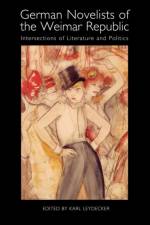
New essays introducing a broad range of novelists of the Weimar period.
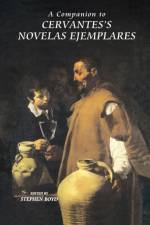
This edited volume of fourteen specially commissioned essays written from a variety of critical perspectives by leading Cervantine scholars seeks to provide an overview of Cervantes's Novelas ejemplares which will be of interest to a broad academic readership.
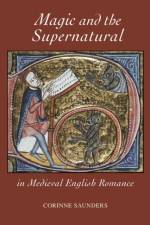
The themes of magic and the supernatural in medieval romance are here fully explored and put into the context of thinking at the time in this first full study of the subject.
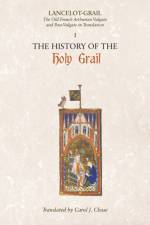
AlthoughThe History of the Holy Grail opens the Vulgate Cycle, it was added after the events described in Lancelot and The Quest of the Holy Grail were already an established part of the Arthurian story. It is, in Hollywood terms, a `prequel', and relates the story of the Grail from its first appearance at the Crucifixion up to the point where it is placed by Alain, the Fisher King, in the castle of Corbenic, whose inhabitants then await the arrival of the chosen Grail knight. Many points in the narrative are designed to foreshadow or to explain the later adventures connected with the Grail, but it also draws on the stories in the apocryphal gospels and other legends of the crucifixion such as the story of Veronica, as well as unrelated material such as the story of Hippocrates. But it also provides many details about the Grail itself which are not found anywhere else. It is less chivalric in tone from the subsequent books of the Vulgate Cycle, and relatively few copies of the original survive. For a full description of the Vulgate Cycle see the blurb for the complete set.
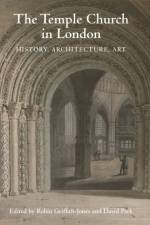
First full-length survey of the Temple Church, from its foundation in the twelfth century to the Second World War.
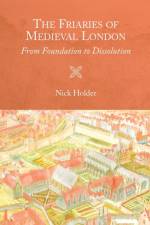
A lavishly illustrated account of the buildings of the friars in the middle ages, bringing them vividly to life.
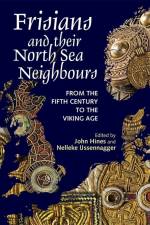
An investigation into the mysterious Frisians, drawing together evidence from linguistic, textual and archaeological sources.From as early as the first century AD, learned Romans knew of more than one group of people living in north-western Europe beyond their Empire's Gallic provinces whose names contained the element that gives us modern "e;Frisian"e;. These were apparently Celtic-speaking peoples, but that population was probably completely replaced in the course of the convulsions that Europe underwent during the fourth and fifth centuries. While the importance of linguisticallyGermanic Frisians as neighbours of the Anglo-Saxons, Franks, Saxons and Danes in the centuries immediately following the fall of the Roman Empire in the West is widely recognized, these folk themselves remain enigmatic, the details of their culture and organization unfamiliar to many. The Frisian population and their lands, including all the coastal communities of the North sea region and their connections with the Baltic shores, form the focal pointof this volume, though viewed often through comparison with, or even through the eyes of, their neighbours. The essays present the most up-to-date discoveries, research and interpretation, combining and integrating linguistic, textual and archaeological evidence; they follow the story of the various Frisians through from the Roman Period to the next great period of disruption and change introduced by the Viking Scandinavians. John Hines is Professor of Archaeology at Cardiff University; Nelleke IJssennagger is Curator of Archaeological and Medieval Collections at the Museum of Friesland. Contributors: Elzbieta Adamczyk, Iris Aufderhaar, Pieterjan Deckers, Menno Dijkstra, John Hines, Nelleke Ijssennagger, Hauke Jons, Egge Knol, Jan de Koning, Johan Nicolay, Han Nijdam, Tim Pestell, Peter Schrijver, Arjen Versloot, Gaby Waxenberger, Christiane Zimmermann.
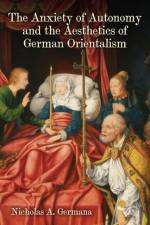
A history of Kantian and post-Kantian thought and of a foundational stage of German orientalism.
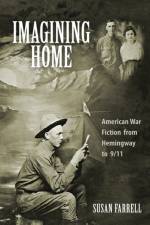
The first study to bring Hemingway, Vonnegut, O'Brien, and 9/11 literature together in order to examine views about war, gender, and domesticity over a hundred-year period.War has often been seen as the domain of men and thus irrelevant to gender analysis, and American writers have frequently examined war according to traditional gender expectations: that boys become men by going to war and girls become women by building a home. Yet the writers discussed in this book complicate these expectations, since their female characters often take part directly in war and especially since their male characters repeatedly imagine domestic spaces for themselves in the midst of war. Chapters on Hemingway and the First World War, Kurt Vonnegut and the Second World War, and Tim O'Brien and the Vietnam War place these writers in their particular historical and cultural contexts while tracing similarities in their depiction of gender relationships, imagined domestic spaces, and the representability of trauma. The book concludes by examining post-9/11 American literature, probing what happenswhen the front lines actually come home to Americans. While much has been written about Hemingway, Vonnegut, O'Brien, and even 9/11 literature separately, this study is the first to bring them together in order to examine views about war, gender, and domesticity over a hundred-year period. It argues that 9/11 literature follows a long tradition of American writing about war in which the domestic and public realms are inextricably intertwined and in which imagined domestic spaces can provide a window into representing wartime trauma, an experience often thought to be unrepresentable or incomprehensible to those who were not actually there. Susan Farrell is Professor of English at the College of Charleston.
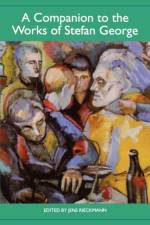
New, wide-ranging essays on the controversial poet, who was both a harbinger of Modernism and a critic of modernity.
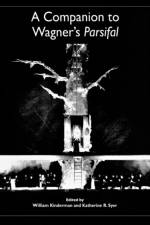
New essays demonstrating and exploring the abiding fascination of Wagner's controversial work.
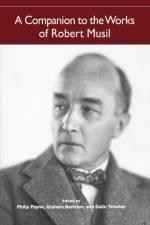
A fresh and extensive look at the works of the great Austrian novelist in the context of the German and Austrian culture of his time.
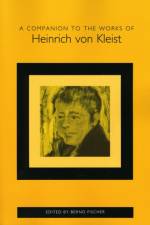
New essays on the most prominent German dramatist and short-story writer of the early 19th century.
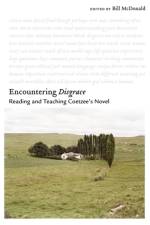
First book of essays devoted to Coetzee's controversial novel, combining critical and pedagogical approaches.
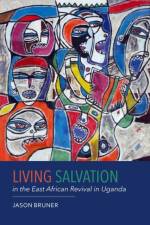
Reexamines the first twenty years of the East African revival movement in Uganda, 1935-1955, arguing that through the movement African Christians articulated and developed a unique spiritual lifestyle.Starting in the mid-1930s, East African revivalists (or, Balokole: "e;the saved ones"e;) proclaimed a message of salvation, hoping to revive the mission churches of colonial East Africa. Frustrated by what they believed to be the tepid spiritual state of missionary Christianity, they preached that in order to be saved, converts had to confess publicly the specific sins they had committed, putting them "e;in the light."e; By "e;walking in the light"e; with other revival brethren, converts reoriented their lives, articulating this reorientation in the stark terms of light and darkness: they had left their dark past and now lived in the light of salvation. This book uses missionary and Colonial Office archives, contemporary newspapers, archival collections in Uganda, anthropologists' field notes, oral histories, and interviews by the author in order to reexamine the first twenty years of the East African revivalmovement (roughly, 1935-1955). Focusing upon the creative, controversial, and remarkable efforts of the ordinary African Christians who comprised the vast majority of the movement, it challenges previous historical analyses that have seen in the revival the replication of British evangelical holiness spirituality or, alternatively, a manifestation of late colonial dissent. Instead, this study argues, the Balokole revival was a movement through which African Christians articulated and developed a unique spiritual lifestyle, one that responded creatively to the sociopolitical contexts of late colonial East Africa. Jason Bruner is Assistant Professor of Global Christianityat Arizona State University.
Readable, enjoyable and provides a clear overview of runes and their importance to reading the past. EARLY MEDIEVAL EUROPE
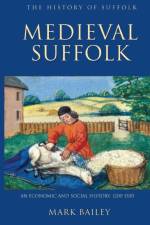
The first volume in what will become the definitive history of Suffolk looks at how the county survived the three most tumultuous events of the period, the Great Famine, the Black Death and the Peasants' Revolt, to emerge as one of the richest English regions.
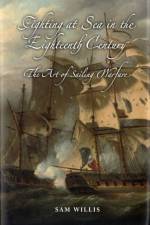
Naval warfare is vividly brought to life, from first contact through how battles were won and lost to damage repair.
A study of a contemporary witness to the transformation of post-Roman Britain into Anglo-Saxon England.
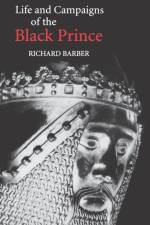
Letters, reports, campaign diaries and the chronicles of Geoffrey le Baker and Chandos Herald document the life and dazzling exploits of the legendary Black Prince.
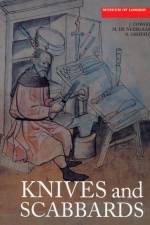
Catalogue of knives and scabbards found in London excavations, with discussion of date, technology, decoration and function.
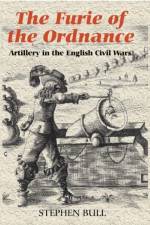
Shows how new developments in guns and artillery played a decisive role in the English Civil War.
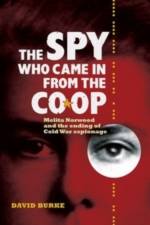
A story of wartime intelligence, super-power relations and spies and their handlers - seen through the experience of Melita Norwood.
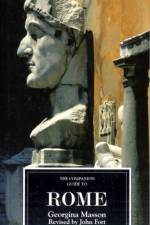
Classic guide to Rome. 2009 edition, thoroughly revised and updated.
Insightful account of the life and works of two of the most important figures in twentieth-century British cultural life.
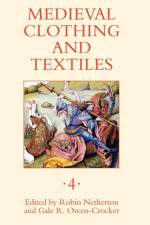
The best new research on medieval clothing and textiles, drawing from a range of disciplines and with a special focus on reconstruction.
A wide-ranging survey of the brief revival of religious art, architecture, music, and literature during the Counter-Reformation.
Abonner på vårt nyhetsbrev og få rabatter og inspirasjon til din neste leseopplevelse.
Ved å abonnere godtar du vår personvernerklæring.