



Gjør som tusenvis av andre bokelskere
Abonner på vårt nyhetsbrev og få rabatter og inspirasjon til din neste leseopplevelse.
Ved å abonnere godtar du vår personvernerklæring.Du kan når som helst melde deg av våre nyhetsbrev.

A comprehensive history of parliament in the British Isles from the earliest times, covering all aspects of parliament as an institution.
A new interpretation of Celtic Christianity, supported by images of Christ taken from manuscripts, metalwork and sculpture, and showing how it departed from continental practice largely due to a differing perception and application of Pelagianism.
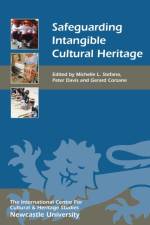
Wide-ranging essays on intangible cultural heritage, with a focus on its negotiation, its value, and how to protect it.
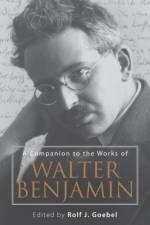
An advanced introduction to Benjamin's work and its actualization for our own times.
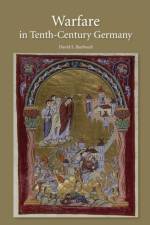
A complete survey of the military campaigns of the early Saxons, tactics, strategy, and logistics, demonstrating in particular the sophistication of the administration involved.
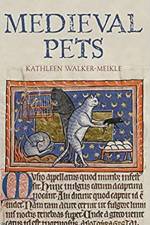
An engaging and informative survey of medieval pet keeping which also examines their representation in art and literature.
Separating fact from fiction, this book explores how the legendary violinist challenged the very notion of what it meant to be a musician.
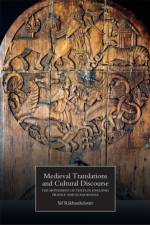
An examination of what the translation of medieval French texts into different European languages can reveal about the differences between cultures.
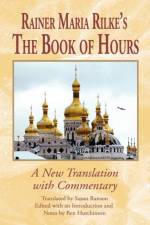
A superb new (and complete) translation of Rilke's luminously lyrical early book of poems, with scholarly introduction and commentary.Rainer Maria Rilke is arguably the most important modern German-language poet. His New Poems, Duino Elegies, and Sonnets to Orpheus are pillars of 20th-century poetry. Yet his earlier verse is less known. The Bookof Hours, written in three bursts between 1899 and 1903, is Rilke's most formative work, covering a crucial period in his rapid ascent from fin-de-siecle epigone to distinctive modern voice. The poems document Rilke'stour of Russia with Lou Andreas-Salome, his hasty marriage and fathering of a child in Worpswede, and his turn toward the urban modernity of Paris. He assumes the persona of an artist-monk undertaking the Romantics' journey into the self, speaking to God as part transcendent deity, part needy neighbor. The poems can be read simply for their luminous lyricism, captured in Susan Ranson's superb new translation, which reproduces the music of the original German with impressive fluidity. An in-depth introduction explains the context of the work and elucidates its major themes, while the poem-by-poem commentary is helpful to the student and the general reader. A translator's note treating the technical problems of rhythm, meter, and rhyme that the translator of Rilke faces completes the volume. Susan Ranson is the co-translator, with Marielle Sutherland, of Rainer Maria Rilke, Selected Poems (Oxford World's Classics, 2011). Ben Hutchinson is Reader in Modern German at the University of Kent, UK.
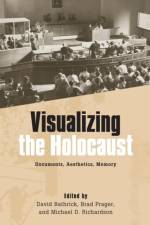
Collection of essays exploring the controversies surrounding images of the Holocaust.
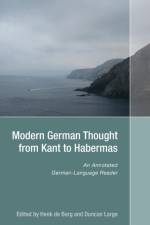
The first book that presents key original texts from the modern German philosophical tradition to English-language students and scholars of German, with introductions, commentaries, and annotations that make them accessible.
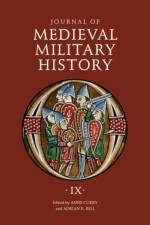
Special edition of a volume which has become the leading forum for debate on aspects of medieval warfare, looking at warfare in the fifteenth century.
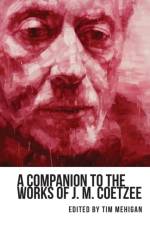
New essays providing critical views of Coetzee's major works for the scholar and the general reader.
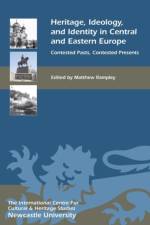
Essays looking at heritage practices and the construction of the past, along with how they can be used to build a national identity.The preservation of architectural monuments has played a key role in the formation of national identities from the nineteenth century to the present. The task of maintaining the collective memories and ideas of a shared heritage often focused on the historic built environment as the most visible sign of a link with the past. The meaning of such monuments and sites has, however, often been the subject of keen dispute: whose heritage is being commemorated, by whom and for whom? The answers to such questions are not always straightforward, particularly in Central and Eastern Europe, the recent history of which has been characterized by territorial disputes, the large-scale movement of peoples, and cultural dispossession. This volume considers the dilemmas presented by the recent and complex histories of European states such as Germany, Greece, Poland, Hungary, Romania and Bulgaria. Examining the effect ofthe destruction of buildings by war, the loss of territories, or the "e;unwanted"e; built heritage of the Communist and Nazi regimes, the contributors examine how architectural and urban sites have been created, destroyed, or transformed, in the attempt to make visible a national heritage. Matthew Rampley is Professor of History of Art at the University of Birmingham. Contributors: Matthew Rampley, Juliet Kinchin, Paul Stirton, SusanneJaeger, Arnold Bartetzky, Jacek Friedrich, Tania Vladova, George Karatzas, Riitta Oittinen
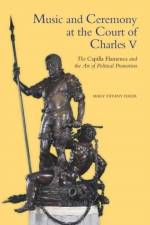
Shows how Charles V used music and ritual to reinforce his image and status as the most important and powerful sovereign in Europe.The presentation of Charles V as universal monarch, defender of the faith, magnanimous peacemaker, and reborn Roman Emperor became the mission of artists, poets, and chroniclers, who shaped contemporary perceptions of him and engaged in his political promotion. Music was equally essential to the making of his image, as this book shows. It reconstructs musical life at his court, by examining the compositions which emanated from it, the ordinances prescribing its rituals and ceremonies, and his prestigious chapel, which reflected his power and influence. A major contribution, offering new documentary material and bringing together the widely dispersed information on the music composed to mark the major events of Charles's life. It offers.a very useful insight into music as one of many elements that served to convey the notion of the emperor-monarch in the Renaissance. TESS KNIGHTON Mary Ferer is Associate Professor at the College of Creative Arts, West Virginia University.
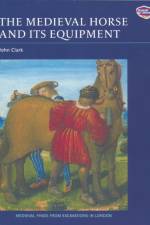
Over 400 recent finds associated with horses and excavated in London, from the utilitarian to the highly decorated, illustrated and discussed.
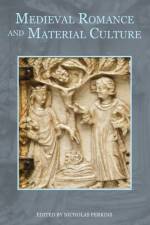
Studies of how the physical manifests itself in medieval romance - and medieval romances as objects themselves.
A study of the journalistic and academic reception of the writings of one of the great American writers of the late twentieth century.
Anne of France (1461-1522) composed these lessons - presented as a portrait of an ideal princess - as guidance in negotiating the pitfalls facing a woman in the world of politics. First English translation.
Women are shown to have played an important and very visible role in society at the time.
This book takes advantage of new and often surprising biographical research on the Loder family as a whole and its four main figures, using them to illustrate aspects of music history in the 19th century.
New insights into the nature of the seventeenth-century English revolution - one of the most contested issues in early modern British history.
Written in a lively and engaging style, and designed to be accessible to a broader audience, this collection combines new research with the latest scholarship to provide a fresh and invigorating introduction to the revolutionary period that transformed Britain and its empire.
The first comprehensive survey of the Irish literary elite in the early middle ages.Winner of the 2015 Irish Historical Research Prize. Much of our knowledge of early medieval Ireland comes from a rich literature written in a variety of genres and in two languages, Irish and Latin. Who wrote this literature and what role did they play within society? What did the introduction and expansion of literacy mean in a culture where the vast majority of the population continued to be non-literate? How did literacy operate in and intersect with the oral world? Was literacy a key element in the formation and articulation of communal and elite senses of identity? This book addresses these issues in the first full, inter-disciplinary examination of the Irish literate elite and their social contexts between ca. 400-1000 AD. It considers the role played by Hiberno-Latin authors, the expansion of vernacular literacy and the key place of monasteries within the literate landscape. Also examined are the crucial intersections between literacy and orality, which underpin the importance played by the literate elite in giving voice to aristocratic and communal identities. This study places these developments within a broader European context, underlining the significance of the Irish experience of learning and literacy. Elva Johnston is lecturer in the School of History and Archives, University College Dublin.
Provides for a new interpretation of the agrarian economy in late Tudor and early modern Britain.This volume revisits a classic book by a famous historian: R.H. Tawney's Agrarian Problem in the Sixteenth Century (1912). Tawney's Agrarian Problem surveyed landlord-tenant relations in England between 1440 and 1660, the period of emergent capitalism and rapidly changing property relations that stands between the end of serfdom and the more firmly capitalist system of the eighteenth century. This transition period is widely recognised as crucial to Britain's long term economic development, laying the foundation for the Industrial Revolution of the eighteenth century. Remarkably, Tawney's book has remained the standard text on landlord-tenant relations for over a century. Here, Tawney's book is re-evaluated by leading experts in agrarian and legal history, taking its themes as a departure point to provide for a new interpretation of the agrarian economy in late Tudor and early modern Britain. The introduction looks at how Tawney's Agrarian Problem was written, its place in the historiography of agrarian England and the current state of research. Survey chapters examine the late medieval period, a comparison with Scotland, and Tawney's conception of capitalism, whilst the remaining chapters focus on four issues that were central to Tawney's arguments: enclosure disputes, the security of customary tenure; the conversion of customarytenure to leasehold; and other landlord strategies to raise revenues. The balance of power between landlords and tenants determined how the wealth of agrarian England was divided in this crucial period of economic development - this book reveals how this struggle was played out. JANE WHITTLE is professor of rural history at Exeter University. Contributors: Christopher Brooks, Christopher Dyer, Heather Falvey, Harold Garrett-Goodyear, Julian Goodare, Elizabeth Griffiths, Jennifer Holt, Briony McDonagh, Jean Morrin, David Ormrod, William D. Shannon, Jane Whittle, Andy Wood. Foreword by Keith Wrightson
New essays on the works and themes of Hesse, one of the most perennially relevant and widely-read German authors.
First English translation of the final work of Theodor Fontane, one of Germany's most significant novelists.
New English translation of Llull's classic and significant text, restoring the nuances of the original.
The relations between medieval East Anglia and countries across the North Sea examined from a variety of perspectives.
Abonner på vårt nyhetsbrev og få rabatter og inspirasjon til din neste leseopplevelse.
Ved å abonnere godtar du vår personvernerklæring.