






Gjør som tusenvis av andre bokelskere
Abonner på vårt nyhetsbrev og få rabatter og inspirasjon til din neste leseopplevelse.
Ved å abonnere godtar du vår personvernerklæring.Du kan når som helst melde deg av våre nyhetsbrev.

Essays examining how punishment operated in England, from c.600 to the Norman Conquest.
Liszt's Final Decade reveals in the composer's own words to his confidantes Carolyne von Sayn-Wittgenstein and Olga von Meyendorff how he resolved his conflicted self-image as a celebrated performer but underappreciated composer.
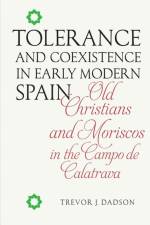
Challenges the view that that the Moriscos of Spain made little or no attempt to assimilate to the majority Christian culture around them, and that this led to their expulsion between 1609 and 1614.
Latest volume in a series which is "a monumental achievement" REVIEW OF ENGLISH STUDIES
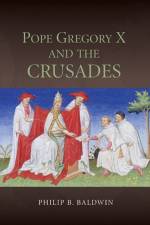
First full-length study of Pope Gregory X in relation to Crusade, demonstrating his significant impact.
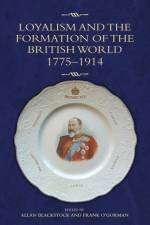
Explores loyalism as a social and political force in eighteenth and nineteenth century British colonies and former colonies.
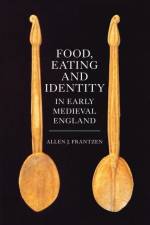
A fresh approach to the implications of obtaining, preparing, and consuming food, concentrating on the little-investigated routines of everyday life.
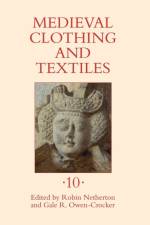
The best new research on medieval clothing and textiles, drawing from a range of disciplines.The usual wide range of approaches to garments and fabrics appears in this tenth volume. Three chapters focus on practical matters: a description of the medieval vestments surviving at Castel Sant'Elia in Italy; a survey of the spread of silk cultivation to Europe before 1300; and a documentation of medieval colour terminology for desirable cloth. Two address social significance: the practice of seizing clothing from debtors in fourteenth-century Lucca, and the transformation of the wardrobe of Margaret Tudor, daughter of King Henry VII, upon her marriage to the king of Scotland. Two delve into artistic symbolism: a consideration of female headdresses carved at St Frideswide's Priory in Oxford, and a discussion of how Anglo-Saxon artists used soft furnishings to echo emotional aspects of narratives. Meanwhile, in an exercise in historiography, there is an examination of the life of Mrs. A.G.I. Christie, author of the landmark Medieval English Embroidery. ROBIN NETHERTON is a professional editor and a researcher/lecturer on the interpretation of medieval European dress; GALE R. OWEN-CROCKER is Professor of Anglo-Saxon Culture at the University of Manchester. Contributors: Michelle L. Beer, Elizabeth Coatsworth, Valija Evalds, Christine Meek, Maureen C. Miller, Christopher J. Monk, Lisa Monnas, Rebecca Woodward Wendelken
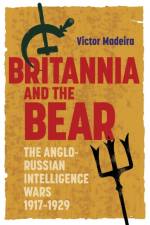
A compelling new narrative about how two Great Powers of the early twentieth century did battle, both openly and in the shadows
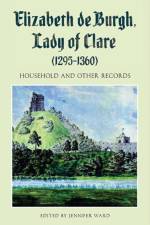
Edition, with full explanatory notes and introduction, of financial records from Elizabeth de Burgh, one of the most important women of fourteenth-century England.
A study of two Germanic tribes, the Baiuvarii and Thuringi, looking at their origins, development, and customs between the fifth and the eighth centuries.
A survey of the theory and methods of conservation from the nineteenth century to the present day, highlighting future pathways.
This book is the most authoritative and up-to-date source of quick reference on the Baroque composer and theorist Jean-Philippe Rameau (1683-1764)
Shows how the rise of evangelical religion in the navy helped create a new kind of sailor, technologically trained and steeped in a higher set of values.This book examines how, as the nineteenth century progressed, religious piety, especially evangelical piety, was seen in the British navy less as eccentric and marginal and more as an essential ingredient of the character looked for in professional seamen. The book traces the complex interplay between formal religious observance, such as Sunday worship, and pockets of zealous piety, showing how evangelicalism gradually earned less grudging regard, until inthe 1860s and 1870s it became a dominant source of values and a force for moral reform. Religion in the British Navy explains this shift, outlining how Arctic expeditions showed the need for dependability and character, how Health Returns revealed the full extent of sexual licence and demonstrated the urgency of moral reform, and how manning difficulties in the Russian War of 1854-1856 showed that a modern fleet required a new type of sailor, technologically trained and steeped in a higher set of values. The book also discusses how the navy, with its newly awakened religious sensibilities, played a major role in the expansion of Protestant missions globally, in exploration,convict transportation, the expansion of imperial frontiers, and worldwide maritime policing operations. Fervent piety had an effect in all these areas - religion had helped develop a new kind of manliness where piety as well asdaring had a place. RICHARD BLAKE is the author of Evangelicals in the Royal Navy, 1775-1815 (Boydell 2008).
Revealing unpublished interviews with John Cage and some of his closest colleagues, including Virgil Thomson, Karlheinz Stockhausen, Pauline Oliveros, Merce Cunningham, and David Tudor.John Cage was one of America's most renowned composers from the 1940s until his death in 1992. But he was also a much-admired writer and artist, and a uniquely attractive personality able to present his ideas engagingly wherever he went. As an interview subject he was a consummate professional. The main source of CageTalk: Dialogues with and about John Cage is a panoply of vivid and compulsively readable interviews given to Peter Dickinson in the late 1980s for a BBC Radio 3 documentary. The original BBC program lasted an hour, but the full discussions with Cage and many of the main figures connected with him were not published until the first edition of this book.CageTalk also includes earlier BBC interviews with Cage, including ones by the renowned literary critic Frank Kermode and art critic David Sylvester. And Dickinson, the editor of this volume, contributes little-known source material about Cage's Musicircus and Roaratorio as well as a substantial introduction exploring the multiple roles that Cage's varied and challenging output played during much of the twentieth century and continuesto play in the early twenty-first. Apart from the long interview with Cage himself, there are discussions with Bonnie Bird, Earle Brown, Merce Cunningham, Minna Lederman, Otto Luening, Jackson Mac Low, Peadar Mercier, Pauline Oliveros, John Rockwell, Kurt Schwertsik, Karlheinz Stockhausen, Virgil Thomson, David Tudor, La Monte Young, and Paul Zukovsky. Most of the interviews were given to Peter Dickinson but there are others involving Rebecca Boyle,Anthony Cheevers, Michael Oliver, and Roger Smalley. Peter Dickinson, British composer and pianist, is Emeritus Professor, University of Keele and University of London, and has written or edited several books about twentieth-century music, including Copland Connotations [Boydell Press, 2002] and The Music of Lennox Berkeley [Boydell Press, 2003].
This book explores the crossroads between autobiographical narratives and musical composition in Alban Berg's Lulu, unveiling aspects of encoded social customs, gender identity, and personal experiences within musical structures.
The complexity of print culture in Britain between the seventeenth and nineteenth century is investigated in these wide-ranging articles.The essays collected here offer examinations of bibliographical matters, publishing practices, the illustration of texts in a variety of engraved media, little studied print culture genres, the critical and editorial fortunes of individual works, and the significance of the complex interrelationships that authors entertained with booksellers, publishers, and designers. They investigate how all these relationships affected the production of print commodities and how all the agents involved in the making of books contributed to the cultural literacy of readers and the formation of a canon of literary texts. Specific topics include a bibliographical study of Aphra Behn's Oroonoko and its editions from its first publication to the present day; the illustrations of John Bunyan's Pilgrim's Progress and the ways in which the interpretive matrices of book illustration conditioned the afterlife and reception of Bunyan's work; the almanac and the subscription edition; publishing history, collecting, reading, and textual editing, especially of Robert Burns's poems and James Thomson's The Seasons; the "e;printing for the author"e; practice; the illustrated and material existence of Sir Walter Scott's Waverley novels, and the Victorian periodical, The Athenaeum. Sandro Jung is Research Professor of Early Modern British Literature and Director of the Centre for the Study of Text and Print Culture at Ghent University. Contributors: Gerard Carruthers, Nathalie Colle-Bak, Marysa Demoor, Alan Downie, Peter Garside, Sandro Jung, Brian Maidment, Laura L. Runge.
Examines Czech musical culture c. 1600-1750 and the society that created and shaped it
The first large-scale study of the music of Herbert Howells, prodigiously gifted musician and favourite student of the notoriously hard-to-please Sir Charles Villiers Stanford.Herbert Howells (1892-1983) was a prodigiously gifted musician and the favourite student of the notoriously hard-to-please Sir Charles Villiers Stanford. Throughout his long life, he was one of the country's most prominent composers, writing extensively in all genres except the symphony and opera. Yet today he is known mostly for his church music, and there is as yet relatively little serious study of his work. This book is the first large-scale study of Howells's music, affording both detailed consideration of individual works and a broad survey of general characteristics and issues. Its coverage is wide-ranging, addressing all aspects of the composer's prolific output and probing many of the issues that it raises. The essays are gathered in five sections: Howells the Stylist examines one of the most striking aspect of the composer's music, its strongly characterised personal voice; Howells the VocalComposer addresses both his well-known contribution to church music and his less familiar, but also important, contribution to the genre of solo song; Howells the Instrumental Composer shows that he was no less accomplished for his work in genres without words, for which, in fact, he first made his name; Howells the Modern considers the composer's rather overlooked contribution to the development of a modern voice for British music; and Howells in Mourning explores the important impact of his son's death on his life and work. The composer that emerges from these studies is a complex figure: technically fluent but prone to revision and self-doubt; innovative but also conservative; a composer with an improvisational sense of flow who had a firm grasp of musical form; an exponent of British musical style who owed as much to continental influence as to his national heritage. This volume, comprising a collection of outstanding essays by established writers and emergent scholars, opens up the range of Howells's achievement to a wider audience, both professional and amateur. PHILLIP COOKE is Lecturer in Composition at theUniversity of Aberdeen. DAVID MAW is Tutor and Research Fellow in Music at Oriel College, Oxford, holding Lectureships also at Christ Church, The Queen's and Trinity Colleges. CONTRIBUTORS: Byron Adams, Paul Andrews, Graham Barber, Jonathan Clinch, Phillip A. Cooke, Jeremy Dibble, Lewis Foreman, Fabian Huss, David Maw, Diane Nolan Cooke, Lionel Pike, Paul Spicer, Jonathan White. Foreword by John Rutter.
An in-depth study of the life of Sir Hamilton Harty (1879-1941), pianist, composer and conductor of the Halle Orchestra, who arguably made Manchester the most important focus for music in Britain in his day.Sir Hamilton Harty (1879-1941) is best known as the conductor of the Halle Orchestra, who arguably made Manchester the most important focus for music in Britain in his day. This book chronicles and analyses Harty's illustrious career, from his establishment as London's premiere accompanist in 1901 to his years as a conductor between 1910 and 1933, first with the LSO and then with the Halle, to his American tours of the 1930s. Tragically, Harty died from cancer in 1941 at the age of only 61. This book also looks at Harty's life as a composer of orchestral and chamber works and songs, notably before the First World War. Although Harty's music cleaved strongly to a late nineteenth-century musical language, he was profoundly influenced during his days in Ulster and Dublin by the Irish literary revival. A great exponent of Mozart and especially Berlioz, Harty was also a keen exponent of British music and an active supporter of American composers such as Gershwin. Harty's role in the exposition of standard and new repertoire and his relationship with contemporary composers and performers are also examined, against the perspective of other important major British conductors such as Sir Thomas Beecham, Malcolm Sargent and Sir Henry Wood. Additionally, the book analyses the debates Harty provoked on the subjects of women orchestral players, jazz, modernism, and the music of Berlioz. JEREMY DIBBLE is Professor of Music at Durham University and author of John Stainer: A Life in Music(The Boydell Press, 2007) and monographs on C. Hubert H. Parry, Charles Villiers Stanford and Michele Esposito.
First English-language publication of fascinating interviews with world-renowned musicians: composers (Gyorgy Ligeti), conductors (Claudio Abbado), singers (Elisabeth Schwarzkopf), instrumentalists (Yehudi Menuhin, Alfred Brendel), and more.Balint Andras Varga makes available here for the first time in English nineteen extended interviews with some of the most notable figures in music from the past fifty years, as well as lively snippets from interviews Varga conducted with thirteen other equally renowned musicians. The interviewees include singers Elisabeth Schwarzkopf and Cathy Berberian; pianists Alfred Brendel and Arthur Rubinstein; violinists Isaac Stern and Yehudi Menuhin; conductors Claudio Abbado and Sir Neville Marriner; composers Gyorgy Ligeti and Karlheinz Stockhausen; and legendary pedagogue Nadia Boulanger. Of special interest is an interview with the reclusive composer Gyorgy Kurtag, here published for the first time in any language. From Boulanger to Stockhausen concludes with a poignant memoir by Varga of his experiences growing up in a Jewish family in Hungary during World War II and the early years of Communist rule. Varga's recollections also include details about his many interviews with some of these remarkable musicians, and about his employment at the Hungarian state radio station and then in the music-publishing industry, which brought him to, among other places, Vienna, where he now lives. Interviewees: Claudio Abbado, Georges Auric, Cathy Berberian, Nadia Boulanger, Ernest Bour, Alfred Brendel, Aaron Copland, Sir Neville Cardus, Antal Dorati, Adam Fischer, Ivan Fischer, Geza Frid, Sir William Glock, Sylvia Goldstein, Alois Haba, Ralph Kirkpatrick, Gyorgy Kurtag, Walter Legge, Gyorgy Ligeti, Witold Lutoslawski, Sir Neville Marriner, Yehudi Menuhin, Eugene Ormandy,Vladlemuter, Arthur Rubinstein, Gyorgy Sandor, Elisabeth Schwarzkopf, Isaac Stern, Karlheinz Stockhausen, Wolfgang Stresemann, Walter Susskind, Hans Swarowsky, Joseph Szigeti, Tibor Varga. Balint Andras Varga has spent morethan forty years working for and with composers. His previous books include Gyorgy Kurtag: Three Interviews and Ligeti Homages and Three Questions for Sixty-Five Composers, both published by the University of Rochester Press.
Offers a fresh approach to German film studies by tracing key genres -- including horror, the thriller, Heimat films, and war films -- over the course of German cinema historyOver the last few decades, the field of film studies has seen a rise in approaches oriented toward genre: studies that look at thematic, narrative, and stylistic similarities between films, contextualizing them within culture andsociety. Although there now exists a large body of genre-based scholarship on international film, German film studies has largely ignored the importance of genre. Even as the last several years have witnessed increasing scholarlyinterest in popular cinema from Germany, very few works have substantively engaged with genre theory. Generic Histories offers a fresh approach, tracing a series of key genres -- including horror, science fiction,the thriller, Heimat films, and war films -- over the course of German cinema history. It also addresses detective films, comedies, policiers, and romances that deliberately localize global genres within Germany - aform of transnationalism frequently neglected. This focus on genre and history encourages rethinking of the traditional opposition (and hierarchy) between art and popular cinema that has informed German film studies. In these ways, the volume foregrounds genre theory's potential for rethinking film history as well as cultural history more broadly. Contributors: Marco Abel, Nora M. Alter, Antje Ascheid, Hester Baer, Steve Choe, Paul Cooke, Jaimey Fisher, Gerd Gemunden, Sascha Gerhards, Lutz Koepnick, Eric Rentschler, Kris Vander Lugt. Jaimey Fisher is Associate Professor of German and Cinema and Technocultural Studies, and Director of Cinema and Technocultural Studies, at the University of California, Davis.
The author analyses six novels of the "boom" in Cuban fiction of the 1990s that subvert homogenized views of Cuban identity.
An analysis of the ways in which Chaucer uses details of costume, clothing and fabric, enhancing our understanding of and shedding fresh insights into his work.
The story of a modernist building with a significant place in the history of Soviet espionage in Britain, where communist spies rubbed shoulders with British artists, sculptors and writers
This new companion to the works of Marie de France offers fresh insights into the standard critical debates.
German history films that focus on utopianism and political dissent and their effect on German identity since 1989.
An essential chronological framework for students of Portuguese literature.
The monastic life, traditionally considered as an area of withdrawal from the world, is here shown to be shaped by metaphors of war, and to be actively engaged with battle in the world outside.
Examination of welfare during the last years of the Poor Law, bringing out the impact of poverty on particular sections of society - the lone mother and the elderly.
Abonner på vårt nyhetsbrev og få rabatter og inspirasjon til din neste leseopplevelse.
Ved å abonnere godtar du vår personvernerklæring.