







Gjør som tusenvis av andre bokelskere
Abonner på vårt nyhetsbrev og få rabatter og inspirasjon til din neste leseopplevelse.
Ved å abonnere godtar du vår personvernerklæring.Du kan når som helst melde deg av våre nyhetsbrev.

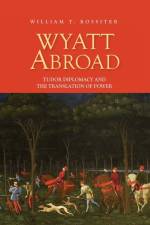
An examination of Wyatt's translations and adaptions of European poetry yields fresh insights into his work and poetic practice.During the 1520s and 1530s Sir Thomas Wyatt, the poet and diplomat, composed a number of translations and adaptations of European poetry (including the Penitential Psalms and works by Petrarch) when he was in embassy, or when he was engaged in other forms of international negotiations.This volume presents a comparative analysis of those poems which were directly or indirectly shaped by his ambassadorial experience. By examining the key points of divergencefrom and adaptation of his Italian, Latin and French sources and analogues, the author identifes the specific ways in which Wyatt reformed those sources in order to comment upon the lability of Tudor diplomacy and the political machinations at home and abroad which informed it - as well as the personal cost to Wyatt himself. The volume also identifies Wyatt's innovations and his debts, so redressing earlier interpretations of Wyatt's work which ignored its translative ontology. Through noting Wyatt's specific alterations and ameliorations, it allows a clearer image of his poetics to develop. Dr William T. Rossiter is Senior Lecturer in Medieval and Early Modern EnglishLiterature at the University of East Anglia.
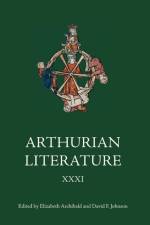
Arthurian Literature has established its position as the home for a great diversity of new research into Arthurian matters. It delivers fascinating material across genres, periods, and theoretical issues. TIMES LITERARY SUPPLEMENTThe studies collected in this volume demonstrate the enduring vitality of the Arthurian legend in a wide range of places, times and media. Chretien's Conte du Graal features first in a study of the poem's place in its Anglo-Norman context, followed by four essays on Malory's Morte Darthur. Two of these deal with the significance of wounds and wounding in Malory's text, while the third explores the problematic aspects of sleep and the "e;slepynge knight"e; in that same romance. The fourth considers "e;transformative female corpses"e; as, quite literally, the embodiment of critical comment on the chivalric community in the Morte Darthur. There follow two studies of the Arthurian legend captured in material objects: the first concerns the early twelfth-century images on a marble column from the cathedral at Santiago de Compostela, the second a twentieth-century tapestry created by Lady Trevelyan for the family home at Wallington Hall. The volume closes with an essay that brings us into the twenty-first century, with an assessment of Kaamelott, an irreverent French Pythonesque television series. ElizabethArchibald is Professor of English Studies at Durham University, and Principal of St Cuthbert's Society; David F. Johnson is Professor of English at Florida State University, Tallahassee. Contributors: Karen Cherewatuk,Tara Foster, Joan Tasker Grimbert, Erin Kissick, Irit Ruth Kleiman, Megan Leitch, Roger Simpson, K.S. Whetter.
Covering a period from the Ancient World to the present day, the book suggests that until very recently, falsettists and counter-tenors have been distinct vocal genres.
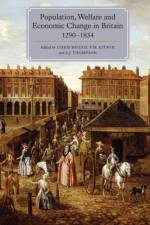
Presents the latest research on the causes and consequences of British population change from the medieval period to the eve of the Industrial Revolution, in both town and countryside
Discusses the many measures taken in this period to improve seamen's health and fitness.
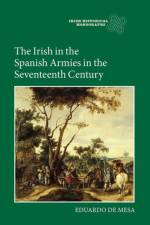
Provides a wealth of detail on how "e;the wild geese"e; - the Irish who refused to submit to the English - played a significant role in the armies of Spain.It is well-known that many Irishmen who refused to submit to the English in the reigns of Elizabeth and the early Stuart kings, including the famous earls of Tyrone and Tyrconnell, went to fight for the king of Spain, but what they did when they joined the Spanish armies is much less well-known. This book provides a wealth of detail on the activities of the Irish in the Spanish armies in the late sixteenth and seventeenth centuries. It outlines who the Irish soldiers were, how they were recruited and the terms under which they served. It discusses their military roles both in the wars in Flanders between the Spanish and their former Dutch subjects, and, later, in the Hispanic peninsula, showing how the Irish were often employed as elite troops who made significant contributions to major military actions, such as the siege of Breda in 1624. It examines military tactics, explores the politics of the Spanish armies, showing how the Irish fitted in, and discusses how, when the rebellion of 1641 broke out in Ireland, many Irish soldiers returned to Ireland to resume the fight against the English. Eduardo de Mesa completed hisdoctorate at University College Dublin. He is the author of La pacificacion de Flandes. Spinola y las campanas de Frisia (1604-1609) (2009), and Discurso Militar del Marques de Aytona (2008), co-author of La Monarquia de Felipe III (2008), and author of numerous articles, chapters in edited collections, and encyclopedia entries.
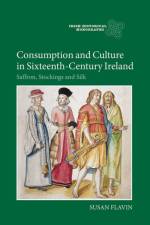
A detailed study of changing patterns of consumption, showing how these related to wider political, social and economic developments.
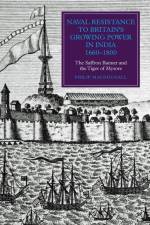
Reveals, from a non-Eurocentric perspective, how Indian states developed and implemented maritime strategies which posed a serious threat to British naval power in the region.Most books on the colonisation of India view the subject in Eurocentric imperial terms, focusing on the ways in which European powers competed with each other on land and at sea and defeated Indian states on land, and viewing Indian states as having little interest in naval matters. This book, in contrast, reveals that there was substantial naval activity on the part of some Indian states and that this activity represented a serious threat to Britain's naval power. Considering the subject from an Indian point of view, the book discusses the naval activities of the Mahratta Confederacy and later those of Mysore under its energetic rulers Haidar Ali and his successor Tipu Sultan. Itshows how these states chose deliberately to develop a naval strategy, seeing this as the most effective way of expelling the British from India; how their strategies learned from European maritime technology, successfully blending this with Indian technology; how their opposition to British naval power was at its most effective when they allied themselves with the other European naval powers in the region - France, Portugal and the Netherlands, whose maritime activities in the region are fully outlined and assessed; and how ultimately the Indian states' naval strategies failed. Philip MacDougall, a former lecturer in economic history at the University of Kent, is a founder member of the Navy Dockyards Society, editor of the Society's Transactions, and the author or editor of seven books in maritime history, including The Naval Mutinies of 1797 (The Boydell Press, 2011).
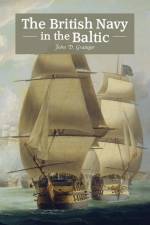
A comprehensive overview of the activities of the British navy in the Baltic Sea from the earliest times until the twentieth century.
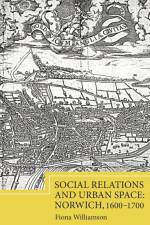
This book offers an insight into the social relationships and topographies that fashioned both city life and landscape and serves as a useful counterpoise in a field that has largely focused on London.
This book will appeal not only to historians and geographers, but to many who maintain a deep interest in the British countryside and its past, and to those who continue to share a fascination for the Second World War, in particular the 'home front'.
The first full-length study devoted to Ignaz Moscheles (1794-1870), pianist, conductor and composer.
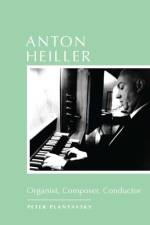
First English-language study of Anton Heiller (1923-1979), one of the twentieth-century's most influential organistsAnton Heiller is one of the twentieth century's most renowned and influential organists. Born in 1923, Heiller was trained in Vienna and rose to prominence quickly, giving his first solo recital at the age of twenty-two. Before concentrating on the organ exclusively, he was a successful conductor of the symphonic repertoire, and, from 1945 until his untimely death in 1979, he was professor of organ at the University of Music and Performing Arts in Vienna.His interpretations of Bach, which included registration and articulation, as well as a consideration of the theological underpinnings, would change the way Bach is played. Anton Heiller: Organist, Composer, Conductorprovides an assessment of Heiller's works and teaching, while also examining his complex personality, one torn between strong religious devotion and the world of artistry. The narrative also offers a unique view of the organ worldin the decades after World War II, featuring the important organs, builders, and organists across North America and Europe. Peter Planyavsky was Anton Heiller's successor as an organ professor in Vienna, and organist of St. Stephan's Cathedral in Vienna from 1969 through 2004. He is also a prolific composer, improviser, and conductor. Christa Rumsey, a former student of Heiller's, translated the book from the original German.
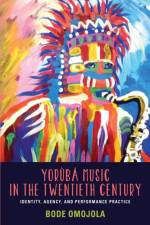
Drawing on extensive field research conducted over the course of two decades, Bode Omojola examines traditional and contemporary Yoruba genres of music.
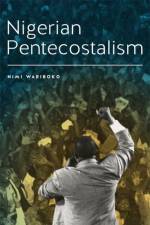
Presents a multidisciplinary study of how Nigerian pentecostals conceive of and engage with a spirit-filled world, arguing that the character of the movement is defined through an underlying "spell of the invisible."
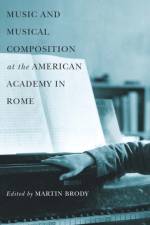
Combining cultural analysis with historical and personal accounts of a century of musical life at the American Academy in Rome, this volume provides a history of the AAR's Rome Prize in Composition.
A volume of essays marking out a new, historically and culturally specific model for contemplating autobiographical non-fiction film and video.
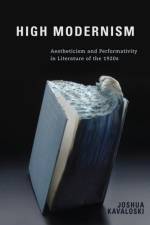
Explores the performative role of canonical literary works from the 1920s, providing a more nuanced understanding of high modernism and resituating it within literary history.
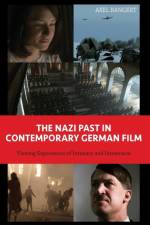
From intimate portrayals of ordinary Germans and Nazi leaders to immersive spectacles of war and defeat, this study argues that, since 1990, German film has focused on portraying the Nazi past from within.
Essays in this volume seek to clarify the meaning of tragedy and the tragic in its many German contexts, art forms, and disciplines, from literature and philosophy to music, painting, and history.The many catastrophes of German history have often been described as tragic. Consequently, German literature, music, philosophy, painting, and even architecture are rich in tragic connotations. Yet exactly what "e;tragedy"e; and "e;thetragic"e; may mean requires clarification. The poet creates a certain artful shape and trajectory for raw experience by "e;putting it into words"e;; but does putting such experience into words (or paintings or music or any other form) betray suffering by turning it into mere art? Or is it art that first turns mere suffering into tragic experience by revealing and clarifying its deepest dimension? What are we talking about, exactly, when we talk about tragic experience and tragic art, especially in an age in which, according to Hannah Arendt, evil has become banal? Does banality muffle or even annul the tragic? Does tragedy take suffering and transform it into beauty, as Schiller thought?Is it in the interest of truth for suffering to be "e;beautiful"e;? Is it possible that poetry, music, and art are important because they in fact create the meaning of suffering? Or is suffering only suffering and not accessible to meaning, tragic or otherwise? This book comprises essays that seek to clarify the meaning of tragedy and the tragic in its many German contexts, art forms, and disciplines, from literature and philosophy to music, painting, and history. Contributors: Jeffrey A. Bernstein, Stephen D. Dowden, Wolfram Ette, Jennifer Anna Gosetti-Ferencei, Barbara Hahn, Karsten Harries, Felicitas Hoppe, Joseph P. Lawrence, James McFarland, Karen Painter, Bruno Pieger, Robert Pirro, Thomas P. Quinn, Mark W. Roche, Helmut Walser Smith. Stephen D. Dowden is Professor of German language and literature at Brandeis University. Thomas P. Quinn is an independent scholar.
Paints a complex portrait of East German film art and representation through examining eighteen key DEFA films following the fall of the Berlin Wall.
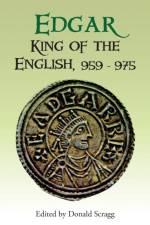
Fresh assessments of Edgar's reign, reappraising key elements using documentary, coin, and pictorial evidence.
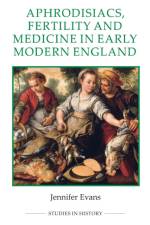
An investigation into aphrodisiacs challenges pre-conceived ideas about sexuality during this period.
This volume features a dossier on writer-actor-director Manfred Karge, unpublished documents from the Brecht Archive in Berlin, new research articles on Brecht, and reviews of recent books. Article topics include Brecht and Adorno in Los Angeles, Celan and Brecht, and transcultural aspects of epic theatre.
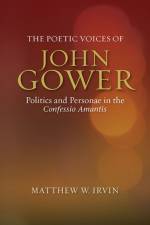
An examination of Gower's skilful deployment of personae in his works, showing the parallels between the way he treats love, and the way he treats politics.
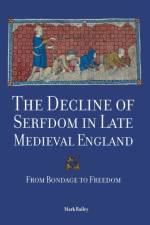
An exciting, fresh look at one of the most important questions of medieval scholarship - the decline of serfdom and its implications.
This volume provides a combined index to the first 20 volumes of Index of Middle English Prose. In the absence of a searchable electronic database version of this series, it will be an essential tool for all researchers in this area. Indexes of incipits and excipits are provided, together with author and title indexes and general subject indexes.The project to publish a complete listing of all known manuscript items containing Middle English prose began in 1978, and the first volume appeared in 1984. The final listing will consist of some fifty volumes; with the publication of the twentieth volume in 2009, the corpus was sufficiently extensive to justify the first comprehensive index to the contents of the existing titles. This, the resulting volume, is a vital research tool for anyone working with Middle English prose texts. It is designed to give immediate access to the indices now found separately in the first twenty descriptive manuscript catalogues and begins with a summary contents list for each of these. In additionto an index of first lines, the volume contains other finding aids in the form of an index of rubrics and titles, and a general index. This will enable scholars to quickly find all surviving manuscript copies of a particular textin the collections catalogued to date, and will form the basis of future index volumes. KARI ANNE RAND is Professor of Older English Language at the University of Oslo.
A series which is a model of its kind EDMUND KING, HISTORY
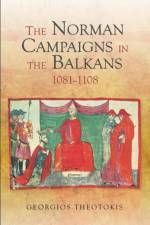
First full-length analysis of Norman military organisation in the Balkans: events, strategy, and tactics.
Abonner på vårt nyhetsbrev og få rabatter og inspirasjon til din neste leseopplevelse.
Ved å abonnere godtar du vår personvernerklæring.