

Gjør som tusenvis av andre bokelskere
Abonner på vårt nyhetsbrev og få rabatter og inspirasjon til din neste leseopplevelse.
Ved å abonnere godtar du vår personvernerklæring.Du kan når som helst melde deg av våre nyhetsbrev.

New edition and modern English translation of the Anglo-Norman version of the story of Haveloc - one of the most popular of the Middle Ages.
Leading composers, producers and writers consider the role of the composer in the community in Britain today and over the last fifty years.With his Aspen award lecture (1964), Benjamin Britten expressed a unique commitment to community and place. This book revisits this seminal lecture, but then uses it as a starting point of reflection, inviting leading composers, producers and writers to consider the role of the composer in the community in Britain in the last fifty years. Colin Matthews, Jonathan Reekie and John Barber reflect on Britten's aspirations as a composer and the impact of his legacy, and Gillian Moore surveys the ideals of composers since the 1960s. Eugene Skeef and Tommy Pearson discuss the influence of the London Sinfonietta, while Katie Tearle reviews the tradition of community opera at Glyndebourne. Nigel Osborne and Judith Webster explore the role of music as therapy, and James Redwood, Amoret Abis, Sean Gregory and Douglas Mitchell look at music in the classroom and creative workshops. John Sloboda, Detta Danford and Natasha Zielazinski discuss collaboration in music-making and ways of facilitating exchanges between the composer and the audience, while Christopher Fox and Howard Skempton examine the role of modernism and the use of 'other', radical techniques to stimulate new dialogues between composer and community. Peter Wiegold and Amoret Abis interview Sir Harrison Birtwistle, John Woolrich and Phillip Cashian, and Wiegold discusses his formative experiences in encountering music-making in other cultures. All of these approaches to the role and identity of the composer throw a different light on how we address 'the composer and the community': the varied, sometimes contradictory, motivations of composers; the role of music in 'enhancing lives'; the concept of 'outreach' and the different ways this is pursued; and, finally, the meaning of 'community'. Underpinning each are genuine questions about the relationship of arts to society. This book will appeal not only to composers, performers and practitioners of contemporary music but to anyone interested in the changes in twentieth-century music practice, music in education, and the role ofmusic and the arts in the wider community and society. PETER WIEGOLD is a composer, conductor and the director of Club Inegales and the Institute of Composing. He is a Research Professor of Music at Brunel University, and also director of the 'Brunel Institute for Contemporary Middle-Eastern Music' (BICMEM). GHISLAINE KENYON is an author, freelance arts education consultant and curator.
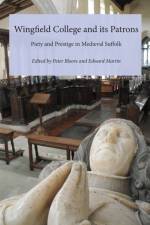
The 650th anniversary of the foundation of Wingfield College was the occasion for a special two-day symposium marking the culmination of a three-year UEA-funded research project into the college and castle. The building projects of the late medieval aristocracy focused on their homes and the monasteries, churches or chantry foundations under their patronage where their family were buried and commemorated. This commemoration allowed a visual celebration of their achievements, status and lineage, the scale and prestige of which reflected on the fortunes of the family as a whole. Wingfield is explored in the context of both the actual building of the castle, chantry chapel and the college, and that of the symbolic function of these as a demonstration ion of aristocratic status. The contributions to this book examine many topics which have hitherto been neglected, such as the archaeology of the castle, which had never been excavated, the complex history of the college's architecture, and the detailed study of the monuments in the church. The latest techniques are used to reconstruct the college and castle, with a DVD to demonstrate these. And the context of the family and its fortunes are explored in chapters on the place of the de la Poles in fifteenth century history, as soldiers, administrators and potential claimants to the throne.
A detailed and long-overdue study of Frank Bridge's music and its socio-cultural and aesthetic contexts
Essays on musical performance practice by an acknowledged expert in the field.
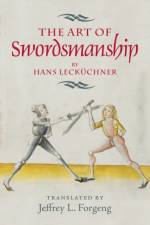
English translation of one of the most significant medieval texts on fighting with swords.
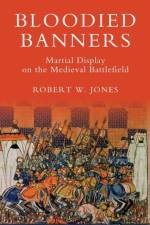
Groundbreaking reassessment of the role played by armour, weapons and heraldry in medieval warfare, showing their cultural as well as military significance.
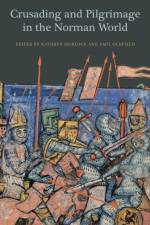
An examination into two of the most important activities undertaken by the Normans.
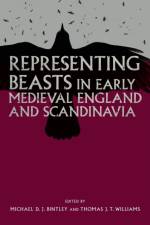
Essays on the depiction of animals, birds and insects in early medieval material culture, from texts to carvings to the landscape itself.
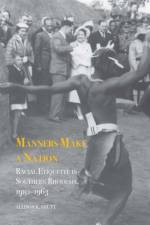
Shortlisted for the inaugural award of the ASAUK Fage & Oliver Prize Tells the story of how people struggled to define, refine, reform, and ultimately overturn racial etiquette as a social guide for Southern Rhodesian politics.
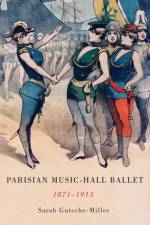
This pioneering study of ballets staged in Parisian music halls brings to light a vibrant dance culture central to the renewal of French choreography at the fin de siecle.
Investigates the concept of transnationalism and its significance in and for German-language literature and culture.
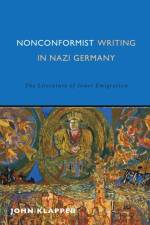
An innovative, critical, historically informed, yet accessible reassessment of writers who remained in Nazi Germany and Austria yet expressed nonconformity - even dissent - through their fiction.
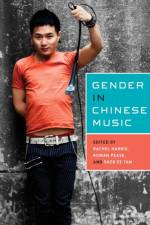
Gender in Chinese Music draws together contributions from ethnomusicologists, anthropologists, and literary scholars to explore how music is implicated in changing notions of masculinity, femininity, and genders "in between" in Chinese culture.
Presenting a range of ethnographic case studies from around the globe, this edited collection offers new ways of thinking about the interconnectivity of gender, place, and emotion in musical performance.
The first comprehensive account of the linkage between natural resources and political and social conflict in Africa.
Preeminant gamelan performer and scholar Sumarsam explores the concept of hybridity in performance traditions that have developed in the context of Javanese encounters with the West.
The first book-length study in any language of the "Berlin School," the most significant filmmaking movement to come out of Germany since the 1970s.
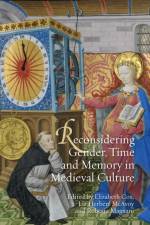
A consideration of the ways in which the past was framed and remembered in the pre-modern world.The training and use of memory was crucial in medieval culture, given the limited literacy at the time, but to date, very little thought has been given to the complex and disparate ways in which the theory and practices of memoryinteracted with the inherently unstable concepts of time and gender at the time. The essays in this volume, drawing on approaches from applied poststructural and queer theory among others, reassess those ideologies, meanings and responses generated by the workings of memory within and over "e;time"e;. Ultimately, they argue for the inherent instability of the traditional gender-time-memory matrix (within which men are configured as the recorders of "e;history"e;and women as the repositories of a more inchoate familial and communal knowledge), showing the Middle Ages as a locus for a far more fluid conceptualization of time and memory than has previously been considered. Elizabeth Cox is Lecturer in Old English at Swansea University; Roberta Magnani is Lecturer in Medieval Literature at Swansea University; Liz Herbert McAvoy is Professor of Medieval Literature at Swansea University. Contributors: Anne E. Bailey, Daisy Black, Elizabeth Cox, Fiona Harris-Stoertz, Ayoush Lazikani, Liz Herbert McAvoy, Pamela E. Morgan, William Rogers, Patricia Skinner, Victoria Turner.
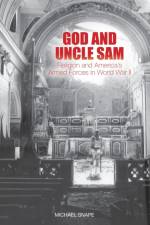
An authoritative and timely book shedding new light on the role of religion during World War II and its impact on post-war American society.
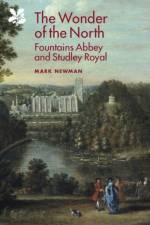
A history and tour of this exceptionally beautiful designed landscape in North Yorkshire.
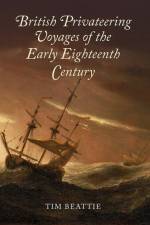
The story of hugely ambitious and risky long-distance private voyages, only one of which brought huge returns for investors.The three great privateering expeditions into the South Sea, which set out, respectively, in 1703, led by William Dampier; in 1708, led by Woodes Rogers; and in 1719, led by George Shelvocke, were costly and ambitious long distance voyages, carrying great risk for their investors but promising great reward. This book tells the story of the voyages and their impact. It argues that, far from being anachronistic activities more in keeping with an earlier age,as some scholars have asserted, the voyages were significant events and had a huge impact - on politicians, influencing future maritime and naval strategy; on investors, swelling enthusiasm for the South Sea Company which ended in the disastrous Bubble; and in literature, where the narratives of the voyages became an important source for some of the greatest literature of the period, including Robinson Crusoe, Gulliver's Travels and The Rime of the Ancient Mariner. The book provides a great deal of original detail about the voyages, including the difficulties of undertaking such lengthy expeditions, unrest among the crews, and financial details of investmentsand returns - and losses. Tim Beattie completed his doctorate at the University of Exeter.
A window into the mental and cultural worlds of the Stuart period, capturing the existing religious, social and political tensions on the eve of the English Civil War.
An examination of the linguistic and cultural construction of one of the texts of the Anglo-Saxon Chronicle.
Essays in this volume rethink conventional ways of conceptualizing female authorship and re-examine the formal, aesthetic, and thematic terms in which German women's literature has been conceived.
First modern edition of medieval ecclesiastical documents illuminates the career of a senior prelate.
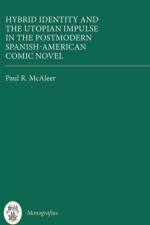
The author examines the role of comedy in the novels of four key postmodern Spanish-American writers: Gustavo Sainz, Alfredo Bryce Echenique, Jaime Bayly and Fernando Vallejo.An important but often overlooked function of comedy is its intrinsic relation to questions of identity. This relationship, furthermore, is connected to another traditional feature of comedy: the utopian impulse. This book analyses these functions of comedy in the novels of four key postmodern Spanish-American writers: Gustavo Sainz, Alfredo Bryce Echenique, Fernando Vallejo and Jaime Bayly. Focusing on the correlation between changing concepts of identityand the hybrid cultural context of the late 20th-century, it examines the issues of individual and social identities expressed by these authors in their inscription and distortion of the comic genre as well as in their usage of different modes of comedy. It views the novels' comic aspects as symptoms of hybridity, which, according to many theorists, have brought about the dissolution of concepts, such as the self and society, and utopian modernity. Thesesymptoms are studied in tandem with the individual themes of the novels, such as gender, sexuality, class and global migration, as well as the 'post-national' question of Peruvian, Colombian and Mexican identity. PaulMcAleer is Lecturer in Hispanic Studies at the University of Hull.
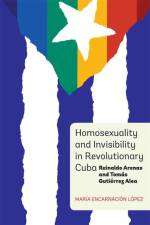
Offers alternative insights into the complex relationship between politics and intelligentsia in revolutionary Cuba.
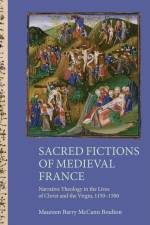
A study of the immensely popular "lives" of Christ and the Virgin in medieval France.
Abonner på vårt nyhetsbrev og få rabatter og inspirasjon til din neste leseopplevelse.
Ved å abonnere godtar du vår personvernerklæring.