




Gjør som tusenvis av andre bokelskere
Abonner på vårt nyhetsbrev og få rabatter og inspirasjon til din neste leseopplevelse.
Ved å abonnere godtar du vår personvernerklæring.Du kan når som helst melde deg av våre nyhetsbrev.

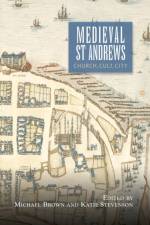
First extended treatment of the city of St Andrews during the middle ages.
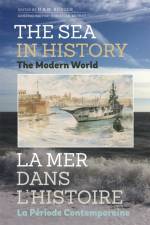
An assessment of how important the sea has been in the development of modern history.
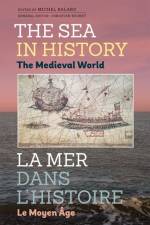
An assessment of how important the sea was in the middle ages.
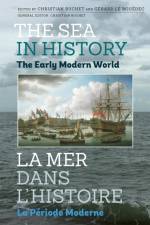
An assessment of how important the sea was in the early modern period.
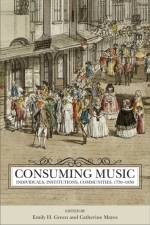
This collection of nine essays investigates the consumption of music during the long eighteenth century, providing insights into the activities of composers, performers, patrons, publishers, theorists, impresarios, and critics.
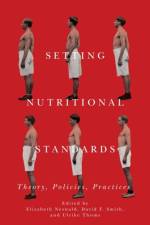
Presents historical perspectives on the theory, practices, and policies of nutrition science in Western Europe and the United States from the 1860s to the 1960s.Suzanne Junod's essay "e;Proscribing Deception"e;: The Gould Net Weight Amendment and the Origins of Mandatory Nutrition Labeling"e; is the winner of the 2017 Charles Thomson Prize of the Society for the History of the Federal Government. In the second half of the nineteenth century, ways of thinking about food changed as chemists and physiologists identified nutrients and bodily needs and as urbanization, industrialization, and colonial encounters challenged traditional dietary customs and assumptions. Emerging as a reaction to concerns about industrial and military power, social welfare, and public health, the science of nutrition sought to define the norms and needs of variable human bodies, setting standards for bodies and foods that would enable physicians and politicians to develop nutritional recommendations and food policies for individuals and populations. Setting Nutritional Standards brings together authors from a variety of disciplines to explore perspectives on the theory, practices, and policies of modern nutrition science from the 1860s to the 1960s. The essays place the new science of nutritionwithin the changing social landscapes of Western Europe and the United States at the intersection of medicine, policy, social reform agendas, and public health initiatives. CONTRIBUTORS: Nick Cullather, Suzanne Junod, Deborah Neill, Elizabeth Neswald, David F. Smith, Ulrike Thoms, Corinna Treitel, Ina Zweiniger-Bargielowska Elizabeth Neswald is associate professor for the history of science and technology at Brock University, Canada.David F. Smith is Honorary Senior Lecturer in the history of medicine at the University of Aberdeen. Ulrike Thoms is a historian of science and researcher at the Max Planck Institute for the History of Science.
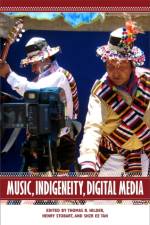
Investigates the significance of a range of digital technologies in contemporary Indigenous musical performance, exploring interdisciplinary issues of music production, representation, and transmission.The essays in this volume offer rich and diverse perspectives on the encounter between Indigenous music and digital technologies. They explore how digital media -- whether on CD, VCD, the Internet, mobile technology, or in the studio -- have transformed and become part of the fabric of Indigenous cultural expression across the globe. Communication technologies have long been tools for nation building and imperial expansion, but these studies reveal how over recent decades digital media have become a creative and political resource for Indigenous peoples, often nurturing cultural revival, assisting activism, and complicating earlier hegemonic power structures. Bringing together thework of scholars and musicians across five continents, the volume addresses timely issues of transnationalism and sovereignty, production and consumption, archives and transmission, subjectivity and ownership, and virtuality and the posthuman. Music, Indigeneity, Digital Media is essential reading for scholars working on topics in ethnomusicology, Indigeneity, and media studies while also offering useful resources for Indigenous musicians and activists. The volume provides new perspectives on Indigenous music, refreshes and extends debates about digital culture, and points to how digital media shape what it means to be Indigenous in the twenty-first century.Contributors: Linda Barwick, Beverley Diamond, Thomas R. Hilder, Fiorella Montero-Diaz, John-Carlos Perea, Henry Stobart, Shzr Ee Tan, Russell Wallace Thomas R. Hilder is postdoctoral fellow in musicology at the University of Bergen. Henry Stobart is reader in music at Royal Holloway, University of London. Shzr Ee Tan is senior lecturer at Royal Holloway, University of London.
Showcases the energy and diversity of the young field of music semiology, appealing to readers who want to explore the meaning of music in our lives.
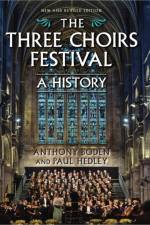
Described in the Radio Times (27 July 2015) as 'A remarkable, unique institution lying at the heart of British life', the Three Choirs Festival celebrated its three-hundred-year anniversary in 2015.
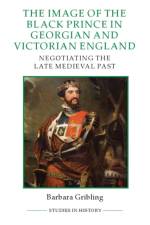
Studies the manifestations of Edward the Black Prince in the eighteenth and nineteenth centuries.
Fleming masterfully demonstrates Camoes's debt to, and participation in, the long and continuing traditions of "e;spiritual"e; or allegorical scriptural exegesis in the European Middle Ages and Renaissance.Second in its fame only to the Lusiads within Camoes's large body of poetry, "e;Sobolos rios"e; ("e;Babylon and Zion"e;) in redondilhas is a philosophically ambitious masterwork of Christian humanism that draws from the psalm Super flumina Babylonis both a general theory of poetry and an intensely focused meditation upon the shape of an individual poet's career. Bringing to bear upon the poem the several learned traditions the poet demands, Fleming's study relates the poem to the traditions of allegorical scriptural exegesis characteristic of the Middle Ages and Renaissance. Specific subjects include the centrality of the psalms and the image of David to European poets, therelation of pagan myth to biblical truth, the complexity and purposefulness of Camoes's intertextual strategies, the underappreciated influence on Camoes of Juan Boscan, the exegetical control of the poem's elaborate numerological schemes, and the concept of palinode as literary genre and personal moral statement. John V. Fleming is the Louis W. Fairchild Professor of English and Professor of Comparative Literature emeritus at Princeton University.
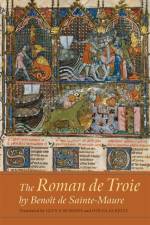
First English translation of an important twelfth-century romance, giving an account of the Trojan war and its consequences.
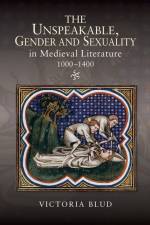
An investigation of the motif of the unspeakable as manifested in a wide range of medieval texts, from the Exeter Book to Chaucer.
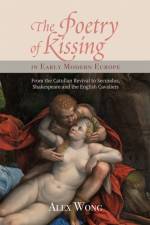
The "kissing-poem" genre was wide-spread in Renaissance literature; this book surveys its form and development.
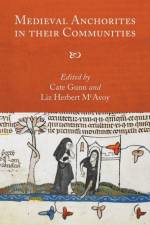
Essays challenging the orthodox opinion of anchorites as entirely divorced from the world around them.Much of the research into medieval anchoritism to date has focused primarily on its liminal and elite status within the socio-religious cultures of its day: the anchorite has long been depicted as both solitary and alone, almost entirely removed from community and living a life of permanent withdrawal and isolation, in effect dead to the world. Considerably less attention has been afforded to the communal sociability that also formed part of the reclusivelife during the period, The essays in this volume, stemming from a variety of cross-disciplinary approaches and methodologies, lay down a challenge to this position, breaking new ground in their presentation of the medievalanchorite and other types of enclosed solitary as playing a central role within the devotional life of the communities in which they were embedded. They attest also to the frequent involvement of anchorites and other recluses in local, national and, sometimes, international matters of importance. Overall, the volume suggests that, far from operating on the socio-religious periphery, as posited previously, the medieval anchorite was more often found at theheart of a sometimes intersecting array of communities: synchronic and diachronic; physical and metaphysical; religious and secular; gendered and textual. CATE GUNN has taught in the Continuing Education and LiteratureDepartments of the University of Essex; LIZ HERBERT MCAVOY is Professor of Medieval Literature at Swansea University. Contributors: Diana Denissen, Clare Dowding, Clarck Drieshen, Cate Gunn, Catherine Innes-Parker, E.A. Jones, Dorothy Kim, Liz Herbert McAvoy, Godelinde Perk, James Plumtree, Michelle Sauer, Sophie Sawicka-Sykes, Andrew Thornton OSB,
Anglo-Norman Studies is nothing if not wide-ranging. One opens each new volume expecting to find the unexpected - new light on old arguments, new material, new angles. MEDIUM AEVUMThis year's volume continues to demonstrate the vitality of scholarship in this area, across a variety of disciplines. Topics include the forging of the Battle Abbey Chronicle; warring schoolmasters in eleventh-century Rouen; theimpact of the Conquest on England; the circulation of manuscripts between England and Normandy; and Earl Harold and the Foundation of Waltham Holy Cross. Contributors: Julie Barrau, Christopher Clark, Laura Cleaver, Stefan de Jong, Simon Keynes, Tom Licence, Brigitte Meijns, Thomas O'Donnell, Alheydis Plassman, Elisabeth Ridel, Chris Whittick, Ann Williams
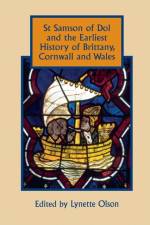
New essays shed light on the mysterious St Samson of Dol and his Vita.The First Life of St Samson of Dol (Vita Prima Samsonis) is a key text for the study of early Welsh, Cornish, Breton and indeed west Frankish history. In the twentieth century it was the subject of unresolved scholarly controversy that tended to limit its usefulness. However, more recent research has firmly re-established its significance as a historical source. This volume presents the results of new, multi-disciplinary, assessment of the textand its context. What emerges from the studies collected here is a context of greater plausibility for the First Life of St Samson of Dol as an early and essentially historical text, potentially at the centre of early British Christianity and its influence on the Continent. The landscape of that Christianity is gradually emerging from the shadows and it is a landscape in which the career of St Samson, the first Insular peregrinus, is shown to be of considerable importance. LYNETTE OLSON is an Honorary Associate of the Department of History, University of Sydney. Contributors: Caroline Brett, Karen Jankulak, Constant J. Mews, Lynette Olson, Joseph-Claude Poulin, Richard Sowerby, Ian N. Wood, Jonathan M. Wooding.
Presents Scotland as a case study for a fresh interpretation of Archbishop William Laud, his career and his working partnership with Charles I.William Laud, Archbishop of Canterbury (1633-45), remains one of the most controversial figures in British ecclesiastical and political history. His rise to prominence under Charles I, his contribution to the shaping and implementation of contentious religious policies and his subsequent and catastrophic downfall are fundamental to our understanding of the religious and political developments which led to the collapse of royal authority in all three of theStuart kingdoms. Events in Scotland were central to this chain of events, and this book presents Scotland as a case study for a fresh interpretation of Laud, his career and his working partnership with Charles I. Casting new andmuch-needed light on Laud's engagement in Scottish affairs, this book reveals that his agency in Scotland was broadly consistent with - although differing in detail from - his approach in England and Ireland. It represents a majorcontribution to key debates on the nature of religion and politics in the 1630s and early 1640s and enhances current thinking on the role of both prince and prelate in the formulation of ecclesiastical policy, the 'British problem', and, indeed, the causes of the British Civil Wars. LEONIE JAMES is Lecturer in History at the University of Kent, Canterbury.
Case-studies of whether and how heritage can be used to bring about reconciliation.This volume explores one of the most critical issues of our time: whether heritage can contribute to a more peaceful society and future. It reflects a core belief that heritage can provide solutions to reconciling peoples and demonstrates the amount of significant work being carried out internationally. Based round the core themes of new and emerging ideas around heritage and peace, heritage and peace-building in practice, and heritage, peace-building andsites, the twenty contributions seek to raise perceptions and understanding of heritage-based peace-building practices. Responding to the emphasis placed on conflict, war and memorialization, they reflect exploratory yet significant steps towards reclaiming the history, theory, and practice of peacebuilding as serious issues for heritage in contemporary society. The geographical scope of the book includes contributions from Europe, notably the Balkans andNorthern Ireland, the Middle East, and Kenya. Diana Walters is an International Heritage Consultant and Honorary Senior Research Fellow at the University of Exeter; Daniel Laven is Associate Professor of Human Geography, Department of Tourism Studies and Geography/European Tourism Research Institute (ETOUR), Mid Sweden University; Peter Davis is Emeritus Professor of Museology, Newcastle University. Contributors: Tatjana Cvjeticanin, PeterDavis, Jonathan Eaton, David Fleming, Seth Frankel, Timothy Gachanga, Alon Gelbman, Felicity Gibling, Will Glendinning, Elaine Heumann Gurian, Lejla Hadzic, Feras Hammami, Lotte Hughes, Bosse Lagerqvist, Daniel Laven, Bernadette Lynch, Elena Monicelli, Yongtanit Pimonsathean, Saleem H. Ali, Sultan Somjee, Peter Stone, Michele Taylor, Peter van den Dungen, Alda Vezic, Jasper Visser, Diana Walters.
A magisterial survey of Normandy from its origins in the tenth century to its conquest some two hundred years later.
Charles R. Cockerell (1788-1863) was one of the most significant nineteenth-century British architects and a major player in the cultural shift from the Georgian eighteenth to the Victorian nineteenth century.Charles R. Cockerell (1788-1863) was one of the most significant nineteenth-century British architects and a major player in the cultural shift from the Georgian eighteenth to the Victorian nineteenth century. Cockerell's travelsin the eastern Mediterranean between 1810 and 1817 were the formative experience of his life. His forty letters from this period, held in the archives of the Royal Institute of British Architects and published here for the first time, give crucial day-to-day insights into his actions, thoughts and feelings in relation to the intricate histories of the re-discovery and sales of the Aegina and Bassae marbles and, equally importantly, illuminate his hugely significant work on temple architecture and sculpture in mainland Greece, the great cities of Asia Minor, and the significant temples of Sicily. Drawing on these letters, and on some 150 unpublished letters sent by his friends while they were all in Greece and now held in the British Museum, this book elucidates what Cockerell did and why by analyzing his methods of work and their significance. It discusses Cockerell's aesthetic and conceptual development during his time abroad, particularly his influential part in the changing vision of Greek sculpture and architecture, from Winkelmann's static ideal to one rooted in dramatic tension and contextual contingency. The book unravels the emergence of Cockerell's crucial historical perspective and shows how he arrived at a new view of the ancient Greek past as made up of real lived lives, rather than just existing as a back drop to the present. By offeringa complete edition of the RIBA letters, this book fills a significant gap in our understanding of the thought and work of one of the formative spirits of nineteenth century visual historical culture. SUSAN PEARCE is Professor Emeritus of Museum Studies, University of Leicester. THERESA ORMROD has extensive experience in archival research, manuscript transcription and editing.
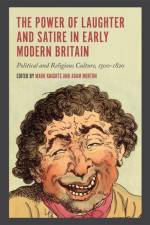
Leading scholars show how laughter and satire in early modern Britain functioned in a variety of contexts both to affirm communal boundaries and to undermine them.
The first full-length treatment of the operatic querelles in eighteenth-century France, placing individual querelles in historical context and tracing common themes of authority, national prestige and the power of music over popular sentiment.In the eighteenth and early nineteenth centuries, French cultural life seethed with debates about the proper nature and form of musical expression, particularly in opera. Expressed in a flood of pamphlets, articles, letters and poems as well as in the actual disruption of performances, these so-called querelles were seen at the time as a distinctively French phenomenon and have been mined by scholars since for what they can tell us about French politics and culture in the revolutionary period. This is the first full-length treatment of the entire history of this phenomenon, from its beginnings in the last years of Louis XIV to the 1820s when the new musical challenges of Berlioz and Wagner put an end to this particular form of debate. Arnold analyses the individual querelles, showing how they reflected and played their part in wider political and cultural events. At the same time, hetraces themes common in varying degrees to them all - questions of authority, the issue of national prestige, and the relation of language to music. Where some scholars have characterised these disputes as simply politics by proxy, Arnold paints a more nuanced picture, showing that music itself was taken seriously beyond artistic circles because it was seen as having great, potentially limitless, power over popular sentiment and thus implicitly power to reform society and change the world. R.J. Arnold is an honorary research fellow at Birkbeck, University of London
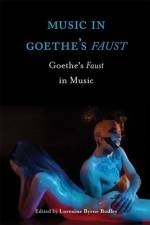
Goethe's Faust, a work which has attracted the attention of composers since the late eighteenth century and played a vital role in the evolution of vocal, operatic and instrumental repertoire in the nineteenth century, hashad a seminal impact in musical realms.That Goethe's poetry has proved pivotal for the development of the nineteenth-century Lied has long been acknowledged. Less acknowledged is the seminal impact in musical realms of Goethe's Faust, a work which has attractedthe attention of composers since the late eighteenth century and played a vital role in the evolution of vocal, operatic and instrumental repertoire in the nineteenth century. While Goethe longed to have Faust set to musicand considered only Mozart and perhaps Meyerbeer as being equal to the task, by the end of his life he had abandoned hope that he would live to witness a musical setting of his text. Despite this, a floodtide of musical interpretations of Goethe's Faust came into existence from Beethoven to Schubert, Schumann to Wagner and Mahler, and Gounod to Berlioz; and a broad trajectory can be traced from Zelter's colourful description of the first setting ofGoethe's Faust to Alfred Schnittke's Faust opera (1993). This book explores the musical origins of Goethe's Faust and the musical dimensions of its legacy. It uncovers the musical furore caused by Goethe's Faust and considers why his polemical text has resonated so strongly with composers. Bringing together leading musicologists and Germanists, the book addresses a wide range of issues including reception history, the performative challenges of writing music for Faust, the impact of the legend on composers' conceptual thinking, and the ways in which it has been used by composers to engage with other contemporary intellectual concepts. Constituting the richest examination to date of the musicality of language and form in Goethe's Faust and its musical rendering from the eighteenth to twenty-first centuries, the book will appeal to music, literary and Goethe scholars and students alike. LORRAINE BYRNE BODLEY is Senior Lecturer in Musicology at Maynooth University and President of the Society for Musicology in Ireland. Contributors: Mark Austin, Lorraine Byrne Bodley, NicholasBoyle, John Michael Cooper, Siobhan Donovan, Osman Durrani, Mark Fitzgerald, John Guthrie, Heather Hadlock, Julian Horton, Ursula Kramer, Waltraud Meierhofer, Eftychia Papanikolaou, David Robb, Christopher Ruth, Glenn Stanley, Martin Swales, J. M. Tudor
The first detailed study of the vital role that Norway played in the life and work of Frederick DeliusThis is a study of the vital role that Norway played in the life and work of Frederick Delius. Norway was a primary source of inspiration for Delius: 20 summers of his adult life were spent there, and almost 40 works express his experiences of Norwegian nature or were composed to Norwegian texts. Yet, although his attachment to Norway was at the core of his creative life, this book is the first in-depth study of the influence the country and its artists had on the composer. It includes significant new material regarding Delius's friendships with Edvard Munch, Edvard Grieg and Knut Hamsun. Previously unknown visits to Norway are detailed, as are close ties to a whole raft of Norwegian artists and political figures that have never previously been documented. For the first time, Delius's alter ego is uncovered, several mythologies regarding the composer are clarified, and the Norwegian background to some of his most well-known works is considered. The Delius that emerges from these pages is little known, even to most enthusiasts of his music: a driven and energetic personality and an artist searching for a language with which to express the existential crisis facing modern man in the early twentieth century. ANDREW J. BOYLE is an author and musician. He gained his PhD on the music of Frederick Delius from the University of Sheffield.
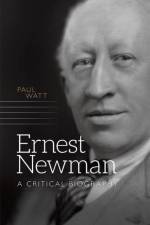
Examines the genesis of Ernest Newman's major publications in the context of prevailing intellectual trends in history, criticism and biography.
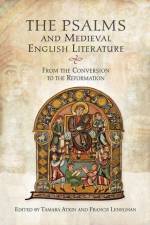
An examination of how The Book of Psalms shaped medieval thought and helped develop the medieval English literary canon.The Book of Psalms had a profound impact on English literature from the Anglo-Saxon to the late medieval period. This collection examines the various ways in which they shaped medieval English thought and contributed to the emergence of an English literary canon. It brings into dialogue experts on both Old and Middle English literature, thus breaking down the traditional disciplinary binaries of both pre- and post-Conquest English and late medieval and Early Modern, as well as emphasizing the complex and fascinating relationship between Latin and the vernacular languages of England. Its three main themes, translation, adaptation and voice, enable a rich variety of perspectives on the Psalms and medieval English literature to emerge. TAMARA ATKIN is Senior Lecturer in Late Medieval and Early Renaissance Literature at Queen Mary University of London; FRANCIS LENEGHAN is Associate Professor of OldEnglish at The University of Oxford and a Fellow of St Cross College, Oxford Contributors: Daniel Anlezark, Mark Faulkner, Vincent Gillespie, Michael P. Kuczynski, David Lawton, Francis Leneghan, Jane Roberts, Mike Rodman Jones, Elizabeth Solopova, Lynn Staley, Annie Sutherland, Jane Toswell, Katherine Zieman.
How did epidemics, zoos, German exiles, methamphetamine, disgruntled technicians, modern bureaucracy, museums, and whipping cream shape the emergence of modern neuroscience?
Considers how political language has changed through time, looking at concrete examples from English and other languages.Conal Condren's fifth and final volume in a decades-long examination of political language, Political Vocabularies: Word Change and the Nature of Politics is a study of the mechanisms of change in political vocabularies over time. Though the main focus of the study is on English political vocabulary, Condren also compares political terms in other languages, such as French, German, Latin, Greek, Italian, and Japanese, and discusses how some of theseterms are imported into English. Considering concrete examples of extension and intension of meaning, neologism, euphemism, translation, loan words, and metaphor as used in political discourse, Condren constructs a theoretical model of the political that describes what precisely goes on when political words are used or when words are used politically. Thus Condren's analysis in this study is not merely linguistic but it bears on perennial questions about the nature of politics.The book will thus appeal not only to linguists and political scientists but to a broad readership of those interested in history, politics, and philosophy. Conal Condren is Emeritus Scientia Professor at the University of New South Wales and honorary professor at the Institute for Advanced Studies in the Humanities at the University of Queensland, Australia.
Abonner på vårt nyhetsbrev og få rabatter og inspirasjon til din neste leseopplevelse.
Ved å abonnere godtar du vår personvernerklæring.