


Gjør som tusenvis av andre bokelskere
Abonner på vårt nyhetsbrev og få rabatter og inspirasjon til din neste leseopplevelse.
Ved å abonnere godtar du vår personvernerklæring.Du kan når som helst melde deg av våre nyhetsbrev.

'Remarkably brought together, heartwarming and uplifting . . . showing that despite differences in age and background, geography and lifestyle, there is so much that binds up, so much we share' Kit de Waal'A stimulating collection of women's voices to help inspire us for the next 100 years' Elizabeth Day100 Voices is an anthology of writing by women across the country on what achievement means for them, and how they have come to find their own voice. Featuring poetry, fiction and memoir, the pieces range from notes on making lemon curd, to tales of marathon running and riding motorbikes, to accounts of a refugee eating English food for the first time, a newlywed learning her mother tongue and a woman rebuilding her life after an abusive relationship. The poignant, funny and inspiring stories collected here are as varied and diverse as their authors, who include established names such as Louise Jensen, Sabrina Mahfouz, Yvonne Battle-Felton and Miranda Keeling alongside a host of exciting new writers. Taken together, they build a picture of what it's really like to be a woman in the UK today.
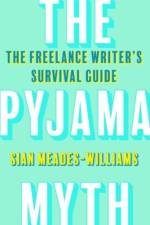
'A career-changing book, packed with real, lived-in wisdom and advice not just about working but really living as a self-employed person. If you're thinking about going freelance, read this first' Oliver Franklin-Wallis'Invaluable ... A wonderful, warts and all book written in a friendly, approachable manner. I wish I'd had a book like this years ago' Simon BrewSelf-employment has never been a more popular career path, and for thousands of writers, freelancing is becoming an appealing - and sometimes necessary - option. But alongside the benefits of a freelance career come very real obstacles that are daunting for anyone going it alone. We all need some guidance. Sian Meades-Williams - freelance writer, editor and founder of the Freelance Writing Jobs newsletter - knows all too well that while freelancing doesn't come with hard and fast rules, sometimes there is a wrong way to go about things. Drawing on her extensive experience and dozens of industry interviews, she pulls back the curtain with tips on how to get out of your pyjamas and pitch effectively, find new ideas and hone your voice, build a network of contacts, deal with edits and editors, cope with rejection, know your worth and get more money for your work, manage your finances, deal with late payments and file your taxes, care for your physical and mental health and ultimately find a path to success that makes you happy. Inspiring, optimistic and - above all - real, The Pyjama Myth is an essential, practical survival guide for anyone embarking on their career, established freelance writers and everyone in between.
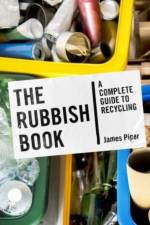
A comprehensive practical guide to recycling in your home, written by a leading sustainability expert
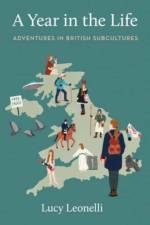
1 year, 8,500 road miles, 26 weird and wonderful British subcultures: Lucy Leonelli leaves the corporate world behind on a quest to discover her most authentic self
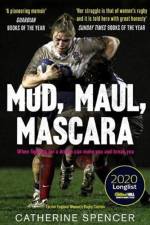
The former England rugby captain on the joys and struggles of leading her team to the World Cup final, and the challenges she faced as an elite sportswoman at the top of her game
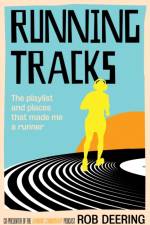
Rob Deering has been listening to music his whole life, but it was only in his mid-thirties that - much to his surprise - he found himself falling in love with the hugely popular, nearly perfect, sometimes preposterous activity of runningIn this vividly conjured collection, Rob shares stories of when a run, a place and a tune come together in a life-defining moment. His adventures in running have spanned four continents, fifteen marathons and numberless miles of park and pavement, and the carefully chosen music streaming through his headphones has spurred him forward throughout. What makes the perfect running tune? Where can you find the best routes, even in an unfamiliar town? Why do people put themselves through marathons? In Running Tracks, Rob Deering shares his sometimes surprising answers to these questions, and explains how a hobby became an obsession that changed his life forever.
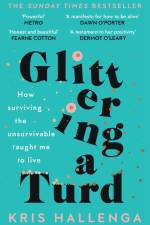
Kris was living a totally normal life as a twenty-three-year-old: travelling the world, falling in love, making plans.However, when she found a lump in her boob and was told that it was not only cancer, but also incurable, life took on a completely new meaning. She was diagnosed at an age when life wasn't something to be grateful for, but a goddamn right.Little did Kris know it was cancer that would lead her to a life she had never considered: a happy one. From founding a charity to visiting Downing Street, campaigning at festivals to appearing on TV, and being present at the birth of her nephew; in the face of all the possible prognoses, Kris is surviving, thriving, and resolutely living.Glittering a Turd is more than just another cancer memoir; it's a handbook for living life to the fullest, shining a new perspective on survival and learning to glitter your own turd, whatever it might be. Kris has survived the unsurvivable for twelve years. Here, she begins to discover why.
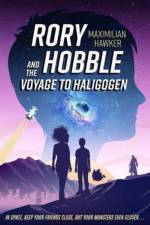
Eleven-year-old Rory Hobble has it tough: he gets upsetting thoughts all the time and they won't go away - 'Obsessive Compulsive Disorder (OCD)', the head doctors call it. His mum hasn't been very well for a long while either. Perhaps it's his fault... Maybe that's why she doesn't always feed him; maybe that's why she screams at him. At least Rory has his telescope - gazing at the unchanging stars keeps him calm. But, one night, Rory sees something impossible in the sky: mysterious lights - artificial and definitely not of earthly origin.When his mum is abducted by the shadowy Whiffetsnatcher, Rory - accompanied by his space-faring, care-experienced social worker, Limmy - travels beyond the Earth, chasing those mysterious lights to the frozen ends of the Solar System. Along the way he must outwit a breakaway human civilisation living on a Martian moon; survive the threat of otherworldly monsters; and learn to speak to alien whales.But his greatest challenge left Earth with him and it will take all the courage he has not only to overcome his OCD, but to decide whether he wants to rescue an abusive mother if he gets his chance...
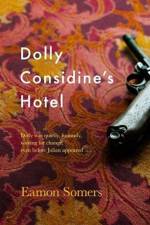
Dolly Considine runs a late-night drinking establishment catering to the needs of thirsty politicians and theatricals in Dublin's legendary drinking area, the Catacombs.Julian Ryder (aka Paddy Butler) is an eighteen-year-old aspiring writer in need of shelter from his bullying older brother.As the new live-in lounge assistant at Dolly Considine's Hotel, Julian soon embroils himself in the shebeen's gossip - and the guests' bedsheets - and turns Dolly's entourage into fodder for his literary ambitions. Reality quickly becomes difficult to separate from fantasy...Set against the run-up to the Pro-life Constitutional Amendment of September 1983 and moving fluidly between the 1950s of Dolly's youth and Julian's Summer of Unrequited Love, the hotel becomes a stage for farce and tragedy. Between Julian's fictions, Dolly's Secrets, and narrow party politics - and featuring a papier-mache figure of Mother Ireland giving birth and clashing sword-wielding dancers - this rich cocktail threatens to blow them, and even Ireland itself, wide apart.
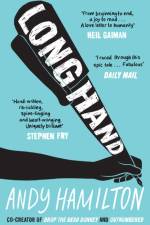
This novel by comedy legend Andy Hamilton (Outnumbered, Not the Nine O'Clock News) is a publishing first, reproducing 300 pages of handwritten manuscript
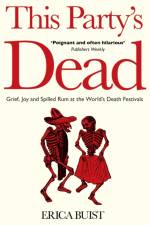
What if we responded to death... by throwing a party? Journalist Erica Buist travels to seven death festivals around the world (Mexico, Nepal, Sicily, Thailand, Madagascar, Japan, Indonesia) in search of better attitudes towards mortality
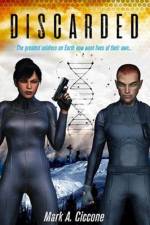
In 2023, the Accelerated Regeneration Compound (ARC) was created: a serum that stimulates regrowth of human tissue - and which quickly drew notice from the United States government. In 2035, 'Project Golem' was created: Five genetically augmented super-soldiers, imbued with ARC...Twenty years later, the world is finally beginning to recover from the effects of the 'Turmoil': a near-apocalyptic collision of terrorist attacks, brushfire wars, economic collapse, industrial accidents, and internal disorder and uprisings across the globe. Here and there, rumors circulate of 'giants in black' who fought against the worst violence - and then suddenly disappeared, hidden or dead.Cut off from the Project, a small group of surviving Golems has spent the past five years in hiding. In that time, they have been seeking out others of their kind, trying to bring them together in a community all their own. They know nothing of their lives before the Project - if those even existed.Now, however, two of them are setting out on a journey to find answers. But the truth of their origins goes far deeper than they could ever believe. And there are some in the covert world they left behind who will kill to keep this truth buried...
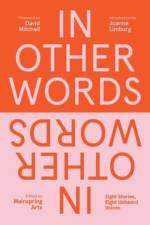
An anthology of lively and imaginative short fiction by eight autistic writers, with a foreword by David Mitchell and introduction by Joanne Limburg
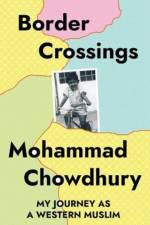
Whether negotiating the mind-games of the Israeli intelligence services or performing ablutions in a London bathroom, Mohammad Chowdhury's life as a British Muslim travelling the world brings daily challenges. Border Crossings is the story of Chowdhury's journey, gripping in some parts and shame-inducing in others, as he describes a lifelong struggle to reconcile the British, Asian and Muslim sides of his identity, constantly dealing with the mistrust of Westerners alongside the hypocrisies of his own community and their misunderstanding of Islam.Chowdhury's story echoes the experience of thousands of Western Muslims who since 9/11 have been subjected to a constant barrage of questions that cast doubt over the very goodness of their faith. It is the story of a man who cries when England win the Ashes, yet still finds himself screaming in the face of racism and religious bigotry. This timely book powerfully rejects the poisonous narrative that Muslims can no longer be trusted as honest citizens of the West.
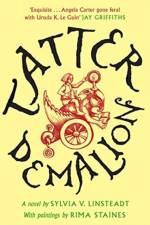
'Exquisite . . . Angela Carter goes feral with Ursula K. Le Guin' (Jay Griffiths): a beautifully illustrated novel rooted in fantasy and folklore, set in a post-apocalyptic California
They've all got a book in them, unfortunately.In December 2016, Julia Greengage, aspiring writer and resting actor, puts up a poster in her local library inviting people to join a new writers' group. The group will exchange constructive feedback and 'generally share in the pains and pleasures of this excruciating yet exhilarating endeavour we call Literature'.Seven people, each in their own way a bit of a work in progress, heed the call.There's Keith, a mercenary sci-fi geek who can write 5,000 words before breakfast and would sell his mother for a book deal. Tom, a suburban lothario with an embarrassing secret. Peter, a conceptual artist whose main goal in life is to make everyone else feel uncomfortable. Alice, who's been working on her opening sentence for over nine months. Jon, a faded muso with a UFO complex. Blue, whose doom-laden poems include 'Electrocuted Angel in the Headlights of My Dead Lover's Eye Sockets' and the notorious 'Kitten on a Fatberg'. And Mavinder, who sadly couldn't make the first meeting. Or the second. But promises to come to the next one...Soon, under Julia's watchful eye, the budding writers are meeting every month to read out their work and indulge each other's dreams of getting published. But it's not long before the group's idiosyncrasies and insecurities begin to appear. Feuds, rivalries and even romance are on the cards - not to mention an exploding sheep's head, a cosplay stalker, and an alien mothership invasion. They're all on a journey, and God help the rest of us.A novel-in-emails about seven eccentric writers, written by three quite odd ones, Work in Progress is a very British farce about loneliness, friendship and the ache of literary obscurity.
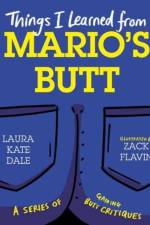
An illustrated compendium and critique of the most beautiful, bulbous and downright dangerous video game butts
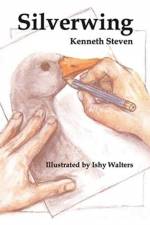
Douglas and his father haven't been able to communicate since his mother's death from cancer. Their house is a place of sadness. One day Douglas finds an injured goose and begins their mission to nurse the bird, and themselves, back to health.
According to the latest figures, the number of vegans in the UK has more than quadrupled since 2014, now representing over 1 per cent of the total population. With the rise in plant-based foods and cruelty-free products showing no sign of stopping, Think Like a Vegan explores how vegan ethics can be applied to every area of our daily lives.We all want to live more healthily and ethically, and this book is certainly not just for vegans. It's for anyone interested in veganism, its ideals and what even non-vegans can learn from its practice. Through a personal and often irreverent lens, the authors explore a variety of contemporary topics related to animal use: from the basics of vegan logic to politics, economics, love and other aspects of being human, each chapter draws you into a thought-provoking conversation about your daily ethical decisions.Why should we adopt animals?What's the problem with organic meat?What are the economics of plant-based foods?What about honey?What is the relationship between veganism and feminism?What is vegansexualism?
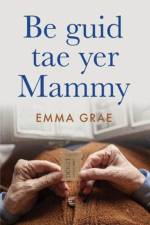
Kate and her Granny Jean have nothing in common. Jean's great claim to fame is raising her weans without two pennies to rub together, and Kate's an aspiring scriptwriter whose anxiety has her stuck in bad thought after bad thought. But what Jean's Glaswegian family don't know is that she dreamed of being a film star and came a hairsbreadth away from making it a reality. Now in her nineties, Jean is a force to be reckoned with. But when the family starts to fall apart Jean must face her failings as a mammy head-on - and Kate too must fight her demons. Either that or let go of her dream of the silver screen forever...
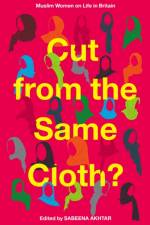
From the publisher of The Good Immigrant: a groundbreaking collection of essays written by British hijabis
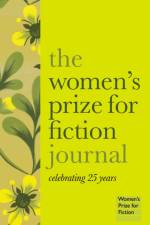
An illustrated journal celebrating twenty-five years of the Women's Prize for Fiction, full of quotes and tips to inspire your own writing
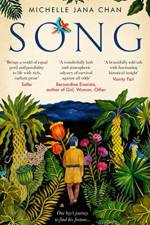
Chasing tales of sugarcane, rubber and gold, Song embarks upon a perilous voyage across the globe to the British colony of Guiana, but once there he discovers riches are not so easy to come by and he is forced into labouring as an indentured plantation worker.
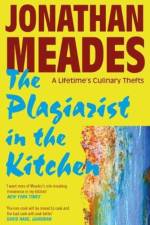
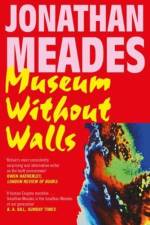
'I adore Meades's book . . . I want more of his rule-breaking irreverence in my kitchen' New York Times'The Plagiarist in the Kitchen is hilariously grumpy, muttering at us "e;Don't you bastards know anything?"e; You can read it purely for literary pleasure, but Jonathan Meades makes everything sound so delicious that the non-cook will be moved to cook and the bad cook will cook better' David Hare, GuardianThe Plagiarist in the Kitchen is an anti-cookbook. Best known as a provocative novelist, journalist and film-maker, Jonathan Meades has also been called 'the best amateur chef in the world' by Marco Pierre White. His contention here is that anyone who claims to have invented a dish is delusional, dishonestly contributing to the myth of culinary originality.Meades delivers a polemical but highly usable collection of 125 of his favourite recipes, each one an example of the fine art of culinary plagiarism. These are dishes and methods he has hijacked, adapted, improved upon and made his own. Without assuming any special knowledge or skill, the book is full of excellent advice. He tells us why the British never got the hang of garlic. That a purist would never dream of putting cheese in a Gratin Dauphinois. That cooking brains in brown butter cannot be improved upon. And why - despite the advice of Martin Scorsese's mother - he insists on frying his meatballs.Adorned with his own abstract monochrome images (none of which 'illustrate' the stolen recipes they accompany), The Plagiarist in the Kitchen is a stylish object, both useful and instructive. In a world dominated by health fads, food vloggers and over-priced kitchen gadgets, it is timely reminder that, when it comes to food, it's almost always better to borrow than to invent.
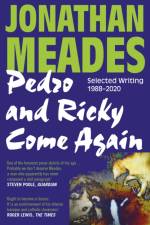
Jonathan Meades has an obsessive preoccupation with places. He has spent thirty years constructing sixty films, two novels and hundreds of pieces of journalism that explore an extraordinary range of them, from natural landscapes to man-made buildings and 'the gaps between them', drawing attention to what he calls 'the rich oddness of what we take for granted'. This book collects fifty-four pieces and six film scripts that dissolve the barriers between high and low culture, good and bad taste, deep seriousness and black comedy. Meades delivers what he calls 'heavy entertainment' - strong opinions backed up by an astonishing depth of knowledge. To read Meades on places, buildings, politics or cultural history is an exhilarating workout for the mind. He leaves you better informed, more alert, less gullible.
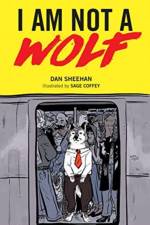
An interactive story from the hugely popular SICKOFWOLVES Twitter account assume the role of a wolf, disguised as a man, trying to hide your real identity while navigating the minutiae of modern life.
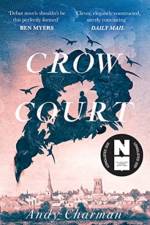
This searingly inventive novel conjures a kaleidoscope of individual lives that all touch a central mystery: the suicide of a choirboy in rural Victorian Dorset
Abonner på vårt nyhetsbrev og få rabatter og inspirasjon til din neste leseopplevelse.
Ved å abonnere godtar du vår personvernerklæring.