



















Gjør som tusenvis av andre bokelskere
Abonner på vårt nyhetsbrev og få rabatter og inspirasjon til din neste leseopplevelse.
Ved å abonnere godtar du vår personvernerklæring.Du kan når som helst melde deg av våre nyhetsbrev.

Green Ivy Grows Over Their Graves, Tra La by Janice D. Soderling (2020) is a collection of received forms, vers libre, and prose poems. The red thread tying them all together is our ultimate shared fate: death.Some poems are in a lighter vein,Consider now the frantic surge of sperm,each rushing blindly, lacking aperçu.How one, a little quicker than the rest,careens into the other half of you.--The Journey while others adopt a more somber bent,Lord, let them be content with solitude.Let the wind move gently over their jutting bones.Croon them to sleep with their old pet names.--The Graveyard at the Ruins of the Monastery)Most of the poems contained here appeared in international literary journals such as Measure, The Literary Bohemian and Mezzo Cammin; some are in print for the first time.This is a volume for poetry lovers to dip into, to return to.
Alexander Pope (21 May 1688 - 30 May 1744) is regarded as one of the greatest English poets, and the foremost poet of the early eighteenth century. He is best known for his satirical and discursive poetry, including The Rape of the Lock, The Dunciad, and An Essay on Criticism, as well as for his translation of Homer. After Shakespeare, Pope is the second-most quoted writer in the English language, as per The Oxford Dictionary of Quotations, some of his verses having even become popular idioms in common parlance. He is considered a master of the heroic couplet. Pope's poetic career testifies to his indomitable spirit in the face of disadvantages, of health and of circumstance.
Rebecca Skinner is a modern-day urban explorer seeking unique, neglected structures and desolate places. Often the only things left in an abandoned building are the bathroom fixtures. Rebecca comes across a lot of antique sinks and claw foot tubs. Where once the water ran freely over glistening porcelain, now these basins are clogged with dust and fallen plaster. The peeling paint on the bathroom walls offers abundant color and texture. Windows, mirrors and toilet stalls create dramatic effects. And, as always, the medicine cabinet beckons. She resists the urge to peek inside.
Alexander Pope (21 May 1688 - 30 May 1744) is regarded as one of the greatest English poets, and the foremost poet of the early eighteenth century. He is best known for his satirical and discursive poetry, including The Rape of the Lock, The Dunciad, and An Essay on Criticism, as well as for his translation of Homer. After Shakespeare, Pope is the second-most quoted writer in the English language, as per The Oxford Dictionary of Quotations, some of his verses having even become popular idioms in common parlance. He is considered a master of the heroic couplet. Pope's poetic career testifies to his indomitable spirit in the face of disadvantages, of health and of circumstance.
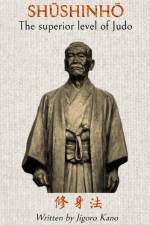
Professor Jigoro Kano classified Kodokan Judo under what he called the 3 cultures or levels of Judo: Shobuho (as warrior and combat art), Rentaiho (as a physical and sports education system) and Shushinho (as a method for moral development), intellectual and ethical). On this occasion, the study is directed towards Shushinho, which according to Jigoro Kano is the highest level of Kodokan Judo. It is well known the capacity and depth that Kano showed in his writings and documents where we conclude that he was an exceptional man, an educator ahead of his time and a Bujutsu teacher who tirelessly helped preserve traditions while adapting the methodology of his school to modern times. Therefore, moral and intellectual development had a relevant role in the doctrine of the founder of Kodokan Judo. It is for this reason that we have ventured to collect, classify, translate and publish ancient writings by Jigoro Kano that appeared mainly in old interviews, contributions in newspapers and specialized magazines, in ancient Kodokan Judo readings, etc. We have divided it into 7 chapters arranged chronologically.In all the chapters, Kano speaks to us about the need to use time correctly, about austerity in expenses, he advises us on the ideal form of combat, feelings and of friendship, of the best way to resolve conflicts between people, of the values that must prevail in any society, of honesty, etc. Sometimes he even explains his doctrine in a hard, direct tone and with some criticism of what was happening in judo and in society at that time. Reading and assimilating each chapter makes the reader move to the mind of who was an exemplary man, of a visionary who knew how to extend the benefits of Kodokan Judo to Japan at that time and later to the rest of the world.
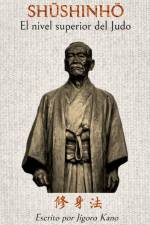
El profesor Jigoro Kano clasificó el Judo Kodokan bajo lo que denominó las 3 culturas o niveles del Judo: Shobuho (como arte guerrero y de combate), Rentaiho (como sistema de educación física y deportiva) y Shushinho (como método para el desarrollo moral, intelectual y ético). En esta ocasión, el estudio está dirigido hacia el Shushinho, que según Jigoro Kano es el nivel más alto del Judo. Es bien conocida la capacidad y profundidad que mostró Kano en sus escritos y documentos donde concluimos que fue un hombre excepcional, un educador adelantado a su época y un maestro de Bujutsu que ayudó incansablemente a preservar las tradiciones al mismo tiempo que adaptaba la metodología de su escuela a los tiempos modernos. Por lo tanto, el desarrollo moral e intelectual tuvo un papel relevante en la doctrina del fundador del Judo Kodokan. Es por este motivo por el que nos hemos aventurado a recopilar, clasificar, traducir y publicar antiguos escritos de Jigoro Kano que aparecieron principalmente en viejas entrevistas, contribuciones en periódicos y revistas especializadas, en antiguas lecturas del Kodokan, etc. Lo hemos dividido en 7 capítulos ordenados cronológicamente. En todos los capítulos, Kano nos habla sobre la necesidad de usar el tiempo correctamente, de la austeridad en los gastos, nos aconseja sobre la forma ideal del combate, de los sentimientos y de la amistad, de la mejor forma de resolver los conflictos entre las personas, de los valores que deben imperar en cualquier sociedad, de la honestidad, etc. Incluso en algunas ocasiones explica su doctrina en un tono duro, directo y con algunas críticas a lo que estaba aconteciendo en el judo y en la sociedad de aquella época. Leyendo y asimilando cada capítulo hace que el lector se traslade a la mente de quien fue un hombre ejemplar, de un visionario que supo extender los beneficios del Judo al Japón de aquella época y posteriormente al resto del mundo.
A whimsical, illustrated riddle based on quotes by existentialist philosopher Søren Kierkegaard.
Emerson Hough (June 28, 1857 - April 30, 1923) was an American author best known for writing western stories and historical novels. Hough was born in Newton, Iowa on June 28, 1857. He was in Newton High School's first graduating class of three in 1875. He graduated from the University of Iowa with a bachelor's degree in philosophy in 1880 and later studied law and was admitted to the bar in 1882. His first article, "Far From The Madding Crowd," was published in Forest and Stream in 1882.
Disengage from social media. Engage in yourself. The Manifesting Wellness Journal is an exercise for mental wellness and self discovery through prompts combined with anxiety and stress relieving, meditative coloring pages.
Islamic Folklore Tales of Abu Hurairah The Father of Small Cats Bilingual Edition In English and Germany Languange.One day, his yearning to meet Allah intensified. While his visitors were invoking Allah to cure him of his disease, he was imploring Allah saying, "O Allah, I love to meet You, so love to meet me." In AH 59, he died at the age of 78. His calm body was buried in a blessed place among the reverent inhabitants of Al-Baqii.Returning from his funeral, the people kept reciting many of the traditions that he had taught them about the noble Messenger. One of the recent Muslims asked his friends, "Why was our deceased sheikh called Abu Hurairah?" His knowing friend answered, "In the preislamic time his name was `Abd Shams.When he embraced Islam, the Messenger called him `Abd Ar-Rahman. He used to be sympathetic towards animals. He had a cat that he used to feed, carry, clean, and shelter, and it used to accompany him as if it were his shadow. Thus, he was called Abu Hurairah, which means father of the small cats. May Allah be pleased with him."
Abonner på vårt nyhetsbrev og få rabatter og inspirasjon til din neste leseopplevelse.
Ved å abonnere godtar du vår personvernerklæring.