




















Gjør som tusenvis av andre bokelskere
Abonner på vårt nyhetsbrev og få rabatter og inspirasjon til din neste leseopplevelse.
Ved å abonnere godtar du vår personvernerklæring.Du kan når som helst melde deg av våre nyhetsbrev.

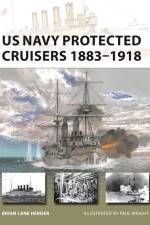
Explores the history of the US Navy's 11 new steel warships, built during the late 19th century to advance American naval supremacy.After the American Civil War, the powerful US Navy was allowed to decay into utter decrepitude, and was becoming a security liability. In 1883, Congress approved four new steel-constructed vessels called the "ABCD" ships. The three protected cruisers Atlanta, Boston, and Chicago were the first steel warships built for the US Navy, whose 1880s-1890s technological and cultural transformation was so total it is now remembered as the "New Navy". This small fleet was joined by a succession of new and distinctive protected cruisers, culminating in the famous and powerful Olympia. These 11 protected cruisers formed the backbone of the early US steel navy, and were in the frontline of the US victory in the 1898 Spanish-American War. It was these warships that fought and won the decisive Battle of Manila Bay. These cruisers also served faithfully as escorts and auxiliaries in World War I before the last were retired in the 1920s.Written by experienced US naval researcher Brian Lane Herder, and including rare photographs, this book explores the development, qualities, and service of these important warships, and highlights the almost-forgotten Columbia-class, designed as high-speed commerce raiders, and to mimic specific passenger liners. All 11 protected cruisers are depicted in meticulously researched color illustrations with one depicting the Olympia deploying her full sail rig.
A highly illustrated history of the US Navy's nuclear submarine program, from the postwar years to the 2020 Columbia-class SSBNs.James C. Goodall covers the origins, design and development of the US Navy's fleet of nuclear-powered submarines. This program was developed under the command of Hiram G. Rickover, the "Father of the Nuclear Navy" who oversaw the commissioning of the very first nuclear-powered attack submarine, the USS Nautilus (SSN 571) in 1952. This was a truly revolutionary design. Until the advent of nuclear power, the world's submarine fleets traveled on the surface at night to charge their batteries, and only dove below the surface when enemy ships or planes were spotted. With the development of the USS Nautilus, the US Navy now had the ability to stay submerged for not just hours or days, but to hide out of harm's way for weeks or months at a timeThis highly illustrated book covers all of the 220+ submarine hulls built and delivered to the US Navy from the USS Nautilus through to the Navy's newest class of submarine, the Columbia class SSBNs. The story of the Nuclear Navy from its origins up to the present day is told through more than 1,300 images from official and archive sources, as well as the author's own personal collection, some of which have never been published before.
The Great War meets the horrors of forgotten folklore in this occult skirmish wargame.1916: A World Transformed. As the Great War raged, the Moon fell from its orbit. Seas shifted, uncovering new lands and revealing what tide and time had concealed. Long known as a potent occult power, the Moon's descent also heralded the terrifying resurgence of magic. Long-forgotten gods and spirits began to stir in hidden groves and caverns and old traditions found new strength. Soon, stone circles echoed once more with the chanting of ancient rituals and menhirs were again bedecked with wildflowers and presented with offerings of honey and blood. 1918: A War Transformed. Rival nations battle on new fronts, seeking dominance with weapons of spell, song, and sacrifice. Thrust to the surface, Doggerland, the ancient bridge between Britain and Europe, becomes a crucial battleground in the conflict. In this alien landscape, raiding parties pick through the ribs of wrecks and the ruins of lost villages, war machines festooned with totems and fetishes roll over the brittle bones of long-dead giants, and cavalry charge across plains made verdant by the vegetation returning to this new land with unnatural speed.A War Transformed is a skirmish wargame set in a world where World War I was utterly changed by forces far beyond human comprehension. Players command small forces of infantry, cavalry, artillery, and other. stranger. troops on the Doggerland Front. Fast-paced gameplay and a tense initiative bidding system are combined with authentic folk traditions and occult philosophies of the era - it is a game of rifle and relic, of bayonet and belief, of machine gun and magic.
A roleplaying game of fast-moving beat 'em up action - take to the streets, take on the gangs, take back your City!As night falls over the City, a storm is brewing in the streets below. The gangs have taken over. They rule with an iron fist, their will enforced by armies of thugs and brawlers. Gutters run red. The authorities have either sold out or are stretched too thin to make a difference. Might makes right. You will not tolerate this any longer. Uniting with a crew of like-minded individuals, you head out to reclaim your home, protecting neighborhoods, inspiring others to take a stand, and clashing with gang enforcers as you work your way through their ranks, seeking to cut the head from the snake coiled at the heart of the City.Urban Decay is a roleplaying game of beat 'em up action inspired by classic arcade video games, movies, and comic-books. Players take on the roles of warriors, martial artists, vigilantes, and ordinary citizens, taking to the streets to face the gangs that control the City and to save the people and places they love. Streamlined character and crew creation produces distinct, capable heroes with shared goals and bonds, while the versatile Clash system emphasizes the brutal, gritty street-fights in which these heroes will find themselves. The City itself is built collaboratively, with players working together to define the districts and neighborhoods for which their heroes will go to war.
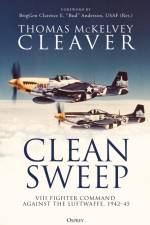
A vivid narrative history, packed with first-hand accounts, of the US Eighth Air Force's VIII Fighter Command from its foundation in 1942 through to its victory in the skies over Nazi Germany.On August 7, 1942, two events of major military importance occurred on separate sides of the planet. In the South Pacific, the United States went on the offensive, landing the First Marine Division at Guadalcanal. In England, 12 B-17 bombers of the new Eighth Air Force's 97th Bombardment Group bombed the Rouen-Sotteville railroad marshalling yards in France. While the mission was small, the aerial struggle that began that day would ultimately cost the United States more men killed and wounded by the end of the war in Europe than the Marines would lose in the Pacific War. Clean Sweep is the story of the creation, development and operation of the Eighth Air Force Fighter Command and the battle to establish daylight air superiority over the Luftwaffe so that the invasion of Europe could be successful.Thomas McKelvey Cleaver has had a lifelong interest in the history of the fighter force that defeated the Luftwaffe over Germany. He has collected many first-hand accounts from participants over the past 50 years, getting to know pilots such as the legendary "Hub" Zemke, Don Blakeslee and Chuck Yeager, as well as meeting and interviewing leading Luftwaffe pilots Adolf Galland, Gunther Rall and Walter "Count Punski" Krupinski. This story is told through accounts gathered from both sides.
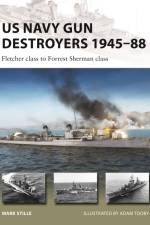
An illustrated history of the long Cold War careers of the US Navy's last gun destroyers, from the modernized World War II-era Fletcher-class to the Forrest Sherman-class. The finest American destroyers of World War II had surprisingly long careers into the Cold War and the missile age. The 175-strong Fletcher-class was the largest class of US Navy destroyers ever built, and most received some modernization after World War II. A handful were converted into ASW (Anti-Submarine Warfare) escorts and one was even converted into the US Navy's first guided missile destroyer. Many Sumner-class destroyers were also kept in service, with the last decommissioned in 1973. The Gearing class was the classic US Navy wartime destroyer to have a second Cold War career, some being modified into picket ships and others into ASW escorts. Ninety-five were extensively modernized under the Fleet Modernization and Rehabilitation (FRAM) program which allowed them to serve until 1980. The majority of these ships then saw service with foreign navies. However the story of Cold War gun destroyers is not just one of World War II relics. Commissioned in the 1950s, the 18 ships of the Forrest Sherman class were the US Navy's last all-gun destroyers, and were considered to be the pinnacle of US Navy gun-destroyer design. Later in their careers, most were modernized for ASW and antiair warfare. The virtually unknown Norfolk class was originally built as a destroyer leader and maximized for ASW but only two were modernized and the other three retired early. Many of these ships, such as USS Edson, Cassin Young, and Turner Joy, still survive as museum ships today.Using battlescene artwork, detailed illustrations and photos, this book explores the careers, modernizations, and roles of all these unsung Cold War stalwarts, the last gun destroyers of the US Navy.
A gripping illustrated narrative of the Cimbrian (or Cimbric) War, in which the armies of the Roman Republic finally defeated the Germanic tribes of the Cimbri, Teutons, Ambrons and Tigurini.Rome's victory in the Cimbrian War was born of a number of huge and devastating defeats at the hands of the Germanic tribes (chiefly the Cimbri and Teutones), who had migrated en masse southwards in the late 2nd century BC. These included the defeat in 113 BC of the consul Cnaeus Papirius Carbo at Noreia; the smashing of Marcus Iunius Silanus' army near Burdigala (Bourdeaux) in 109 BC, and the humiliating destruction of two consular armies at Arausio (Orange) four years later. This work explores how, in the autumn of 105 BC, Caius Marius managed to contain the Germanic threat in the north, before crushing it in two successful battles, at Aquae Sextiae (Aix-en-Provence) in Gallia Transalpina in 102 BC and at Vercellae (Vercelli) in Gallia Cisalpina in 101 BC.Packed with stunning illustrations covering the major clashes of this epic and drawn-out war of the late Republic, this work brings to life for the first time Rome's vital quashing of the Germanic threat to its very existence. It also documents the rise of Marius, one of Rome's most important martial figures, who was highly significant in the transformation of its armed forces.
Using first-hand accounts and rare and unpublished images, this highly illustrated title tells the full story of the German reconnaissance troops in World War II. When the Wehrmacht was first formed in 1935, tactical reconnaissance was carried out by motorcycle rifle units (Kradschützen). However, with the development and large-scale introduction of wheeled armoured vehicles in the late 1930s, motorized reconnaissance battalions (Aufklärungs-Abteilungen) were introduced. Equipped with a mixture of armoured cars and motorcycles, they often operated far ahead of battlefront to survey the terrain, observe enemy positions and identify enemy forces - key information required ahead of any armoured assault. In the second half of the war, with Germany on the strategic defensive, armoured reconnaissance troops found themselves increasingly drawn into combat operations, and even holding sectors of the line. At the same time, more modern equipment was introduced with motorcycles phased out and purpose-built armoured personnel carriers (Schützenpanzerwagen) introduced. Renowned armour expert Thomas Anderson draws on first-hand accounts and rare and previously unseen photographs in this comprehensive and fully illustrated study of the Panzer reconnaissance troops, the crucial eyes and ears of the German armoured forces of World War II.
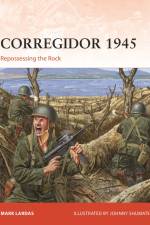
A detailed and fascinating exploration of the 1945 US combined land, naval and air operation to retake Corregidor and the other Japanese-held islands in Manila Bay from a determined and well-entrenched enemy. The islands guarding the entrance to Manila Bay, Luzon, had been seized by the Japanese in May 1942. In February 1945, US forces were back, and closed in on Manila from the north and south against heavy Japanese resistance. A joint US parachute and amphibious assault was planned to capture the largest island Corregidor, using the much-reinforced 503rd PRCT and elements of the 24th Infantry Division and 2nd Engineer Special Brigade. Facing them were over 6,000 Japanese troops recently evacuated from Bataan, where they had been cut off by advancing US forces. General MacArthur desired the island, once a symbol of American defiance, to be liberated with a flourish.This superbly illustrated work examines the ambitious US assault on Corregidor, which witnessed the most dangerous and risky parachute drop in airborne history, and vicious, desperate fighting by the defenders as they sought to prevent American troops from taking the island. It also covers the recapture of other islands defending Manila Bay: El Fraile/Fort Drum, Caballo, and Carabao.
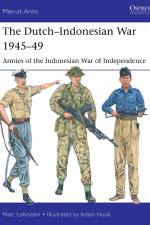
Highly detailed and colourful, this account illustrates the struggle of Indonesian forces in their War of Independence against the Netherlands, following the surrender of occupying Japanese forces in 1945.Following on from MAA 521 Royal Netherlands East Indies Army 1936-42 and completing the coverage of the post-World War II wars of decolonization, The Dutch-Indonesian War 1945-49 describes the Japanese surrender in September 1945 which left a power vacuum in the colonial Dutch East Indies (Indonesia). Using vivid colour illustrations and rare photos, this title depicts the various forces involved in the struggle for Indonesia: the British Indian Army troops sent to key areas to disarm Japanese garrisons, the Indonesian nationalists who immediately proclaimed an independent Republic, remaining Japanese troops, and the Dutch forces which arrived in 1946.The wide dispersion of populations, and their ethnic, religious and political differences ensured that the struggle which followed was complex. Fragmented bands of nationalist permuda insurgents were slowly brought together under command of a republican army (the BKR, later TKR, and finally the TNI, complete with naval and air elements), but stubborn negotiations alternated with bouts of major fighting. This book details how the nationalists were defeated by Dutch and Dutch-led local forces in urban areas (e.g. during Operations Product and Crow, 1947 and 1948), but how their guerrillas evaded Dutch troops in the jungle hills and swamps. Illustrating a wide range of uniforms, insignia, personal weapons and equipment, this study showcases the troops and armour involved in the conflict.
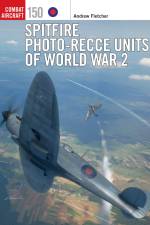
A fascinating exploration of the feats of the RAF's photographic reconnaissance aircraft.The photographic reconnaissance (PR) versions of the Supermarine Spitfire saw service against the Axis Tripartite throughout World War 2. Its superior performance even led to the USAAF adopting the type for the Eighth Air Force's reconnaissance needs in Europe. PR Spitfires were responsible for some of the most significant intelligence finds of the war - from low-level oblique photographs of new German radars in France to locating the battleship Bismarck off the Norwegian coast before it attempted to sortie into the Atlantic. It has been estimated that as much as 80 per cent of Allied intelligence was gathered from aerial photographs, many of which were taken by cameras installed in PR Spitfires.In this volume, RAF PR specialist Andrew Fletcher details the important part played by the small number of 'photo-recce' Spitfires in the key theatres of World War 2. His detailed text, which includes numerous first-hand accounts, chronicles operations from the first months of the conflict through to VJ Day.
This work provides an authoritative illustrated examination of the second day of the Battle of Gettysburg, analyzing both grand strategy, and the tactical decisions of Day Two and the ensuing combat.July 2, 1863 was the bloodiest and most complicated of the three days of the Battle of Gettysburg. On this day, the clash involved five divisions of Confederate infantry and their accompanying artillery battalions, as well as a cavalry skirmish at nearby Hunterstown. The bulk of the Union army engaged on the second day of fighting, including men from the 2nd, 3rd, 5th, 6th, 11th and 12th Corps.Assisted by superb maps and 3D diagrams, this fascinating work describes the tactical play-by-play, the customary "who did what" of the battle. Among the famous actions covered are Hunterstown and Benner's Hill, Little Round Top, Devil's Den, the Rose Wheatfield, the Peach Orchard, and Culp's and Cemetery hills. The critical decisions taken on the second day are examined in detail, and why the commanders committed to them. Gettysburg was-first and foremost-a soldier's battle, full of raw emotion and high drama, and this work also examines the experience of combat as witnessed by the rank and file, bringing this to life in stunning battlescene artworks and primary accounts from common soldiers.
Using specially commissioned artwork and detailing technical specifications, this book explores the Bf 109's different roles occasioned by wartime necessity, from its employment as a fighter to its evolution as a fighter-bomber.One of the principal types in the Luftwaffe's inventory at the beginning of World War II, the piston-engined Bf 109 was central to the many initial victories that the Germans achieved before coming up against the unbeatable RAF during the Battle of Britain. Nevertheless, by the second half of 1940 the Bf 109's operability was widened due to operational needs and it was flown as a fighter-bomber for precision attacks in Southern England. At first ad hoc conversions were made 'in the field' to allow the aircraft to carry a bomb or extra fuel tank. Such modifications were soon formalised by Messerschmitt, which created the Jabo Bf 109s. Drawing from pilots' first-hand accounts, author Malcolm V. Lowe explores the number of specialised units, including Lehrgeschwader 2 and dedicated fighter-bomber sections of standard fighter units such as 10. Staffel of Jagdgeschwader 26, which flew this highly specialised fighter-bomber. Including technical specifications, rare photographs and outstanding artwork, this book explores the Jabo versions of the Bf 109E, F and G both on the production line and with the addition of Rüstsätze field conversion kits.
A fully illustrated study of the Nakajima Ki49 'Helen', the twin-engined bomber of the Pacific War, from Japanese aviation expert George Eleftheriou.The Nakajima Ki-49 Donryu ('Dragon Eater'), codenamed 'Helen' by the Allies, was a twin-engined Japanese bomber designed to undertake daylight attacks without the protection of escort fighters. Consequently, while it was officially known as the Army Type 100 Heavy Bomber, its formidable defensive armament and armour were so heavy that they restricted the Ki-49 to payloads comparable to those of smaller medium bombers. While only five heavy bomber sentai (regiments) were equipped with the 'Helen', the over 800 Ki-49s built between 1941 and 1944 saw extensive action in Burma, Papua New Guinea, the Philippines, northern India and north Australia. In an act of desperation, a small number of 'Helens' were even employed, unsuccessfully, as kamikaze aircraft against US Navy warships operating off the Philippines and Okinawa. In this fascinating book, George Eleftheriou provides a comprehensive account of the units that saw action flying the 'Helen', based on original Japanese sources. Also featuring high-quality photographs never published before, specially commissioned colour profile artwork, official unit histories and veteran accounts, this title is a must-have for Japanese aircraft enthusiasts.
A new study of tank warfare used in the Soviet offensive of Operation Bagration, which destroyed Army Group Center. Operation Bagration, the 1944 summer campaign on the Russian Front, has been called "Hitler's Greatest Defeat." The operation involved substantial tank and armored vehicles on both sides but the German forces were severely hampered by the transfer of dozens of Panzer divisions to France to repel an expected Allied invasion. Forced to make hard decisions, German tank forces in the central Belarus sector were weak compared to the heavy concentration of Panzers in northern Ukraine. The Red Army exploited this vulnerability, crushing Army Group Center, and pushing beyond the Soviet frontier into Poland and East Prussia. With this crucial victory secured, the Red Army conducted successive offensives beyond the Carpathian Mountains, arriving at the Vistula river in Poland, and forcing Romania to switch sides. The Red Army had embarked on a major tank modernization after the Kursk battles of 1943 and as a result, Operation Bagration saw the first widespread use of T-34-85 and IS-2 tanks as well as self-propelled guns. Germany's Panther tank finally reached technical maturity in the summer of 1944 but small numbers weakened its battlefield impact, while other innovations such as the Tiger II heavy tank failed to leave their mark. Using new photos and a fascinating selection of color illustrations explaining the camouflage and markings of these tanks, this book describes how the tanks and AFVs on both sides contributed to the eventual defeat of Army Group Center.
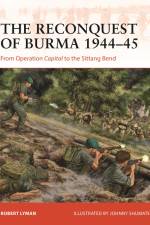
A fascinating exploration of the dramatic battles and Allied operations to wrest back control of Burma (Myanmar) from the Japanese.The Allied reconquest of Burma was not part of Allied Grand Strategy in 1944 and 1945. It happened despite it - in particular, because of the dramatic failure of the Japanese invasion of India (Operation U-Go), which ended ignominiously for the Japanese Empire in August 1944. The reconquest was one of the longest campaigns of World War II. It comprised 11 distinct battles and offensives that were part of the overall continuum of operations that resulted in the Allied victory.Written by a foremost expert on the British Army in World War II, this superbly illustrated work details the Allied operations to retake Burma from Japanese control. Accounts of Operation Capital, the capture of Meiktila and Mandalay, the Allied advance in the Arakan, the race for Rangoon, Operation Dracula, the Battle of the Sittang Bend and Japanese breakout operations across the Pegu Yomas are supported by easy to follow 2D maps and 3D diagrams. Among the events brought to life in vivid battlescene artworks are an SOE-led ambush in Operation Character, and the famous Defence of Hill 170 in the Arakan.
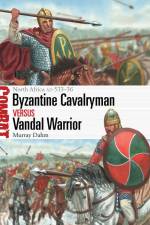
Fully illustrated, this enthralling study explores how the Vandals in North Africa attempted to defend their kingdom against the resurgent Byzantine Empire during 533-36.In AD 533, the Byzantine Emperor Justinian I launched the first of his campaigns to reconquer the Western Roman Empire. This effort began in North Africa (modern Algeria and Tunisia), targeting the Vandal kingdom established there a century earlier, which also included Sardinia, Corsica and the Balearic Islands. Featuring full-colour artwork and mapping alongside carefully chosen archive illustrations, this book shows how the Byzantine general Belisarius established his formidable reputation in the lightning-fast campaign that ensued, exploring the origins, tactics and reputation of the two sides' forces as they fought for control of North Africa.The landing of Belisarius' forces took the Vandal king, Gelimer, completely by surprise; in September 533 the two sides met in battle near Carthage in an encounter known to posterity as Ad Decimum, with Gelimer ambitiously attempting to trap Belisarius' forces as they advanced. In December, the two sides fought again in a momentous clash at Tricamarum, where the fate of Gelimer's regime would be determined. A third battle ensued in 536, when the rebel Stotzas' Byzantine and Vandal troops confronted Belisarius' forces, the outcome sealing the Byzantine general's standing as the foremost soldier of his age.Featuring specially commissioned artwork and mapping alongside archive illustrations and photographs, this vivid account compares and assesses the two sides' fighting men as they vied for supremacy in North Africa.
Fully illustrated with specially commissioned artwork and mapping plus carefully chosen archive illustrations, many in color, this lively study investigates the Mexican soldiers and Texian volunteers who fought one another in three key battles during the Texas Revolution.Following unrest throughout Mexico, in 1835 a revolt began in Texas among the Anglophone and Tejano-speaking settlers, known as Texians. Having retreated after their defeat at Bexar in December 1835, Mexican troops were ordered to re-occupy Texas in early 1836. In this volume, US military history expert Ron Field explores in detail three key battles that ensued. From February 23, Mexican forces besieged the Texian forces at the Alamo at San Antonio de Bexar; in the subsequent battle on March 6, almost all of the Texian defenders were killed. On March 19, forces en route to join the main Texian army were surrounded by Mexican troops at Coleto Creek. Following their surrender, about 340 Texian prisoners were shot by Mexican soldiers in what became known as the Goliad Massacre. On April 21, a Texian force launched a surprise attack on a larger Mexican army near the San Jacinto River, the decisive Texian victory that resulted is the third battle to be investigated in this study. Featuring full-color artwork and maps and drawing upon the latest research, this book investigates the fighting men of both sides at the Alamo, Coleto Creek, and the San Jacinto River, casting light on the doctrine, tactics, weaponry, and combat record of the Texian and Mexican combatants who clashed in the first weeks of the emerging Republic of Texas.
Featuring specially commissioned artwork and archive illustrations, this engrossing study describes the US Marine Corps' early operations and illustrates its evolving uniforms and personal equipment. The US Marine Corps' uniforms, personal equipment, insignia, and weaponry are all described and illustrated in this book, complemented by a succinct history of the Marines' military record from their beginnings to the eve of the American Civil War, by which time the US Marine Corps had established itself as a small but vitally important part of the United States' armed forces. Organized in 1775, the first American Marines distinguished themselves throughout the American Revolutionary War, and even raided mainland Britain before being disbanded in 1783. Reestablished in 1798, the US Marine Corps fought in the Barbary Wars and the War of 1812, both at sea and on land. The years after 1815 saw the Corps involved in a wide variety of conflicts, from the Seminole Wars to the Mexican-American War; Marines even reached China and Japan. As the prospect of civil war began to threaten the United States, a small battalion of Marines was responsible for the capture of abolitionist John Brown at Harper's Ferry on October 18, 1859. The diverse operations and evolving appearance of the Marines are captured in this absorbing study from an acknowledged authority on US military costume.
Spark provides an unhurried, thought-provoking experience about what drives individuals, teams and organizations to thrive, and how readers can use that knowledge to ignite and direct their own careers.Spark is an unconventional business book. It has been built on the idea that coming from a perspective of 'getting' something is a severely self-limiting position. Instead, a career should be seen as an opportunity to give - to your funders, your team, your customers and the world at large. Doing so, the authors argue, can lead to expansive possibilities. At the same time, however, people should be averse to bloat, bureaucracy, and everything that comes with achieving a certain level of inert mass. So, how can these two positions be reconciled? How can we complain about companies getting too big while presenting a book to help entrepreneurs and leaders think and act more effectively? This is why, unlike most business books, Spark doesn't use the authors' business backgrounds or personal stories as a launchpad for their views on best practices. It's not a step-by-step guide to building an empire, and it doesn't pretend to have all the answers to creating the world's best businesses. Instead, Spark aims to deliver an unhurried, thought-provoking experience about what drives individuals, teams and organizations to thrive. The 24 concepts in the book are commonplace inside venture capital firms and high-performing private equity firms, but they haven't yet made their way to the broader marketplace. The authors believe that these ideas should be more accessible to professionals in all industries, at all stages of their careers. And instead of giving overly-prescriptive advice, readers will be encouraged to think about broader concepts in the context of their own experiences, careers and goals.The book is organized into three sections, each containing eight chapters:- Tier One: Ideas you work on within yourself (individual) - Tier Two: Ideas you work on with someone else (interpersonal) - Tier Three: Ideas you work on within groups (organizational). Each chapter introduces a term; gives a specialized definition that challenges the reader to think differently about the term; and offers thoughts and guidance on how to put the idea into practice. Part manifesto, part self-help guide, Spark is for anyone who has to be resilient and tap into the fire (or inferno!) inside of them to overcome a challenge. It's for those who simply aren't finding purpose in bloated organizations, who don't like to hold meetings for meetings' sake, and who want to live each day as their last, instead of just getting through. The goal of this book is to help you overcome whatever obstacles stand between you and the life you want to live.
Imagine designing a race that only you could win. Now imagine that race was your life. You're done with living by other people's rules. It's time to define your own version of success and set free your inner maverick.Success is something that many of us are encouraged to pursue from a young age - but what defines 'success'? Many people are taught to set goals in pursuit of a generic definition of success that is dictated by society: chase money, pass exams, build profile, attract followers, or generate likes. Even if we do reach the top of the mountain, we often find it to be less than we expected. Living someone else's life is draining; individuals are tired and society is poorer as a consequence. The Modern Maverick sets out a roadmap for a different way forward. A way that combines purpose and profit. A way that helps you figure out your own definition of success and gives you the courage and tools to pursue it. It moves beyond a general question around purpose, and instead focuses on identifying what you are truly passionate about, what you are uniquely good at, what you can get paid enough for - and how all of that dovetails with what the world needs.Using a distilled set of 'Maverick' principles, the books presents a clear 4D process to help you create the life you want:1. Discover - what are you uniquely able to do2. Dream - about what is possible for your life3. Do - create and put into action your Maverick plan4. Develop - ensure the plan evolves and deepens By helping you find the best version of yourself, your work and your relationships, the book shows you how to build your inner Maverick. By becoming clearer and more intentional about how and where you spend your energy and focus, you can create a life where you have positive impact, autonomy, choice and time. A win for you, but - crucially - a win for those close to you, and, over time, a win for society at large.
Staying the Distance showcases the much-needed leadership lessons that sport can teach us: how to improve, perform and achieve, in ways that are effective and sustainable.Leadership can be hard. It can certainly be relentless. The pandemic has wreaked havoc on the well-being, health and sustained performance of many senior leaders, and yet strong leadership remains central to the performance of every single organization.Business leaders are very familiar with drawing lessons from elite sport, particularly around teams, leadership and high performance. But we have all been missing a trick. Day in, day out, sport has been showing us not only how to improve, perform and achieve, but how to do so on a sustained basis, consistently delivering results when it matters. This book shines a light on these unseen lessons, and provides a clear and practical roadmap for how to deploy them in the reader's own leadership practices.With Catherine Baker's unique view into world-class sport and top-level business, and with insights from top performers in both worlds, this book provides a fresh and dynamic take on how - consistently and over the long term - to bring out the best in yourself, and in those you lead.
Discover the beauty and delights of London's waterways, on foot or by boat, with Derek Pratt and Richard Mayon-White's fascinating and thorough guide.To really explore London's canals is to see the city in a way you've never seen it before. A different world, away from the hustle-bustle of overladen streets and towering skyscrapers, the waterways offer a unique paradise, full of wildlife, brightly coloured narrowboats, lush greenery and an environment steeped in history. London's Canals will open your eyes to this world and show you all it has to offer, walking with you along the vast stretches of each canal, pointing out the many sights to see and enjoy, pubs to quench your thirst in and history to marvel at. Enjoy whole days out with family and friends, or just an hour or two, choosing a stretch of canal and discovering so many sights and attractions either on or within a short walk from the water's edge. With information boxes, travel directions, clear maps and beautiful photography, along with insightful travel writing from the kings of the waterways, Derek Pratt and Richard Mayon-White, London's Canals is the perfect guide for anyone who loves walking, wildlife and the waterways of the great city of London. Go out there and see for yourself - there is a wonderful network of waterways just waiting to be explored in parts of London you hardly knew existed.
'Humble and very funny' - Ned Boulting'Essential reading for any Étape rider' - Daniel Friebe, co-host of The Cyclist PodcastAn Everyman dropped into the world of Supermen... Can this amateur cyclist complete L'Étape du Tour?Tadej Pogacar has 7% body fat, Chris Froome's resting heart rate is 30bpm, Mark Cavendish reaches sprint speeds of over 50mph. They're super-human cyclists who ride 3,500km over 21 stages across the Alps and Pyrenees as a matter of course.James Witts is 45 years old, fatty deposits have begun to nestle on his back and he has a penchant for craft ale. He also rides a little. But not a lot. In his job as cycling journalist, however, he does have unparalleled access to the world's best riders and their expert support staff.Which got him thinking: could spending time with the pros, discovering the training, gear and nutritional tricks of the trade, transform this back-of-the-pack sportive straggler into a fit-and-fast frontrunner?In this entertaining and warm-hearted tale, Witts gains access to the world's greatest teams and riders to reveal the tricks of the trade. Follow along as he trains, rides and eats using the regimes of the planet's toughest athletes, to conquer a stage of the Tour de France.Will he sacrifice the pub for stamina-boosting beetroot juice? Can an altitude mask really send his performance soaring? And will his ego cope with a drag-cutting, little-left-to-the-imagination skinsuit?
This is the ultimate guide to liferaft survival for all boaters and its purpose is to ensure the survival of skipper and crew in the event of their boat sinking. In this essential safety book, expert authors, Frances and Michael Howorth, cover how to be mentally and physically prepared for a sailor's ultimate nightmare. It includes invaluable advice on the essentials to pack into the emergency grab bag for a short or long cruise, hot or cold climate, coastal or offshore trip. Packed full of checklists and clear diagrams, there are lessons learned from disasters, flowcharts to prioritise abandon ship procedure, sections on first aid and emergency treatment. Featuring some essential content from the authors' previous title The Grab Bag Book but completely revised and updated, the new Liferaft Survival Guide is what you need right now to stay safe at sea and covers up to date information on the way satellites and beacons work, world monitoring of distress signals and advances in medical practice. Preparation and planning are key for safe enjoyable sailing. Every boater needs to plan and prepare, and every boater should read this book. This unique survival at sea handbook helps you ensure your crew's survival in a liferaft. Buy it, build your own grab bag and be sure to be prepared!
Abonner på vårt nyhetsbrev og få rabatter og inspirasjon til din neste leseopplevelse.
Ved å abonnere godtar du vår personvernerklæring.