










Gjør som tusenvis av andre bokelskere
Abonner på vårt nyhetsbrev og få rabatter og inspirasjon til din neste leseopplevelse.
Ved å abonnere godtar du vår personvernerklæring.Du kan når som helst melde deg av våre nyhetsbrev.

Theatre and war have long been bedfellows. This brief study looks beyond theatre that is about war, and instead focuses on the relationship between theatre and war: how they feed into and inform one another, from rehearsal to post-production analysis. The study builds on the premise that theatre and war share a deep kinship that finds its consummate expression in the very phrase 'theatre of war.' This critical look at the entangled history of theatre and war asks pressing questions that remain pertinent to our current moment: how have the tools of theatre been used in the waging of war? How have the tools of waging war been used in the making of performance? What are the 'shared interests' of theatre and war? And how has performance become a militarized paradigm?
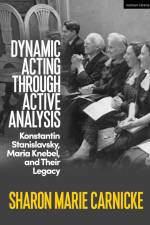
In the 21st century, actors face radical changes in plays and performance styles, as they move from stage to screen and grapple with new technologies that present their art to ever-expanding audiences. Active Analysis offers the flexibility of mind, body, and spirit now urgently needed in acting. Dynamic Acting through Active Analysis brings to light this timely legacy, born during the worst era of Soviet repression and hidden for decades from public view. Part I unfolds like a mystery novel through letters, memoirs, and transcripts of Konstantin Stanislavsky's last classes. Far from the authoritarian director of his youth, he reveals himself as a generous mentor, who empowers actors with a brand new collaborative approach to rehearsals. His assistant, Maria Knebel, first bears witness to his forward-looking ideas and then builds the bridge to new plays in new styles through her directing and influential teaching. Part II follows a 21st century company of diverse actors as they experience the joy of applying Active Analysis to their own creative and professional work.
This handbook is the first complete guide to the herpetofauna of northeast Africa, covering seven countries - Djibouti, Egypt, Ethiopia, Eritrea, Somalia, South Sudan and Sudan.The seven countries of north-east Africa - Egypt, Sudan, South Sudan, Ethiopia, Eritrea, Djibouti and Somalia - share a remarkably diverse landscape, and the region is home to a vast array of herpetofauna, from the Variable Green Toad to the Congo Hinged Terrapin, the Nubian Pigmy Gecko and the Pasteur's Desert Racer. This handbook is the most comprehensive and up-to-date reference to all 114 species of amphibian and 458 species of reptile known from the region, including caecilians, frogs, turtles and tortoises, lizards, crocodiles and snakes. Featuring more than 950 photos, Handbook of Amphibians and Reptiles of North-east Africa includes information on identification, habitat and distribution, behaviour, and best locations to see species, as well as up-to-date species maps. Supporting chapters cover the region's habitats, conservation, and safety when observing and handling amphibians and reptiles. This is an essential resource for anyone interested in the unique and extraordinarily diverse herpetofauna of north-east Africa.
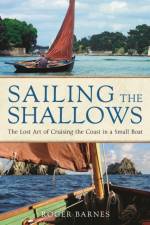
A beautifully written and illustrated manifesto for a simpler style of sailing, exploring the coastline in a small boat. Filled with useful advice and techniques, but above all an inspiring and captivating read.Sail just a couple of miles away from the coast and the shoreline begins to drop below the horizon. Soon you are alone on the same wild seas the Vikings crossed, where Drake repulsed the Spanish Armada, and where the clippers once raced home with cargoes of tea. The modern world may have changed radically, but the sea remains as feral and free as it always was. There are opportunities for adventure all around us, if we wish to take advantage of them. Dinghy cruising is accessible, affordable adventure, available to anyone. It requires little other than self-reliance and self-confidence, as well as a respect for the subtleties of the local climate and topography. Out at sea in a small boat, nature is not something to be observed disinterestedly: it batters and drenches you, refreshes and enlivens you. In Sailing the Shallows Roger Barnes combines lyrical writing and beautifully drawn illustrations with simple and practical wisdom on sailing a small boat - a combination that has been much admired in his first book, The Dinghy Cruising Companion. Where the first book got readers set up and ready to go, Sailing the Shallows sees us underway and exploring. Roger describes a series of sea passages in small boats in UK, French and Italian waters, with each chapter highlighting a particular technique of coastal sailing or wilderness camping. Roger weaves practical instruction seamlessly into the narrative, and accompanies his tales with a series of exquisite hand-drawn illustrations of the places visited, events described or details of his beloved boat Avel Dro.This book is a manifesto for a different attitude to sailing; an antidote to the complexity and ostentation of contemporary yachting. It is also arguing for a different attitude to living - plain, direct and at one with nature - a reassessment of our priorities that is long overdue.
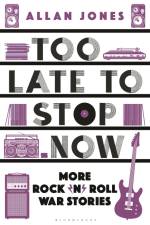
More than 40 stories from the glory days of rock'n'roll, featuring Lou Reed, Elton John, Sting and The Clash.Allan Jones brings stories - many previously unpublished - from the golden days of music reporting. Long nights of booze, drugs and unguarded conversations which include anecdotes, experiences and extravagant behaviour. - A band's aftershow party in San Francisco being gatecrashed by cocaine-hungry Hells Angels- Chrissie Hynde on how rock'n'roll killed The Pretenders- What happened when Nick Lowe and 20 of his mates flew off to Texas to join the Confederate Air Force- John Cale on his dark alliance with Lou Reed Allan Jones remembers a world that once was - one of dark excess and excitement, outrageous deeds and extraordinary talent, featuring legends at both the beginnings and ends of their careers.
In the 1940s and 1950s, hundreds of art documentaries were produced, many of them being highly personal, poetic, reflexive and experimental films that offer a thrilling cinematic experience. With the exception of Alain Resnais's Van Gogh (1948), Henri-Georges Clouzot's Le Mystère Picasso (1956) and a few others, most of them have received only scant scholarly attention. This book aims to rectify this situation by discussing the most lyrical, experimental and influential post-war art documentaries, connecting them to contemporaneous museological developments and Euro-American cultural and political relationships. With contributors with expertise across art history and film studies, Art in the Cinema draws attention to film projects by André Bazin, Ilya Bolotowsky, Paul Haesaerts, Carlo Ragghianti, John Read, Dudley Shaw Aston, Henri Storck and Willard Van Dyke among others.
This volume approaches the broad topic of wonder in the works of Tacitus, encompassing paradox, the marvellous and the admirable. Recent scholarship on these themes in Roman literature has tended to focus on poetic genres, with comparatively little attention paid to historiography: Tacitus, whose own judgments on what is worthy of note have often differed in interesting ways from the preoccupations of his readers, is a fascinating focal point for this complementary perspective. Scholarship on Tacitus has to date remained largely marked by a divide between the search for veracity - as validated by modern historiographical standards - and literary approaches, and as a result wonders have either been ignored as unfit for an account of history or have been deprived of their force by being interpreted as valid only within the text. While the modern ideal of historiographical objectivity tends to result in striving for consistent heuristic and methodological frameworks, works as varied as Tacitus' Histories, Annals and opera minora can hardly be prefaced with a statement of methodology broad enough to escape misrepresenting their diversity. In our age of specialization a streamlined methodological framework is a virtue, but it should not be assumed that Tacitus had similar priorities, and indeed the Histories and Annals deserve to be approached with openness towards the variety of perspectives that a tradition as rich as Latin historiographical prose can include within its scope. This collection proposes ways to reconcile the divide between history and historiography by exploring contestable moments in the text that challenge readers to judge and interpret for themselves, with individual chapters drawing on a range of interpretive approaches that mirror the wealth of authorial and reader-specific responses in play.
Charting the early dissemination of Shakespeare in the Nordic countries in the 19th century, this opens up an area of global Shakespeare studies that has received little attention to date. With case studies exploring the earliest translations of Hamlet into Danish; the first translation of Macbeth and the differing translations of Hamlet into Swedish; adaptations into Finnish; Kierkegaard's re-working of King Lear, and the reception of the African-American actor Ira Aldridge's performances in Stockholm as Othello and Shylock, it will appeal to all those interested in the reception of Shakespeare and its relationship to the political and social conditions.The volume intervenes in the current discussion of global Shakespeare and more recent concepts like 'rhizome', which challenge the notion of an Anglocentric model of 'centre' versus 'periphery'. It offers a new assessment of these notions, revealing how the dissemination of Shakespeare is determined by a series of local and frequently interlocking centres and peripheries, such as the Finnish relation to Russia or the Norwegian relation with Sweden, rather than a matter of influence from the English Cultural Sphere.
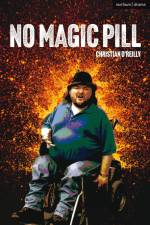
If you're a wheelchair-user, you've got a simple choice: either you suck sweets in a corner and watch television all day or you try to change the world around you. There ain't gonna be no magic pill in my day.This is the (mostly) true story of Martin Naughton AKA Michael Collins in a wheelchair. Martin is an agitator. A disruptor. A seeker of justice and planter of (truth) bombs. But will his anarchic quest for equality be derailed by dreams of love and new horizons?Based on the real life of Martin Naughton and his campaign for independence for disabled people in Ireland, No Magic Pill, written by Christian O'Reilly, is a joyful, shameless, no-holds-barred story of one man's fight for justice and love.This edition was published to coincide with the production at Black Box, Galway, and the Civic, Tallaght, for Dublin Theatre Festival in October 2022.
You can't live your life thinking everything you text will become public knowledge.Censoring yourself is no way to live.Everyone needs Jim.His mother.His best friend.His brother.A hopeful future President.But can Jim really help anyone, when he isn't sure who he is any more, or what he actually believes? An expert in electoral strategy, he's forged a successful career by advising politicians how to communicate with voters. But following seismic shifts in the political landscape, he's disillusioned. And his marriage is in crisis. As he juggles the demands on his life through his smartphone, will the lure of success and fame prove irresistible?The Narcissist is a gripping, inventive and witty take on personal and political communication in the internet age by celebrated US playwright Christopher Shinn. This edition was published to coincide with the premiere at Chichester Festival Theatre in August 2022.
"I need you to get in the wardrobe."Faye's afraid.She's not sleeping, she doesn't trust ducks and all she's had to eat this week is a box of dry Rice Krispies.A doctor recommends a form of exposure therapy, so Faye enlists the help of her brother, Naoise. But Naoise has a devastating secret that's about to explode.A darkly funny new monologue by Ciara Elizabeth Smyth, Lie Low is a theatrical exploration into the human brain via the genitals. This edition was published to coincide with the world premiere at the Dublin Fringe Festival, in September 2022.
"An astonishingly powerful play with a mesmeric performance from Bilal Hasna. He is an important young Palestinian voice who deserves a wide audience."- Palestine Solidarity CampaignBut there's this feeling. And it really is impossible to translate. But if you feel it you know what it is. If you're watching this and you're Palestinian, you know what it is.Bilal has always been obsessed with love stories. Here he tells you his favourite: the true story of Palestinian translator Wa'el Zuaiter. Join Bilal as he ventures through the orange groves of Jaffa, Rome's piazzas, and the Duty-Free aisles of Luton Airport, piecing together this untold story, and asking what it means to be a Palestinian in the West. After receiving standing ovations and glowing audience reviews when it appeared as a work in progress in 2021, WoLab returned to Camden People's Theatre and transferred to the Bristol Old Vic in Autumn 2022, with Bilal Hasna and Aaron Kilercioglu's acclaimed, For A Palestinian. The play was supported by P21 Gallery, Palestine Solidarity Campaign, Na'amod, Bristol Palestine Museum and Cultural Centre, and New Diorama Theatre.
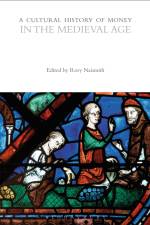
Money provides a unique and illuminating perspective on the Middle Ages. In much of medieval Europe the central meaning of money was a prescribed unit of precious metal but in practice precious metal did not necessarily change hands and indeed coinage was very often in short supply. Money had economic, institutional, social, and cultural dimensions which developed the legacy of antiquity and set the scene for modern developments including the rise of capitalism and finance as well as a moralized discourse on the proper and improper uses of money. In its many forms - coin, metal, commodity, and concept - money played a central role in shaping the character of medieval society and, in turn, offers a vivid reflection of the distinctive features of medieval civilization. Drawing upon a wealth of visual and textual sources, A Cultural History of Money in the Medieval Age presents essays that examine key cultural case studies of the period on the themes of technologies, ideas, ritual and religion, the everyday, art and representation, interpretation, and the issues of the age.
Bracketed by global financial crises and economic downturns, the modern age has been defined by debates about, and transformations of, money. The period witnessed the consolidation of national currencies and monetary policies as well as the diversification of payment technologies and the proliferation of financial instruments. Throughout, even as it appeared abstracted by finance and depoliticized by expert ideologies, money was revealed again and again to be a powerful medium of cultural imagination and practical inventiveness as well as the site of public and political struggles. Modern money - both as a form of liquidity and as a claim on wealth - remains deeply unsettled, caught between private and public interests and subject to epic struggles over the infrastructures of value creation and circulation and their distributional consequences. Drawing upon a wealth of visual and textual sources, A Cultural History of Money in the Modern Age presents essays that examine key cultural case studies of the period on the themes of technologies, ideas, ritual and religion, the everyday, art and representation, interpretation, and the issues of the age.
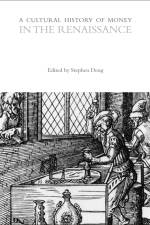
In a time before large banking systems, and with paper money just in its infancy, money during the Renaissance meant coinage (mainly gold and silver) and local credit systems. These monetary forms had a significant influence on the ways in which money was understood throughout the period, and shaped discussions on such topics as the meaning of monetary value, the economic, political, religious, and aesthetic uses of coinage, the moral implications of usury and credit systems, and the importance of reputation, both at the state and individual levels. Crucial to the transformation of ideas about money in the period was the growing awareness that the individuals, up to and including the monarch, were powerless to overcome the market forces that determined value and directed the movement of goods and money. Drawing upon a wealth of visual and textual sources, A Cultural History of Money in the Renaissance presents essays that examine key cultural case studies of the period on the themes of technologies, ideas, ritual and religion, the everyday, art and representation, interpretation, and the issues of the age.
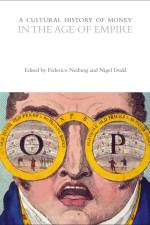
The nineteenth century was a time of intense monetization of social life: increasingly money became the only means of access to goods and services, especially in the new metropolises; new technologies and infrastructures emerged for saving and circulating money and for standardizing coinage; and paper currencies were printed, founded purely on trust without any intrinsic metallic value. But the monetary landscape was ambivalent so that the forces unifying monetary practice (imperial and national currencies, global monetary standards such as the gold standard) coexisted with the proliferation of local currencies. Money became a central issue in politics, the arts, and sciences - and the modern discipline of economics was born, with its claim to a monopoly on knowing and governing money. Drawing upon a wealth of visual and textual sources, A Cultural History of Money in the Age of Empire presents essays that examine key cultural case studies of the period on the themes of technologies, ideas, ritual and religion, the everyday, art and representation, interpretation, and the issues of the age.
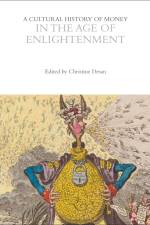
The Enlightenment was a time of monetary turmoil and transformation in Europe. Change began with a riot of experimentation, including novel ideas about human agency and capacity to promote economic progress, efforts to reframe divinity in terms (like the providential) compatible with market exchange, new instruments of credit, and innovative institutions such as national banks and capital markets. Europeans, including the settler societies in North America, improvised frantically: people faced the task of everyday exchange in changing media; governments took up the project of creating currencies that supported their political power; artists and writers raced to represent new forms of wealth and interpret the issues they raised; and intellectuals struggled to conceptualize, and tame, patterns of monetary transformation. The result was a rich debate, still unsettled, about the sources of value, the morality of the market, and the very nature of money. Drawing upon a wealth of visual and textual sources, A Cultural History of Money in the Age of Enlightenment presents essays that examine key cultural case studies of the period on the themes of technologies, ideas, ritual and religion, the everyday, art and representation, interpretation, and the issues of the age.
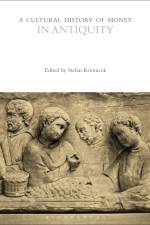
The origins of the modern, Western concept of money can be traced back to the earliest electrum coins that were produced in Asia Minor in the seventh century BCE. While other forms of currency (shells, jewelry, silver ingots) were in widespread use long before this, the introduction of coinage aided and accelerated momentous economic, political, and social developments such as long-distance trade, wealth creation (and the social differentiation that followed from that), and the financing of military and political power. Coinage, though adopted inconsistently across different ancient societies, became a significant marker of identity and became embedded in practices of religion and superstition. And this period also witnessed the emergence of the problems of money - inflation, monetary instability, and the breakup of monetary unions - which have surfaced repeatedly in succeeding centuries.Drawing upon a wealth of visual and textual sources, A Cultural History of Money in Antiquity presents essays that examine key cultural case studies of the period on the themes of technologies, ideas, ritual and religion, the everyday, art and representation, interpretation, and the issues of the age.
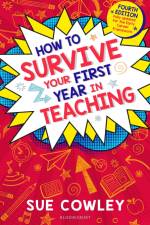
This new edition of Sue Cowley's bestselling book serves as a practical, up-to-date guide for early career teachers learning to navigate their first two years in the classroom. This introspective toolkit shows you how to not only survive but thrive during the first two years of your teaching career, and this latest edition provides practical new chapters on how to effectively manage your workload and gives plenty of useful teacher wellbeing tips. It reflects the introduction of the Early Career Framework along with revised material on the National Curriculum and the current Education Inspection Framework. Written in Sue Cowley's honest, accessible and down to earth style, How to Survive your First Year in Teaching is a must have for all new teachers at the start of their career.
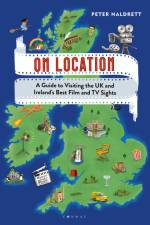
Explore the many sights, locations, towns and cities up and down the country that have inspired and hosted popular films and TV programmesFor popular-culture vultures, there really is no better guide to Britain's best TV and film locations than On Location. Explore the cities, towns, historical sights, stately homes, studios, beaches, moors and parks that inspired and hosted films such as Harry Potter, 28 Days Later, Trainspotting and Batman Begins, and TV programmes such as Poldark, The Crown, Dr Who and Game of Thrones, to name just a few. Wander the corridors of Highclere Castle, where Downton Abbey was filmed; gaze across Glen Etive in the Highlands of Scotland, an eerie and atmospheric location seen in the James Bond film, Skyfall; escape on the Hogwarts Express, aka the Jacobite Steam Train, across Glenfinnan Viaduct, as seen in the Harry Potter films: storm through the gates of Castle Ward in Northern Ireland, the location of Winterfell in Game of Thrones; and experience a feast for the senses amongst the dreamlike candy-coloured houses of Portmeirion Village, setting of The Prisoner, plus so many more sights to please all ages.Handy maps and beautiful colour photography complete this fascinating guidebook that covers over 100 different locations, so you're never far from one whether you're on holiday and on a mission to see as many as you can, or simply fancy an interesting afternoon or day out not far from home that will both thrill the kids and captivate the grown-ups.
Abonner på vårt nyhetsbrev og få rabatter og inspirasjon til din neste leseopplevelse.
Ved å abonnere godtar du vår personvernerklæring.