





Gjør som tusenvis av andre bokelskere
Abonner på vårt nyhetsbrev og få rabatter og inspirasjon til din neste leseopplevelse.
Ved å abonnere godtar du vår personvernerklæring.Du kan når som helst melde deg av våre nyhetsbrev.

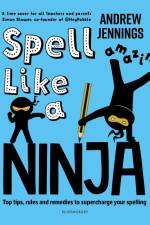
From Andrew Jennings (@VocabularyNinja), the bestselling author of Vocabulary Ninja and Write Like a Ninja, this is an essential toolkit of strategies and resources to supercharge primary school children and transform them into spelling ninjas!In this newest instalment in the Like a Ninja series, Spell Like a Ninja provides essential tips, lists and advice to support the teaching and learning of spelling in the primary classroom or at home, all in a handy, pocket-sized book. Including every statutory spelling pattern in the National Curriculum, this book is split into sections for Key Stage 1, Lower Key Stage 2 and Upper Key Stage 2 to enable all pupils to learn at their own pace in this all-in-one quick reference tool. They'll be buzzing spelling bee champs in no time!This engaging, easy-to-use book includes:- the statutory spelling requirements for every year as well as the statutory word lists for Years 3, 4, 5 and 6;- clear, practical guidance for teachers and parents to help effectively with spelling;- tips for remembering spellings;- useful spelling lists by word type, such as homophones or homonyms.For more must-have Ninja books by Andrew Jennings, check out Vocabulary Ninja, Maths Like a Ninja, Write Like a Ninja and Comprehension Ninja.
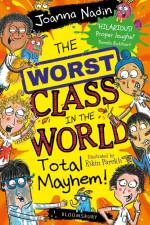
'Deliciously silly, with hilarious catchphrases. a great cheer-up book' The Guardian'HILARIOUS! Proper laughs!' Pamela Butchart_______________A laugh-out-loud young fiction series from bestselling author Joanna Nadin, perfect for fans of Horrid Henry.Head teacher Mrs Bottomley-Blunt thinks 4B is the WORST CLASS IN THE WORLD. She says school is not about footling or fiddle-faddling or FUN. It is about LEARNING and it is high time 4B tried harder to EXCEL at it.But best friends Stanley and Manjit didn't LITERALLY mean to get covered in newt pond water just before the Class Photo. And they really didn't LITERALLY mean to cause TOTAL MAYHEM by trying to get fake teeth to the very best tooth fairy. These things just happened, even though they had FOOLPROOF plans to get away with it all.Highly illustrated and featuring two hilarious madcap adventures in one book, these stories are just right for children ready for their first chapter books.
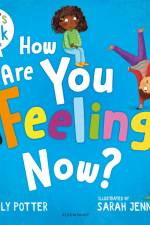
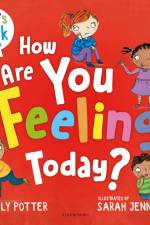
How Are You Feeling Now? is packed with fun, imaginative ways to help children understand and express a range of emotions and is a brilliant addition to How Are You Feeling Today?Feelings visit us all the time. They are a normal part of being human! This is the perfect picture book to help children understand and manage their feelings early on. Offering child-friendly strategies for dealing with feelings, this book looks at 12 big emotions and makes them simple for children. From feeling proud, brave and grateful to frustrated, anxious and lonely, it shows children just what to do when they're faced with these everyday emotions. It's full of beautiful illustrations by Sarah Jennings and child-friendly, humorous language to delight little readers.Notes at the back of the book explain emotional intelligence to parents, carers and practitioners and provide more ideas and strategies to use with children.Let's Talk books help you start meaningful conversations with your child. Written by an expert and covering topics like feelings, relationships, diversity and mental health, these comforting picture books support healthy discussion right from the start.
A darkly funny, sharply observed, and deeply moving novel about the surprises and struggles of life in contemporary Delhi_____________________'A beautiful novel exploring tensions in modern India' OBSERVER'Confirms Anjum Hasan as one of the most important writers of our time' WILLIAM DALRYMPLEAlif is a middle-aged, mild-mannered history teacher, living in contemporary Delhi, at a time in India's history when Muslims are seen either as hapless victims or live threats. Though his life's passion is the history he teaches, it's the present that presses down on him: his wife is set on a bigger house and a better car while trying to ace her MBA exams; his teenage son wants to quit school to get rich; his supercilious colleagues are suspicious of a Muslim teaching India's history; and his old friend Ganesh has just reconnected with a childhood sweetheart with whom Alif was always rather enamored himself. And then the unthinkable happens. While Alif is leading a school field trip, a student goads him, and in a fit of anger, Alif twists his ear. His job suddenly on the line, Alif finds his life rapidly descending into chaos. Meanwhile, his home city, too, darkens under the spreading shadow of violence.In this darkly funny, sharply observed, and shockingly moving novel, Anjum Hasan deftly and delicately explores the life of Muslims in India and the force and consequence of remembering your people's history in an increasingly indifferent milieu.'Hasan's eye is sharp and her aim is unerring. This is a work of sublime elegance' SHRUTI SWAMY, author of The Archer'Told in a subdued, sad, ironical tenor, it is compassionate without being sentimental' GEETANJALI SHREE, author of the International Booker Prize-winning Tomb of Sand'Extremely timely . History's Angel helps us view the erasures of the past through a living lens with sensitivity and nuance' DAISY ROCKWELL
The heroic romance is one of the West's most enduring narratives, found everywhere, from religion and myth to blockbuster films and young adult literature. Within this story, adolescent girls are not, and cannot be, the heroes. They are, at best, the hero's bride, a prize he wins for slaying monsters. Crucially, although the girl's exclusion from heroic selfhood affects all girls, it does not do so equally- whiteness and able-bodiedness are taken as markers of heightened, fantasy femininity. Female Heroes in Young Adult Fantasy Fiction explores how the young female-heroes of mythopoeic YA, a Tolkienian-inspired genre drawing on myth's world-creating power and YA's liminal potential, disrupt the conventional heroic narrative. These heroes, such as Tamora Pierce's Alanna the Lioness, Daine the Wildmage, and Marissa Meyer's Cinder and Iko, offer a model of being-hero, an embodied way of living and being in this world that disrupts the typical hero's violent hierarchy, isolating individuality, and erasure of difference. In doing so, they push the boundaries of what it means to be a hero, a girl, and even human.
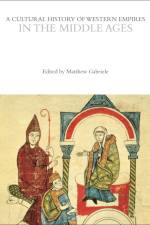
This volume explores a world that thought deeply about imperial power and emperors but one that perhaps never had an "empire" of its own. These synthetic essays from experts across a wide variety of disciplines mine the intellectual world of this period and begin to demolish the myth of the so-called "Dark Ages," showing how the European Middle Ages were illuminated by vigorous debates that echo today. The story of medieval Western empires is both familiar and foreign. It is a story about politics, culture, religion, society, gender, sex, and economics, and how porous the boundaries between those categories can often be.A Cultural History of Western Empires in the Middle Ages offers a detailed and highly-illustrated account of how we got to where we are, as well as the dangers of not fully understanding why those origins matter.
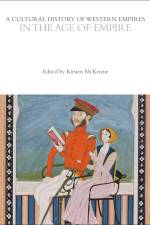
Between 1800 and 1920, the territory and influence claimed by Western empires came to cover a larger portion of the globe than at any time before or since. Why and how did this happen? What were the consequences of this unprecedented scramble for dominion? What methods have historians used to understand the increasingly large and structurally complex Western empires that emerged across the long 19th century?In this fifth volume, A Cultural History of Western Empires in the Age of Empire, we trace these questions across a period bookended by two devastating global wars. The forces that enabled unparalleled Western expansion were likewise violent. Often no less traumatically, the phenomenon was also one of cultural exchange and negotiated identities in which both colonized and colonizer were repeatedly made and remade. As cultural historians we locate the power struggles of empire as much in identity and ways of life as in the movement of armies or the signing of treaties. New technologies of communication, transport and warfare brought an 'Age of Empire' into existence for the West. But it was equally grounded in new ways of thinking about human difference and new beliefs about the state's power to intervene in the most intimate domains of human behavior.
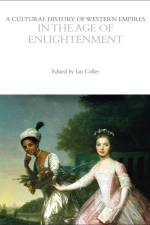
This fourth volume of A Cultural History of Western Empires explores the intersections and transformations of empire in the late 17th and 18th centuries: an age of "Enlightenment" understood here both as a product of these new forces and as a matrix shaping their emergence and development. As innovative ideas transformed warfare, commerce and agriculture, the great "universal" empires confronted new capitalist forces that both splintered and reinforced imperial relations across the globe. Dutch, English and French trading companies backed by state power increasingly overtook the imperial ascendency of Spain and Portugal, while Ottoman and Russian territorial expansion slowed or halted. Commodities and capital circulated in new ways, along with people and ideas, yet that mobility was hardly a free exchange. The new forces found their first great expression in the global trade in human labour that transformed communities, environments and social relations in Europe, Africa and the Americas.Above all, A Cultural History of Western Empires in the Age of Enlightenment reveals the profound imprint left by the Atlantic slave trade on global conceptions of race, sexuality and power, and the burgeoning imperial rivalry, resentment and resistance that contributed to the explosion of revolutionary change at the end of the 18th century.
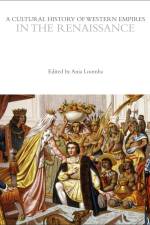
European overseas trade and diplomacy in some parts of the world went hand in hand with colonization and conquest in others areas. As the introduction to this third volume explains, and the eight expertly written chapters assembled here detail, these were not divergent but intricately connected activities. Through detailed attention to Renaissance literature, travel books, political, scientific and commercial writing, they show how European contact with Asia, the Americas and Africa spurred innovations in warfare, seafaring, and accounting. Demanding the creation of international law, and new labour practices at home and abroad, this contact overhauled previous conceptions of nature, race and sexuality and shaped debates on religion, politics, and power. Renaissance culture, in all its diversity and dynamism, was both the midwife of empire and its progeny.A Cultural History of Western Empires in the Renaissance offers a new understanding of Renaissance culture, commonly understood as a blooming of arts, literature, philosophy, politics, commerce and science that together marked a high point of Western civilization and laid the foundation stone of modernity. It shows that this "rebirth" is organically connected to the processes by which Spain, the Italian states, France, England, and the Netherlands tried to establish their first overseas empires.
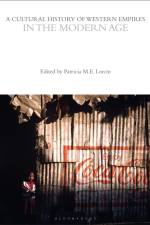
A Cultural History of Western Empires in the Modern Age covers the period from 1918 to the present. Through the lens of the political and international events shaping the period, the introduction traces the gradual demise of the cultural importance of European empires and the emergence of the United States as the predominant cultural model. The following eight chapters of the volume, authored by a diverse range of experts, highlight different aspects of this cultural shift while indicating the historiographical controversies and conceptual developments that shaped the century-long evolution related to each of the specific topics.This richly-illustrated and accessible volume provides deep historical context to the rise of the US as a major cultural force in the modern era. In so doing, it gives the reader a backdrop to the shift of Western empire from the European model of 18th and 19th century imperialism, to the emergence of the US as a cultural hegemon. A feature of contemporary geopolitics that continues to play a key role in the dynamics of cultural exchange and influence playing out on the world stage today.This is volume 6 in the Cultural History of Western Empires set.
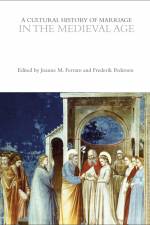
Marriage in Europe became a central pillar of society during the medieval period. Theologians, lawyers, and secular and church leaders agreed on a unique outline of the institution and its legal framework, the essential features of which remained in force until the 1980s. The medieval Western European definition of marriage was unique: before the legal consequences of marriage came into being, the parties had to promise to engage in sexual union only with one partner and to remain in the marriage until one of the parties died. This requirement had profound implications for inheritance rules and for the organization of the family economy; it was explained and justified in a multitude of theological discussions and legal decisions across all faiths on the European continent. Normative texts, built on the foundations of the scriptures of several religious traditions, provided an impressive intellectual framework around marriage. In addition, developments in iconography, including sculpture and painting, projected the dominant model of marriage, while social, demographic and cultural changes encouraged its adoption.This volume traces the medieval discussion of marriage in practice, law, theology and iconography. It provides an examination of the wider political and economic context of marriage and offers an overview of the ebb and flow of society's ideas about how expressions of human sexuality fit within the confines of a clearly defined social structure and ideology.A Cultural History of Marriage in the Medieval Age presents an overview of the period with essays on Courtship and Ritual; Religion, State and Law; Kinship and Social Networks; the Family Economy; Love and Sex; the Breaking of Vows; and Representations of Marriage.
Reinventing Europe provides a thorough exploration of the history of the European Union, tracing its development from inception to recent times. It is the first book of its kind to contextualize the history of the EU within the wider frames of European and global history. The volume also breaks new ground by successfully highlighting the roles individuals, member states, transnational actors and European institutions played in both advancing and slowing down European integration in the EU.With chapters from leading academics in the UK, the US and across Europe who draw on sources in a variety of languages, the book presents a balanced and comprehensive account of this sometimes controversial Union. It is made up of three main parts which in turn cover:· A narrative survey of the EU· A historical analysis of the key institutions and policies· Critical themes and vital geographical spacesThere is also a historiographical essay which handily charts the literature in the field, as well as 50 illuminating images, a range of maps, text boxes and primary source extracts, a bibliography and a useful glossary.
I don't think I'll evermeet someone wholoves me as much as Ryan loves me andhates me as much asRyan hates meA loving relationship can be anything but. In this one-woman thriller, Ruckus explores coercive control, an issue not widely recognised - yet its side effects kill up to three women every week in the UK. Each moment of the play has been inspired by real women and real stories. Acclaimed by critics and audiences, this powerful piece sends brings to light the suppression caused by coercive control. During its original run at Edinburgh Fringe in August 2022, Ruckus was the 1st Finalist for the Popcorn New Writing Award 2022, shortlisted for The Filipa Bragança Award, and winner of a Lustrum Award.This edition was published to coincide with the run at the Southwark Playhouse in London, in October 2022.
Interior Design Research Methods gives you the tools and skills needed to do research and analysis for human-centered interior design projects. The text develops your analytical skills and helps you transform scientific models into unique and innovative processes for design projects. You'll integrate information about external and internal influences on the research process, develop a research question and thesis, design a system of inquiry, and analyze, interpret, and present data. Updated case studies cover topics such as gender, design for vulnerable populations, and ethical considerations. Instructor's Guide includes test banks, sample syllabus, and supplemental assignments
Abonner på vårt nyhetsbrev og få rabatter og inspirasjon til din neste leseopplevelse.
Ved å abonnere godtar du vår personvernerklæring.