






















Gjør som tusenvis av andre bokelskere
Abonner på vårt nyhetsbrev og få rabatter og inspirasjon til din neste leseopplevelse.
Ved å abonnere godtar du vår personvernerklæring.Du kan når som helst melde deg av våre nyhetsbrev.

Scholars of biblical law are already widely agreed that ancient Israel did not draft law-texts for legislative purposes. This study critiques and challenges the current consensus, and presents an alternative hypothesis.
An in-depth analysis of international intervention in Madagascar following the 2009 coup, and what it means for African 'anti-coup' efforts.
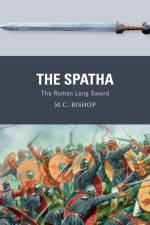
The Roman long sword, the spatha, was central to the Romans'' defense of their empire--this title investigates the origins, development, combat use, and lasting legacy of this feared close-combat weapon. Adopted from the Celts in the 1st century BC, the spatha, a lethal and formidable chopping blade, became the primary sword of the Roman soldier in the Later Empire. Over the following centuries, the blade, its scabbard, and its system of carriage underwent a series of developments, until by the 3rd century AD it was the universal sidearm of both infantry and cavalry. Thanks to its long reach, the spatha was the ideal cavalry weapon, replacing the long gladius hispaniensis in the later Republican period. As the manner in which Roman infantrymen fought evolved, styles of hand-to-hand combat changed so much that the gladius was superseded by the longer spatha during the 2nd century AD. Like the gladius, the spatha was technologically advanced, with a carefully controlled use of steel. Easy maintenance was key to its success and the spatha was designed to be easily repaired in the field where access to a forge may have been limited. It remained the main Roman sword into the Late Roman period and its influence survived into the Dark Ages with Byzantine, Carolingian, and Viking blades.Drawing together historical accounts, excavated artefacts, and the results of the latest scientific analyses of the blades, renowned authority M.C. Bishop reveals the full history of the development, technology, training, and use of the spatha: the sword that defended an empire.
*Shortlisted for the Duff Cooper Prize and the Marsh Biography Award*The definitive biography of chemist Dorothy Crowfoot Hodgkin, the only British woman to win a Nobel prize in the sciences to date. Dorothy Crowfoot Hodgkin (1910ΓÇô1994) was passionate in her quest to understand the molecules of the living body. She won the Nobel Prize for Chemistry in 1964 for her work on penicillin and Vitamin B12, and her study of insulin made her a pioneer in protein crystallography. Fully engaged with the political and social currents of her time, Hodgkin experienced radical change in women''s education, the globalisation of science, relationships between East and West, and international initiatives for peace. Georgina Ferry''s definitive biography of Britain''s first female Nobel prizewinning scientist was shortlisted for the Duff Cooper Prize and the Marsh Biography Award. This revised and updated edition includes a new preface from the author.
ΓÇ£Mountain flowers are the most romantic in our flora, exquisite, enigmatic and, often, remote from human habitation. Michael Scott has not only seen them all but has roamed every part of the hill scenery of Britainand brings to his subject passion, learning and hands-on experience. This is field botany at its best, engrossing, exciting and full of wonder.ΓÇ¥PETER MARRENBritain''s mountains and exposed sub-arctic regions of the far north are home to a remarkable range of specialist flowers, shrubs and ferns that are able to thrive on our islands thanks to a combination of conditions seldom found in mainland Europe. The peculiarities of their occurrence here, at unusually low altitudes for typically alpine species and uncommonly far south for arctic species, make their ecologyespecially intriguing. In this invigorating journey from the Lizard of Cornwall to Unst in Shetland, Michael Scott examines Britain''s richest upland sites, bringing an important 21st-century perspective to our understanding of the flora along the way. Lavishly illustrated, Mountain Flowers has much to offer wild flower enthusiasts and botanists, including detailed profiles of over 150 of the plants most characteristic of our montane regions. It will prove an indispensable companion for hillwalkers and climbers wanting to learn more about the enigmatic species that are such an intrinsic part of the British mountain landscape.- Featuring over 150 mountain plants, with 20 extended profiles for the most enigmatic species- Illustrated with over 340 colour photographs of plants and their spectacular habitats- Jacket artwork by Carry Akroyd
'A wonderfully illustrated, jam-packed, must-have science book for all aspiring young physicists!' The Royal Institution 'Lively, humorous and stuffed with enticing images and outrageous puns' The GuardianHave you ever wondered how to slow down time? Or what would happen if you fell into a black hole? Well, wonder no more. This book is bursting with fascinating physics facts that will explain everything you want to know, and more, about the curiosities of our cosmos.Featuring easy-to-follow experiments, eye-catching illustrations and plenty of laugh-out-loud moments, this book will demystify physics and bring science to life.
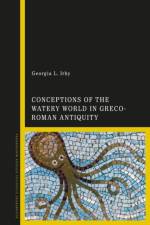
Water management is one of the most vital topics in the modern world. But appreciating how water is used now is significantly enhanced, as Georgia Irby shows, by a proper understanding of how water was employed by people in antiquity.
This new commentary analyses, article by article, the two most important regulations on the European banking union: firstly, the Single Supervisory Mechanism with the ECB as the single supervisory authority for major banking institutions; and secondly, the Single Resolution Mechanism with the Single Resolution Fund as the centralized decision-making body in the eurozone.
An examination of howpatterns of income, class and racial inequality in Johannesburg highlight howand why earnings and spatial inequality in cities are changing in differingways to the, commonly-accepted, social polarisation hypothesis.
Advancing our understanding of one of the most influential 20th-century philosophers, Robert Vinten brings together an international line up of scholars to consider the relevance of Ludwig Wittgenstein's ideas to the cognitive science of religion. Wittgenstein's claims ranged from the rejection of the idea that psychology is a 'young science' in comparison to physics to challenges to scientistic and intellectualist accounts of religion in the work of past anthropologists.Chapters explore whether these remarks about psychology and religion undermine the frameworks and practices of cognitive scientists of religion. Employing philosophical tools as well as drawing on case studies, contributions not only illuminate psychological experiments, anthropological observations and neurophysiological research relevant to understanding religious phenomena, they allow cognitive scientists to either heed or clarify their position in relation to Wittgenstein's objections. By developing and responding to his criticisms, Wittgenstein and the Cognitive Science of Religion offers novel perspectives on his philosophy in relation to religion, human nature, and the mind.
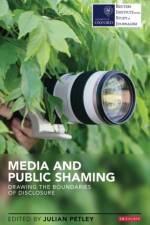
In this book, leading academics, commentators and journalists from a variety of different cultures, consider the extent to which the media are entitled to reveal details of people's private lives, the laws and regulations which govern such revelations, and whether these are still relevant in the age of social media.
Abonner på vårt nyhetsbrev og få rabatter og inspirasjon til din neste leseopplevelse.
Ved å abonnere godtar du vår personvernerklæring.