


















Gjør som tusenvis av andre bokelskere
Abonner på vårt nyhetsbrev og få rabatter og inspirasjon til din neste leseopplevelse.
Ved å abonnere godtar du vår personvernerklæring.Du kan når som helst melde deg av våre nyhetsbrev.

The structure of the book, however, revolves around the fact that every chapter is a venture into new areas of the application of Jungian pedagogics.
An accessible and thought-provoking introduction to timespans in the natural world, featuring more than 80 beautifully designed diagrams. Which organisms live the longest? How does the natural world recover from fire? How long do eggs take to hatch? What are the world's fastest and slowest growing plants? Which species invest the most in parental care? How Nature Keeps Time discovers the natural world's most important and intriguing patterns of time. Beautifully designed with stunning colour photography and more than 80 reader-friendly charts and diagrams, this witty book examines a broad range of species from across the world and throughout time. From the lifecycle of immortal jellyfish and identifying the perfect amount of time for a 'good sleep' to mass extinction and the destruction of the coral reef, Helen Pilcher tackles highly relevant and fascinating topics in this deeply entertaining read.
John Boorman's Point Blank (1967) has long been recognised as one of the seminal films of the sixties, with its revisionary mix of genres including neo-noir, New Wave, and spaghetti western. Its lasting influence can be traced throughout the decades in films like Mean Streets (1973), Reservoir Dogs (1992), Heat (1995), The Limey (1999) and Memento (2000). Eric Wilson's compelling study of the film examines its significance to New Hollywood cinema. He argues that Boorman revises traditional Hollywood crime films by probing a second connotation of 'point blank'. On the one hand, it is a neo-noir that aptly depicts close range violence, but, it also points toward blankness, a nothingness that is the consequence of corporate America unchecked, where humans are reduced to commodities and stripped of agency and playfulness. He goes on to reimagine the film's experimental style as a representation of and possible remedy for trauma. Examining Boorman's formal innovations, including his favouring of gesture over language and blurring of boundaries between dream and reality, he also positions the film as a grimly comical exploration of toxic masculinity and gender fluidity. Wilson's close reading of Point Blank reveals it to be a film that innovatively inflects its own generation and speaks powerfully to our own, arguing that it is this amplitude, which encompasses the many major films it has influenced, that qualifies the film as a classic.
A powerful thriller from New York Times bestseller C.J. Box, the award-winning author of the Joe Pickett and Cassie Dewell series, both now major TV shows. They're so sorry... They've made a terrible mistake... There's nothing they can do... They have to take your daughter away. You have three weeks to say goodbye. After years of trying for a child, Jack and Melissa McGuane adopted a beautiful baby girl. Nine months later, a call from the adoption agency plunges them into every parent's worst nightmare: the father never signed away his parental rights, and now he wants his daughter back. The biological father is a sullen eighteen-year-old with gangland connections, and, even worse, is the son of a well-connected federal judge who is prepared to use the full weight of his influence to get what he wants. Together they wage a harrowing campaign of intimidation and harassment aimed at destroying the McGuanes before they can fight back. Jack and Melissa know that the boy has no love for his daughter, but what they don't know is why he and the judge want the girl so badly. With three weeks until they must legally hand over their baby, just how far outside the law are they prepared to go to find out?Reviews for Three Weeks to Say Goodbye'Full of suspense and menace.' Daily Mirror'One terrifying little tale... Box doesn't miss a trick in this suspense-filled thriller.' Toronto Globe and Mail
A gripping and moving debut novel about two women, decades apart, whose fates converge in Florence, Italy. Perfect for fans of Patricia Wilson, Carol Kirkwood and Lucinda Riley.Only fourteen, Stella Infuriati is the youngest member of her town's resistance network during World War II. Risking imprisonment and death, she relays messages, supplies, and weapons to partisan groups in the Tuscan Hills. Her parents have no idea, consumed instead by love and fear for their beloved son, Achille, a courier and unofficial mechanic for a communist brigade fighting the fascists.Then, after 1945, Stella seemingly vanishes from the records, her name and story overshadowed by the tragic death of her brother - until a young writer arrives in Tuscany in the spring of 2019, uncovering long-buried secrets.Fleeing an emotionally abusive marriage and a lonely life on an isolated estate, Tori McNair has come to Florence, the beautiful city her grandmother, Margaret, taught her to love, to build a new life. As she digs into her family history with the help of Marco, a handsome lawyer, Tori starts to uncover secrets of the past - truths that stretch back decades, to a young woman who risked everything to save her world....
It is the Night Before the Night Before the Night of the Hungry Ghosts Munchathon and Bridget and Tom are excited. They've never seen a parade before. And Lord Dare, the new Earl of Bomberton Hall, and reigning World Hide-and-Seek Champion, has invited them to tea.But Mr Vanderpuff is in trouble - he needs a new creation, and he's totally stumped. To make matters worse, the salty old seadog, Captain Lufty, and his rat, Barry, have warned that something is coming to Belle-on-Sea. Something terrible.When a ghost train is seen rattling into town, and people start to go missing - first the librarian, then the Mayor - Bridget begins tracking the train's tracks, delighted to be in the thick of another mystery. Then the unthinkable happens: the ghost train takes Mr Vanderpuff! Someone - or something - is out to destroy Belle-on-Sea. But they've forgotten one important detail. This is Bridget's town. Bridget must save the missing people from their perilous prisons, rescue the parade, and come up with an idea for Mr Vanderpuff's Hungry Ghosts bake, before it's too late.
Halloween has nearly arrived, but a young witch is in a pickle. She has cast a spell and shrunk herself by mistake! When a gust of wind blows her out to sea, her best friend, a little ghost, goes with her. They find themselves landing on Rubbish Island where the Tindims haven't met witches or ghosts before, and the witch and ghost didn't know the Tindims even existed. But Skittle, Brew, Pinch and the gang are soon helping their spooky new friends get back to the right size and home in time for their Halloween parade. And the Tindims might just decide to hold their own Halloween-Helloween party... Printed in dyslexia-friendly font with pictures on every page and perfect for the reluctant reader, the Tindims of Rubbish Island is an empowering series for 5-8 year olds inspiring conservation and inventive ways to recycle.
This open access book is the seventeenth volume in the Swedish Studies in European Law, reflecting the series aim to explore the variety of issues and dilemmas that European law faces in specific areas of EU law and policy, as well as overarching questions of EU institutional and constitutional law. In this volume, experts explore the development of the role of Europe and European law in the field of taxation. The ebook editions of this book are available open access under a CC BY-NC-ND 4.0 licence on bloomsburycollections.com. Open access was funded by Swedish Studies Network.
This book analyses, comments and further develops on the most important instrument of the Hague Conference on Private International Law (HCCH): the HCCH 2019 Judgments Convention. The HCCH Convention, the product of decades of work, will have a transformative effect on global judicial cooperation in civil matters. This book explores its 'mechanics', i.e. the legal cornerstones of the new Convention (Part I), its prospects in leading regions of the world (Part II), and offers an overview and comment on its outlook (Part III). Drawing on contributions from world-leading experts, this magisterial and ambitious work will become the reference work for law-makers, lawyers and scholars in the field of private international law.
This volume examines the influence that Pompeii and, to a lesser extent, Herculaneum had on the visual and performing arts in Spain and countries across South America. Covering topics from architecture, painting and decorative arts to theatre, dance and photography, the reader will gain insight into the reception of classical antiquity through the analysis of the close cultural ties between both sides of the Atlantic, in the past and the present. Each contribution has been written by a specialist researcher participating in the project, 'The Reception and Influence of Pompeii and Herculaneum in Spain and America', funded by the Spanish Ministry of Science and Innovation (PGC2018-093509-B-I00 Ministry of Science and Innovation/AEI/ERDF/EU).Pompeii in the Visual and Performing Arts begins by examining the influence of Pompeiian architecture in Spain in paintings that depict scenes inspired by Roman scenes and also buildings modelled on those of Pompeii. Next, the influence of Pompeii crosses the Atlantic to Mexico with a study of the archaeological site's influence on the visual and performing arts. An exploration of the elitist use of the ancient past in architecture is seen in Chilean architecture, which leads onto an investigation of the new art styles that emerged in the 19th century. Later chapters look into the influence of the ancient frescoes and the use of modern plaster casts of statues. The final chapters are devoted to comics and photography, which also make a study of the places in Latin America nicknamed 'Pompeii' in the 20th and 21st centuries.
Using case records of prosecutions at the Scottish High Court of Justiciary between 1918 and 1930, this book takes a quantitative and qualitative approach to understand sexual violence in Scotland at this time. Analysing legal records alongside victim and witness testimonies, Louise Heren analyses who committed sexual violence against whom, where and how and, to an extent, looks to uncover the victims' voice.Assessing how the courts responded, Sex and Violence in 1920s Scotland reveals that, despite pejorative views of working-class female behaviour, the successful conversion of prosecutions to convictions was greater than what is seen in modern sexual assault cases. In a society adjusting to post-conflict stresses, there were fears expressed in middle-class circles that those most affected by the First World War might react with violence. However, the High Court archives suggest otherwise. Cases of incest, rape and sexual assault appears to have been endemic, an opportunistic crime against older victims yet often pre-meditated against the youngest; selfish crimes that suggest toxic masculinity among some working-class men. The book concludes with the ultimate question: why did these men perpetrate sexual violence?
Etienne Nodet examines the Samaritans and their religion, using Jewish and Christian sources, including rabbinic literature and the latest archaeology. Nodet tells the story of the Samaritans and their religion, showing how they were faithful to a classical form of monotheism.Nodet traces the Samaritan story from more recent to more ancient times. He begins by looking at the importance of the Samaritans in the time of Josephus and the New Testament, taking in the area formed by Galilee, Samaria, and Judea and recognizing how this corresponds approximately to Canaan at the time of Joshua, between the Jordan and the Mediterranean. He then examines the account of 2 Kings 17, which shows the Samaritans as descendants of the settlers sent by the Assyrians, who were initiated to a certain Yahwism after the fall of the kingdom of Israel (North) in 721 BC. Next Nodet looks at the time of the Maccabean crisis, when the Samaritans separated from the Jews, showing how before then there was a peaceful coexistence. Finally, Nodet turns to the Persian period, showing how after the return from exile there was a restoration of the Babylonian-derived form of religion, which the local Israelites (including the Samaritans) opposed. Nodet contends that, as such, the Samaritan religion, with its succession of high priests up to the present day, and is of 'immemorial permanence', linking to the earliest worship of YHWH in Israel.
Design, History and Time reflects on the nature of time in relation to design, in both past and contemporary contexts. In contrast to a traditional design historical approach which emphasizes schools and movements, this volume addresses time as a continuum and considers the importance of temporality for design practice and history.Contributors address how designers, design historians and design thinkers might respond to the global challenges of time, the rhythms of work, and the increasing speed of life and communication between different communities. They consider how the past informs the present and the future in terms of design, the importance of time-based design practices such as rapid prototyping and slow design, time in relation to memory and forgetting, and artefacts such as the archive for which time is key, and they also ponder the design of time itself.Showcasing the work of 15 design scholars from a range of international contexts, this book provides an essential text for thinking about changing attitudes to the temporal.
What is the contemporary cultural legacy of Byzantium or The Eastern Roman Empire? This book explores the varied reception history of the Byzantine Empire across a range of cultural production.Split into four sections: the origins of 'Byzantomania' in France, modern media, literature, and politics, it provides case studies which show the numerous ways in which the empire's legacy can be felt today. Covering television, video games and contemporary political discourse, contributors also consider a wide range of national and geographical perspectives including Russian, Turkish, Polish, Greek and Hungarian. It will be essential reading for scholars and students of the reception and cultural history of the Byzantine Empire.
The third instalment in Naughtie's Cold War spy series about three brothers whose lives are all entwined with the intelligence services. Will Flemyng is now British ambassador to Washington, but soon he finds himself on a dangerous journey into his clandestine past, from conflict in Ireland to the long shadows of the Cold War.
Charles Stewart Henry Vane-Tempest-Stewart, the seventh Marquess of Londonderry has long been a divisive figure in British aristocratic history. Was he an anti-Semitic Nazi sympathizer, as some have argued, or a visionary who should be remembered in glory for his role in the creation of RAF Spitfires and Hurricanes during World War II?In the paperback edition of Lord Londonderry, N.C Fleming answers this question and more. This updated edition draws extensively from private Londonderry family papers and state papers, as well as existing secondary literature, to provide an illuminating biography of Londonderry. This book has been updated with additional primary source research to reveal details about Londonderry House, Londonderry's travels and his radical right-wing beliefs as well as his infamous anti-Semitism. Lord Londonderry examines his disastrous diplomatic visits during the war, which seriously damaged his credibility at home, alongside his achievements in the Royal Air force to provide a comprehensive biography of the Marquess. Fleming also studies the tumultuous period of aristocratic decline set against a backdrop of growing calls for social equality, to show how this Conservative MP held onto his power in the changing social climate of post-war Britain.Here, Fleming has revised and updated his biography of Lord Londonderry to remove the shadow that Londonderry's association with Nazi Germany has cast over his career. In doing so, he provides an analysis of private family papers while also providing an extensive case study into the historiography of aristocracy.
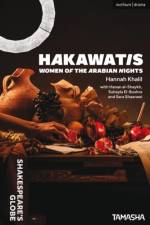
Hakawati Noun: Storyteller. From the Arabic terms 'hekaye' meaning story and 'haki' meaning to talk.A tyrant revenges his wife's infidelity by wedding, bedding and beheading a new bride every day. Years later, only five brides-in-waiting remain.These women are unapologetic, and united in their fight to keep themselves - and the whole of womankind - alive. They've got other ideas for their future, and it starts with a story...This fearless new play, a co-production with Tamasha, is written by Globe Resident Writer Hannah Khalil. This edition is published to coincide with the world premiere at the Globe Theatre, London, in December 2022.
Abonner på vårt nyhetsbrev og få rabatter og inspirasjon til din neste leseopplevelse.
Ved å abonnere godtar du vår personvernerklæring.