



Gjør som tusenvis av andre bokelskere
Abonner på vårt nyhetsbrev og få rabatter og inspirasjon til din neste leseopplevelse.
Ved å abonnere godtar du vår personvernerklæring.Du kan når som helst melde deg av våre nyhetsbrev.

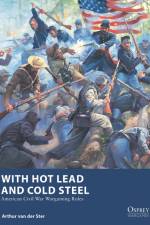
A set of wargaming rules for fighting large battles set during the American Civil War.From the First Bull Run to Appomattox Court House, enter one of the defining conflicts of American history. With shot, shell, and sabre, guide the armies of the Blue and the Grey through this first modern war to determine the fate of a nation.With Hot Lead and Cold Steel is a large-scale, mass-battle wargame for recreating the American Civil War. Designed to handle brigade and divisional level engagements while providing a balance between ease of play and period detail, With Hot Lead and Cold Steel is ideal for new gamers and wargaming veterans alike. It contains everything players need to raise armies and craft scenarios, whether based upon historical campaigns and orders of battle or those of their own devising.
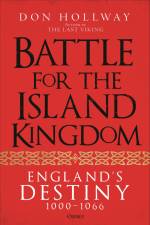
A rich history of the years leading up to 1066 when Vikings, Anglo-Saxons and Normans vied for the English crown. A tale of loyalty, treason and military might. In a saga reminiscent of Game of Thrones and The Last Kingdom, Battle for the Island Kingdom reveals the life-and-death struggle for power which changed the course of history. The six decades leading up to 1066 were defined by bloody wars and intrigues, in which three peoples vied for supremacy over the island kingdom. In this epic retelling, Don Hollway (The Last Viking) recounts the clashes of Vikings, Anglo-Saxons and Normans, their warlords and their conniving queens. It begins with the Viking Cnut the Great, forging three nations into his North Sea Empire while his Saxon wife Aelfgifu rules in his stead and schemes for England's throne. Her archenemy is Emma of Normandy, widow of Saxon king Aethelred, claiming Cnut's realm in exchange for her hand in marriage. Their sons become rivals, pawns in their mothers' wars until they can secure their own destinies. And always in the shadows is Godwin of Wessex, playing all sides to become the power behind the throne until his son Harold emerges as king of all of England. But Harold's brother Tostig turns traitor, abandons the Anglo-Saxons and joins the army of the last great Viking, Harald Hardrada, where together they meet their fate at the battle of Stamford Bridge. And all this time watching from across the water is William, the Bastard, fighting to secure his own Norman dukedom, but with an eye on the English crown.
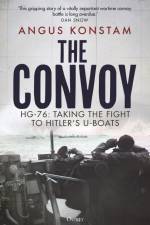
The Convoy represents a fresh approach to the story of the Battle of the Atlantic. It is also the first to deal with the more spectacular story of HG-76, a major turning point in the naval war.HG-76 sailed from Gibraltar to Britain in December 1941 and was specially targeted by the Germans. A wolfpack of U-boats was sent against it, and the Luftwaffe was heavily committed too in a rare example of German inter-service cooperation. German intelligence agents in Gibraltar and Spain also knew every detail of HG-76 before it had even sailed, seemingly stacking the odds in favour of the Kriegsmarine. Despite this the convoy fought its way through. Improved radar and sonar gave the convoy's escorts a slight edge over their opponents, while the escort group was led by Commander Walker, an anti-submarine expert who had developed new, aggressive U-boat hunting tactics. Previous Gibraltar convoys had been mauled by Luftwaffe bombers operating from French airfields. This time, though, HG-76 would be accompanied by HMS Audacity, the Royal Navy's first escort carrier - a new type of warship purpose-built to defend convoys from enemy aircraft and U-boats. Following seven days and nights of relentless attack, the horrors of which are brought home through a series of first-hand accounts, the convoy finally reached the safety of a British port for the loss of only two merchant ships. Its arrival was seen as the first real convoy victory of the war. Brought to life by expert naval historian Angus Konstam, The Convoy combines the story of the technical and tactical developments that won the Battle of the Atlantic for the Allies along with a narrative that reveals both the terror and the stubborn determination that defined the experiences of those that served on convoy duties.
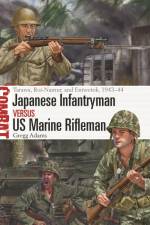
Featuring evocative artwork plates and carefully selected photographs, this book assesses the US Marines and Japanese troops who contested the islands of Tarawa, Roi-Namur, and Eniwetok during 1943-44. On November 20, 1943, amphibious vehicles carrying Marines of the 2d Marine Division reached the shores of Betio Island in the Tarawa Atoll, defended by a determined Japanese garrison that would fight to the last man. This began a test by combat of over two decades of US studies, analyses, and planning for capturing and defending naval bases in Micronesia. The Tarawa assault was followed in February 1944 by the rapid capture of the Kwajalein and Eniwetok atolls in the Marshall Islands. In these battles US Marines fought a mix of Imperial Japanese Navy and Imperial Japanese Army ground units. All but a handful of the defenders, whether they were organized ground combat troops or infantry improvised from aviators and service troops, were determined to die for the Emperor while killing as many of the enemy as possible. In this study, Gregg Adams shows how the US Marine Corps and US Navy drew upon these pivotal actions to improve their tactics, organization, and equipment for the next round of amphibious operations. He also explains how their Japanese opponents - realizing that isolated island garrisons were doomed to destruction or isolation if the Imperial Japanese Navy could not defeat the US Navy at sea - moved from seeking to repel an invasion to one inflicting maximum American casualties through prolonged defensive fighting.
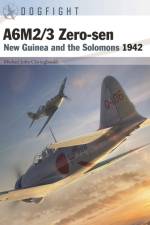
This book details the exploits of the highly skilled Naval Aviators charged with achieving air supremacy over New Guinea in their A6M2/3 Zero-sens. The combat record of the Zero-sen in New Guinea has mostly been overstated, with little due being given to the constraining conditions under which the fighter operated. The air combats fought over New Guinea in 1942 between Imperial Japanese Naval Air Force (IJNAF) pilots and their Allied counterparts in P-39 Airacobras and P-40 Warhawks were often 'trial and error' affairs, with both belligerents being caught out by weather. This study covers the key role played by governing factors including geography and climatic conditions, and examines the modified tactics employed by IJNAF Zero-sen pilots to help them cope in-theatre through the comprehensive analysis of RAAF, USAAF and Japanese operational after action reports. Using first-hand accounts from both famous aviators and previously unknown RAAF and Japanese pilots, and specially commissioned artwork, leading South Pacific historian and author Michael John Claringbould sheds new light on the air war fought over the wilds of New Guinea during the course of 1942.
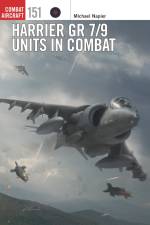
Former RAF Tornado pilot Michael Napier chronicles the action-packed history of the Harrier GR 7/9, and its missions in West Africa, the Balkans, the Middle East and Afghanistan over a 14-year period of ceaseless operations. The Harrier GR 7/9 was at the 'tip of the spear' for the RAF when it came to employing weapons against well-equipped standing armies and irregular forces in the 1990s and during the first decade of the new millennium. Assigned to the Harrier GR 7/9 Force, the aircraft undertook No Fly Zone patrols over northern Iraq, supported UN forces in the Balkans and embarked in Royal Navy carriers to bolster the RAF presence ashore in the Arabian Gulf. Harrier GR 7s also flew from HMS Illustrious over Sierra Leone in 2000 and were involved in the second Gulf War during early 2003 acting as Close Air Support for Coalition forces. Using first-hand accounts from his extensive Service contacts, supported by both official and personal photographs and 30 artwork profiles illustrating the wide range of colours worn and ordnance employed by the 'jump jet', Michael Napier provides a rare insider's look at the deployment of Harrier GR 7/9 up to its withdrawal from RAF service in 2010. Moreover, Napier also covers the numerous upgrades received by the aircraft over the years, from more powerful engines to the creation of the GR 9/9A variants in 2005.
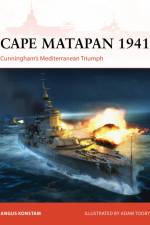
The first ever illustrated study of the largest and most significant clash between the Royal Navy and the Italian Regia Marina.The Battle of Matapan witnessed the first use of decisive new technologies to bring about a stunning British victory over the Italian Navy. The Allies had tapped into the Ultra coded messages sent by the Axis powers, and the battle witnessed the use of radar and carrier-based air strikes to bring about a critical night action. The result was the most decisive engagement of the Mediterranean naval war.Written by renowned naval historian Angus Konstam, this book offers for the first time a unique and fully illustrated exploration of the battle. It also examines why, despite the emphatic and decisive Royal Navy victory, the Allies failed to capitalize on the strategic advantage earned in the months that followed. Battlescene artworks bring to life the cruiser clashes early on 28 March off Gavdos, the Fleet Air Arm attacks on the Italian fleet, and the 28/29 March night action that resulted in the destruction of Admiral Carlo Cattaneo's ships - Italy's worst naval defeat. The progress of the action from the initial Operation Gaudo sweep by Italy's powerful battle fleet towards Crete (aimed at disrupting Allied convoys) to the events of the climactic battle itself is revealed in detailed maps.
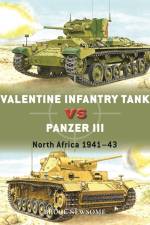
A unique comparison between the two most numerous British and German tank types from 1941 to 1943.Although much has been written about the Panzer III, little attention has been given to the equally prominent Valentine tank. This work compares the respective strengths and weaknesses of these iconic tanks, which frequently went head-to-head in brutal battles across Europe, Libya, Egypt, and Tunisia. It documents the upgrades made to each AFV type over three years, as up-gunned and up-armoured variants - ever more lethal, ever more survivable - arrived in North Africa.Dr Bruce Newsome explores the two tanks' encounters, from the first Valentine vs Panzer III clashes in 1941, to the Axis drive into Egypt, and on to the Tunisian fighting of 1942-1943. Colour artworks include profile, weaponry and gunsight, and battlescene views of both tanks, while maps chart the campaigns in which they met. Each AVF's performance is also covered, along with their technical details, design evolution, and crew histories.
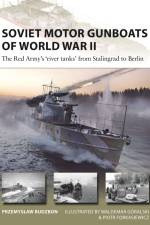
A compelling account of the heavily armed and highly mobile Soviet river gunboats which took on the Germans during World War II.Russia's enormous river system has long been its highway and, as early as 1908, the Tsar's armies were developing armoured riverboats that brought tank-like mobility, firepower and survivability to Russian battlefields.This book, the first history of these vessels in English, explains how this concept led to one of the most remarkable naval weapons of World War II, the Soviet 'river tank', or Armoured Motor Gun Boat (AMGB). Highly mobile, capable of carrying up to 20 infantrymen directly into action and providing immediate firepower from their tank turrets, machine guns or Katyusha rockets, their military value was widely recognized. They were versatile enough to be used in naval landing operations off the Gulf of Finland, the Azov Sea and the Black Sea, and their capabilities were prized by local commanders.Using meticulously researched new colour profiles, rare photos and spectacular artwork, this book uncovers the history of river warfare on the Eastern Front, and the boats that played such a key part in the fighting.
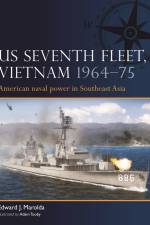
"This is a terrific history of the Seventh Fleet's vital service to the United States in the Vietnam War... remarkably researched and interpreted"- Admiral Jonathan W. Greenert, Chief of Naval Operations, 2011-2015 and Commander Seventh Fleet, 2004-2006A superbly illustrated examination of how the US Navy's most powerful fleet fought the Vietnam War, covering all of its elements from aircraft carriers and heavy cruisers to minesweepers and oilers.The US Navy's Seventh Fleet was at the forefront of America's campaign in Vietnam for a decade, from the Gulf of Tonkin Incident that began it all to the final evacuation of South Vietnam. Its mission was highly strategic, and while its primary role was to provide carrier-based air power over North Vietnam - from Rolling Thunder through Linebacker - the fleet's operations were complex, sensitive, and varied, and required all the capabilities of the fleet.This book is the first overall examination of how US Navy's most powerful fleet fought and operated in Vietnam. Distilled from thousands of declassified secret documents by renowned US Navy specialist Dr Edward J. Marolda, it offers a unique new portrait of how the Seventh Fleet fought the Vietnam War, from the offensive strike power of naval aviation to the vital role of fleet logistics. As well as the carrier operations, he examines the surface combatant fleet's gunfire support role, and its raids against the North Vietnamese coast. Dr Marolda also looks at amphibious warfare, fleet air defense, search-and-rescue, and mining and interdiction operations. Illustrated throughout with archive photos, 3D diagrams and spectacular new artwork, and informed by never-before-translated official documents, publications, and personal accounts from North Vietnamese, Soviet, and Chinese sources, this is the real story behind the US Navy's Vietnam War.
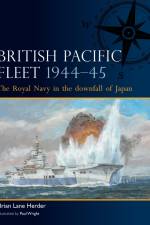
An illustration-packed new account of the powerful Royal Navy fleet that fought alongside the US Navy throughout the last year of the Pacific War.The British Pacific Fleet was the Royal Navy's primary contribution to the direct defeat of Japan in 1945, and is among the most powerful fleets Britain has ever sent into action. With naval supremacy in home waters achieved by 1944, many of the best and most modern ships in the Royal Navy could be sent to the Pacific, including battleships, submarines, light forces, replenishment groups, and shore establishment. However, the main striking force was the fast carrier force.Illustrated throughout with dramatic new artwork, 3D diagrams, maps and archive photos, this book explains how the Royal Navy joined the Pacific carrier war, and how the fleet adopted the US Navy's ruthlessly effective fast carrier doctrine. With ships optimized for short-range operations in the Atlantic and Mediterranean, the BPF had to rapidly adapt to the long-range, high-tempo warfare of the Pacific, and the story is often one of inspired improvisation. The BPF shared the US Navy's terrifying experience of kamikaze strikes, and famously its armoured carriers proved tougher than the US counterparts. With discussion of the ships, their technology, how the fleet was organized and commanded, and how it fought the campaign, this book is a fascinating exploration of the Royal Navy's part in the victory over Japan.
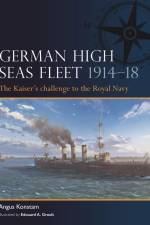
A superbly illustrated new account of how Germany's High Seas Fleet was built, operated and fought, as it challenged the world's most powerful navy in World War I.Seven years before the outbreak of World War I, the Imperial German Navy rebranded its Home Fleet as the Hochseeflotte, or High Seas Fleet. It was a force designed to take on the Royal Navy, then the world's most powerful, and for the next four years the North Sea would be their battleground.Drawing on extensive research, Angus Konstam offers the reader a concise, fully illustrated account of how the entire High Seas Fleet was designed and built, how it operated, and how it fought. The fleet was a modern, balanced force of dreadnought battleships, battlecruisers, cruisers and torpedo boats, using Zeppelins and U-boats for reconnaissance. The ultimate test between them came in May 1916, when they clashed at Jutland.Packed with spectacular original artwork, maps, 3D diagrams and archive photos, it explains how and why the fleet was built, its role, and how and why it fought as it did. From fighting doctrine and crew training to intelligence, logistics, and gunnery, this book is an essential guide to the Kaiser's audacious bid for naval glory.
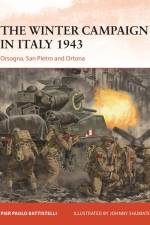
A gripping tale of three crucial battles fought at the end of 1943 as Allied forces approached the Gustav Line in Italy.After repulsing the German counter-attack at Salerno in September 1943, the US Fifth Army and British Eighth Army advanced up the Italian Peninsula. By October, the Allied armies had reached the Volturno Line, forcing a critical decision in German strategy: a prolonged defence would be conducted in southern Italy, contesting the Allied advance using the complex terrain features. By mid-November, the two Allied armies were approaching the German defensive lines along the Garigliano and the Sangro rivers. Here, US 5th Army would attack through the Mignano gap towards San Pietro Infine, while British Eighth Army would seize Ortona on the Adriatic coast and Orsogna. A brutal struggle ensued, with the German defenders attempting to hold their positions. The fighting at Ortona in particular (labelled a 'mini Stalingrad') would be particularly grueling for the Canadian forces involved. This fascinating work focuses on several little-known battles fought in Italy following the German withdrawal from the Salerno bridgehead and from Taranto. Maps and diagrams present an easy to follow overview of the multiple operations of this complex campaign. The forces of the opposing sides (including American, German, Canadian, New Zealand and British troops), and the three decisive battles fought in late 1943, are brought vividly to life in period photos and superb battlescene artworks.
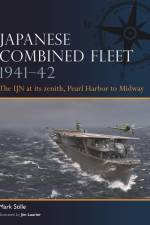
Launching Osprey's new Fleet series, this is a spectacularly illustrated, concise and comprehensive account of the Imperial Japanese Navy's striking force at the height of its power.The Imperial Japanese Navy (IJN) entered the Pacific War as one of the most formidable navies in the world, and its combat power was concentrated into one force, the Combined Fleet. In the months that followed Pearl Harbor it enjoyed an unrivaled string of victories, shattering American, British, Australian, and Dutch naval forces. This period of expansion and constant victories ended at the Battle of Midway, after which the Combined Fleet was forced onto the defensive. In this book, Mark Stille draws on his decades of IJN research to explain what made the Combined Fleet the fighting force that it was. Packed with superb original artwork, explanatory 3D diagrams and maps, it examines the fleet's doctrine, innovative tactics and powerful warships. It also details the qualities and importance of IJN leadership, logistics, naval infrastructure, and Japan's shipbuilding capability, and gives an account and analysis of the IJN's combat performance during these crucial months - not just in the famous carrier battles, but also exploring lesser-known elements such as IJN amphibious forces and land-based aviation.
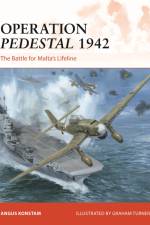
A fascinating story of a key turning point in the War in the Mediterranean, as the island of Malta was thrown a vital lifeline. Since 1940, the island of Malta had been a thorn in the Axis' side. It sat astride the direct sea route between Italy and its North African colonies, and from 1941 the Royal Navy had used the island as a base for its attacks on Axis convoys. The island, though, relied on convoys to survive, and from early 1941 these came under increasingly heavy air and submarine attack. As the situation became critical in 1942, the decision was made to send through a heavily protected convoy, carrying fuel and supplies, in an effort to save the island. This mission was codenamed Operation Pedestal. This fascinating work describes how, after leaving Britain on 2 August 1942, the convoy was repeatedly pummeled by Axis air and submarine attacks as it ground its way towards Malta, with most of the merchant ships sunk during the passage, along with an aircraft carrier and two cruisers. It also explores how despite this grim toll, the sacrifice was worth it.The specially commissioned illustrations in this work cover the progress of the convoy step by step, the submarine and surface naval actions during Pedestal's voyage, the Stuka attack on the carrier Indomitable and the air attacks against the convoy, and the broader strategic situation in the Western Mediterranean. The result is a unique visual exploration of one of the most famous episodes of the war in this theatre.
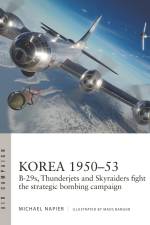
A spectacularly illustrated new history and analysis of the strategic bombing campaign in the Korean War, which saw the last combat of America's legendary B-29s. Just five years after they defeated Japan, at the dawn of the jet age, the most advanced bomber of World War II was already obsolescent. But the legendary war-winning Superfortresses had one more war to fight, in the strategic air campaign against North Korea. The bombers' task was to destroy North Korea's facilities for waging war, from industry and hydroelectric dams to airfields and bridges. However, it was a challenging campaign, in which the strategy was not merely military but political. In this fascinating book, airpower scholar and former RAF pilot Michael Napier explains how the campaign was fought, and how the technique of 'bombing to negotiate' that would become notorious in Vietnam was already being used in Korea. He analyses in detail the relationship between battlefield progress, armistice negotiations and the bombing strategy developed over the complex campaign. In the skies over Korea, the B-29s operated in a new world dominated by jet fighters and jet age technology, and tactics were developing rapidly. Packed with original illustrations, this book includes dramatic air scenes featuring B-29s, MiG-15s, AD Skyraiders and Skyknight jet nightfighters in action. It also includes maps, 3D recreations of missions and explanatory 3D diagrams to bring the conflict to life. This is a fascinating, dramatic account of the last battles of the piston-engined aircraft era as the superpowers vied for victory in the first clash of the Cold War.
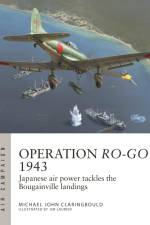
A compelling account of the failure of Imperial Japan's Operation Ro-Go, intended to take the offensive in the Solomons theater of the Pacific War, but which became Japan's first line of defense against the Allies' Rabaul raids and Bougainville landings.By the midpoint of World War II in the Pacific, Japan was on the defensive. At the end of 1943, after a year of tumultuous air combat around Rabaul and the Solomons, 173 Japanese aircraft were sent to Rabaul. The plan was for them to participate in Ro-Go Sakusen (known as Operation Ro, Ro-Go, or B) to strike Allied air power and shipping in the Solomons and to slow the American advance by severing Allied supply chains. However, instead of challenging Allied air and sea power on their own terms, the operation became unexpectedly embroiled in defensive combat and counterattacks, first to defend Rabaul from Allied air raids, and then to challenge the Allied landings at Bougainville. In one fell swoop, Operation Ro-Go was turned on its head, and transformed into a defensive battle for the Japanese. In this book, the first in English to focus on Operation Ro-Go, Michael John Claringbould uses rare Japanese primary source material to explain how the Japanese planned and fought the campaign, and corrects enduring myths often found in books that rely only on Western sources. He traces the unexpected and tremendous pressures placed on the operation's units at Rabaul as the Japanese dealt with massive, surprise raids from Fifth Air Force bombers, and later US Navy carrier aircraft, concluding with the strategic upset of the Bougainville landings. Packed with previously unpublished photos, spectacular original illustrations, 3D recreations of specific missions, maps and explanatory diagrams, this study tells the previously untold but significant story of Japan's air war in the Solomons.
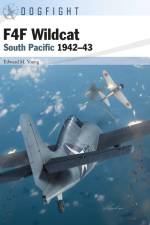
This book examines the role of the Grumman F4F Wildcat, the US Navy's standard carrier fighter at the start of the Pacific War, and its clashes against the Imperial Japanese Naval Air Force's Mitsubishi A6M Zero-sen.The US Navy went to war in December 1941 with the tubby Wildcat, the first of Grumman's famed 'cats', as its principal carrier fighter. Ruggedly built and well armed, the F4F's performance was inferior to the Japanese Zero-sen, yet in the carrier battles of 1942 between the US Navy and the IJN the Wildcat pilots more than held their own against some of the finest naval aviators in the world. Many of the Wildcat pilots that saw action in the South Pacific comprised what respected naval historian John Lundstrom has called the 'First Team' - the small group of highly trained prewar pilots who manned the bulk of the US Navy's carrier fighter squadrons. Illustrated with specially commissioned artwork, including armament views and ribbon diagrams, the book examines the carrier battles that took place in August and October in the South Pacific around the first American offensive of the war - the amphibious assault on the island of Guadalcanal, and the actions of the Wildcat in combat with IJN carrier aircraft. The key combat actions are described and accompanied with rare and original photographs and diagrams, as are the training and tactics that contributed to the Wildcat's success.
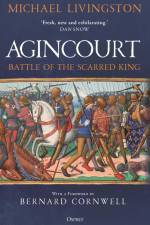
Agincourt is one of the most famous battles in English history, a defining part of the national myth. This groundbreaking study by Mike Livingston, author of Never Greater Slaughter, presents a new interpretation of Henry V's great victory.'It's quite a feat to write an account of England's most famous battle that makes the reader feel like they're experiencing history that is fresh, new and exhilarating.' Dan Snow King Henry V's victory over the French armies at Agincourt on 25 October 1415 is unquestionably one of the most famous battles in history. From Shakespeare's 'band of brothers' speech to its appearances in numerous films, Agincourt rightfully has a place among a handful of conflicts whose names are immediately recognized around the world. The English invasion of France in 1415 saw them take the French port of Harfleur after a long siege, following which Henry was left with a sick and weakened army, which he chose to march across Normandy to the port of Calais against the wishes of his senior commanders. The French had assembled a superior force and shadowed the English Army before finally blocking its route. The battle that followed was an overwhelming victory for the English, with the French suffering horrific casualties. Agincourt opened the door for Henry V's further conquests in France. Agincourt provides a new look at this famous battle. Mike Livingston goes back to the original sources, including the French battle plan that still survives today, to give a new interpretation, one that challenges the traditional site of the battlefield itself. It is a thrilling new history that not only rewrites the battle as we know it, but also provides fresh insights into the men who fought and died there.
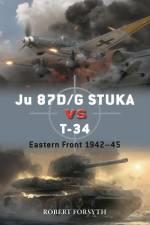
An examination of two of the most high-profile air and land weapons to be deployed on the Eastern Front in World War II.In late 1942, as part of its attempts to strike back at ever-increasing numbers of Soviet tanks, the German air ministry authorised the development of an adaptation and enhancement of the longspan Junkers Ju 87D-5 Stuka dive-bomber. The aircraft was duly fitted with two underwing pods containing 37 mm BK cannon - an antiaircraft cannon with its origins dating back to 1933. The solid, slow, Ju 87 airframe offered the Luftwaffe an ideal platform for specialist, low level, 'tank-killing' operations. Despite the wealth of experience possessed by some of the Luftwaffe's ground-attack and dive-bomber aces, knocking out T-34 tanks from the air was a demanding and difficult process. Nevertheless, some Luftwaffe pilots notched up impressive tank scores, and the Ju 87 is credited with the destruction of more than 100 tanks across the central and southern sectors of the Eastern Front, including during the Battle of Kursk. Including personal accounts from Stuka pilots and biographies of the anti-tank aces, together with detailed photographs of the cannon installation into the Ju 87G and details of the construction of the T-34 illustrated using specially commissioned artwork, this book covers the epic clash of two legendary machines of World War II.
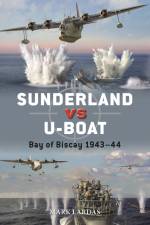
An illustrated examination of the role played by the Sunderland as an antisubmarine aircraft during the Battle of the Atlantic, focusing on the key battles of the Biscay campaign in 1943-44.The Sunderland is an iconic British aircraft of World War II, and the only RAF Coastal Command type to perform frontline service throughout the conflict. Its prime target - the German U-boat - was a deadly adversary to Allied warships and other oceangoing vessels, but proved vulnerable to detection and air attacks from the radar-equipped Sunderland. This book examines the respective advantages and drawbacks of these two maritime predators by providing a vivid analysis of their historic engagement during the Biscay campaign in 1943-44.Drawing upon first-hand accounts of this famous duel, Mark Lardas tells the story of how highly skilled Sunderland crews took the fight to an often elusive enemy and helped RAF Coastal Command defeat the U-boat threat. Maps, tactical diagrams, photographs and specially commissioned artwork bring the action to life as the Sunderland's losses - and eventual victory - in the Bay of Biscay play out in fascinating, insightful detail.
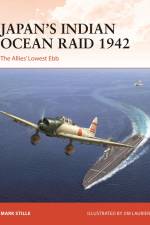
An detailed illustrated exploration of the Japanese raid into the Indian Ocean in April 1942 - one of the largest operations conducted by the Imperial Navy during the war.In the wake of Japan's conquest of Burma in early 1942, plans were formed by the Imperial high command to capture Ceylon (modern Sri Lanka) to consolidate Japan's defensive perimeter and disrupt British shipping lanes to India, Australia, and the Middle East. The Imperial Japanese Army, however, could not release sufficient troops for an invasion, and so in response the Japanese Navy developed Operation C, an aggressive raid by the Combined Fleet into the Indian Ocean. The key objective was to destroy the British Eastern Fleet in port.Expert naval historian Mark Stille documents the high point of Japanese naval air power as its carriers struck Ceylon - the heart of British naval power in the East - sinking several Allied ships. He describes the Allied air attempts to destroy Admiral Chuichi Nagumo's force, and the Japanese attacks against British shipping and the cities along the Indian coast.Specially commissioned battlescenes bring to life the sinking of British carrier Hermes, the Bristol Blenheim attacks on the Japanese carrier force, and a Zero vs Hurricane dogfight over Colombo on 5 April. Easy to follow maps and diagrams reveal the strategic situation at the start and end of the campaign, and track the movements of the Japanese carrier task force and the British Eastern Fleet throughout. Details of weaponry, equipment, personnel and the events of the fascinating battles that took place are revealed in over 60 photographs, many of which are from Japanese sources.
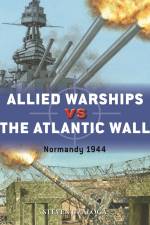
A fascinating exploration of the often-overlooked gunnery duels between the formidable artillery weapons in the Atlantic Wall defences and the mighty US and Royal Navy battleships.Amphibious landings were an essential tool of Allied military strategy in World War II. The Royal Navy and the US Navy provided operational mobility that allowed the Allies to strike unexpectedly across the vast coastlines of the Mediterranean and Atlantic. Nazi Germany did not have sufficient naval power to seriously contest this, and consequently relied heavily on the huge and costly Atlantic Wall fortification programme. By 1944, the French coast featured more than 1,900 coastal guns over 75mm in calibre. At the heart of this fascinating book by renowned military historian Steven J. Zaloga is the clash between Batterie Hamburg (defending Cherbourg) and the Allied naval bombardment group led by the battleship USS Texas on 25 June 1944. Stunning artworks reveal details of the design, construction and ammunition of the weapons involved, and the locations of important sites are shown on maps. The author also explores the evolution of Allied naval doctrine, which was based on repeated experiences during a succession of amphibious operations, and which enabled the Allies to successfully overcome the coastal gun threat. Illustrated with over 50 period photographs, the result is a fascinating exploration of a key battle during the Allied invasion of mainland Europe.
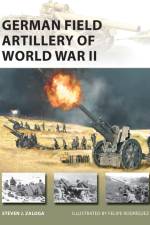
An illustrated study of the big guns of Hitler's army - the Wehrmacht's field artillery, its capabilities and its role in German fighting units of World War II. Often overshadowed in military history by the tanks and aircraft of Blitzkrieg, Germany's artillery was key to its methods of waging war throughout World War II. Field artillery remained the primary killer on the battlefield, often responsible for three-quarters of combat casualties inflicted.Redressing the balance, this book surveys the major Wehrmacht guns of the war, and the basic organizational structure of the German field artillery. Its primary focus is on the divisional field guns, especially the lFH 18 10.5cm field howitzer and the 15cm sFH 18 field howitzer that formed the backbone of German artillery. A brief survey is also made of the infantry guns used at the regimental level, and of corps-level heavy artillery. The issue of the use of"Beutewaffen," captured war-booty field guns, is also looked at, as is the Nebelwerfer and schwere Wurfgerät rocket artillery. With archive photos and meticulously detailed new illustrations, this book provides a concise study of the German Army's big guns of World War II, how they were organized and how they were used, both on the Eastern and Western fronts.
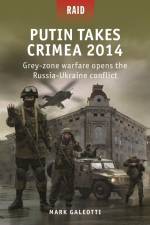
An authoritative analysis of how Putin's Russia conquered the Crimea in 2014 using 'grey zone' warfare techniques, blending operations by anonymous special forces with cyber, sabotage, and propaganda. Russia's annexation of Crimea in 2014 was almost bloodless - fought as much through propaganda, cyberattacks and subversion as by force of arms - but it is crucial for our understanding of both modern warfare and recent Russian history. Ironically, this slick triumph eventually led to the full-scale invasion of Ukraine, the largest and costliest conventional war in Europe since 1945. This is a fascinating account of the Crimea conquest from a supremely qualified expert on modern Russian forces. Illustrated throughout, it explores how Russia developed its new model of 'hybrid' or 'grey zone' warfare, and planned and deployed it against Crimea, from the choreographed appearance of 'spontaneous' protesters through to the deployment of unbadged Russian elite forces. In this book Mark Galeotti explores the lessons that Russia, Ukraine, and the West took from it - correctly and mistakenly - and how this apparently textbook operation sowed the seeds that would erupt so catastrophically in 2022.
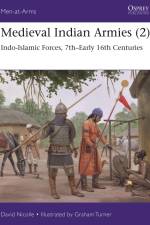
This illustrated study investigates the Indo-Islamic fighting men of South Asia from the 7th century AD to the Mughal conquest of the 16th century.From 1206, much of what is now India as well as parts of Pakistan, Bangladesh and Nepal were ruled by a succession of Islamic dynasties that had their origins in the Ghurid forces that conquered parts of northern India in the 12th century. Although it was never complete, the Islamic domination of this huge region also had a profound impact upon Islamic civilization as a whole, not least in military terms, being felt as far west as Africa. Within South Asia, the war-torn medieval centuries laid the foundations for the subsequent even more brilliant Mughal Empire.Featuring eight plates of superb artwork alongside carefully chosen photographs and illustrations, this study complements the same author's Medieval Indian Armies (1): Hindu, Buddhist and Jain. It describes and illustrates the Indo-Islamic forces operating in South Asia, from the Umayyad Caliphate's frontier in north-western India and Afghanistan in the late 7th century through to the Delhi Sultanate, the Sultanate of Bengal and the Bahmani Sultanate in the 15th and 16th centuries.David Nicolle explains how, with respect to arms, armour, fortification and transport both on land and at sea, the widely successful Muslim armies learned a great deal from their more numerous Hindu, Jain and Buddhist opponents. This was especially evident in developments such as the use of war-elephants and the adoption of lighter, often textile-based forms of protection such as 'soft armour' made of cotton. On the other side, there would be widespread adoption of more potent weapons such as the composite bow, and considerably more sophisticated systems of cavalry warfare, among the non-Islamic forces of the Indian sub-continent. Fully illustrated, this absorbing account casts light on many centuries of warfare in South Asia.
Abonner på vårt nyhetsbrev og få rabatter og inspirasjon til din neste leseopplevelse.
Ved å abonnere godtar du vår personvernerklæring.