












Gjør som tusenvis av andre bokelskere
Abonner på vårt nyhetsbrev og få rabatter og inspirasjon til din neste leseopplevelse.
Ved å abonnere godtar du vår personvernerklæring.Du kan når som helst melde deg av våre nyhetsbrev.

This book provides strong, diverse context that supports educators in driving theory to practice when engaging with English Language Learners.
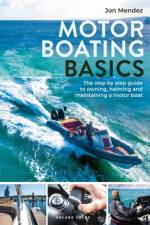
Motor Boating Basics is the ultimate collection of visually clear and appealing 'how-to' guides on all aspects of motor boat handling and ownership.These guides are designed to make motor boating as easy and accessible as possible, for even the newest of motor boaters. Each feature follows the same easy-approach format covering a topic, with an introduction followed by six simple, illustrated steps to show the reader exactly what they need to do at each stage of the process.This book is an ideal introduction to motor boat ownership, driving and maintenance, and covers topics on:- Essential skills (knots, tying up your boat, using a pile mooring, coiling mooring lines, lassoing a cleat)- Safety (recovering an MOB, fitting a lifejacket, using a VHF, setting up a radar, mooring on one engine)- Navigation (creating a route, following a route, pilotage skills)- Boat maintenance (antifouling, changing an impeller, polishing your boat, replacing anodes)- Berthing (arriving, leaving, tying up, moving sideways, handling a single-engined boat, single-handed driving, using springs, manoeuvring in windy conditions, pile moorings, IPS boats, using a bow thruster)- Boat handling (fast turns, throttle and trim, turning in a tight space, ferry gliding, beam trim, heading to windward, heading downwind, rough weather)By breaking everything down into easy to follow steps, even the most inexperienced boater can master new skills quickly, and old hands will find something new in the useful hints and tips added by the author Jon Mendez, a former RYA instructor/examiner and one of the most highly respected motor boat skippers and trainers in the business. Each topic also has a link to an accompanying video that shows the full manoeuvre, with additional commentary from the author.
A re-evaluation of spy fiction that sheds light on how espionage narratives give access to cultural conceptions of gender and sexuality in the period preceding and following the Second World War, this book moves away from masculinist assumptions of the genre, offering an integrative survey of the sexualities on display from important characters across the canon. Topics covered include how authors mocked the traditional spy genre; James Bond as a symbol of pervasive British Superiority; how older female spies act as queer figures that disturb the masculine mythology of the secret agent; and how the clandestine lives of agents described ways to encode queer communities under threat from fascism. Taking stock of spy fiction written by women, female protagonists written by men, and probing the representations of masculinity generated by male authors, this book analyses Ian Fleming's James Bond novels; The Spy Who Came in the Cold, The Ipcress File, and The Little Drummer Girl by John Le Carré (and their adaptations for media); Helen MacInnes's Above Suspicion and Assignment in Brittany; Nancy Mitford's Pigeon Pie; works by Christopher Isherwood and Mick Herron and the television show The Americans. Examination of these key works allows exploration of the construction and even revision of masculinity, femininity and queer identities, as well as domesticity (itself often a microcosm of the nation) in relation to notions of nationality and the defense work being conducted at crucial historical moments.
A troubled cop seeks to save his son from a killer in Yellowstone in the novel that sets the scene for Big Sky, now a hit TV show, from award-winning author and New York Times bestseller C.J. Box.Twilight falls on a cold, wet spring day in the mountains of Montana. A cabin smoulders in the forest. In the remains of the kitchen, a table set for two; next door, the remains of a single body.Detective Cody Hoyt is called to the scene. A brilliant cop, Cody is also an alcoholic struggling with sobriety and it doesn't help that the body in the cabin is his AA sponsor, Hank Winters. It looks like a suicide, but Cody knew Hank better than that. He's convinced its foul play.After years of bad behaviour directly related to his drinking, Cody has few friends left in the department, but Hank was a true friend and Cody is determined to find his killer, badge or no badge. Investigation leads Cody to a website running wilderness adventures in Yellowstone National Park. Their big trip of the year has just left: a two-week horseback journey into the wild. The very same trip that Cody's estranged teenage son, Justin, has signed up for...Cody has no choice but to trek deep into America's greatest wilderness in pursuit of his son and the truth. Cody is on his own, he's out of time, he's in too deep, he's in the Back of Beyond.Reviews for Back of Beyond'One of the most suspenseful wilderness thrillers since Deliverance.' Associated Press'Terrifically entertaining.' Kirkus'Timeless, gripping. Resembles an Agatha Christie whodunnit but with horses, bears, wolves and hunting rifles.' Publishers Weekly'A perfect introduction to the novels of C.J. Box.' Booklist
The T&T Clark Handbook of Suffering and the Problem of Evil provides an extensive exploration of the theology of theodicy, asking questions such as should all instances of suffering necessarily be understood as evil? Why would an omnipotent and benevolent God allow or perpetrate evil? Is God unable or unwilling to reduce human and non-human suffering on Earth? Does humanity have the capacity to exercise a moral evaluation of God's motives and intentions? Conventional disciplinary boundaries have tended to separate theological approaches to these questions from philosophical ones. This volume aims to overcome these boundaries by including biblical (Part I), historical (Part II), doctrinal (Part III), philosophical (Part IV), and pastoral, interreligious perspectives and alternative intersections (Part V) on theodicy.Authors include thinkers from analytic and continental traditions, multiple Christian denominations and other religions, and both established and younger scholars, providing a full variety of approaches. What unites the essays is an attempt to answer these questions from the perspective of biblical testimony, historical scholarship, modern theological and philosophical thinking about the concept of God, non-Christian religions, science and the arts. The result is a combination of in-depth analysis and breadth of scope, making this a benchmark work for further studies in the theology of suffering and evil.
This book explores a specific aspect of modern parliamentarism: its ability to produce and organise political knowledge. The book argues the very meaning of modern parliamentarism cannot properly be understood without considering the cognitive value which is inherent in the representative function discharged by parliaments, vis-a-vis the political community. It does this by applying the theory of parliamentary encyclopaedism. Exploring the concept from ancient times to modernity, it addresses the fundamental question of the relationship between knowledge and decision-making. This is a truly innovative book, challenging, provocative and asking crucial questions of how parliaments work and legislate.
This is the first broad-ranging, comprehensive and comparative study of the concepts of propaganda and neutrality. Bringing together world-leading and early career historians, Propaganda and Neutrality explores case studies from the time of the First World War to the end of the Cold War in countries such as Belgium, Greece, Spain, Portugal, Ireland, Switzerland, Vichy France, USA, Argentina, Turkey, Portuguese Macau, Brazil, South Africa, Laos, Yugoslavia, Egypt, India, Malta, and Sweden. The individual chapters analyse the methods and channels of propaganda utilised in neutral countries, including rumours, newspapers, cartoons, films, pamphlets and magazines as well as radio broadcasts, official reports, diplomatic movements, cultural campaigns and soft power. They look to understand how these methods and channels have been deployed and how effective they have been in changing or reinforcing opinions and outcomes. Finally the book highlights the interaction between the concepts of propaganda and neutrality. It considers whether neutrality is a form of propaganda in itself, whether it is possible to be truly neutral in any propaganda battle and how the different forms of neutrality, including projected strict neutrality, non-belligerency and non-alignment, have been utilised by neutrals and belligerents to achieve propaganda goals in the last 120 years.
This edited volume presents a cutting-edge discussion and analysis of civilian 'enemy alien' internment in Britain, the internment of British civilians on the continent, and civilian internment camps run by the British within the wider British Empire. The book brings together a range of interdisciplinary specialists including archaeologists, historians, and heritage practitioners to give a full overview of the topic of internment internationally.Very little has been written about the experience of interned Britons on the continent during the Second World War compared with continentals interned in Britain. Even fewer accounts exist of the regime in British Dominions where British guards presided over the camps. This collection is the first to bring together the British experiences, as the common theme, in one study. The new research presented here also offers updated statistics for the camps whilst considering the period between 1945 to the present day through related site heritage issues.
The book sets out a general approach to private law, covering contract, tort and private property. Identifying certain fundamental aspects of these areas, it illustrates how this approach can provide solutions to certain longstanding problems. Two overarching ideas inform this novel approach: 'standpoint imitation' and 'remedial consistency'. The standpoint limitation explains the distinctive character of private law, that is to say why it is focussed mainly though not exclusively on the interests of the two parties rather than the common welfare. Remedial consistency explains the way in which remedies depend on and give effect to primary rights. The book goes on to consider the nature of theories of law in order to make clear the sort of theory suggested, and common law legal reasoning and how it is related to the suggested approach. This provides a unique way of thinking about private law and its role in dispensing justice which will be of interest to all those in the field.
Decolonization represented the end of colonial rule, but did not eradicate imperial and colonial categories and mythologies. Situated in the wider context of European colonial legacies, this book looks at the legacies of the Portuguese empire in today's Portugal. Using an interdisciplinary agenda, with contributions from experts in the fields of history, anthropology, literature, and sociology, the several case studies included in the volume look at a wide range of colonial legacies. These include a set of commemorative practices that feed on imperial mythologies, old colonial and racial classifications that condition citizenship rights, and post-imperial modes of culture consumption. Legacies of the Portuguese Colonial Empire is the first book written so far in English on this topic, enabling the Portuguese case to enter into a broader dialogue with other national experiences relating to the legacies of colonialism and empire in today's Europe.
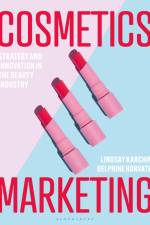
Discover the tools required to pursue your career in cosmetics marketing. Through an in-depth analysis of this fast-growing and complex industry, Cosmetics Marketing: Strategy and Innovation in the Beauty Industry provides thought-provoking, industry-led exercises and case studies to demonstrate the role of aesthetics, authentic communication, emerging technologies, cultural trends, and the measurement of marketing efforts. There are also practical, beautifully illustrated resources for entering the field, exercises for boosting creativity, preparations for interviews, as well as an overview of the beauty products and theory used by makeup artists and product developers.With a focus on the evolution of the industry and its social responsibilities in terms of inclusivity and sustainability, this is a core text for cosmetics courses in marketing and business at the undergraduate and graduate levels. Cosmetics Marketing is the ultimate guide to this powerful, multi-billion dollar global industry and will influence and support the next generation of leaders in beauty.
Abonner på vårt nyhetsbrev og få rabatter og inspirasjon til din neste leseopplevelse.
Ved å abonnere godtar du vår personvernerklæring.